
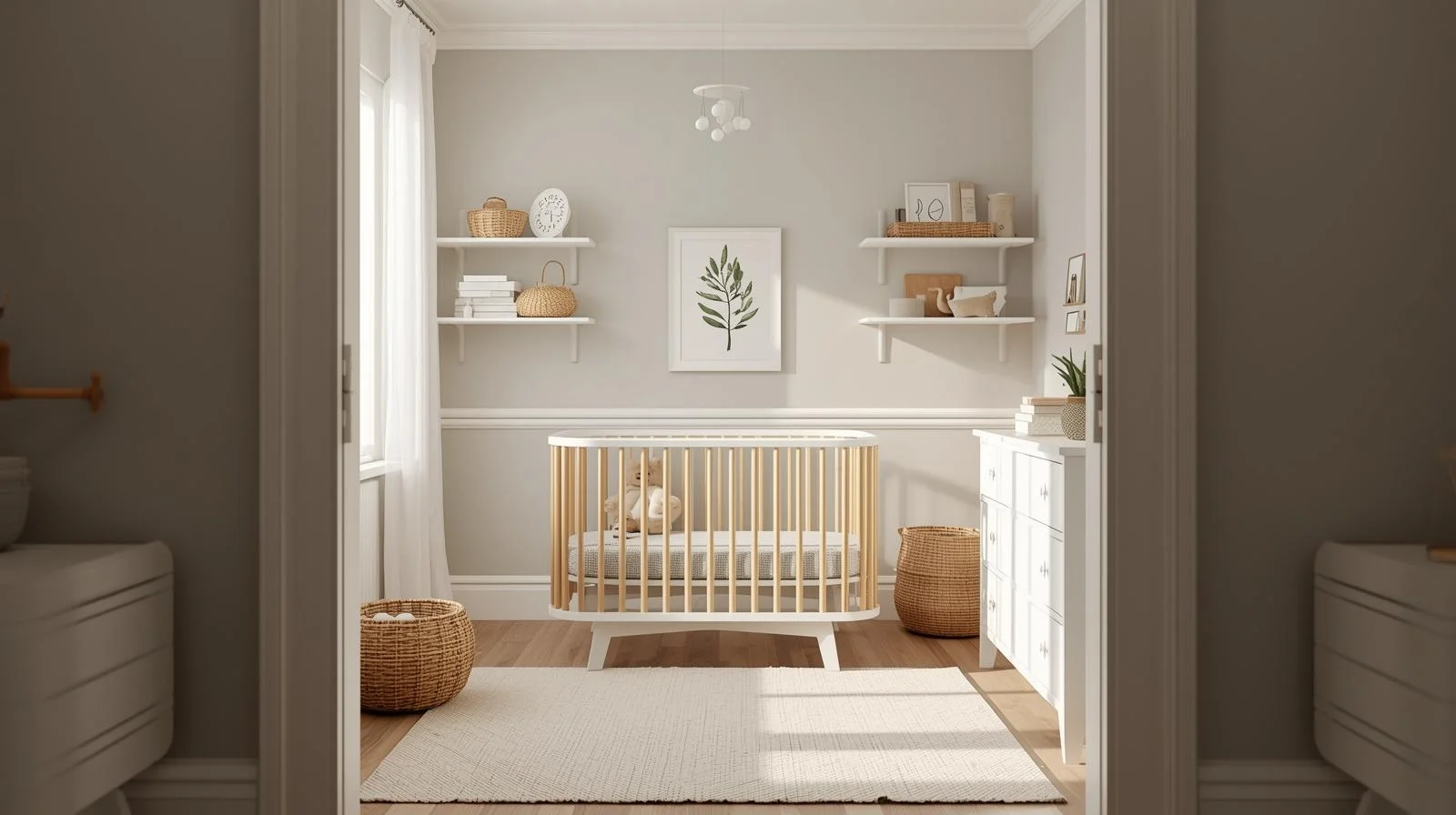
Short on floor space? Here is the quick version. For a tiny nursery or a shared bedroom, a mini crib (a compact cot) is usually the best fit. For the first months in your own room, a bedside crib takes the least space of all.
If you have a little more room and want one piece that lasts for years, a standard cot (crib in the US) with an under-crib drawer gives you sleep space and storage in one footprint. A play yard or travel cot is the flexible backup for studios and visits to family.
Below you will find real UK cot and US crib sizes, how each type compares, the space-saving nursery furniture worth buying for a small apartment, and five well-rated picks that fit tight rooms.
This post contains affiliate links. As an Amazon Associate, I earn from qualifying purchases, at no extra cost to you.
Which Cot or Crib Fits Which Small Space?
Start with the room, not the product. Here is a simple match-up:
- Tiny nursery or box room: a mini crib, roughly 39 x 25 to 28 inches (about 99 x 64 to 71 cm) on the outside.
- Your bedroom, first few months: a bedside crib or bassinet that sits next to your bed.
- Small apartment with no spare room: a mini crib or play yard in a corner of the main bedroom.
- Small nursery that needs storage: a standard cot (crib in the US) with an under-crib drawer.
- Narrow gap between furniture: a narrow cot or folding mini crib about 25 inches (64 cm) deep.
- Studio or frequent travel: a play yard or travel cot that folds away.
Measure your space with doors and drawers fully open, then compare it with the outside dimensions on the product listing, not the mattress size.
Cot Sizes UK vs US Crib Sizes
Size names are where UK and US advice get confusing, so here are the real numbers side by side.
US Crib Sizes
- Full-size crib (US): the US Consumer Product Safety Commission (CPSC) standard sets the inside of a full-size crib at 28 ± 5/8 inches wide by 52 3/8 ± 5/8 inches long, about 71 x 133 cm.
- Full-size crib mattress (US): at least 27 1/4 x 51 5/8 inches (69 x 131 cm) and no more than 6 inches thick.
- Mini crib (US): any crib smaller than full size counts as a non-full-size crib under federal rules. Many mini cribs take a 24 x 38 inch mattress, but always use the mattress the maker specifies.
- Outside footprint: a full-size crib usually measures around 30 x 55 inches outside, while a mini crib is closer to 25 to 28 x 39 inches.
UK Cot Sizes
- Standard UK cot: most take a 60 x 120 cm mattress (about 23.6 x 47.2 inches).
- UK cot bed: most take a 70 x 140 cm mattress (about 27.6 x 55.1 inches), which is close to a US full-size crib.
- Bedside cribs and Moses baskets: there is no single size, so buy the mattress made for that model.
- Standards to look for: BS EN 716 for cots and travel cots, and BS EN 1130 for bedside cribs.
These are common trade sizes rather than one fixed rule. The mattress should fit snugly with no gaps around the edges, so buy the size your cot or crib maker lists.
Want Your Home to Look Expensive for Less?
Grab the free room by room styling checklist, plus weekly decor tips.
Get the Free ChecklistMini Cribs vs Standard Cots vs Bedside Cribs
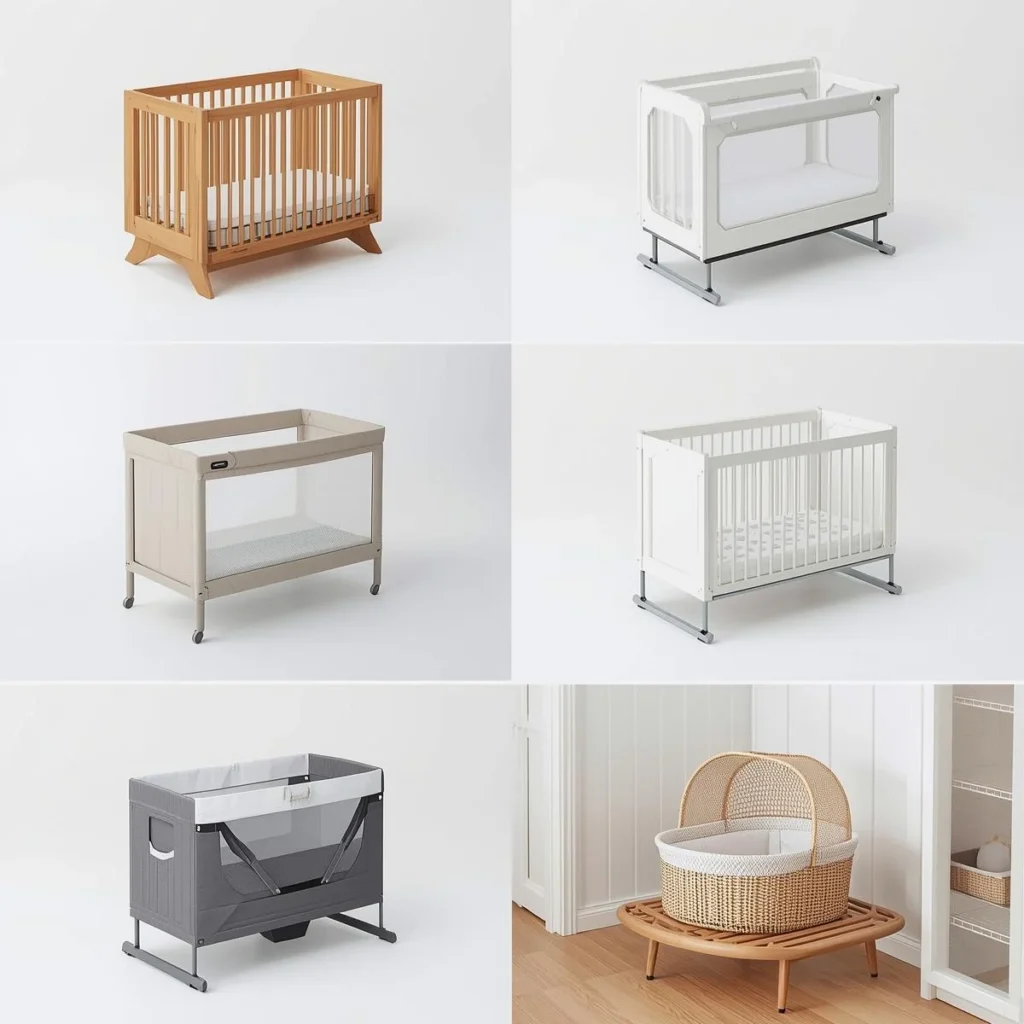
Each type solves a different small-space problem. Here is how they compare in everyday life.
Mini Cribs (Compact Cots)
A mini crib keeps the look of a regular crib with a shorter, narrower frame. It suits small nurseries, shared bedrooms and corners of a studio. Many fold flat or roll on casters, and some convert to a small daybed later.
The trade-off: your child will outgrow it sooner, and mini crib sheets come in fewer designs than standard sizes.
Mini crib mattresses are not all the same size, so buy the one the crib brand lists. A mattress that fits snugly matters more than any extra padding.
Standard Cots and Full-Size Cribs
A standard cot (crib in the US) lasts the longest and is the easiest to buy sheets and mattresses for. In a small room it only makes sense when it earns its space, for example with a storage drawer underneath or a conversion to a toddler bed.
Bedside Cribs
A bedside crib sits level with your bed and often has a side that lowers or zips down, which makes night feeds easier. It takes the least floor space, but it is a short-term solution, usually for the first few months only. Check the weight and age limits on the listing.
Plan the next step before you buy. If a mini crib or cot will move into your room later, measure for both now so you are not rearranging furniture with a newborn.
Quick Comparison
- Footprint: bedside crib, then mini crib, then standard cot.
- How long it lasts: standard cot, then mini crib, then bedside crib.
- Best for: bedside crib for room-sharing early on, mini crib for tiny nurseries, standard cot for long-term use with storage.
Best Cots for Small Spaces: 5 Compact Picks
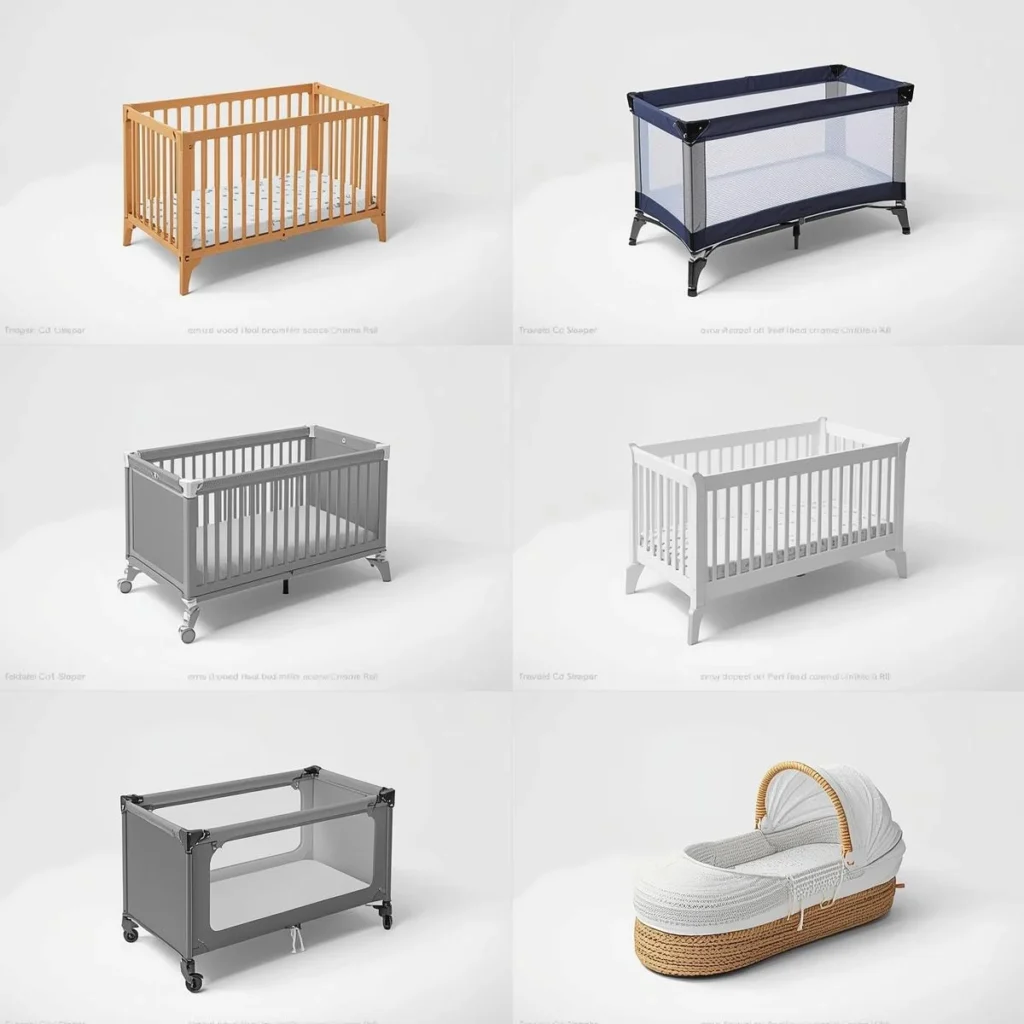
These picks cover the main small-space situations: a tiny nursery, a narrow gap, room-sharing, storage and a flexible alternative. Each one was in stock on Amazon US with strong ratings when we checked.
1. Best Mini Crib Overall: Dream On Me Aden 4-in-1 Mini Crib
The Dream On Me Aden 4-in-1 mini crib measures about 39 x 28 inches and has three mattress heights. It converts to a mini daybed and a twin bed later, with conversion kits sold separately, so it keeps working after the baby stage.
It is a simple pinewood frame in several finishes, and the mattress is sold separately, so budget for a mini crib mattress in the size the brand lists.
2. Best Narrow Cot: Delta Children Folding Portable Mini Crib
At about 25 inches deep, this is the one for tight gaps. The Delta Children folding mini crib rolls on casters, folds flat for storage and includes a thin 1.5-inch mattress that tucks inside when it is folded.
Plenty of buyers swap the included mattress for a thicker mini crib mattress, so factor that into the cost.
3. Best Bedside Crib: Dream On Me Skylar Bassinet and Bedside Sleeper
If the baby is sleeping in your room for the first months, the Skylar bedside sleeper has a side panel that unzips and rolls down, five height settings and straps that attach it to your bed. It folds into a travel bag when you need the floor back.
Check that its height range matches your bed before you buy, and follow the listed weight limit.
4. Best Crib with Storage: Graco Hadley 5-in-1 Convertible Crib with Drawer
When you only have room for one big piece, this full-size crib adds a two-compartment drawer underneath for sheets, sleep sacks and diapers. It converts to a toddler bed, daybed and full bed with kits sold separately, and it fits a standard full-size crib mattress.
It is the biggest piece on this list, at roughly 55 x 30 inches outside, so measure carefully. In return, you may be able to skip a separate dresser for the first year, which can save more floor space than a smaller crib would.
5. Best Crib Alternative: Graco Simple Solutions Pack n Play Playard
A play yard is the flexible option for studios, grandparents and travel. The Graco Pack n Play Simple Solutions has a bassinet, a diaper changer and a toddler play yard mode, and the feet and wheels fold in for a compact fold.
Some reviewers say the changer attachment can tilt, so treat it as a handy extra rather than your main changing station.
Small-Space Cot and Crib Comparison
Here is how the five picks line up at a glance.
| Product Name | Price Range | Best For | Buy on Amazon |
|---|---|---|---|
| Dream On Me Aden 4-in-1 Mini Crib | $120 to $170 | Tiny nurseries and shared bedrooms | Check price |
| Delta Children Folding Portable Mini Crib | $120 to $160 | Narrow gaps and folding away | Check price |
| Dream On Me Skylar Bassinet and Bedside Sleeper | $90 to $120 | Room-sharing in the first months | Check price |
| Graco Hadley 5-in-1 Crib with Drawer | $260 to $300 | One piece with built-in storage | Check price |
| Graco Simple Solutions Pack n Play Playard | $110 to $140 | Studios, travel and grandparents | Check price |
Prices change often, so treat these as rough ranges and check the current price before you order.
Space-Saving Cribs and Nursery Furniture for Small Apartments
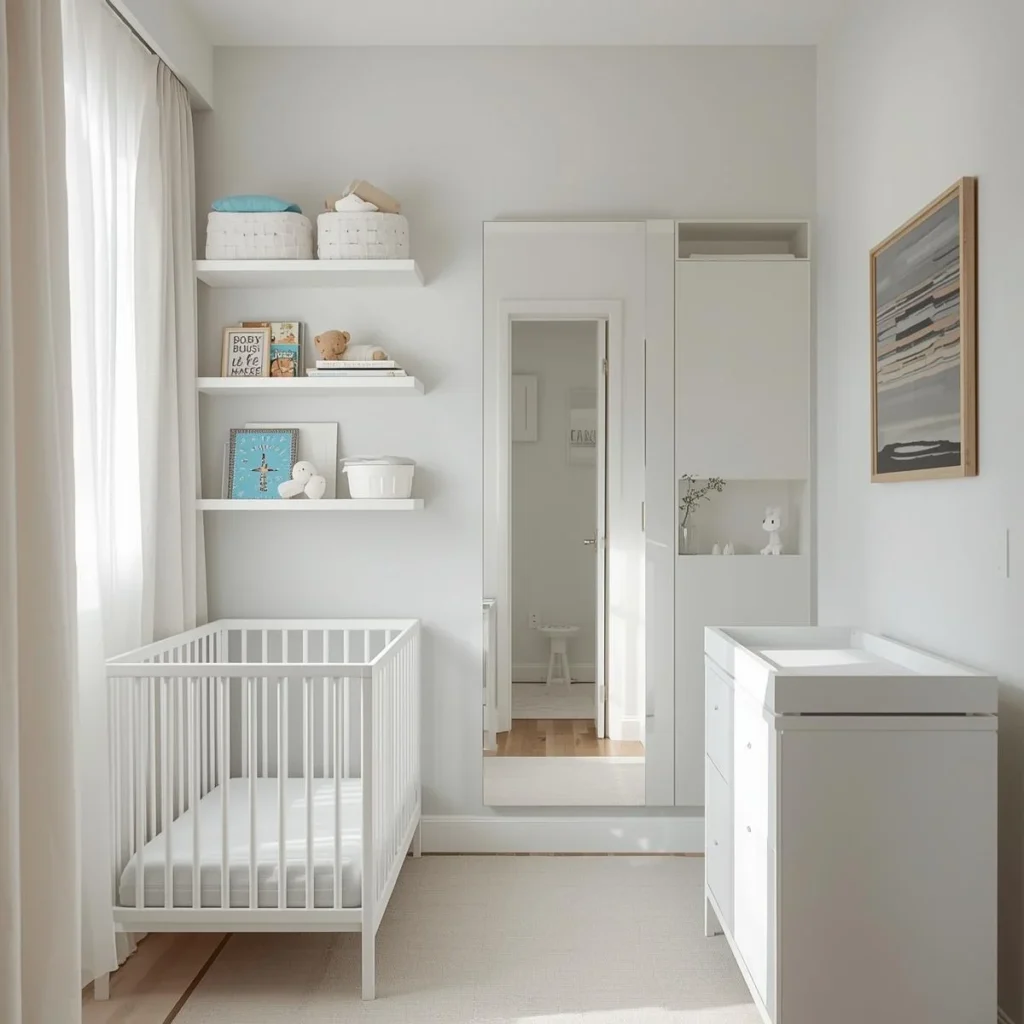
In a small apartment, the nursery is often a corner of your bedroom or part of the main room. If that sounds like your setup, our guide to living in a studio apartment covers zoning one room so the baby corner feels separate. The goal is fewer pieces that each do more than one job.
Cribs with Under-Crib Drawers
A crib with a built-in drawer replaces a separate storage chest. Use it for spare sheets, sleep sacks, swaddles and bulk diapers. If a crib has no drawer, low rolling bins can slide underneath instead, as long as the crib instructions allow it.
Dresser-Changers
A three-drawer dresser with a changing topper does the work of two pieces. Look for one around 30 to 40 inches wide, and choose a changing tray that attaches to the top. Anchor every dresser to the wall following the manufacturer instructions.
When the baby stage ends, take off the topper and you still have a normal dresser. That makes it a better long-term buy than a standalone changing table.
Vertical Storage
When the floor is full, go up. Floating shelves, a tall narrow bookcase, over-the-door pocket organizers and wall hooks for sleep sacks all free up floor space. Keep shelves and wall decor away from the crib area.
If you are not sure which pieces to prioritize, our guide to the different kinds of furniture explains what each type does well, which helps when you are trying to make one piece do two jobs.
Small Nursery Furniture Checklist
- One cot, mini crib or bedside crib that fits your measured space.
- A dresser-changer or a crib with a drawer, not both if space is tight.
- A small chair or floor cushion for feeds, only if the room allows.
- Shelves, hooks or an over-the-door organizer for the small stuff.
- A washable rug if the floor is hard; check our rug sizes chart so it does not crowd the cot.
Crib Alternatives for Small Spaces
Sometimes a full crib is not the right answer, at least not yet. These alternatives save space, especially in the early months or in a studio.
Play Yards and Travel Cots
A play yard (called a travel cot in the UK) folds into a carry bag, so it works for apartments where the baby corner doubles as living space. Many include a bassinet level for newborns. Use only the mattress that comes with it, and check the weight limits for each mode.
Bedside Cribs and Bassinets
A bedside crib or bassinet keeps the baby close and takes up less floor space than any crib. Most are designed for the first few months, so plan what comes next before the baby outgrows it.
Moses Baskets
A Moses basket is the smallest option of all. It is light and easy to move, but it is usually outgrown within a few months, so it works best as a short-term bridge.
Converting a Closet into a Nursery Nook
A wide closet or alcove can hold a mini crib or bassinet if there is good airflow and light. Remove the closet doors or make sure they cannot close on the sleep space, keep cords and blinds well out of reach, and avoid stacking storage above the cot.
How to Measure a Small Room for a Cot
A cot that technically fits but blocks the door or a drawer will drive you mad within a week. A few minutes of measuring prevents that.
- Sketch the room with doors, windows, radiators and outlets marked.
- Measure the full swing of the door and any wardrobe or dresser drawers.
- Use the outside dimensions from the listing, not the mattress size.
- Leave a clear path on at least one long side so you can reach the baby easily.
- Mark the footprint on the floor with painter tape and live with it for a day or two.
Keep the cot away from window blind cords, curtain cords and heaters. That is standard advice from safety bodies, and in a small room it decides where the cot can go.
Example: What Fits in a Small 8 x 9 Foot Nursery
Picture a box room of about 8 x 9 feet (roughly 2.4 x 2.7 m) with the door on one short wall. A mini crib of about 39 x 28 inches fits along the long wall opposite the window, with a 36-inch-wide dresser-changer on the wall facing it.
That still leaves a clear walking path of around 4 feet down the middle and room for a small feeding chair in the corner by the door. Swap the mini crib for a full-size crib and the chair usually has to go, which is why a mini crib or a crib with a drawer suits rooms like this.
Small Nursery Layout Ideas
In a small nursery, the corner farthest from the window is often the easiest spot for the cot, with the dresser-changer on the opposite wall. In a shared bedroom, a mini crib on the side of the room away from the door keeps the path to your bed clear.
Soft lighting and a calm palette make a small shared room feel restful for everyone. For ideas that keep your own side of the room grown-up, browse these cozy bedroom ideas.
Safe Sleep Basics for Small Spaces
Small rooms do not change the basics. Always follow the manufacturer instructions for your cot, crib or bassinet, and follow current safe-sleep guidance from sources like the CPSC and the American Academy of Pediatrics in the US, or the NHS and The Lullaby Trust in the UK. This guide is not medical advice.
A few points come up across official guidance: use a firm, flat mattress that fits the cot snugly, look for the relevant safety standard on new products, and avoid second-hand mattresses where you can. If you have questions about your baby, ask your pediatrician or health visitor.
Budget Tips for a Small Nursery

A small nursery is often the cheaper nursery, because you simply have room for less. A few ways to keep costs down:
- Buy the sleep space new, and save on decor, storage and the chair instead.
- Choose a mini crib or crib that converts later, so you buy fewer beds overall.
- Use a dresser you already own with a changing topper instead of a new changing table.
- Check the price of the right-size mattress and sheets before you commit to a crib.
For more ways to make the room look good without spending much, our economy home decor ideas work just as well in a nursery.
Final Thoughts
The best cot for a small space is the one that fits how you actually live. A mini crib works for most small nurseries, a bedside crib is great for the first months in your room, and a crib with a drawer earns its space when you need storage too.
Measure carefully, choose one or two pieces that do double duty, and follow the maker instructions and current safe-sleep guidance. Even a tiny corner can become a calm, practical place for your baby to sleep.
Best Cots for Small Spaces FAQ
What type of cot is best for a small nursery?
A mini crib is usually best for a small nursery because it takes up much less floor space than a standard cot (crib in the US). For the first months in your own room, a bedside crib uses the least space of all.
What are the best space-saving cribs for small apartments?
Good space-saving options include a mini crib, a folding mini crib on casters, a bedside crib, a play yard and a full-size crib with an under-crib drawer if you need storage in one piece.
What size is a UK cot compared with a US crib?
Most UK cots take a 60 x 120 cm mattress and most cot beds take 70 x 140 cm. A US full-size crib mattress is at least 27 1/4 x 51 5/8 inches, and many US mini cribs use a 24 x 38 inch mattress.
What are good crib alternatives for small spaces?
Popular crib alternatives are play yards or travel cots, bedside cribs, bassinets and Moses baskets. Most bedside cribs, bassinets and Moses baskets are for the first months only, so check the weight and age limits.
Is a narrow cot or mini crib worth it?
A narrow cot or mini crib is worth it if your room is tight or shared, because it fits where a standard cot will not. The trade-off is that your child outgrows it sooner and sheets come in fewer options.