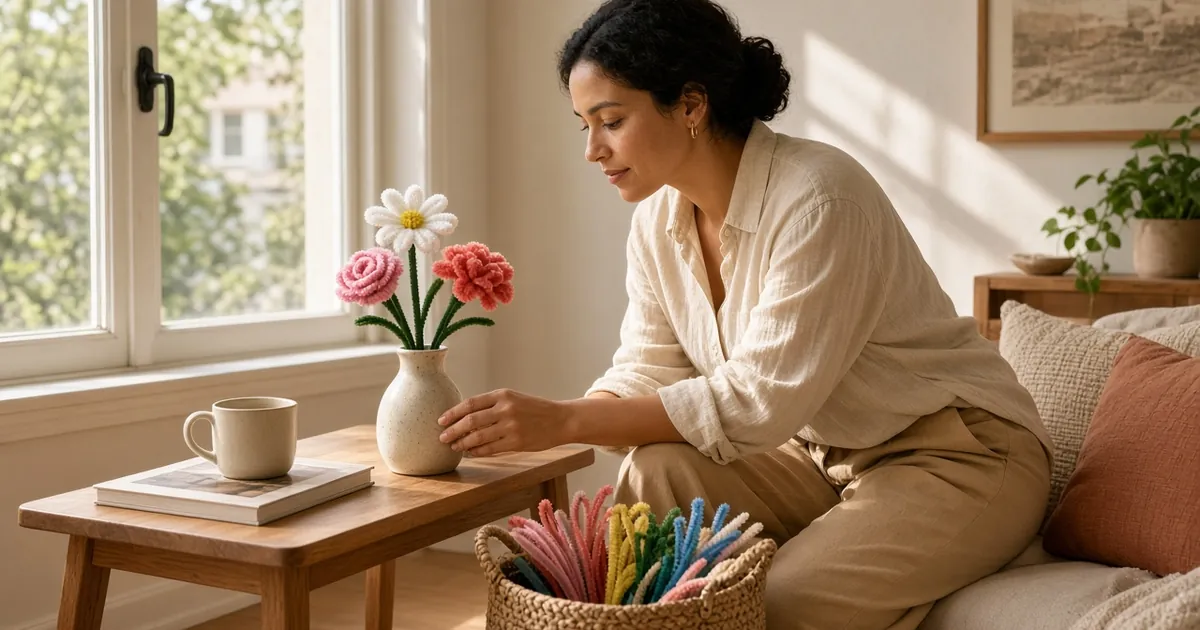
You can make a pipe cleaner flower with two 12-inch chenille stems, a pencil, and scissors. A basic bloom takes about 15 minutes. Fold one stem into five petal loops, twist the ends tight under the loops, then wrap a green stem around that twist so it becomes the stalk.
Pipe cleaners and chenille stems are the same supply: fuzzy fiber on a thin wire. The wire holds the flower, so glue is optional. One tight bloom in a bud vase looks considered. A jar of loose loops does not.
This post contains affiliate links. As an Amazon Associate, I earn from qualifying purchases, at no extra cost to you.
What You Need to Make a Pipe Cleaner Flower
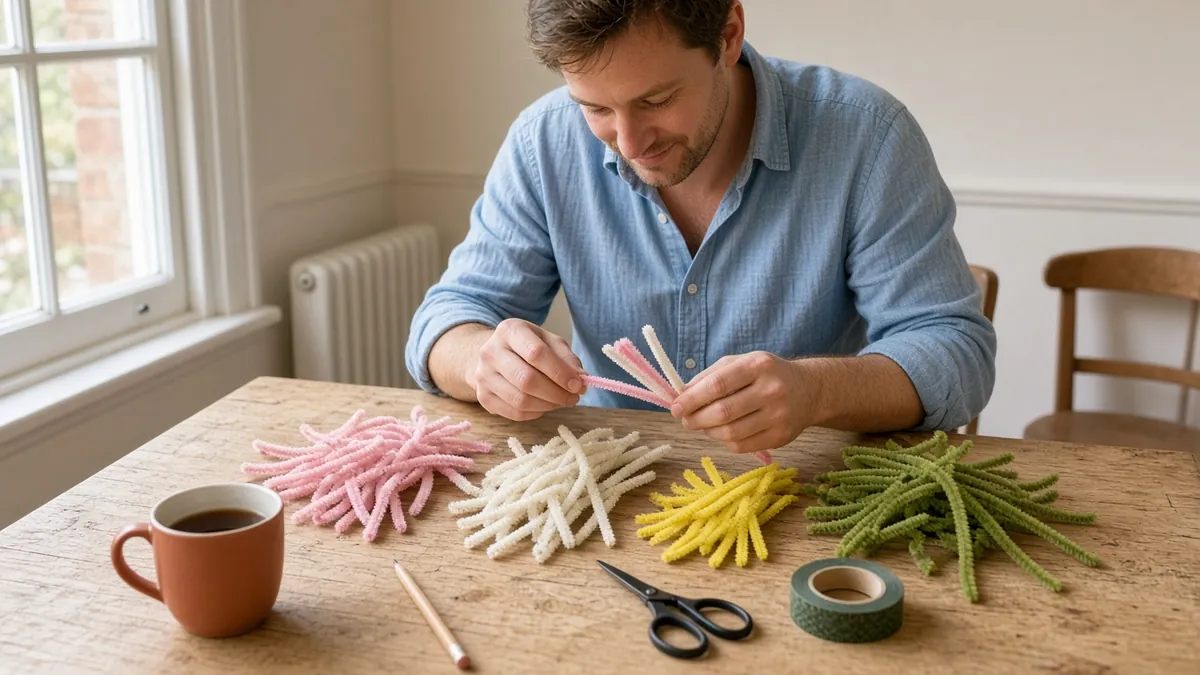
Time and Difficulty
Plan on about 15 minutes for the basic flower, and 25 to 40 minutes for a rose, a carnation, or a bunch of three. Difficulty is easy. Kids around 6 and up can shape petals with an adult nearby. An adult should snip the wire and check the ends.
Materials for One Flower
- 1 colored chenille stem, about 6mm thick and 12 inches long, for the petals
- 1 green chenille stem, same size, for the stalk and one leaf
- A 3-inch scrap in yellow, gold, or white for the center, cut from a third stem
- A pencil, pen, or knitting needle so the loops stay the same size
- Scissors that can snip wire
- Green floral tape, optional, if the flower will sit in a vase or on a gift
That list is one bloom. A mixed pack matters when you want a rose, a daisy, and a carnation in the same afternoon, because you need a few close shades plus green. A pack of 12-inch chenille stems in a wide color range covers all three. A useful mixed pack usually lands around $8 to $15.
Skip jumbo stems. They make chubby loops that will not read as petals. Very thin stems collapse after a day. If a stem does not spring back when you bend it, the flower will droop.
Quick Tip: Sort the greens into their own pile before you start. Mixing lime, forest, and olive in one small bouquet makes the flowers look accidental.
You do not need a glue gun for any flower in this guide. The twist is the fastener. Glue only helps if you want a bead or button that will not stay on the wire, and it leaves a shiny blob in a small vase.
A small kit with stems, tape, and wires often runs around $10 to $20. It is optional. The steps only need the list above.
| Product Name | Price Range | Best For | Buy on Amazon |
|---|---|---|---|
| Yalumo 12-Inch Chenille Stems (360 pcs, 30 colors) | $8 to $15 | Petals, centers and stalks in close shades plus greens | Check price |
| YUXIANG Dark Green Floral Tape (1/2 inch, 30 yards) | $3 to $8 | Wrapping stalks for a vase or gift; stretch the tape as you wrap to activate the wax | Check price |
| Anyeve Pipe Cleaner Flower Kit (800 pcs) | $8 to $15 | An all-in-one box with stems, floral tape, floral wires and stamens | Check price |
How to Make a Basic Pipe Cleaner Flower
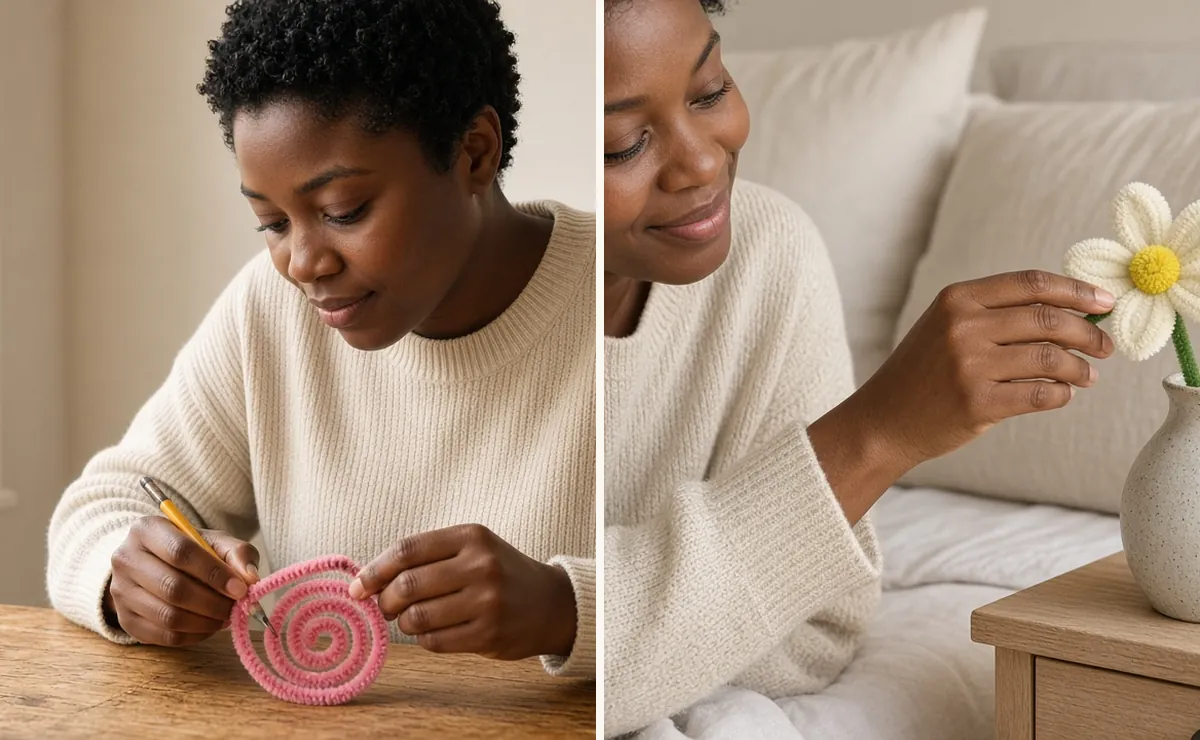
This is the loop-and-twist method. Each loop becomes one petal, and the twist under the loops is the structure. For a bud vase, aim for a bloom about 2 to 3 inches across on a stalk close to 12 inches. A huge head on a short stick looks like a lollipop.
- Fold the petal stem. Fold the colored stem in half so the ends meet. You now have a doubled length of about 6 inches.
- Wrap five loops. Hold the fold against a pencil and wrap the doubled stem around it five times. Keep the wraps side by side, not stacked in one spot. Slide the coil off.
- Twist the base. Pinch the five loops together at the bottom. Twist the two loose ends around each other four or five full turns, right under the loops. If you can spin a petal with one finger, twist again and pinch the join flat.
- Shape the petals. Spread the loops into a circle and pinch each one into a soft oval. A little unevenness looks more like a petal than a row of matching rings.
- Add the center. Roll the 3-inch scrap into a snail about the size of a pea. Push the tail through the middle of the loops and twist it into the base so the center cannot fall out.
- Attach the stalk. Lay the green stem against the base, wrap it four full turns, then pull the rest straight down. Those four turns stop the bloom from spinning when someone lifts the vase.
- Make a leaf. About 2 inches below the flower, bend a short piece of the green stem out, make a skinny loop about 1 inch long, and twist it back into the stalk. Add a second leaf only if you still have stem left.
- Finish the ends. Fluff the petals so the gaps are even. Fold every bare wire tail into the twist. If an end still scratches, snip it and fold the new tip in.
Hold the stalk between two fingers. The head should not flop sideways. If it does, the base twist is too loose or the leaf stole too much stem. Undo the leaf, retwist the base, and put the leaf back lower.
Wrap the stalk if the flower is going into a vase or onto a gift. Start just under the bloom and spiral to the end. Stretch the tape as you go. Stretched floral tape sticks to itself and covers the fuzzy stem. Unstretched tape unwinds.
Keep a roll of green floral tape in the same box as the stems. That roll is the difference between a craft stick and a stem you would put on a side table. One roll covers a season of small bouquets and usually costs only a few dollars.
Want Your Home to Look Expensive for Less?
Grab the free room by room styling checklist, plus weekly decor tips.
Get the Free ChecklistThree Easy Pipe Cleaner Flower Variations
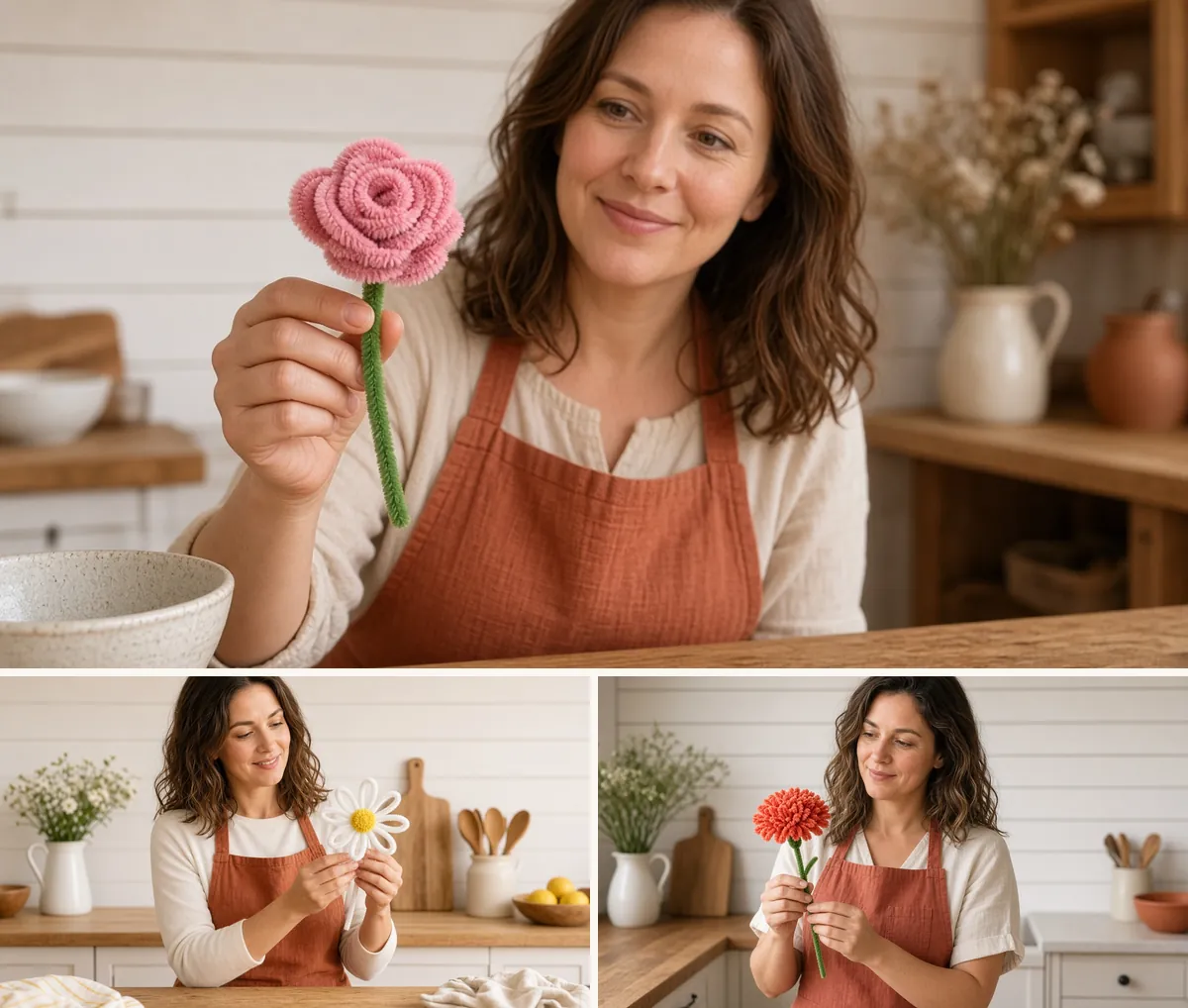
The twist stays the same. Only the petal shape changes. Do not start a rose until the basic flower holds its shape in your hand.
Pipe Cleaner Rose
A rose is a spiral, not five separate loops. The center has to stay tighter than the outside.
- Twist two pink, red, or cream stems together at one end for about half an inch so you have a longer working piece.
- From that end, roll a tight snail about the width of a dime. Keep that roll flat. It is the bud.
- Keep rolling, but loosen your grip as the spiral grows so the outer rounds are wider than the center.
- Pinch the bottom of the spiral and wrap the tail around it three times.
- Pull the outer rounds outward and slightly down, one at a time. Leave the center tight. Attach the green stalk with the same four-turn wrap.
If the rose looks like a lollipop, the center was too loose. Reroll the middle before you open the outside.
Pipe Cleaner Daisy
The basic flower is a daisy if you use white or cream petals and a yellow center. Six loops look fuller than five. Keep the petals flat, like a disk, not a cup. Pinch each loop so it is longer than it is wide, then stop.
Pipe Cleaner Carnation
A carnation is a pile of short ruffles on one firm base, not neat separated petals.
- Cut two colored stems into 4-inch pieces. You should get six pieces.
- Fold each piece in half and twist once at the fold so you have a small ruffled loop with two tails.
- Stack the loops and twist the tails into one thick base. If they slip, twist them in pairs first, then twist the pairs together.
- Fluff the loops up and out until the head looks packed. Wrap the green stem around that base four times.
Want the stems and tape in one box? This kit is an easy place to start.
Common Mistakes With Pipe Cleaner Flowers
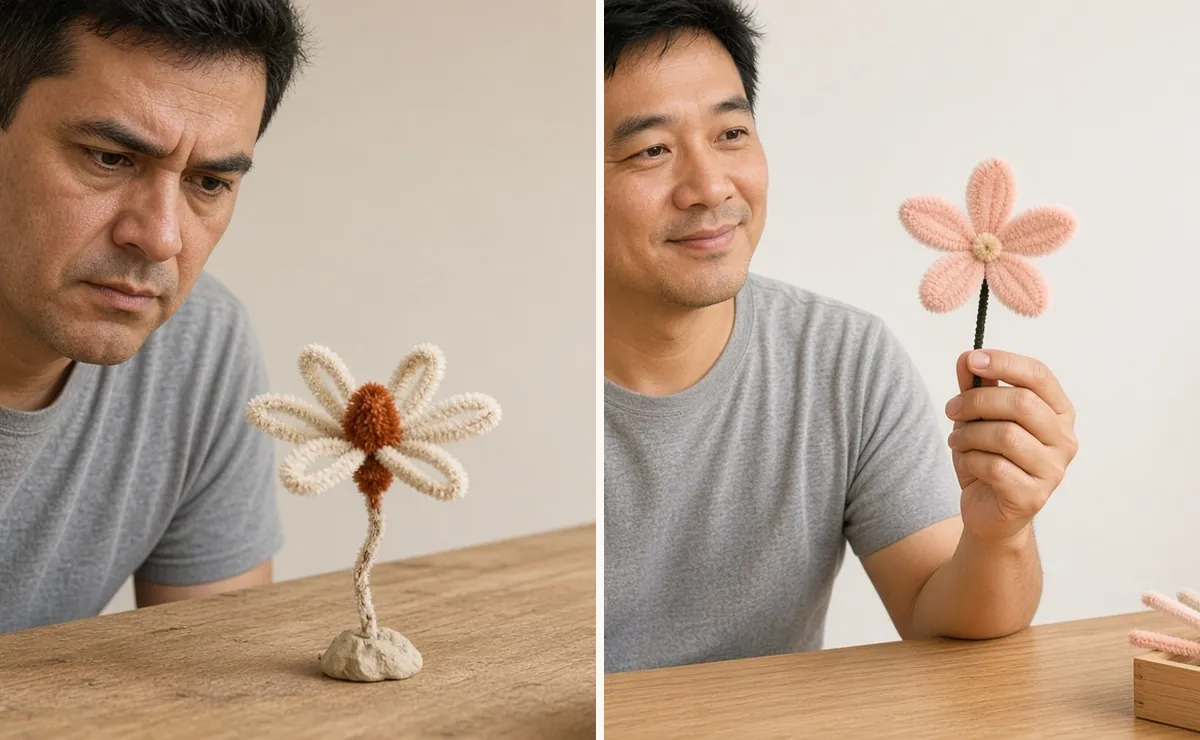
A loose twist. One cross of the wires is not a twist. Petals spin, and the head droops by morning. Use four or five tight turns, then pinch the join flat.
A rose with no tight center. Equal rounds make a disk, not a rose. Keep the center snail smaller than the outer petals, and open the outside only after the middle feels solid.
The wrong stem. Use a 12-inch stem around 6mm thick. Short stems run out before you have a stalk. Jumbo stems will not make a delicate petal. A 6mm pack of 12-inch chenille stems avoids both problems.
Wetting the stems. Damp fingers can pull dye onto your hands and onto a pale petal. Keep the stems dry. If color rubs off while a stem is dry, use that pack for practice, not the vase.
Sharp ends. Fold every tail into the wrap and check with a fingertip before the flower goes near a child or a gift. An adult should do the cutting.
Too many flowers in one jar. Five floppy blooms look crowded, not full. Three good ones, in an odd count with a little height difference, read as an arrangement.
Where to Use Pipe Cleaner Flowers at Home
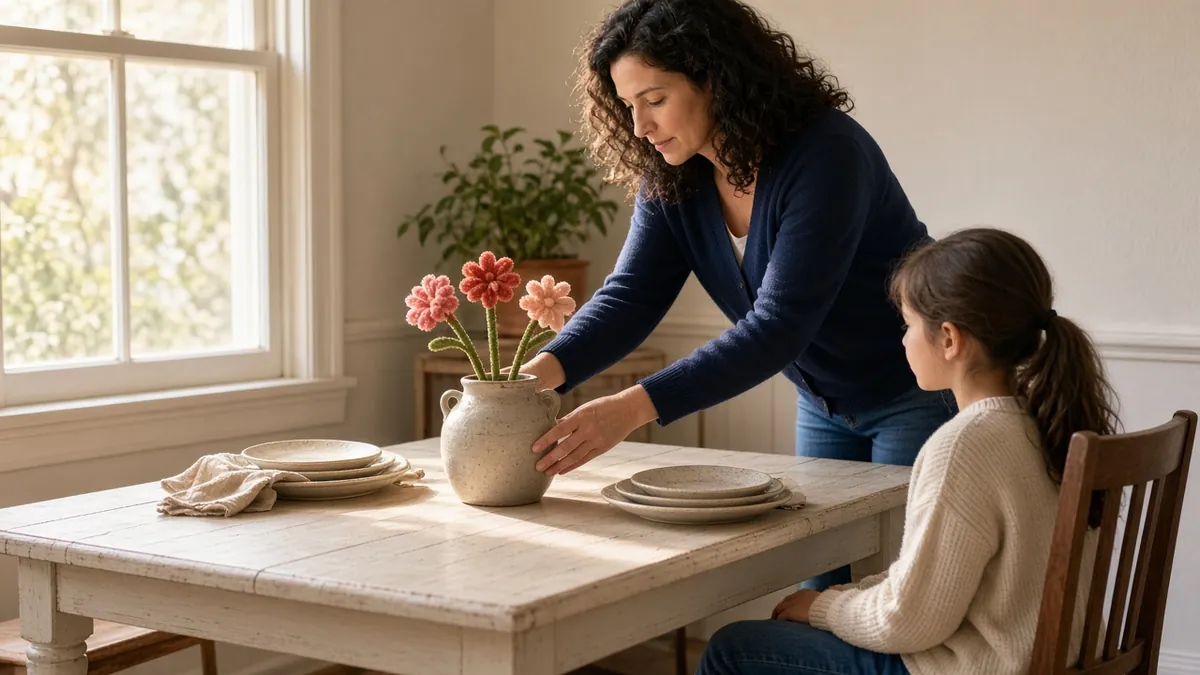
A bud vase. Use three or five stems, tallest slightly off center, blooms about an inch apart in height. A small ceramic vase on a nightstand, a kitchen windowsill, or a desk is enough.
A gift topper. Tape one bloom onto a ribbon. It stays put better than a bow that slides, and the tape hides the wire on kraft paper. One flower is enough. A cluster on a small gift looks top-heavy.
A kids’ table. Use a low jar so it does not tip, and keep the flowers below eye level. Children can help shape petals, and the flowers survive the party because they never need water.
This is the same high-low move as these economy home decor ideas: the piece looks intentional because the shape is right, not because the materials were expensive.
For a shower or birthday table, set a few stems beside the fresh flowers. These bloom bar ideas need a small accent, not a second bouquet.
One stem can fill a bare pocket between pots in these plant wall ideas. The same trick works in wall planters: one bloom beside a trailing plant, not a bunch in the soil.
The Designer’s Take
The flower looks finished when the twist is tight and the petals are a little uneven on purpose. Color is the easy part. Structure is the part people skip, which is why a lot of these blooms never leave the craft box.
Make the basic bloom first. If it stands and the petals do not spin, make the rose. Three stems in a bud vase will get more use than a large bouquet. If you plan to make several, a pipe cleaner flower kit with stems, tape, and wires saves piecing supplies together.
Pipe Cleaner Flower FAQ
How do you make a pipe cleaner flower?
Fold a 12-inch chenille stem in half, wrap it around a pencil to make five loops, and twist the ends together under the loops. Spread the loops into petals, add a small rolled center, then wrap a green stem around the base four times for the stalk.
How many pipe cleaners do you need for one flower?
Two full stems make one basic flower: one for the petals and one green stem for the stalk. Add a short scrap of a third color for the center. A rose uses two colored stems plus one green stem. A carnation uses two colored stems cut into short pieces, plus one green stem.
Do pipe cleaner flowers need glue?
No. A tight twist holds the petals, the center, and the stalk. Glue is optional, and only if you want a bead or button that will not stay on the wire.
How long does it take to make a pipe cleaner flower?
About 15 minutes for the basic bloom once the stems are out. A rose or a carnation takes closer to 25 to 40 minutes. A bud vase of three flowers is usually under an hour.
How long do pipe cleaner flowers last?
They do not wilt. Kept dry and out of hard sun, the shape holds for years. Dust is the real wear. A gentle shake lifts it out of the fibers. If a petal goes flat, pinch it back into an oval.
What is the easiest pipe cleaner flower for beginners?
The five-loop daisy. It uses one colored stem and one green stem, and it teaches the twist you need for every other shape. Make that one before you try a rose.