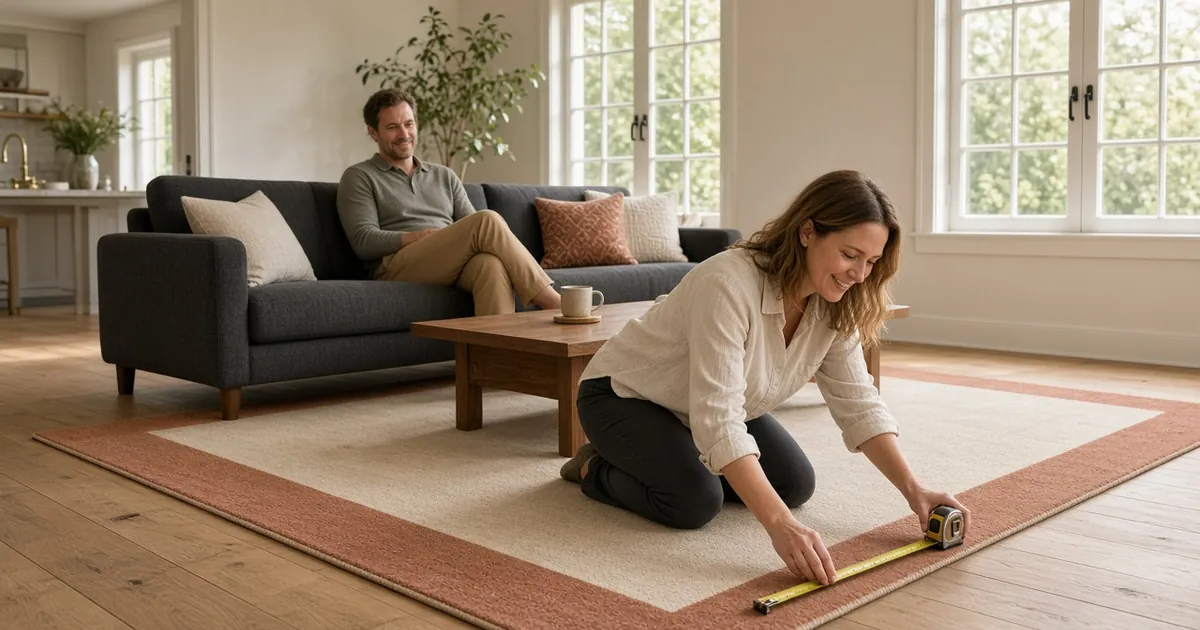
Choosing from a rug sizes chart is less about memorizing numbers and more about how furniture sits on the floor. Measure the room, decide which furniture legs touch the rug, then match a standard size in feet and inches. Most homes land on a 5×7, 8×10, or 9×12, with round rugs and runners filling corners and hallways.
This rug size chart guide covers traditional rug sizes in inches, living room layouts, a full size bed rug size plan, round rugs, and runners. For outdoor sizing notes, see our best outdoor rugs roundup. Pattern lovers can browse our Chinese Art Deco rug ideas after you lock dimensions. Small-space readers may also like living in a studio apartment for how a single rug can zone an open floor plan.
This post contains affiliate links. As an Amazon Associate, I earn from qualifying purchases, at no extra cost to you.
How to Use a Rug Size Chart
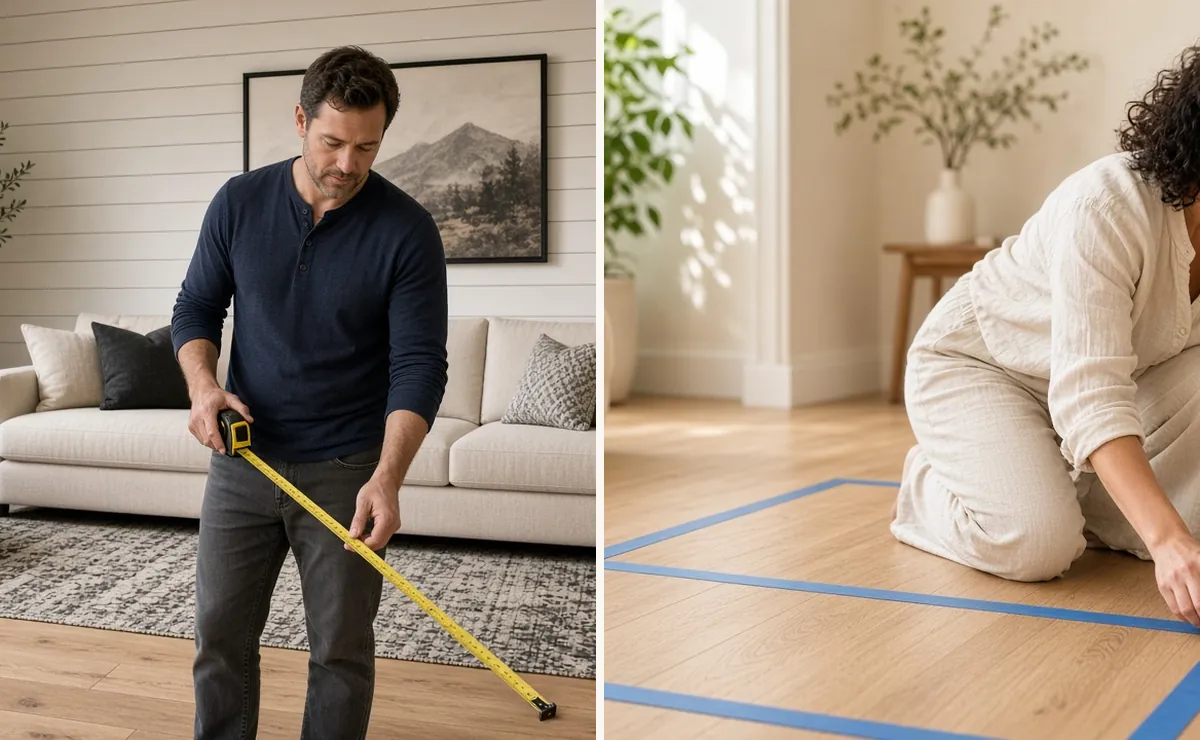
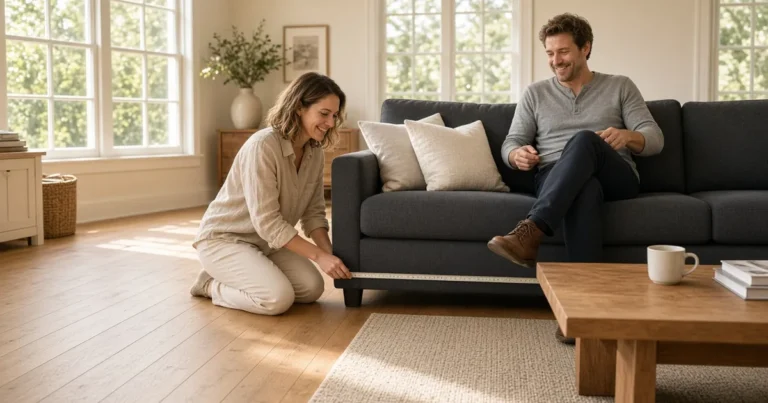
Start with painter tape on the floor. Outline the rug size you are considering, then walk the path for a day. If feet leave the outline before you reach the coffee table or bed, size up. If doors scrape the tape or walkways feel pinched, size down or shift the placement.
Keep 12 to 24 inches of bare floor between the rug edge and the walls when the room allows. That border makes the rug look intentional instead of wall-to-wall carpet. In tight apartments, a smaller border still works if the furniture grouping sits fully or mostly on the rug.
Hidden Pro Tip
Retail labels round to the nearest foot, but actual rugs often measure a few inches under the named size. An 8×10 may arrive closer to 7 feet 10 inches by 9 feet 10 inches. Always check the product dimensions in inches before you buy, especially if your clearance to a doorway is tight.
Traditional Rug Sizes Chart (Feet and Inches)
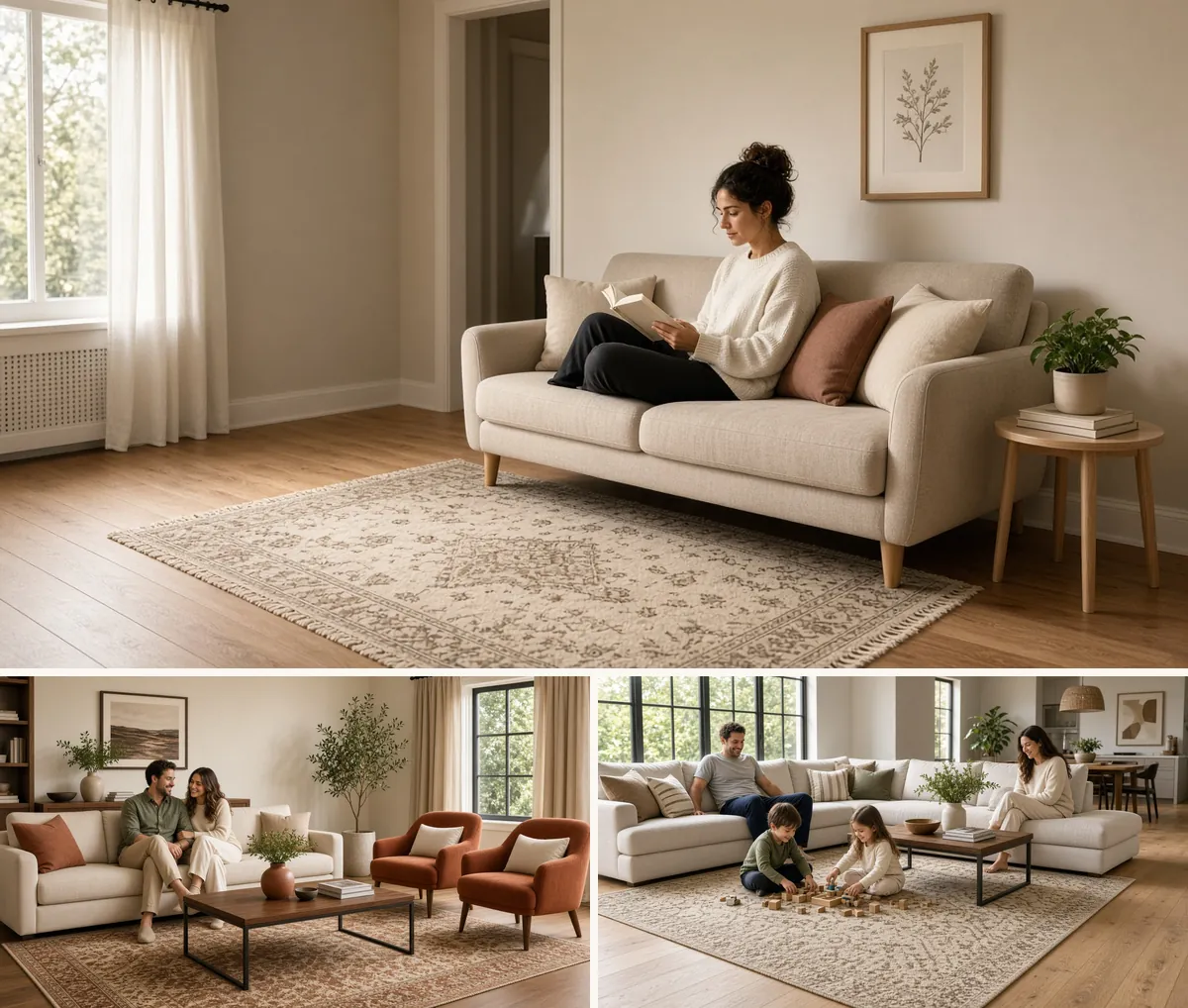
Use this carpet size chart as your quick reference. Sizes are the common US retail names with typical inch equivalents.
| Rug size (ft) | Approx. inches | Sq ft (approx.) | Best starting use |
|---|---|---|---|
| 2×3 | 24″ × 36″ | 6 | Door mat zone, under a small console |
| 3×5 | 36″ × 60″ | 15 | Entry, beside a twin bed, kitchen work zone |
| 4×6 | 48″ × 72″ | 24 | Accent seating, small dining for 2 |
| 5×7 | 60″ × 84″ | 35 | Apartments, twin beds, compact seating |
| 5×8 | 60″ × 96″ | 40 | Small living rooms, full bed starter size |
| 6×9 | 72″ × 108″ | 54 | Full beds, small living rooms |
| 8×10 | 96″ × 120″ | 80 | Most living rooms, queen beds, 4-6 seat dining |
| 9×12 | 108″ × 144″ | 108 | Sectionals, king beds, larger dining |
| 10×14 | 120″ × 168″ | 140 | Large open plans, big sectionals |
Traditional rug sizes also include runners (usually 2 to 3 feet wide and 6 to 14 feet long) and rounds (commonly 4, 5, 6, 8, and 10 feet across). Those get their own charts below.
Living Room Rug Size Guide
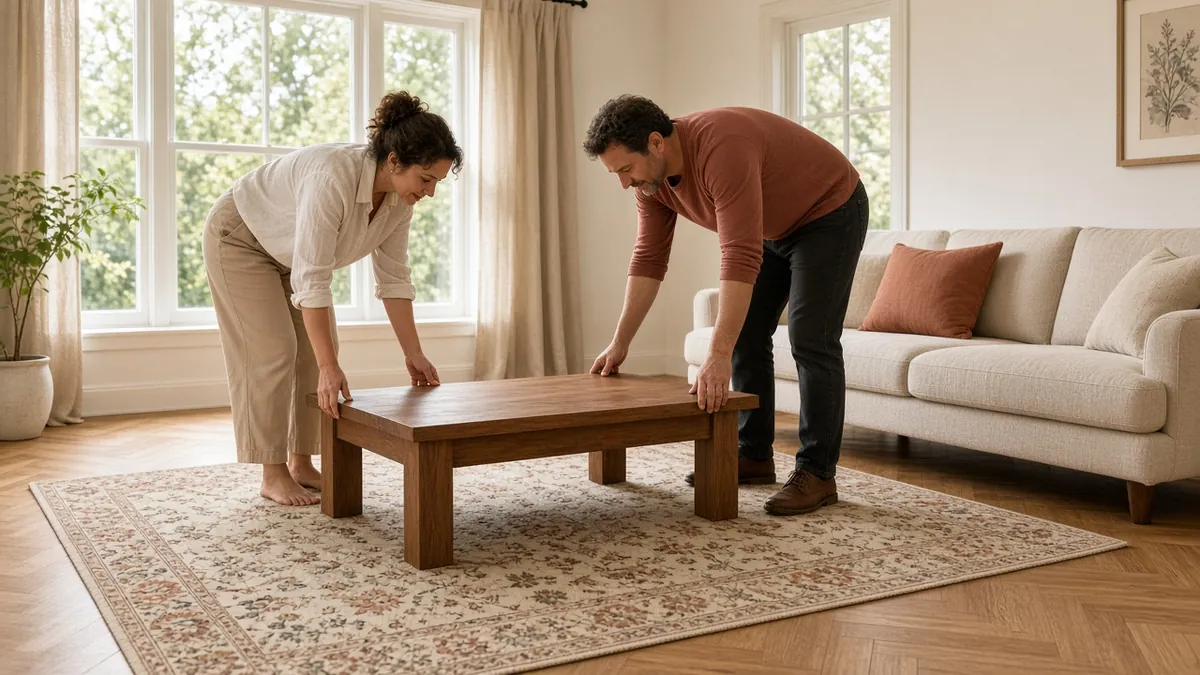
In living rooms, the rug should pull the sofa, chairs, and coffee table into one conversation zone. The most reliable rule: at least the front legs of every major seat sit on the rug. All legs on is even cleaner when the room is large enough for an 8×10 or 9×12.
An 8×10 fits most sofa-and-two-chair layouts. A 9×12 is worth it for sectionals or when you want a generous border around the coffee table. A 5×7 only works if the seating is compact (loveseat plus one chair) or you intentionally float a smaller rug under the coffee table alone, which can look unfinished in a bigger room.
Leave about 12 to 18 inches from the coffee table edge to the sofa so knees and trays have room. If you are still shopping tables, our how to pick a coffee table guide pairs well with these rug proportions. Sofa depth and seating count also affect how much floor you need under the front legs; couch dimensions are worth measuring before you commit to an 8×10 versus 9×12.
Visual weight matters as much as the tape measure. A dark patterned 8×10 can feel heavier than a light solid 9×12. If your sofa is already visually busy, choose a calmer rug field so the room does not feel crowded. If the upholstery is plain, a traditional medallion or soft geometric can add the missing structure without buying new furniture.
Traffic paths should skim the rug edge, not cut across a corner that people trip on. In open-plan spaces, align one long edge of the rug with the sofa back line so the living zone reads as a clear rectangle from the kitchen or entry.
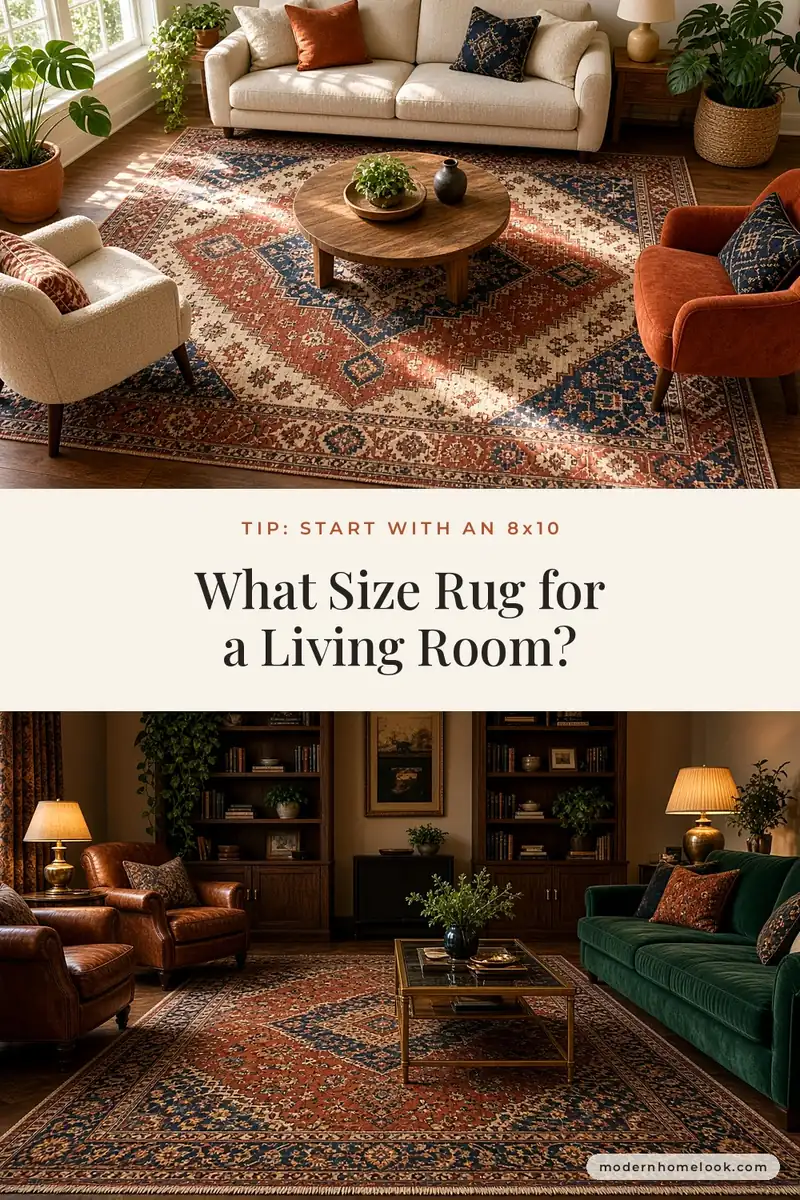
For a practical living room pick, I consistently recommend a washable 8×10 washable area rug with a non-slip backing. Many well-reviewed options land around $60 to $150, which is a smart range for busy homes with kids or pets.
Rug Size Guide for Bedroom (Including Full Bed Rug Size)
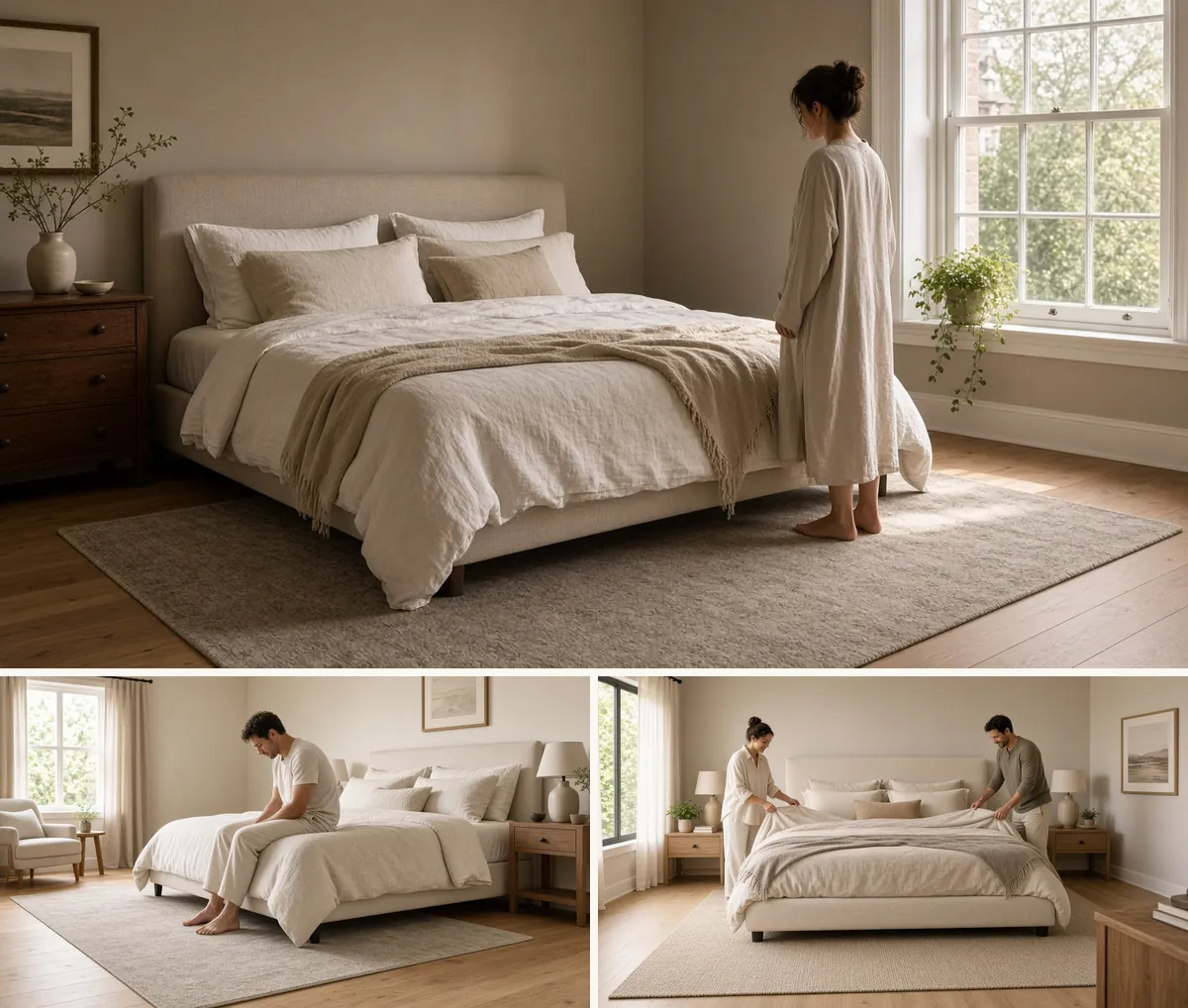
A rug size guide for bedroom layouts usually places the rug under the lower two-thirds of the bed so you step onto soft floor when you get up. Nightstands can sit on or just off the rug. Aim for about 18 to 24 inches of rug showing on both sides and at the foot when the room allows.
| Bed size | Typical mattress (in) | Common rug size | Notes |
|---|---|---|---|
| Twin | 38″ × 75″ | 5×7 or 5×8 | Or two runners beside the bed |
| Full / double | 54″ × 75″ | 6×9 (or 5×8 minimum) | Full bed rug size sweet spot is often 6×9 |
| Queen | 60″ × 80″ | 8×10 | Most versatile under-bed size |
| King | 76″ × 80″ | 9×12 | 8×10 can work in tight rooms |
| California king | 72″ × 84″ | 9×12 | Watch length at the foot |
For a full size bed rug size, a 6×9 usually gives a usable border without crowding a smaller bedroom. A 5×8 can work if you place it horizontally under the lower two-thirds and accept a tighter side margin. If your bedroom styling leans soft and layered, our cozy bedroom ideas post shows how rug tone and texture change the feel once the size is right.
Layering is optional, not required. A flat washable rug under the bed plus a small sheepskin or runner at the foot can soften hard floors without the cost of a custom oversized carpet. Keep pile heights close so the bed frame does not rock, and avoid thick shag under adjustable bases or storage drawers.
Renters should confirm that rubber backings will not stain finished floors. A felt pad under a washable rug often grips enough for carpeted bedrooms while protecting wood. Vacuum both sides occasionally so grit does not sand the finish underneath.
A budget-friendly 5×7 washable area rug is useful under a twin, across the foot of a queen, or in a reading nook. Many solid sellers sit around $25 to $60. When you need more coverage for a king or a large primary, step up to a 9×12 washable area rug, often around $100 to $250 depending on pile and brand.
Round Rug Sizes Chart
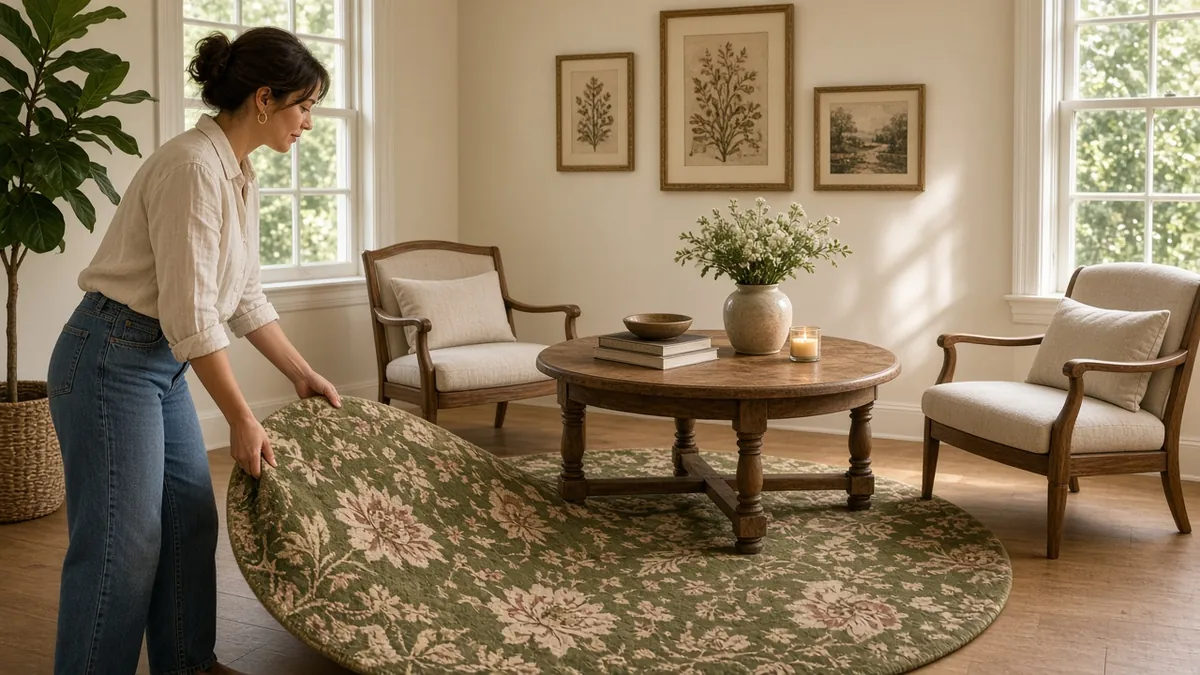
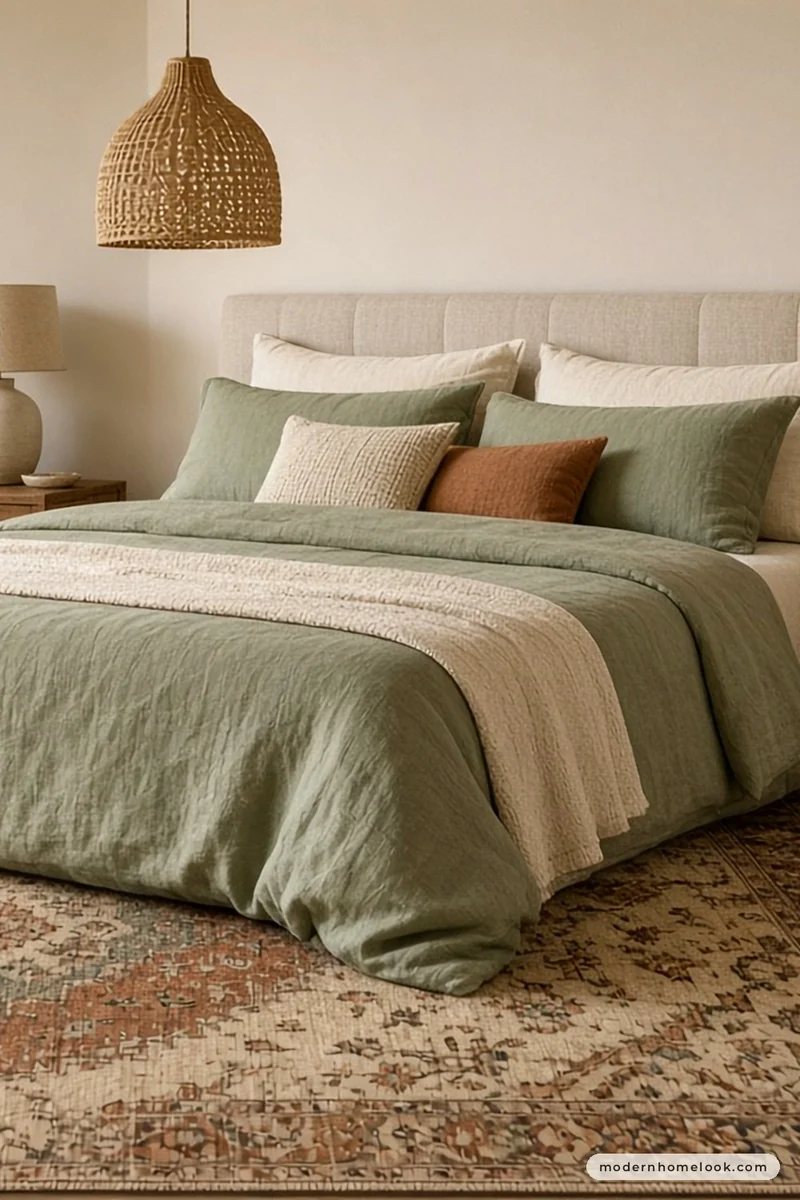
Round rugs calm square rooms and suit round tables. Measure diameter the same way you measure a rectangular rug width: decide how much floor should show beyond the furniture.
| Round diameter | Inches | Best starting use |
|---|---|---|
| 4 ft | 48″ | Small entry, under a side table |
| 5 ft | 60″ | Reading chair, nursery accent |
| 6 ft | 72″ | Breakfast nook, round coffee table seating |
| 8 ft | 96″ | 42-48″ round dining table with chair pull-out |
| 10 ft | 120″ | Large dining or open foyer |
Under a round dining table, leave about 24 inches of rug past the table edge so chairs stay on the rug when pulled out. A 6 foot round washable rug is a flexible living room or bedroom accent; many washable rounds fall around $40 to $100.
Square rooms benefit from round rugs because the curve softens boxy architecture. Place the center of the rug on the visual center of the seating group, not necessarily the geometric center of the room, so the sofa still feels anchored. In foyers, a 5 or 6 foot round under a round pedestal table keeps the entry from looking like a leftover hallway stub.
Kids rooms and play corners often prefer rounds because there is no sharp corner to catch toes during floor play. Choose low pile and washable fibers so crumbs and markers clean up without a specialty cleaner. Setting up a small nursery too? Here are some space saving cribs and cots for small rooms.
Runner Rug Sizes for Hallways and Bedsides

Runners are typically 2 to 3 feet wide. Length should leave a few inches of bare floor at each end of a hallway so the rug does not look jammed into the baseboards. Common ready sizes include 2×6, 2×8, 2×10, and 2×12.
| Runner size | Approx. inches | Best starting use |
|---|---|---|
| 2×6 | 24″ × 72″ | Short hall, galley kitchen strip |
| 2×8 | 24″ × 96″ | Standard hallway, kitchen run |
| 2.5×10 | 30″ × 120″ | Longer hall, wider path |
| 3×12 | 36″ × 144″ | Wide hall, large kitchen |
Beside a bed, two matching runners can replace one large under-bed rug in a narrow room. For hallways and kitchens, a washable 2×8 hallway runner rug with rubber backing is an easy everyday pick, often around $15 to $40.
Kitchen runners should clear appliance doors and dishwasher panels. Measure the open arc of each door before you order a 2×8 versus a 2×6. In laundry rooms, a shorter runner near the machines is safer than a long rug that bunches under rolling hampers.
Stair runners are a different product category with pads and rods; do not assume a flat hallway runner will grip stairs safely. Stick to hallway and bedside uses unless you buy a stair-rated system.
Dining Room and Small-Space Rug Tips
Dining rugs need chair clearance more than perfect centering. Measure the table, then add about 24 to 30 inches on every side. A 4-seat rectangular table often wants an 8×10. A 6-seat table may need a 9×12. Round tables pair cleanly with round rugs of matching scale.
Chair legs should stay on the rug when someone pulls out to sit. If guests constantly catch a chair foot on the rug edge, the rug is too small or the table is too far forward. Low-pile washable styles make sliding chairs easier than thick shag under a dining set.
In studios and small rentals, one correctly sized rug can define the living zone without walls. Prefer an 8×10 floated under the sofa front legs rather than two tiny mats that chop the floor into pieces. Low-pile washable rugs also play nicer with doors and robot vacuums.
If your studio bed and sofa share one room, avoid covering the entire floor with one oversized rug that makes cleaning harder. Use a living-zone rug and a separate bedside runner so each function keeps a clear footprint. That approach also helps when you rearrange furniture seasonally.
Quick Comparison: Popular Washable Rug Sizes
| Product | Size | Price range | Best for | Buy |
|---|---|---|---|---|
| Washable abstract area rug | 5×7 | Around $25-$60 | Twin beds, apartments, accent zones | Amazon |
| Washable vintage floral rug | 8×10 | Around $60-$150 | Most living rooms, queen beds | Amazon |
| Washable vintage floral rug | 9×12 | Around $100-$250 | Sectionals, king beds, larger rooms | Amazon |
| Washable round floral rug | 6 ft round | Around $40-$100 | Round tables, seating nooks | Amazon |
Ratings and exact prices shift, so treat the ranges as shopping brackets. Washable low-pile rugs are thin by design; add a pad if you want more cushion underfoot.
Material and Care Notes That Affect Size Choice
Washable polyester and polypropylene rugs ship folded, so creases are normal for the first days. Larger sizes (8×10 and up) may need a commercial machine for a full wash. If you only have a standard home washer, a 5×7 or runner is easier to launder without a laundromat trip.
Natural fiber rugs such as jute and sisal look expensive but shed and stain differently. They also come in similar foot sizes, yet thickness and edge binding can change how doors clear the floor. Measure pile height if your bedroom or closet doors skim the finish.
Pads add about a quarter inch to a half inch under many rugs. Include that when you check thresholds. A pad can let you size slightly more generously because the rug stays flatter and safer at the edges.
Common Rug Sizing Mistakes
Buying too small is the most frequent miss. A rug that only fits under the coffee table can make the sofa look like it is floating away from the room. Floating all furniture completely off a tiny rug has the same effect.
Ignoring door swing and HVAC vents causes daily friction. Tape the outline, open every door, and confirm vents are not fully covered unless the rug is low enough and the manufacturer allows it.
Mixing outdoor and indoor rules is another trap. Outdoor rugs need drainage and UV resistance; indoor washable rugs need grip on hard floors. Link outdoor sizing to purpose-built outdoor rugs rather than forcing an indoor pad outside.
Matching the rug length to the sofa length exactly can look stiff. Letting the rug extend a little past each sofa arm usually feels more relaxed. On sectionals, prioritize the long chaise side so the chaise foot does not hang awkwardly off the edge.
The Designer’s Take

Measure twice, tape once, then buy the size that keeps furniture visually connected. For most living rooms that means an 8×10. For a full bed, start at 6×9. For king beds and large sectionals, plan on a 9×12. Round and runner sizes are supporting players, not substitutes for an undersized main rug.
When the size is right, even a budget washable rug looks expensive because the proportions do the heavy lifting. Pattern and color come second.
Rug Sizes Chart FAQ
What are the most common rug sizes?
The sizes people buy most are 5×7, 8×10, and 9×12 feet. In inches that is about 60×84, 96×120, and 108×144. Runners around 2×8 and round rugs at 5 or 6 feet are the other everyday options.
What size rug for a living room?
Most living rooms look balanced with an 8×10 rug under the front legs of the sofa and chairs. Use a 9×12 for sectionals or larger rooms. A 5×7 only fits compact seating groups.
What is the full size bed rug size?
A 6×9 rug is the usual full bed rug size when you place it under the lower two-thirds of the bed. A 5×8 can work in a tight room. Aim for about 18 to 24 inches of rug showing on the sides when space allows.
What size rug under a queen bed?
An 8×10 is the standard queen bed rug. Center it so the rug extends beyond both sides and the foot. Nightstands can sit on or just off the rug.
How big should a round rug be for a dining table?
Add about 24 inches of rug past the table edge all around so chairs stay on the rug when pulled out. A 48-inch round table often needs an 8-foot round rug.
Should rug sizes be exact in inches?
Retail names are rounded. Always read the listed length and width in inches, because an 8×10 may measure a few inches smaller. That gap matters near doors and vents.