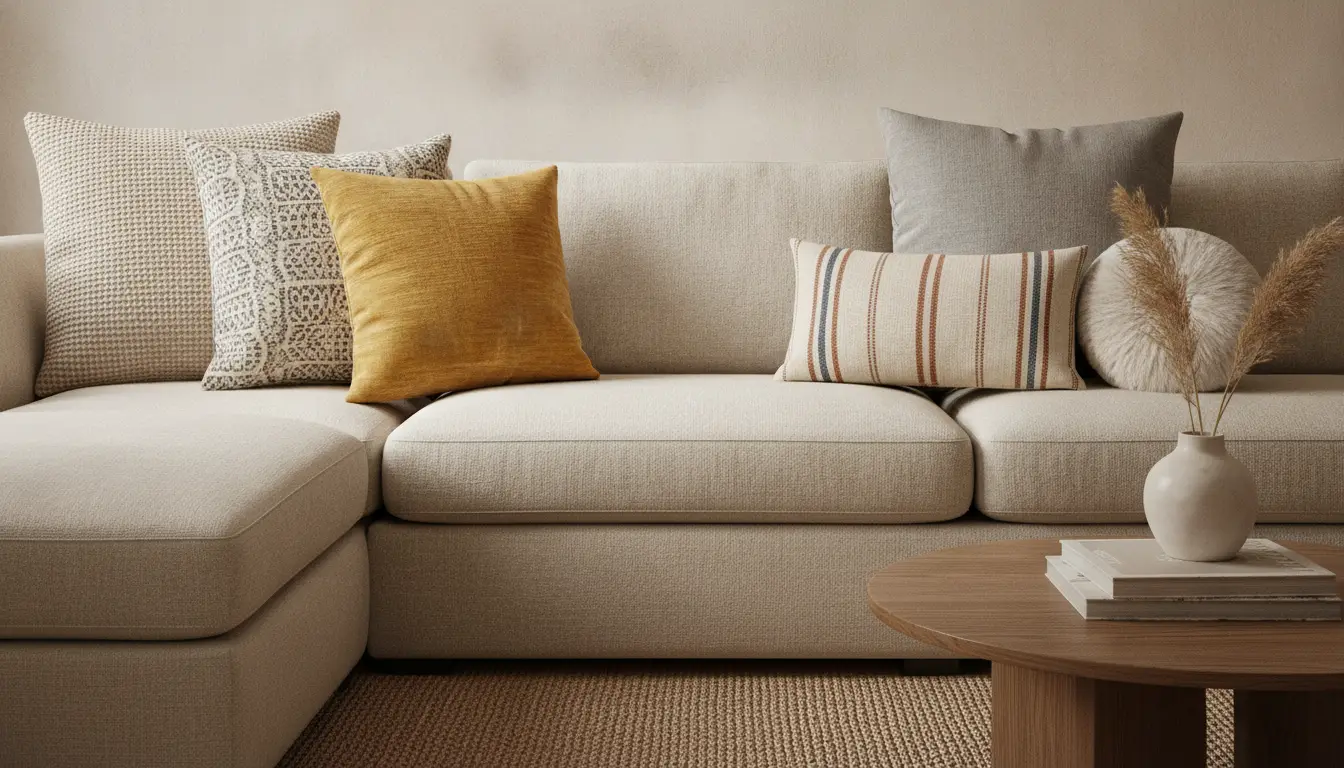
Throw pillows may seem like a small decorating detail, but they have a surprisingly big impact on how a living room feels. The right pillow arrangement can make a basic sofa look custom-designed, add warmth to a neutral space, and create the layered, expensive-looking aesthetic often seen in designer homes.
The secret isn’t buying more pillows. It’s choosing the right combination of sizes, textures, colors, and placement. A thoughtfully styled pillow arrangement creates visual balance, adds comfort, and helps tie together the entire room.
Start with the Right Number of Throw Pillows
One of the most common styling mistakes is either overcrowding the sofa or leaving it looking bare.
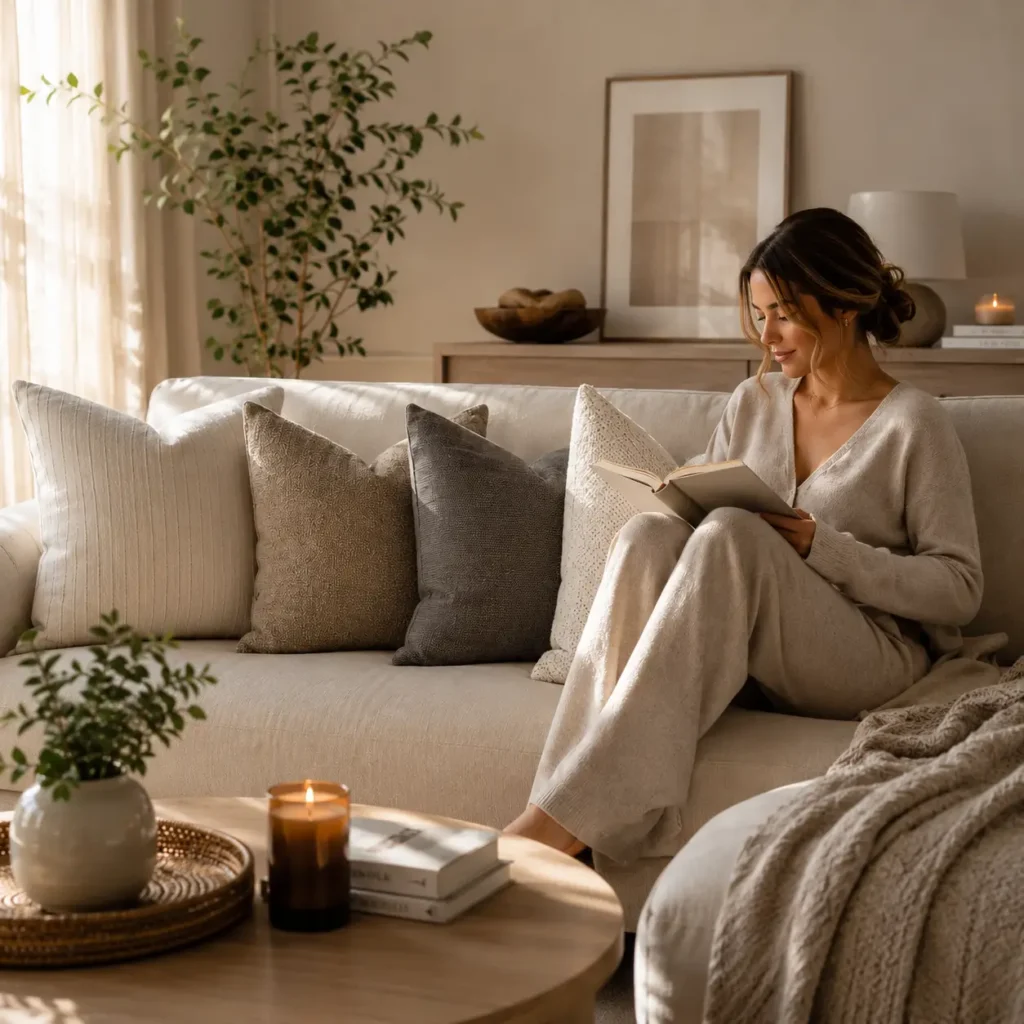
The ideal number depends on the size of your couch and the look you’re trying to achieve.
General Pillow Guidelines by Sofa Size
| Sofa Type | Recommended Number of Pillows |
|---|---|
| Loveseat | 2–4 pillows |
| Standard 3-seat sofa | 4–6 pillows |
| Large sectional | 5–9 pillows |
| Apartment sofa | 3–5 pillows |
For a modern look, fewer pillows often feel cleaner and more intentional. Traditional spaces can usually handle slightly fuller arrangements.
A good rule is to leave enough seating space so the sofa remains comfortable and functional for everyday use.
Hidden Pro Tip: Designers often stop adding pillows one pillow earlier than homeowners expect. Slight negative space helps a sofa feel more elevated and less cluttered.
Build Your Arrangement Using Different Pillow Sizes
Professional-looking pillow styling relies heavily on layering.
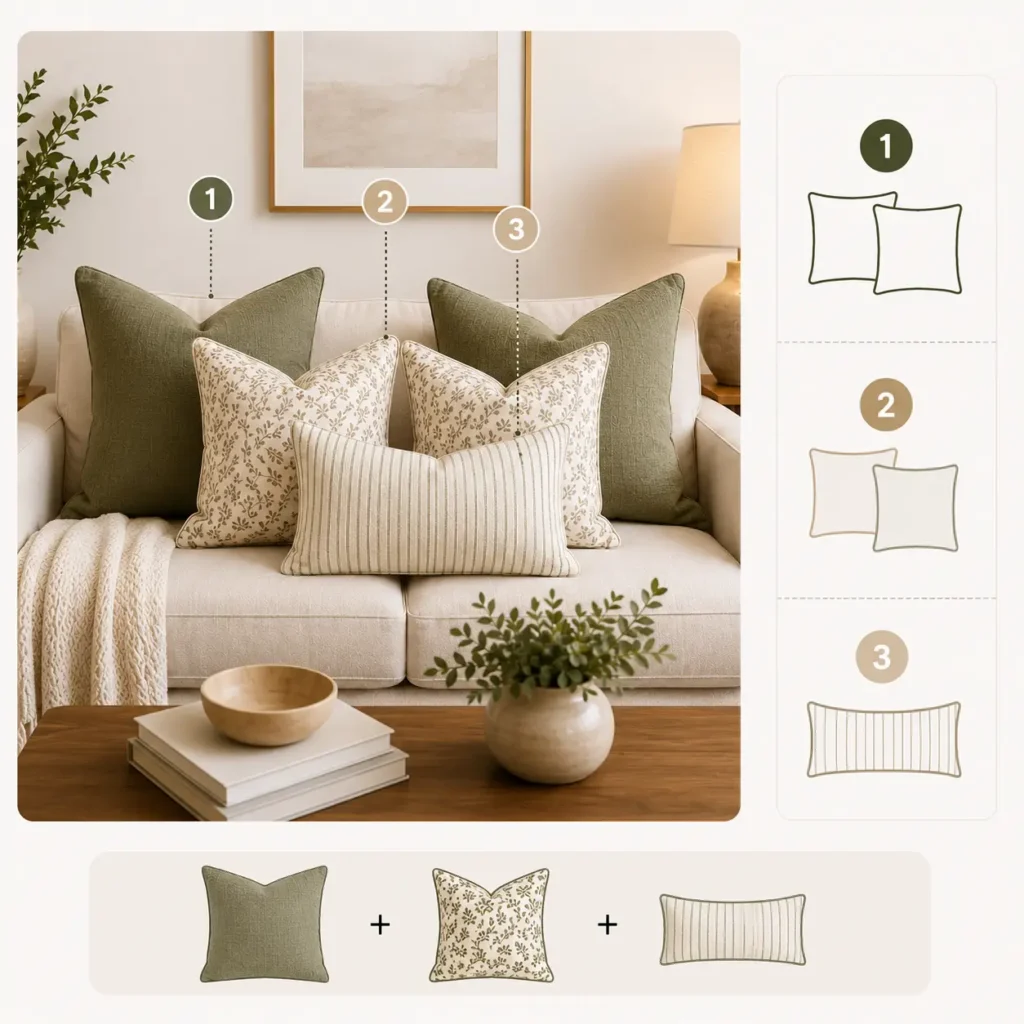
Using pillows that are all the same size can make the arrangement appear flat and uninspired. Mixing sizes creates depth and visual interest.
A common designer formula includes:
- Large pillows at the back
- Medium pillows in the middle
- Smaller accent pillows in front
- Optional lumbar pillow as a finishing layer
For a standard sofa, a layered arrangement might include:
- Two large square pillows
- Two medium square pillows
- One lumbar pillow
This creates a balanced look without overwhelming the furniture.
Why Layering Works
Layering creates dimension. Larger pillows establish structure while smaller accent pillows draw attention and soften the overall arrangement.
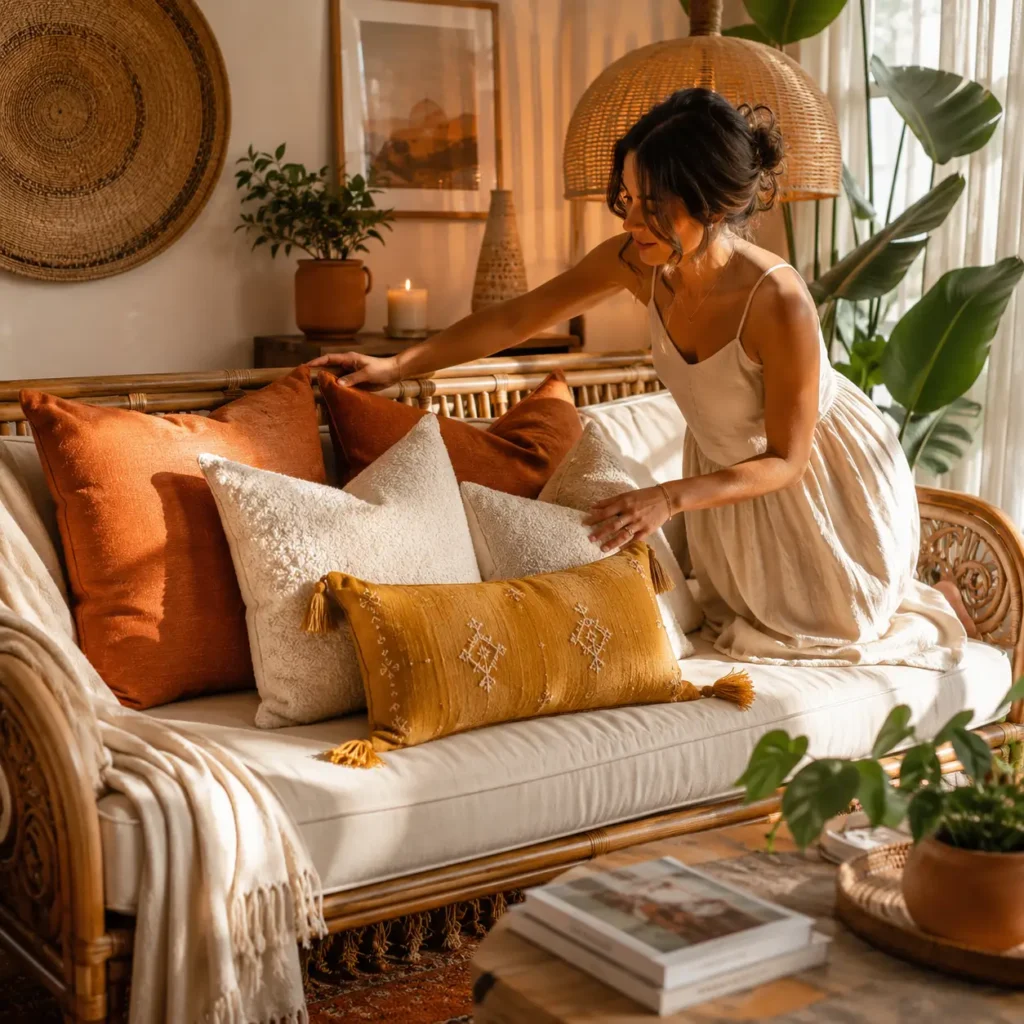
The result feels intentional rather than randomly placed.
Hidden Pro Tip: Slightly oversized pillows often look more luxurious than undersized ones because they fill out the sofa visually and create a plush appearance.
Mix Textures Before You Mix Colors
Many people focus entirely on color and forget about texture.
Texture is often what makes designer pillow combinations feel rich and sophisticated, especially in neutral living rooms.
Consider combining materials such as:
- Linen
- Cotton
- Boucle
- Velvet
- Knit fabrics
- Faux fur
- Woven textiles
Even if every pillow is beige, cream, or gray, varying textures creates movement and depth.
Creating a Luxury Look with Texture
Luxury interiors rarely rely on bold colors alone. Instead, they use layered materials that interact differently with light.
A boucle pillow beside smooth linen instantly creates contrast. A woven pillow next to velvet introduces another layer of visual interest.
This approach works especially well in modern and contemporary interiors where the color palette remains restrained.
Hidden Pro Tip: If your room feels flat, add texture before introducing another color. Texture often solves the problem more effectively than additional patterns.
Choose a Color Story Instead of Random Colors
The best throw pillow styling ideas start with a clear color direction.
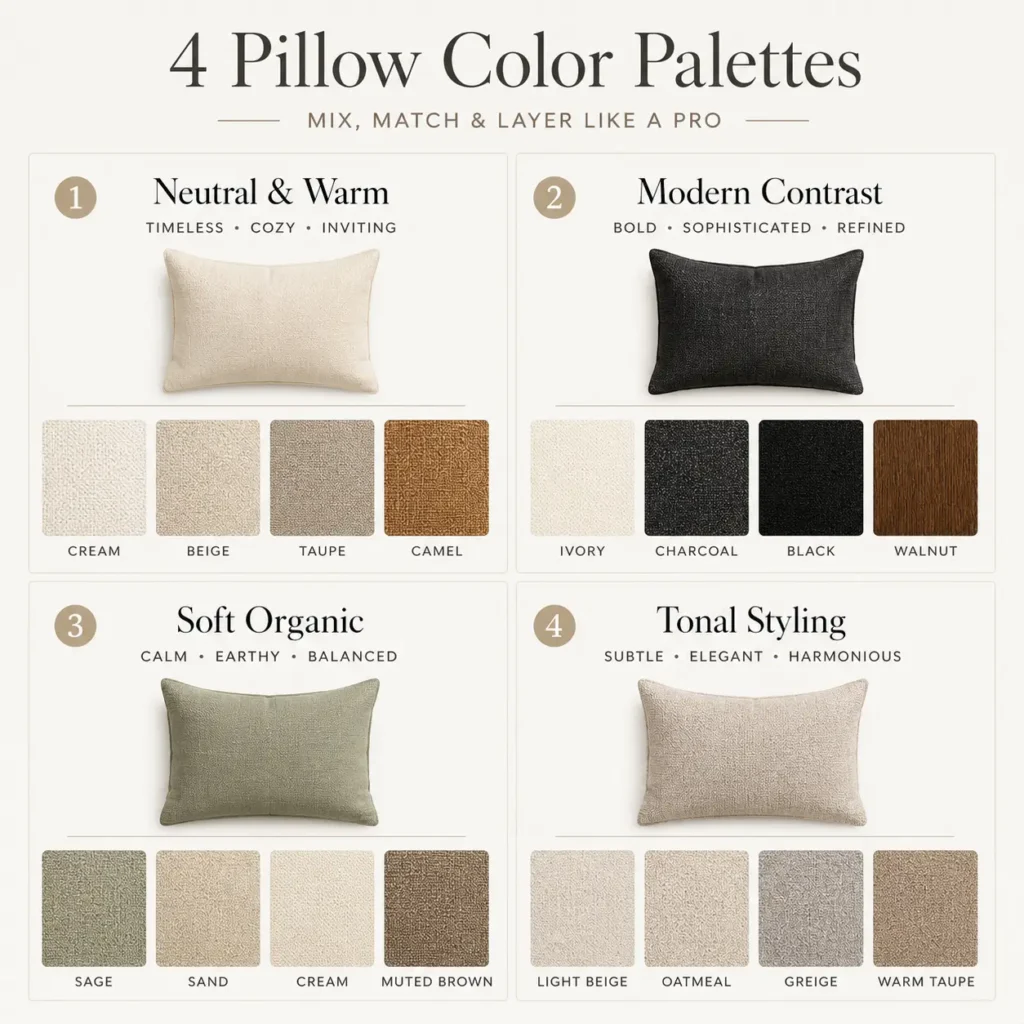
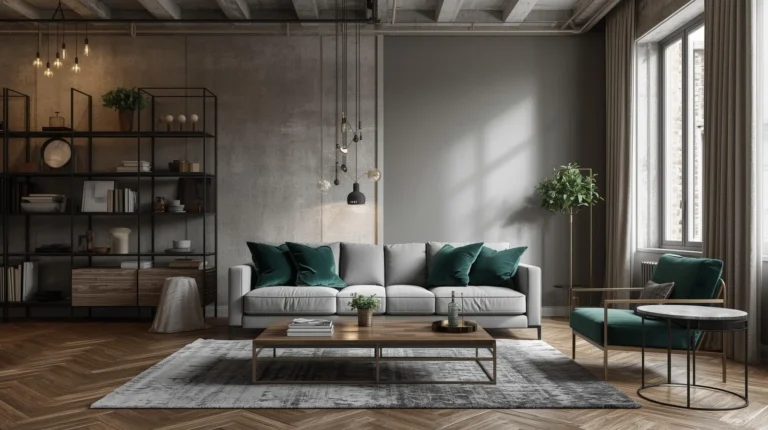
Rather than selecting individual pillows that catch your eye, choose a color palette that complements the room. On a grey sofa, rust and burnt orange pillows are an easy warm palette to start with, and these burnt orange and grey living room ideas show how to carry it through the rest of the space.
Popular combinations include:
Neutral and Warm
- Cream
- Beige
- Taupe
- Camel
- Warm gray
This palette creates a calm and timeless look.
Modern Contrast
- Ivory
- Charcoal
- Black
- Walnut tones
This combination feels clean and sophisticated.
Soft Organic Palette
- Sage green
- Sand
- Cream
- Muted brown
Ideal for cozy modern living rooms.
Tonal Styling
Using different shades of the same color often creates the most designer-inspired result.
For example:
- Light beige
- Oatmeal
- Greige
- Warm taupe
The room feels layered without appearing busy.
Hidden Pro Tip: Pull one secondary color from nearby artwork, rugs, or curtains and repeat it subtly through your pillows. This creates visual cohesion throughout the space.
Incorporate Patterns Without Making the Sofa Feel Busy
Patterns add personality, but too many competing designs can create visual clutter.
A simple designer formula is:
- One large-scale pattern
- One small-scale pattern
- One solid texture
This creates balance while maintaining interest.
Popular Pattern Combinations
- Stripe + solid linen
- Organic abstract + boucle
- Plaid + textured neutral
- Geometric print + woven texture
The key is maintaining a consistent color palette even when mixing patterns.
For smaller apartments and compact living rooms, fewer patterns usually create a cleaner appearance.
Hidden Pro Tip: If you’re unsure whether a pattern works, view the arrangement from across the room. Pillows should enhance the sofa, not become the only thing you notice.
Designer Pillow Arrangements for Different Sofa Styles
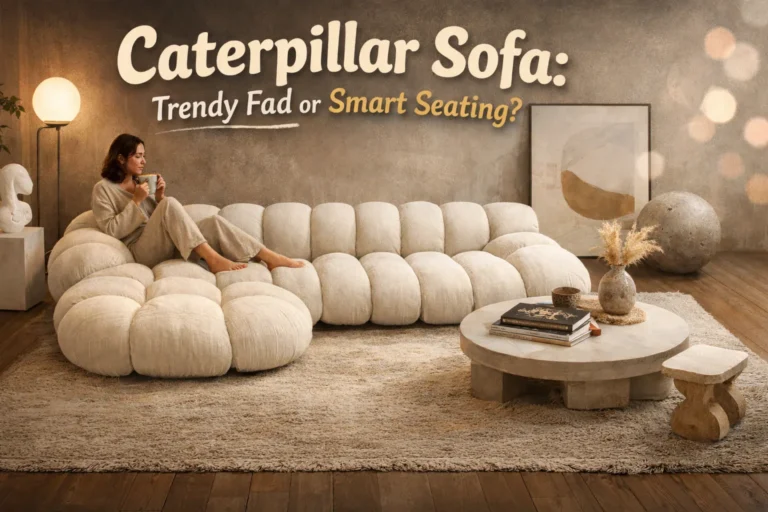
Different sofa shapes benefit from different styling approaches. A low, ribbed caterpillar couch already has plenty of texture, so one or two simple pillows are usually enough.
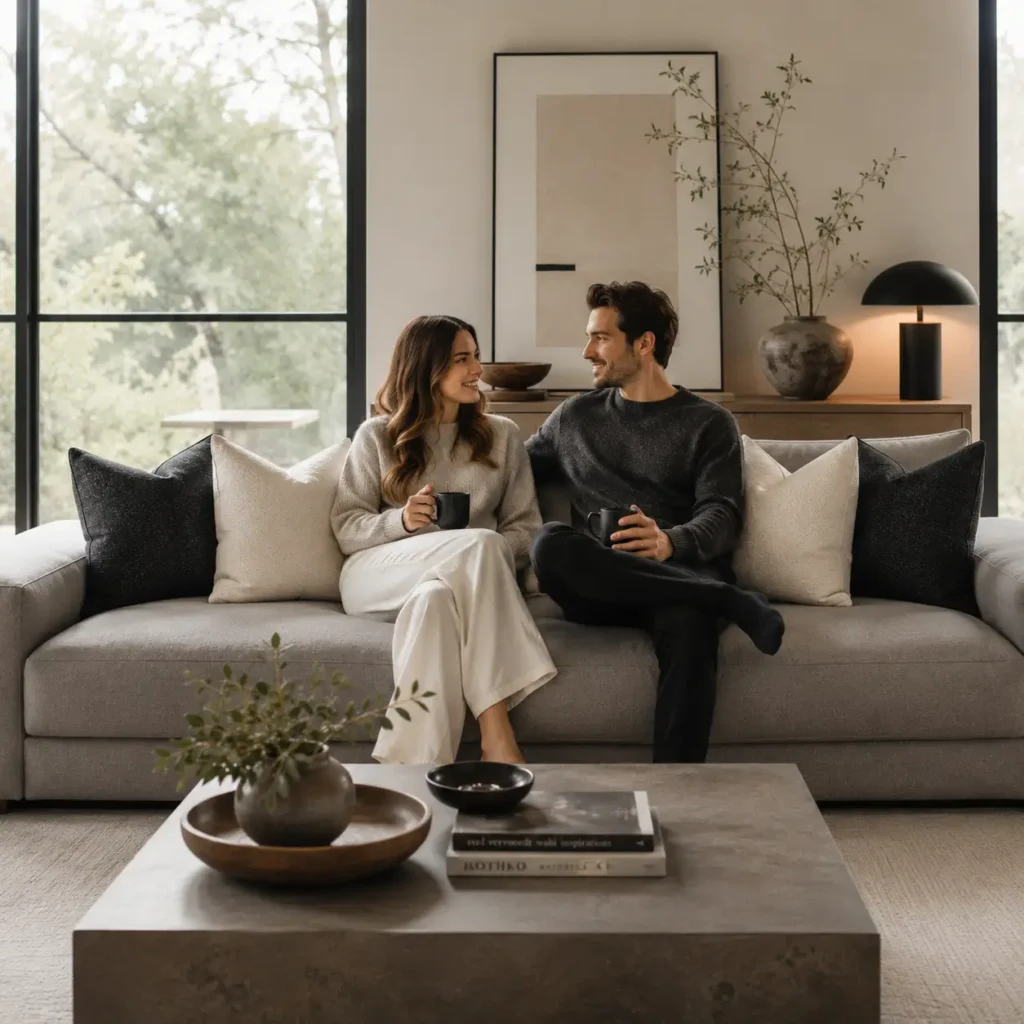
Modern Sofas
Modern sofas generally look best with:
- Symmetrical arrangements
- Neutral color palettes
- Minimal patterns
- Clean lines
Think structured and intentional.
Casual Family Sofas
Family-friendly spaces benefit from:
- Softer layering
- Washable fabrics
- Comfortable textures
- Relaxed asymmetry
The arrangement should still look polished while remaining practical.
Sectionals
Sectionals often need fewer pillows than people expect.
Focus on:
- Corner emphasis
- Larger pillow sizes
- Consistent color palette
- Clear visual balance
Too many pillows can quickly make a sectional feel crowded.
Apartment Sofas
Smaller sofas require restraint.
Stick to:
- Three to five pillows
- Light color palettes
- Simple layering
- Minimal bulk
This helps preserve visual space.
Hidden Pro Tip: On smaller sofas, replacing one square pillow with a lumbar pillow often makes the arrangement feel more custom and less crowded.
Consider Real-Life Functionality
Beautiful pillow styling should still support everyday living.

If you have children, pets, or frequently host guests, prioritize practicality alongside aesthetics.
Look for:
- Removable covers
- Durable fabrics
- Easy-to-clean materials
- Medium-density inserts
Avoid arrangements that require constant adjustment throughout the day.
Pillow Styling for Pet Owners
Pet-friendly homes often benefit from:
- Textured fabrics that hide hair
- Mid-tone colors rather than bright white
- Machine-washable covers
- Durable woven materials
Pillow Styling for Busy Families
Family spaces typically perform better with:
- Fewer decorative pillows
- Practical fabrics
- Flexible arrangements
- Comfortable support
A stylish room should still feel livable.
Hidden Pro Tip: Feather-down inserts create the signature designer “karate chop” look, but high-quality alternative inserts often maintain their shape better in busy households.
Common Throw Pillow Styling Mistakes
Even beautiful pillows can look awkward if they’re arranged incorrectly.
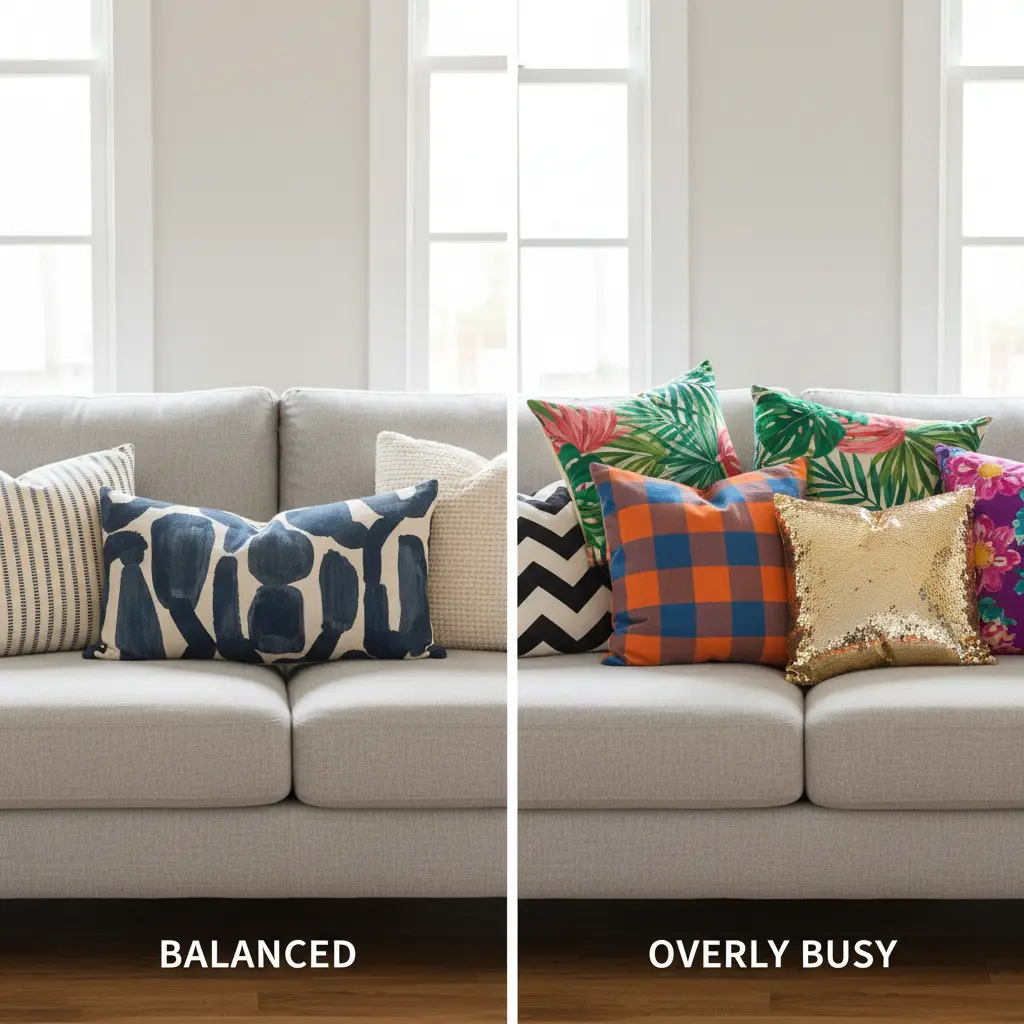
Watch out for these common mistakes:
- Using all the same size pillows
- Choosing pillows that are too small
- Mixing too many unrelated colors
- Overloading the sofa
- Ignoring texture
- Matching every pillow perfectly
The goal is balance, not perfection.
Rooms feel most inviting when they appear curated rather than overly coordinated.
The Designer’s Take
The best throw pillow styling is less about following strict formulas and more about creating balance. Start with the right number of pillows, layer different sizes, prioritize texture, and build around a cohesive color story.
Most designer-worthy living rooms use fewer pillows than people expect, but those pillows work harder through thoughtful proportions, texture variation, and intentional placement.
If you’re updating your sofa styling, focus first on texture and scale before adding bold colors or patterns. Small adjustments often create the biggest visual impact, helping your living room feel warmer, more polished, and effortlessly put together.
FAQs
How many throw pillows should be on a couch?
Most couches look best with 3–6 throw pillows, depending on their size. The goal is to add comfort and style without taking up too much seating space.
What is the standard throw pillow size?
The most common throw pillow size is 18×18 or 20×20 inches. Larger sofas often benefit from 22×22-inch pillows for a fuller, more luxurious look.
How do I mix and match throw pillows?
Mix throw pillows by combining different sizes, textures, and patterns while keeping a consistent color palette. A balanced mix creates depth without making the sofa feel busy.
Should throw pillows match?
No, throw pillows don’t need to match exactly. Designer-inspired arrangements usually combine complementary colors, textures, and patterns for a more layered and curated look.
How do I style pillows on a sectional?
Start with larger pillows in the corners, then layer smaller accent pillows toward the center. Keep the arrangement balanced and avoid overcrowding the sectional so it remains comfortable and functional.