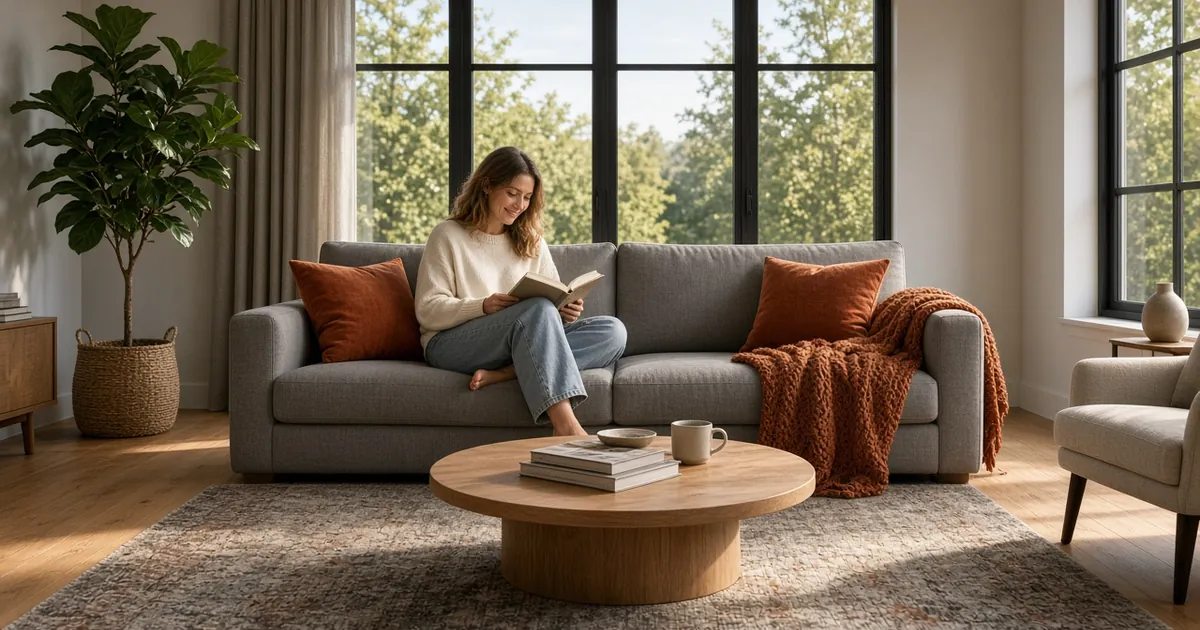
A grey and orange living room is one of those pairings that feels instantly warm without shouting. Grey gives you a calm, grown-up base, and orange brings the glow of a fireplace or an autumn afternoon. Get the balance right, and the room looks layered and expensive. Get it wrong, and it tips into a sports-team color scheme.
The good news is that the balance is easy to learn. Below are 12 grey and orange living room ideas, from a quick pillow swap to full palettes for mid-century, cottage, and Scandi homes, plus the proportions, shades, and small-space tricks that make this combination work. If you already own a grey couch, this is the perfect companion to our grey sofa living room ideas, with the focus firmly on how to bring orange in well.
This post contains affiliate links. As an Amazon Associate, I earn from qualifying purchases, at no extra cost to you.
Why Grey and Orange Work So Well Together
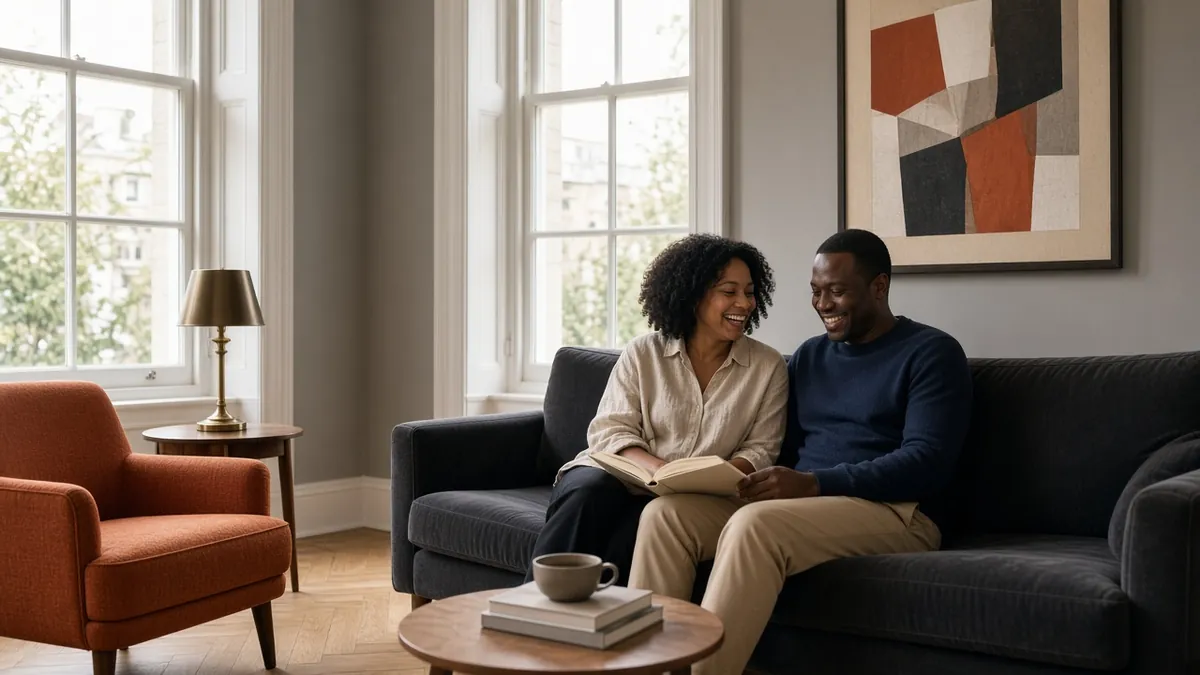
Orange sits opposite blue on the color wheel, and many greys carry a slightly blue or green undertone. That quiet contrast is why a burnt orange cushion looks so rich against a cool grey sofa. Grey also acts as a buffer. It tones down orange’s energy, so you get warmth and personality without the room feeling busy.
Think of it as a partnership where grey does most of the work. A classic designer guideline is the 60-30-10 split: about 60 percent of the room in your main neutral (grey walls, sofa, or rug), 30 percent in a supporting shade (white, cream, or wood), and 10 percent in the accent color. With orange, I often push the accent closer to 15 or 20 percent once the room has plenty of texture, but rarely more.
Pick Your Grey First
Your grey sets the mood. Cool greys with blue undertones, like slate and charcoal, create crisp contrast and suit modern rooms. Warm greys and greige, which lean slightly beige, feel softer and cozier, and they are more forgiving in north-facing rooms that get cooler light. Hold a paint swatch or fabric sample next to your orange piece in daylight and again under lamplight before you commit.
Choose the Right Shade of Orange
Bright pumpkin orange is the hardest to live with. The shades that look most expensive are the muted, earthy ones: burnt orange, rust, terracotta, cognac, and soft apricot. Burnt orange and grey together feel classic and a little retro, terracotta leans relaxed and Mediterranean, and apricot reads light and fresh in a small or dim room.
Start Small: Orange Accents on a Grey Sofa
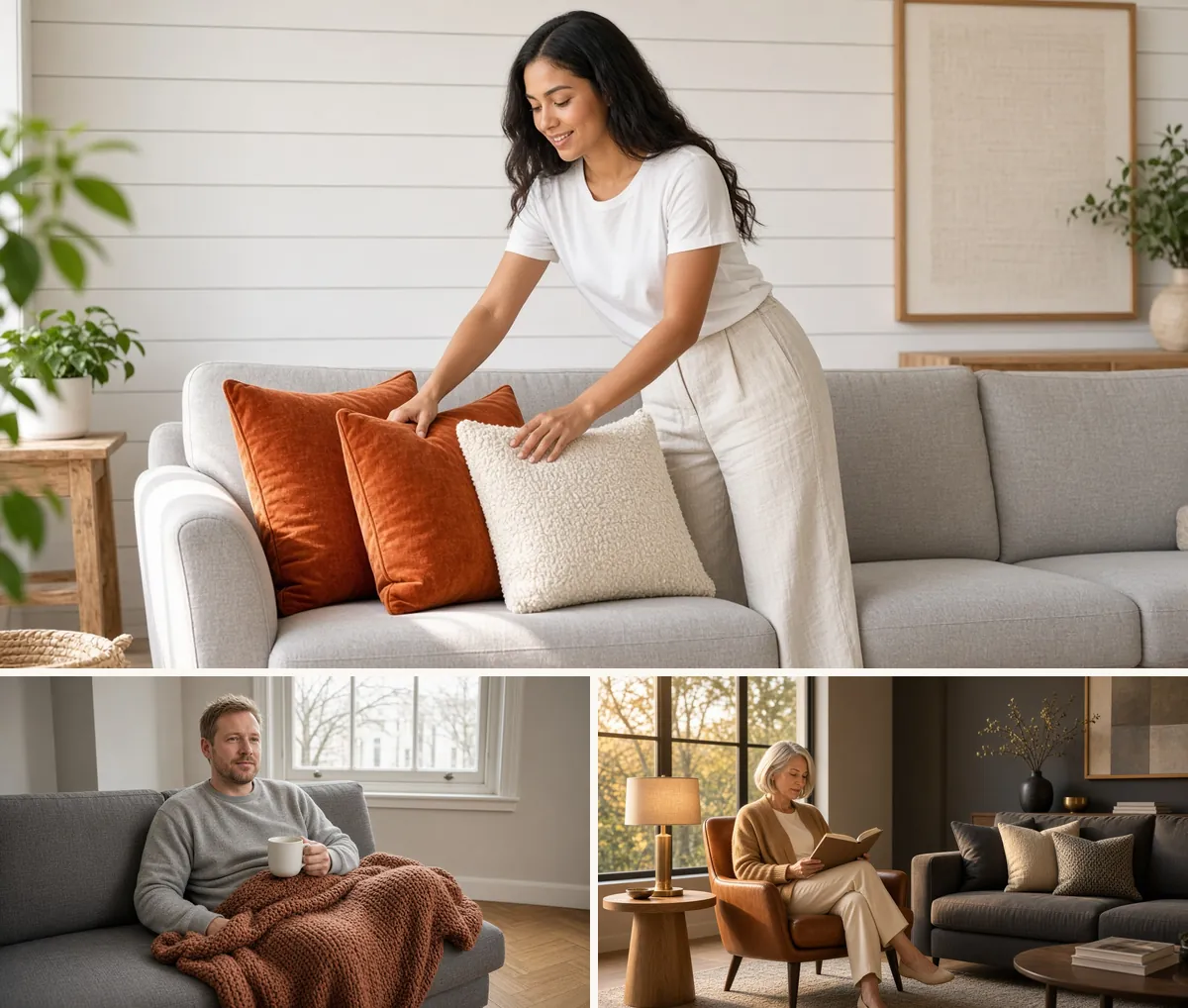
If you are not sure how much orange you want, begin with pieces you can move, wash, or swap. These three ideas cost little, take minutes, and tell you quickly whether you love the look.
1. Burnt Orange Velvet Pillows
Pillows are the easiest way to test the palette. I consistently recommend burnt orange velvet pillow covers because velvet catches the light and makes a budget sofa look richer. Covers are also washable and cheap to replace, which matters in a home with kids or pets.
For a standard three-seat sofa, try two 22-inch pillows in burnt orange at the ends, then one or two smaller pillows in grey, cream, or a subtle pattern in front. Pairs of good velvet covers usually cost around $10 to $30. Our guide on how to style throw pillows like a designer covers sizes and layering in more detail.
2. A Chunky Knit Throw in Rust
A throw adds orange and texture in one move. Drape it over one arm of the sofa or fold it in thirds across a corner rather than spreading it flat, so it looks casual rather than staged. A burnt orange chunky knit throw is a smart budget buy, and most sit around $25 to $60. Chunky chenille knits are cozy, but loose loops can snag on pet claws, so a tighter cable knit is the safer pick if you have a cat.
3. A Cognac or Rust Accent Chair
One accent chair in cognac leather, faux leather, or rust velvet gives the room a clear anchor. Place it across from or at an angle to the sofa, ideally with a small side table and a lamp, so it becomes a real reading spot. Budget chairs usually run around $150 to $400, while solid-wood frames with leather upholstery cost well above that. It is worth the splurge if the chair will be used every day.
Go Bigger: Curtains, Rugs, and Walls
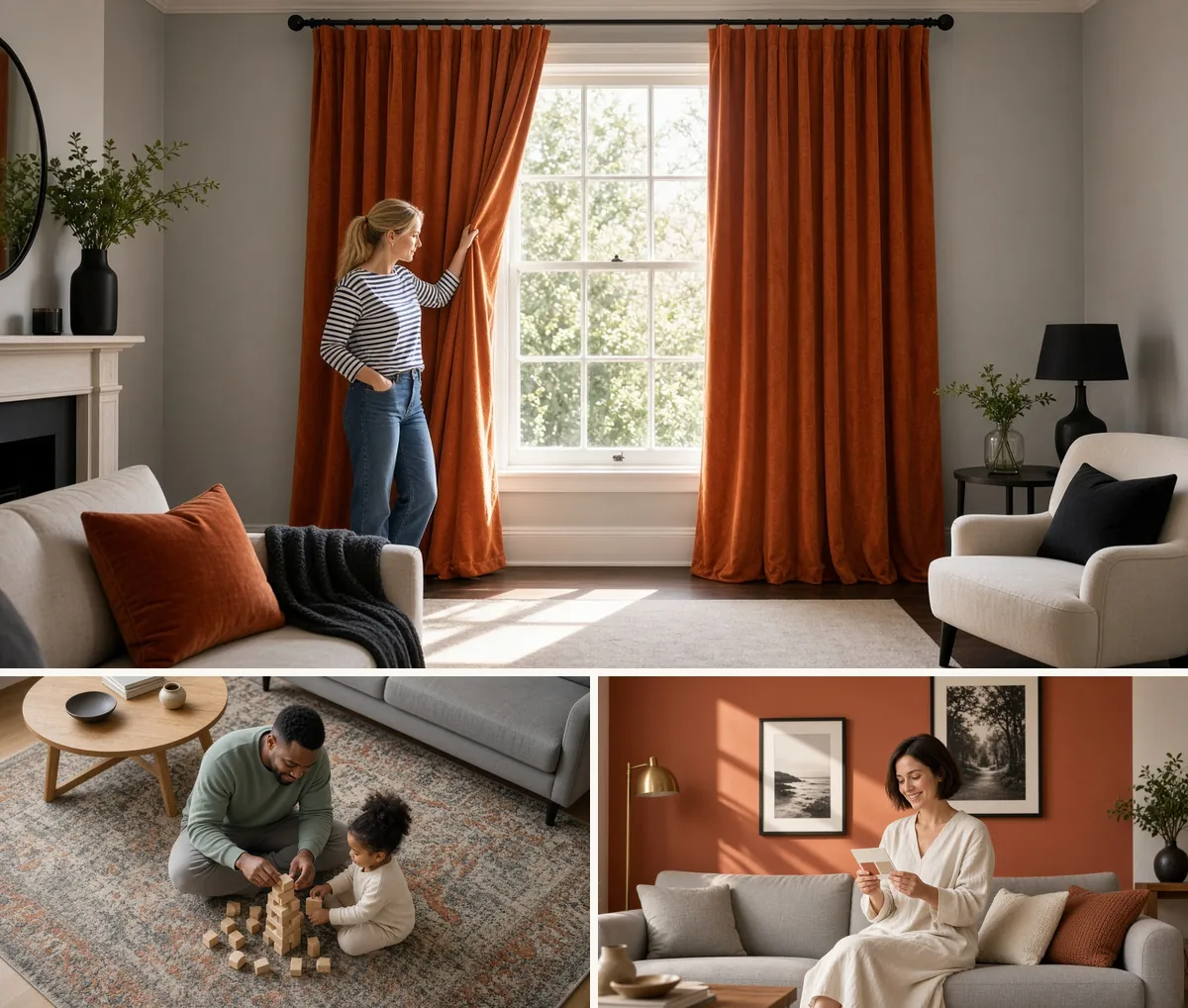
Once you know you like the pairing, larger surfaces let you commit. These pieces carry more visual weight, so repeat the orange at least once elsewhere in the room to keep it from looking random.
4. Rust Velvet Curtains
Curtains bring color in at eye level and frame the view, which makes them one of the most effective places for orange. Burnt orange velvet curtains look far more expensive than they are, and a pair of panels typically costs around $25 to $80.
Placement matters as much as color. Mount the rod 4 to 6 inches below the ceiling or at least halfway between the window frame and the ceiling, and extend it 8 to 12 inches past the frame on each side. The panels should just touch the floor, and their combined width should be about twice the width of the window, so they look full when closed.
5. A Grey and Orange Rug to Tie It Together
A patterned rug that already contains both colors does the coordinating for you. Faded, vintage-style designs are especially forgiving, because the soft pattern hides crumbs, paw prints, and daily wear. A washable grey and orange vintage rug is my go-to for family rooms, with 8×10 sizes usually landing around $60 to $250.
For most living rooms, an 8×10 lets at least the front legs of the sofa and chairs sit on the rug, which connects the seating into one zone. Leave roughly 12 to 18 inches of bare floor between the rug and the walls. Then keep the coffee table about 14 to 18 inches from the sofa, and see our guide to picking a coffee table for size and shape.
6. A Terracotta Accent Wall
Paint is the cheapest big change you can make. A terracotta or clay-toned wall behind a grey sofa creates instant depth, especially in rooms with good natural light. Choose a muted, slightly brown orange rather than a clear bright one, and use a matte or eggshell finish so the color looks soft and chalky. If one wall feels too bold, paint the back of built-in shelves or the inside of an alcove instead.
Grey and Orange Living Room Palettes by Style
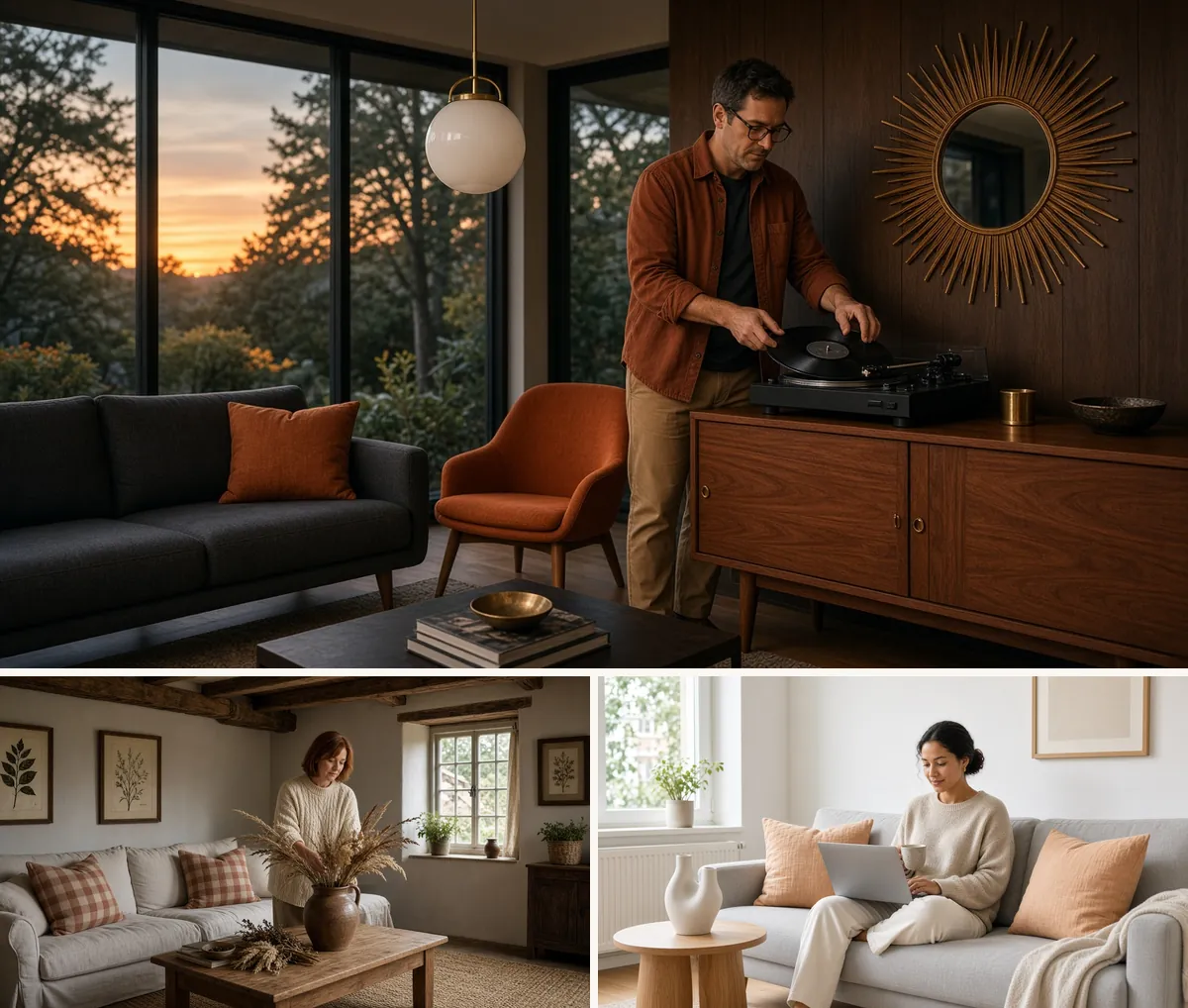
The same two colors can look completely different depending on the materials around them. Here are three combinations that feel intentional rather than thrown together.
7. Mid-Century Modern: Charcoal, Burnt Orange, and Walnut
This is the most natural home for a burnt orange and gray living room. Pair a charcoal sofa with walnut furniture on tapered legs, a burnt orange chair or pillows, and brass or black metal accents. Keep walls warm white so the wood and orange stand out. A sunburst mirror or a globe pendant finishes the look without tipping into a theme.
8. Cozy Cottage: Soft Grey, Terracotta, and Oak
For a softer grey burnt orange living room, think British cottage. Use a pale warm grey on the walls, a linen slipcovered sofa, oak or pine furniture, and terracotta in plain or checked fabrics. Add a jute rug, framed botanical prints, and a few earthenware pots. The orange feels rustic here, like old clay tiles, and the whole room reads relaxed and lived in.
9. Scandi Minimal: Pale Grey and Apricot
If you love calm, light rooms, swap burnt orange for soft apricot or peach. Pair it with pale grey walls, light oak floors, white linen, and one or two sculptural ceramic pieces. The orange becomes a gentle warmth rather than a statement, which also makes this version of a gray orange living room ideal for rentals with white walls you cannot paint.
Small Space and Renter-Friendly Ideas
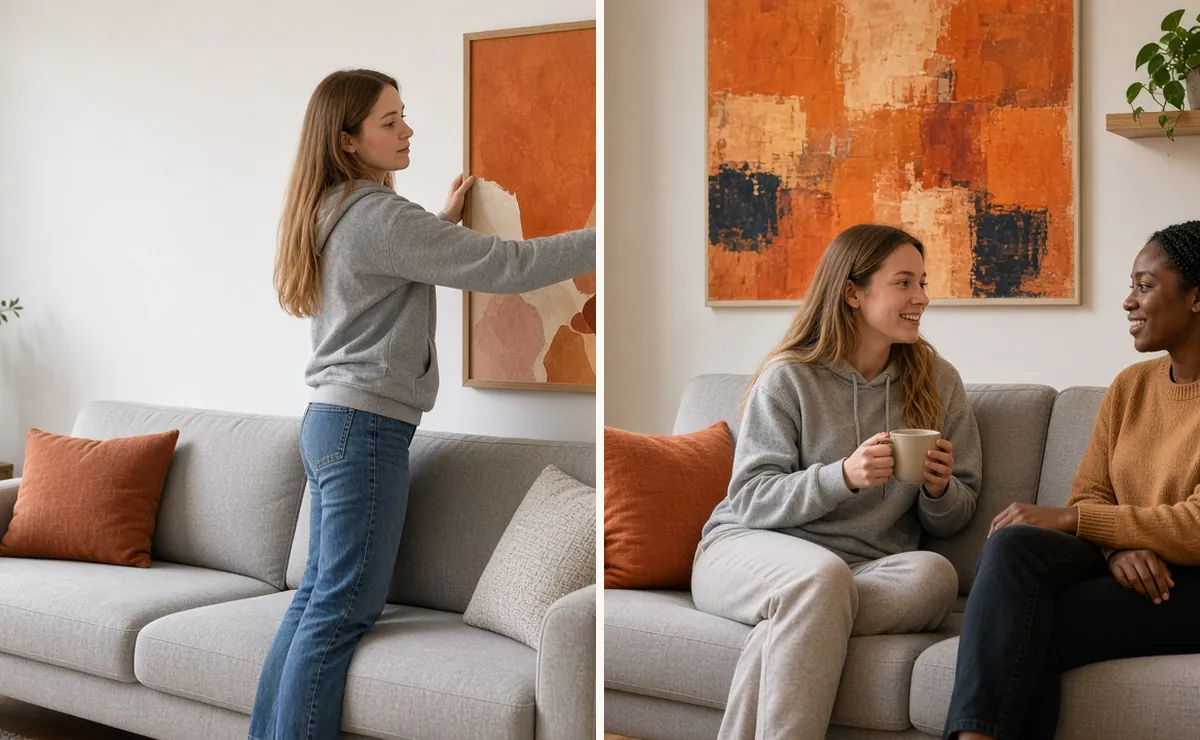
Orange and grey living room schemes work beautifully in small spaces when you control where the color lands. The goal is warmth without visual clutter.
10. Keep the Orange at Eye Level
In a small room, place orange on pillows, art, lampshades, and curtains rather than on a large rug or a big sofa. Your eye travels up, the floor stays calm, and the room feels taller and larger. A light grey rug and a sofa on raised legs help too, because seeing floor underneath furniture makes a space feel more open. Our studio apartment decorating ideas have more layout tricks for tight footprints.
11. Renter-Friendly Swaps
You do not need to paint to get this look. Try a large orange-toned art print, removable wallpaper on one small wall, a rust lampshade, or a slipcover on an existing chair. Everything comes with you when you move. For more low-cost upgrades, see these economy home decor ideas.
12. Bring In Plants and Natural Texture
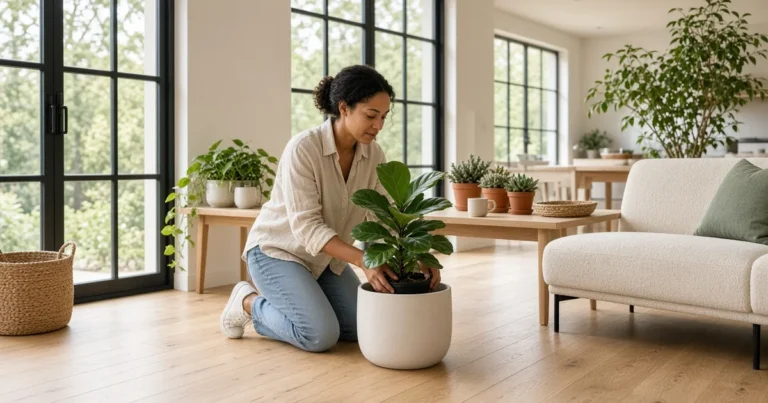
Green is orange’s quiet best friend. A tall leafy plant, a trailing pothos on a shelf, or a bowl of eucalyptus softens the grey and makes the orange feel natural rather than bold. Add woven baskets, a rattan side table, or a linen throw, and the room gains depth without extra color. For placement ideas, browse our indoor plants styling ideas.
Common Grey and Orange Mistakes (and Easy Fixes)
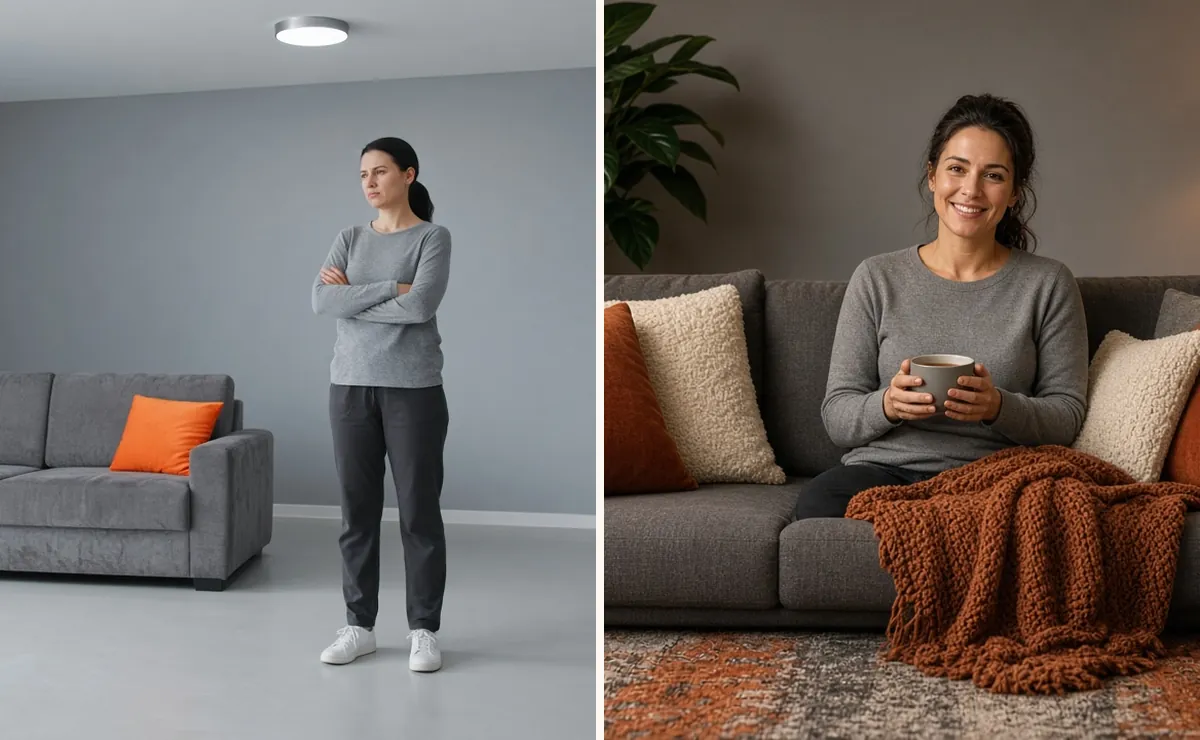
Most orange grey living room ideas fail for the same few reasons, and every one of them is easy to fix.
Too much bright orange. A room full of saturated orange feels loud and dated fast. Swap one or two pieces for rust, cognac, or terracotta, and let grey cover the largest surfaces.
Only one orange item. A single cushion looks like an accident. Repeat the color at least three times at different heights, for example pillows, a vase on a shelf, and an art print.
Flat, matching textures. Grey and orange both look cheaper in flat, shiny fabrics. Mix velvet, bouclé, knit, linen, leather, and wood so the colors have depth.
Cold lighting. Cool white bulbs make grey look gloomy and orange look harsh. Use warm white bulbs around 2700K in lamps, and layer at least three light sources at different heights.
Hidden Pro Tip: If you have a golden or ginger dog, orange accents are secretly practical, because shed hair blends in on rust and cognac fabrics. Pair them with a tightly woven sofa fabric, and see our guide to the best couch material for dogs before you buy.
The Designer’s Take
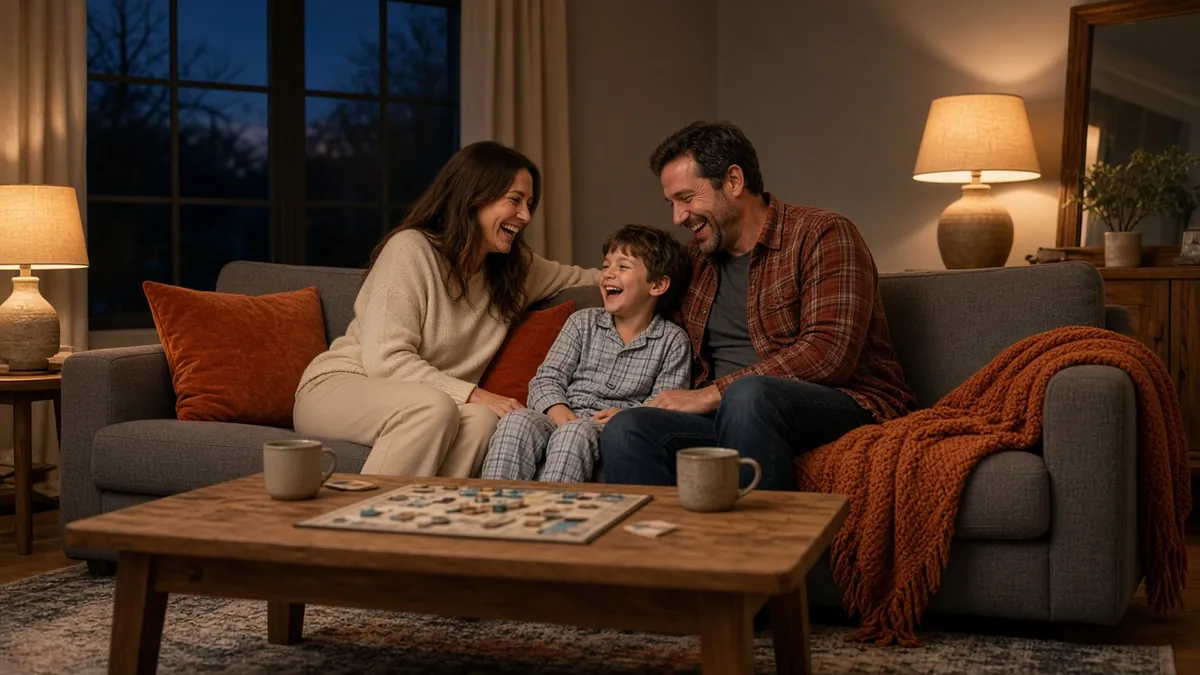
A grey and orange living room works best when grey leads and orange supports. Start with a grey base you love, choose an earthy orange like burnt orange, rust, or terracotta, and repeat it at least three times through pillows, a throw, curtains, or art. Then add texture, wood, greenery, and warm light.
If I had to choose just one starting point, it would be a pair of burnt orange velvet pillows and a warm lamp. They cost little, take five minutes, and tell you exactly how much orange your room wants. From there, build slowly, and the space will feel collected, cozy, and far more expensive than it was.

Grey and Orange Living Room FAQ
What colors go with a grey and orange living room?
Warm white, cream, walnut, oak, brass, and sage green all pair well with grey and orange. For a bolder look, add a small touch of navy or teal, which sits opposite orange on the color wheel and makes it glow.
Is burnt orange and grey a good combination for a living room?
Yes. A burnt orange and grey living room feels warm, grounded, and timeless because the muted orange softens cool grey without overpowering it. Keep grey on the largest surfaces and use burnt orange on pillows, throws, curtains, or one accent chair.
What shade of grey goes best with burnt orange?
Warm greys and greige create a soft, cozy look with burnt orange, while charcoal and slate give sharper, more modern contrast. Test both next to your orange fabric in daylight and lamplight before choosing.
How do I decorate a gray and orange living room without it looking dated?
Choose earthy oranges such as rust, terracotta, or cognac instead of bright pumpkin, repeat the color at least three times, and mix textures like velvet, linen, knit, and wood. Warm lighting and a few plants keep the orange and gray living room feeling current.
Does gray and burnt orange work in a small living room?
Yes, as long as you keep the floor and walls light and place the orange at eye level on pillows, art, lampshades, or curtains. That keeps the room open while still adding warmth.