
If you have ever tried to compare two sofas online and gotten stuck on words like rail, deck, or track arm, you are not alone. Knowing the parts of a couch turns a vague “I like this one” into a clear checklist: which sofa parts matter for comfort, which names show up on product pages, and which details will still annoy you six months later.
This is a practical couch anatomy guide for real living rooms. You will learn the main sofa parts by name, how seat and back cushions work, a dedicated look at sofa arm styles, and how to measure before Black Friday sofa deals hit. When you are ready to place that sofa in a bigger furniture plan, our kinds of furniture hub maps seating against the rest of the room.
This post contains affiliate links. As an Amazon Associate, I earn from qualifying purchases, at no extra cost to you.
Quick Answer: What Are the Main Parts of a Couch?
Most sofas share the same seven core parts of a sofa: (1) the frame, (2) the seat deck with its springs or webbing, (3) the seat cushions, (4) the back and back cushions, (5) the arms, (6) the legs or skirted base, and (7) the upholstery that covers it all. Learn those names first. Style labels (mid-century, farmhouse, cloud) only make sense after you know the anatomy underneath. Extras like a chaise, ottoman, or sleeper mechanism are add-ons, not core parts.
Couch Anatomy: Frame, Seat Deck, and Back Structure

The frame is the skeleton of every couch. Better frames usually use kiln-dried hardwood or a strong engineered mix with corner blocks and screws, not only staples. Softwood-only frames and cardboard-heavy backs can feel fine in the showroom and sag sooner under daily sitters and pets.
Key couch parts names on the frame:
Front rail and back rail: the long horizontal members that set the sofa’s length and stiffness. Arm stumps or arm frames: the uprights that hold each arm. Seat deck (or platform): the surface under the seat cushions, often webbing, sinuous springs (“S” springs), coil springs, or a solid/ply deck on some modern designs. Back structure: the upright panel or rail system that supports back cushions and keeps the silhouette upright.
When a listing says “kiln-dried hardwood frame” or “sinuous spring seat,” that is frame and deck language, not fabric marketing. Those details matter more for longevity than a mood-board photo. If you are choosing a modular or boneless style instead of a traditional frame, our caterpillar sofa guide shows how those pieces stack and connect without a classic rail system.
Seat Cushions, Back Cushions, and Fill
Cushions are the part your body meets every day, so this is where comfort claims get real. Seat cushions sit on the deck. Back cushions (or a tight, upholstered back with no loose pillows) shape how upright or lounge-y the sofa feels.
Common fill types in plain language:
High-density foam: keeps a cleaner shape and is easier to sit down and stand up from. Foam wrapped in fiber or down-alternative: softer “sink in” feel with a bit more fluffing. Feather or down blends: plush and sinky, but they need regular fluffing and can look lived-in faster. Spring-in-cushion or pocketed cores: bounce and airflow for people who hate a dead foam feel.
Loose back cushions look softer and casually styled. A tight back (fully upholstered, no removable pillows) looks cleaner and needs less daily arranging. If you share the sofa with dogs, keep upholstery light here and lean on our best couch material for dogs guide for fabric and cleanability rather than repeating that whole topic.
Sofa Arm Styles: Types of Couch Arms Worth Knowing
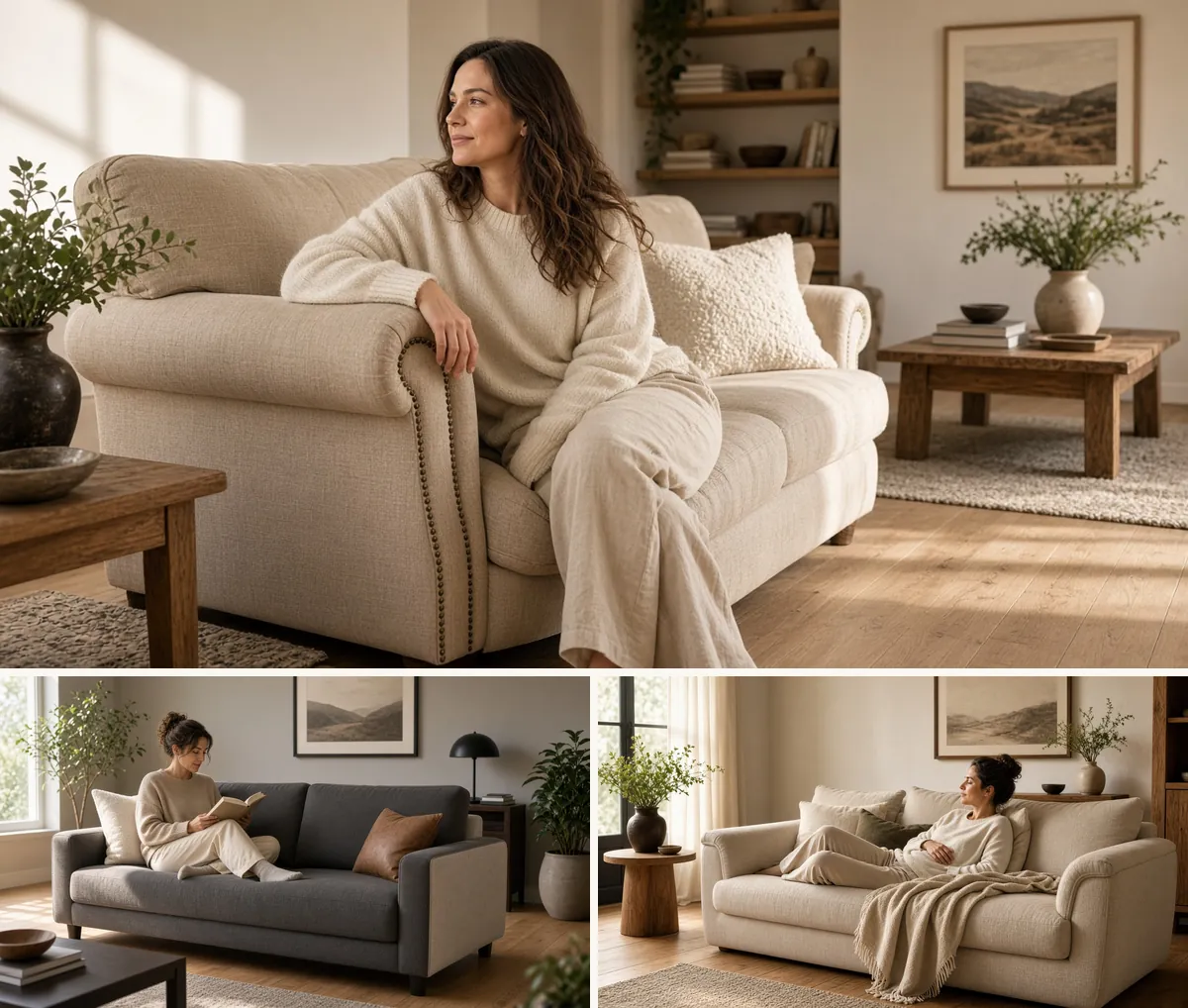
Search data lumps couch arms, sofa arms, and types of sofa arms into this topic for a reason: arm style changes seat width, visual weight, and whether you can perch a mug or fold a nap against the side. Here are the sofa arm styles you will see most often, with the everyday names shops use.
Rolled Arms
A classic curve that rolls outward from the seat. Rolled arms feel traditional and cozy, and they eat more of the overall width, so a “84-inch sofa” can have a shorter usable seat than a track-arm sofa of the same length. Great if you like to lean sideways; less ideal if every inch of seat matters in a small room.
Track Arms (and English Arms)
Track arms are straight, relatively slim, and usually the same height from front to back. They read modern or mid-century and leave more seating width for the same outer measurement. An English arm is a low, tightly rolled arm that sits well below the back height, often set back slightly from the front, so it looks lighter in tight spaces.
Square, Panel, and Tuxedo Arms
Square or panel arms are blocky and architectural. A tuxedo sofa keeps arms and back at roughly the same height for a clean, continuous line. These styles photograph well in modern and grey sofa rooms; see styling ideas in our grey sofa living room ideas post if you are planning a neutral palette.
Pillow Arms, Sock Arms, and Scoop Arms
Pillow or sock arms are soft and overstuffed, sometimes with a separate pillow-like wrap. Scoop arms dip in the middle for a scooped profile. They feel casual and lounge-forward, and they can make side tables harder to align because the arm height is less predictable for a lamp or drink.
Flared, Split, and Recessed Arms
Flared arms widen toward the front. Split arms show a break or seam along the side. Recessed arms sit slightly inset from the front rail so the seat cushion appears to float forward (a common “modern” trick). None of these is better in the abstract; they just change how the sofa fills a wall and how your coffee table should scale.
Quick tip: when you compare two sofas, subtract arm width from overall length in your notes. Two sofas both labeled 80 inches can differ by several inches of usable seat if one has fat rolled arms and the other has skinny track arms.
If your arms are wide enough for daily clutter, the Joywell 6-pocket armrest caddy drapes over the arm and tucks under the seat cushion, keeping remotes, glasses, and a small tablet off the cushions without needing a full side table. It usually lands around $10 to $20, and caddies like this work best on straight or gently rolled arms, not ultra-narrow metal frames.
Legs, Skirt, Skirted Base, and Small Details
What sits under the sofa changes cleaning, visual weight, and floor protection.
Exposed legs: wood, metal, or plastic feet that lift the frame. Higher legs make vacuuming easier and help a room feel airier. Bun feet and block feet: short, traditional shapes. Tapered mid-century legs: angled and slim. Skirted base: fabric that hides the legs and frame for a softer, more traditional look, with less under-sofa airflow.
Other small part of a couch details on tags include nailhead trim, welting or piping, tufting, and a chaise or reversible ottoman on sectionals. None replace a solid frame, but tufting holds crumbs and changes how formal the piece feels.
On hardwood or vinyl, self-stick felt pads under sofa legs stop scuffs when you shift the piece to vacuum. A large assortment such as Scotch felt furniture pads usually costs under $10 and covers more than the couch alone.
How to Measure Couch Parts Before You Buy
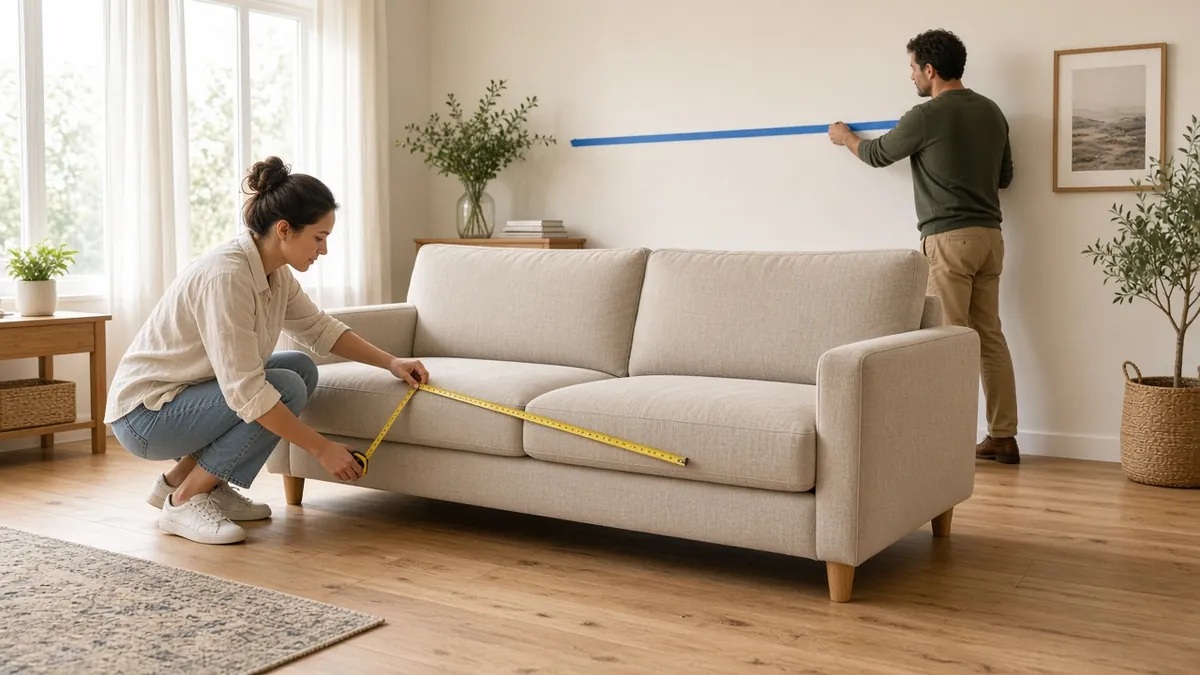
Anatomy only helps if the numbers match your room. Record overall width (arm outside to arm outside), overall depth (front of seat cushion to back of frame), overall height, seat height (floor to top of uncompressed seat cushion), seat depth (front of seat cushion to front of back cushion), and arm height (floor to top of arm).
Also measure the path in: door width, stair turns, and elevator depth. A sofa can fit the wall and still fail at the landing. For size ranges in small rooms, use our couch dimensions guide with this checklist.
Seat depth is the comfort filter people skip. Shallower seats (often around 20 to 22 inches) suit upright sitting. Deeper seats (24 inches and beyond) favor lounging and may need a throw pillow behind the back so you do not slide forward. Arm height should sit close enough that a drink is a short reach.
Black Friday Sofa Shopping: Know the Parts First

Black Friday and Cyber Monday sofa deals are useful when you already know which couch parts you will not compromise on. Write down must-haves before the sale tabs open: track vs rolled arms, minimum seat depth, removable cushion covers if you want washability, and maximum overall width for your wall.
Then shop accessories and protectors with the same list. A stretch velvet slipcover can refresh tired upholstery while you wait for a bigger sofa purchase, and a quilted reversible cover is a smarter pet-and-spill layer than a random throw that slides off. These are not substitutes for a sound frame, but they are high-review, lower-risk cart adds during sale weeks.
For a tailored refresh on a standard three-cushion sofa, this H.VERSAILTEX 4-piece velvet slipcover typically falls in the $45 to $60 range and is sized for sitting widths around 72 to 90 inches. Separate cushion covers help the seat look less “draped sheet” and more intentional.
If you need a quick pet-friendly layer rather than a full slipcover, the Easy-Going reversible quilted couch cover usually lands around $15 to $25, fits seat widths up to about 66 inches in the large size, and tucks into the seat gaps with foam anchors.
Compare the Picks
Use this side-by-side for Black Friday accessories that support real sofa parts (arms, seat, legs), not a second full sofa purchase.
| Product Name | Price Range | Best For | Buy on Amazon |
|---|---|---|---|
| Joywell 6-Pocket Armrest Caddy | $10 to $20 | Remotes and tablets on wide couch arms | Check Price |
| H.VERSAILTEX Velvet 4-Piece Slipcover | $45 to $60 | Refreshing a 3-cushion sofa look | Check Price |
| Easy-Going Reversible Couch Cover | $15 to $25 | Pets, spills, and quick seat protection | Check Price |
| Scotch Felt Furniture Pads (162 pcs) | Under $10 | Protecting floors under sofa legs | Check Price |
Prices and stock move during sale weeks, so confirm the size chart and return window on the listing before you buy. Screenshot the dimensions panel when you add something to your cart so a variant swap does not surprise you at the door.
What Actually Matters Most
You do not need to memorize every furniture glossary term. You need enough sofa anatomy to read a product page without guessing. Frame and deck decide longevity. Cushions decide Tuesday-night comfort. Arms decide usable seat width and how the sofa shares the room with tables. Legs and skirts decide cleaning and visual weight. Shopping for a table next? Our guide to table parts and what they’re called does the same job for dining and coffee tables.
Before you click a Black Friday sofa deal, write three lines: arm style you want, seat depth that fits your body, and maximum overall width for the wall. Then measure the path in. That short list beats scrolling another dozen “cloud couch” photos that never mention the rail or the deck.
Keep this page next to your measurement notes when you compare listings, and pair it with couch dimensions when you are still unsure about scale. Know the parts, then shop the sale.
Parts of a Couch FAQ
What are the main parts of a couch?
Most sofas share a frame, seat deck, seat cushions, back and back cushions, arms, and legs or a skirted base. Optional extras include a chaise, ottoman, nailhead trim, or a sleeper mechanism.
What is the difference between sofa parts and couch parts?
In everyday shopping, sofa and couch mean the same piece of seating. Retail sites often say sofa, while shoppers say couch. The part names (arms, cushions, rails, legs) are the same either way.
What sofa arm styles are most common?
The styles you will see most are rolled arms, track arms, English arms, square or panel arms, tuxedo arms, and softer pillow or sock arms. Track arms usually leave more usable seat width than rolled arms on the same overall length.
How do I measure couch parts before buying?
Record overall width, depth, and height, plus seat height, seat depth, and arm height. Also measure doorways and stair turns. Compare usable seat width by subtracting arm bulk from overall length.
Which couch parts matter most for comfort?
Seat depth and cushion fill decide how the sofa feels day to day. Arm height affects leaning and side-table reach. The frame and seat deck matter more for how long the sofa stays supportive.