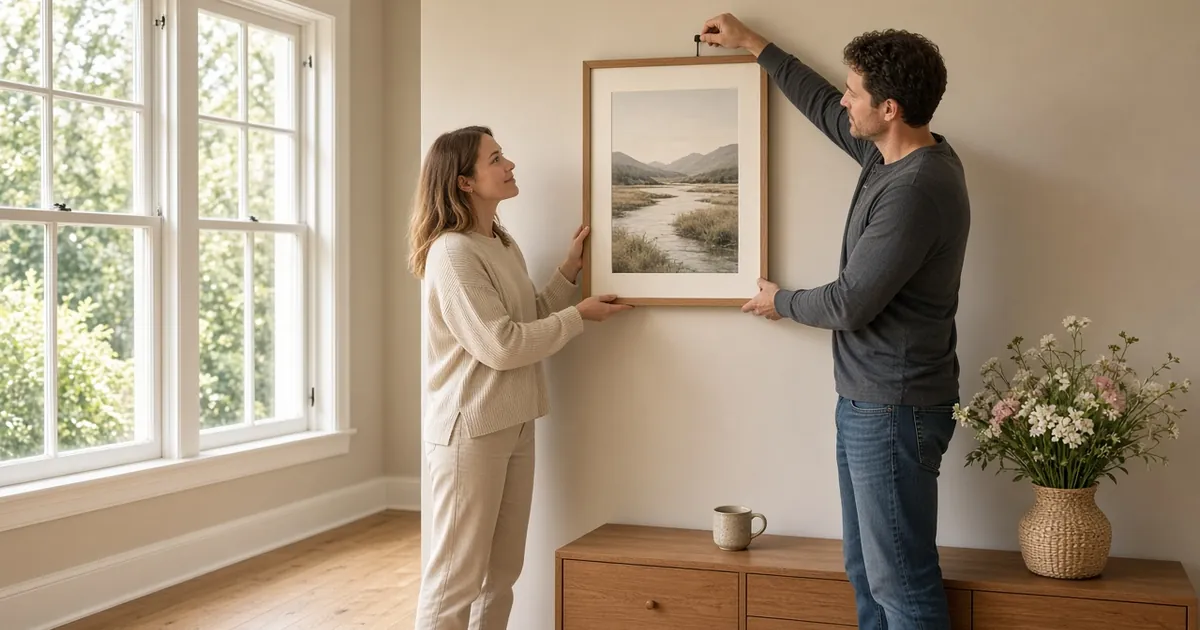
If your frames still sit in a closet because you are scared of drywall craters, you are not alone. The right wall hanging hooks turn that pile into a finished wall without guessing, and the wrong ones leave chips, crooked lines, or a frame on the floor at 2 a.m.
This guide walks through types of picture hooks, renter-friendly options, honest weight guidance, and simple gallery-wall steps before holiday hosting. You will also get a few well-reviewed picks so you can shop hardware once and hang with confidence. If plants are part of that same wall story, our plant wall ideas post pairs nicely with picture hanging options for a mixed gallery.
This post contains affiliate links. As an Amazon Associate, I earn from qualifying purchases, at no extra cost to you.
Quick Answer: Which Wall Hanging Hooks Do You Need?
Match the hanger to three things: wall type (drywall, plaster, tile), frame weight, and how much damage you can live with. Light frames and rentals often do best with adhesive picture hanging strips. Everyday frames on drywall work well with traditional nail-in picture hanger types or tool-free drywall hooks. Heavier mirrors and large art need higher-rated hooks, a stud, or specialty drywall claws. Start with weight, then style.
Types of Picture Hooks and Frame Hangers
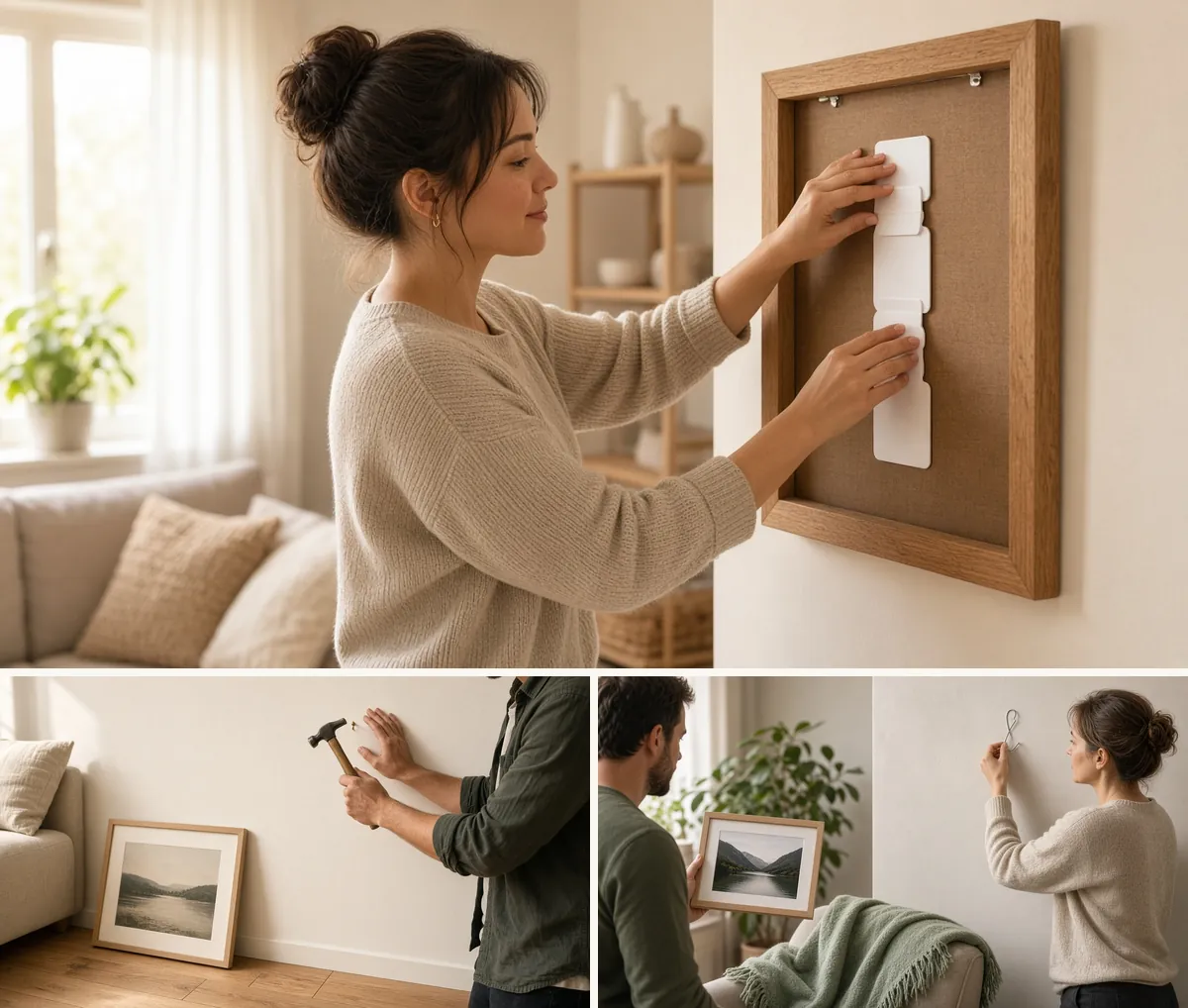
Searchers looking for hooks for hanging, picture hanger types, and types of frame hangers usually want the same short menu. Here are the types of picture hangers you will see most often, with the everyday names shops use.
Nail-In Picture Hooks
These classic wall hanging hooks use a small angled nail (sometimes two) and a brass or steel hook. They are the museum and gallery standard for a reason: the pin hole is tiny, the hold is predictable when rated correctly, and kits often include hooks rated up to 10 lb through 100 lb per the package in one box. Best for drywall and plaster when a small hole is fine. Not ideal if your lease bans any holes at all.
Adhesive Strips and Interlocking Hangers
Command-style strips lock a frame to the wall with Velcro-like pairs. No tools, no stud hunting, and clean removal when you stretch the tab slowly. They shine for light to medium frames, dorms, and apartments. Follow the weight and size chart on the pack, wait for paint to cure, and avoid textured wallpaper or humid spots. For budget makeovers that still look finished, see more ideas in our economy home decor guide.
Monkey Hooks and Tool-Free Drywall Hooks
These spring-steel hooks twist into drywall by hand and leave a small hole with no hammer. Variety packs often mix original hooks, heavier “gorilla” styles, and flush mounts for items that must sit close to the wall. They are popular picture hanging options when you want speed and skip the stud finder. Stick to drywall; they are not for brick or concrete.
Sawtooth, D-Ring, and Wire Hardware
These are types of picture frame hangers that attach to the frame, not the wall. Sawtooth bars suit lighter frames and hang on a single nail or hook. D-rings (one or two) give a stabler hang. Picture wire between two D-rings is common on larger art and needs a wall hook rated for the total weight. Always check what is already on the back before you buy wall hardware.
Heavy-Duty Claws, Anchors, and Stud Mounts
For heavy mirrors or oversized canvas, look for claw-style drywall hangers, toggle anchors, or screws into a stud. These are the “do not guess” category. If the piece is valuable or sits over a sofa where a fall would hurt, oversize the rating and use two hang points when the frame allows it.
Renter-Friendly Hooks for Hanging Without Big Damage
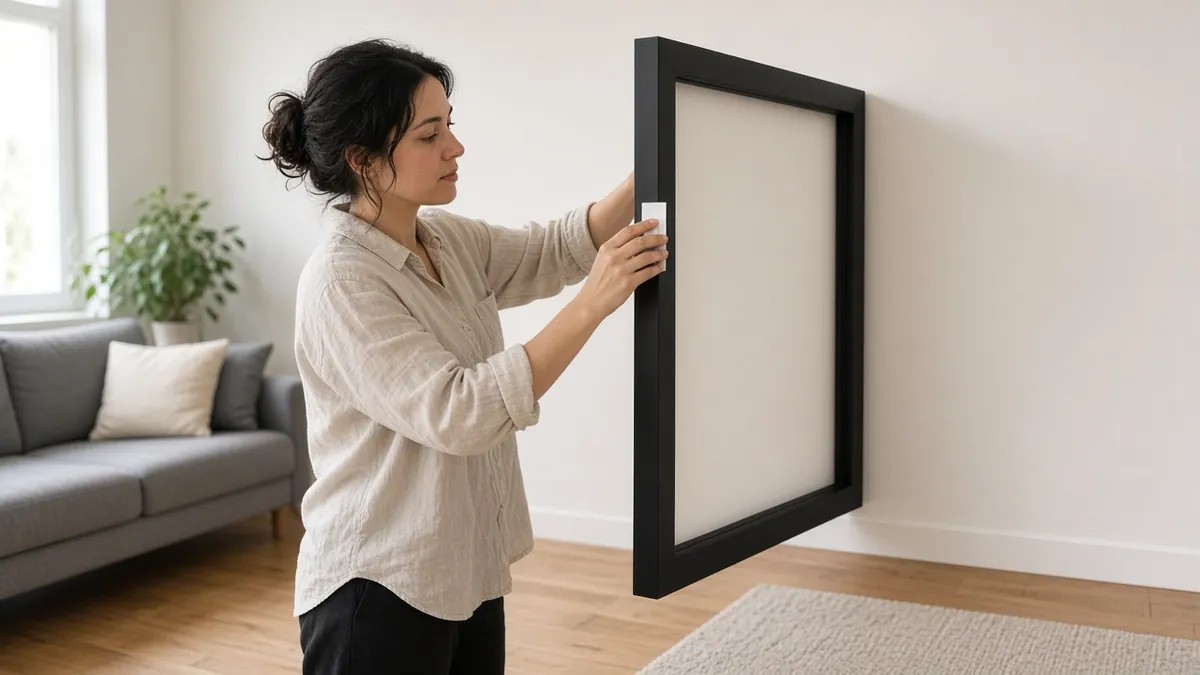
Renters need what to hang pictures with that will not eat the security deposit. Lead with adhesive picture hanging strips for frames that fit the listed weight. Keep a pack of medium utility hooks for wreaths, lightweight calendars, or small decor that is not a framed piece. Tool-free drywall hooks are the next step when adhesive is not enough; the hole is pin-size and easy to fill at move-out.
Studio and small-space walls often carry more visual weight than square footage suggests. A few well-hung frames beat a cluttered shelf stack. For layout ideas in tight footprints, pair this hardware guide with our studio apartment decorating ideas.
A high-review starting pack is Command Large picture hanging strips, usually in the $10 to $15 range for a multi-pair pack sized for many apartment frames. Read the max frame size and weight chart before you open the package.
How Much Weight Can Picture Hangers Hold?
Weight ratings are manufacturer claims, not a guarantee for every wall. Treat the number on the pack as a ceiling, then leave a cushion. Weigh the frame on a bathroom scale if you can, or add frame plus glass plus art as a rough estimate.
Practical planning ranges many shoppers use (confirm on your package before hanging):
Adhesive strips: often best for lighter frames; Command Large strips are rated up to 15 lb per the package when you use four strip pairs, as the brand specifies. Standard nail-in hooks: kits usually label each hook (for example, rated up to 10, 20, 30, 50, or 100 lb per the package). Tool-free drywall hooks: brands often list ratings of several dozen pounds per hook, in drywall only, so check the rating on the package. Claw-style hangers: some are rated up to 45 lb per hanger per the package for heavy pieces without finding a stud.
Hidden Pro Tip: two hang points beat one for wide frames. Even if one hook is “strong enough,” a second hook or a double-nail hanger stops the side-to-side tilt that makes gallery walls look crooked.
Flag for your own check: always re-read the current listing and insert card. Ratings change by SKU, and plaster or crumbly drywall can hold less than the box suggests.
How to Hang Pictures Without Damaging Walls
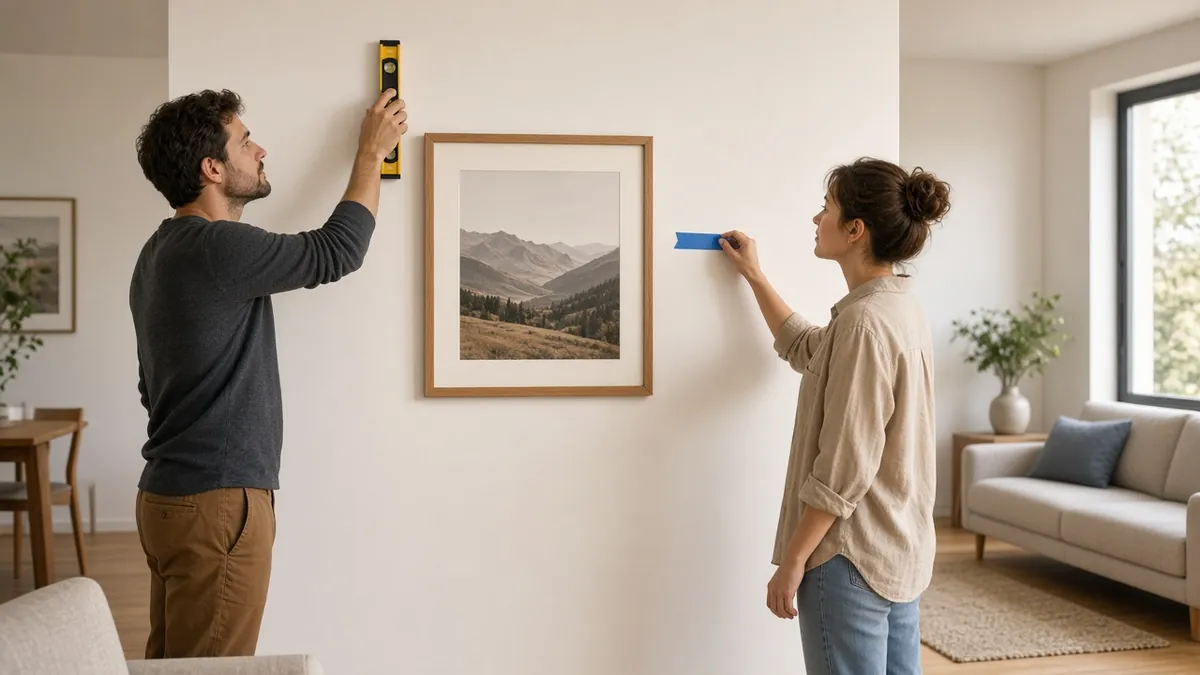
Clean dust off the wall and the frame back. For adhesive, wipe with isopropyl alcohol and let it dry. Mark the center with painter tape, not pen. Use a paper template the size of the frame if you are nervous about holes.
Steps that keep damage low:
1. Choose a hanger rated above the frame weight. 2. Check for wires, sawtooth, or D-rings on the back so the wall hook height is correct. 3. Hang with a level, step back, then adjust. 4. Add adhesive bumpers at the bottom corners so the frame does not scuff paint. 5. For move-out, stretch adhesive tabs slowly or fill pin holes with a dab of spackle and touch-up paint.
Skip adhesive over beds for heavy frames, and never hang soaking-wet walls after a fresh paint job. If you are styling a neutral living room around a grey sofa, keep frame finishes consistent so the hardware story disappears into the room; our grey sofa living room ideas post helps with palette and scale.
For everyday drywall hangs without a hammer dance, many people like a Monkey Hooks 30-piece variety pack, typically around $15 to $20, with original, heavier, and flush styles in one box.
Gallery Wall Tips Before Holiday Hosting

Pre-holiday hosting is the moment gallery walls finally happen. Guests notice a blank wall behind the sofa more than you think. Lay every frame on the floor first in the same arrangement you want on the wall. Keep gaps even, often about 2 to 3 inches. Hang the largest or center piece first, then fill outward.
Use the same wall hanger style across a row when frames are similar in weight so the wall looks intentional. Mix plant hangers and art only if the hardware is rated for each piece; for living walls of greenery, go back to plant wall ideas rather than forcing a picture hook to hold a pot.
A budget hardware stash for mixed frames is the KURUI 303-piece picture hanging kit, usually under $10, with hooks, sawtooth pieces, wire, D-rings, nails, and a small level. For heavier traditional hangs, step up to an OOK professional picture hanging kit in the mid-teens with labeled hangers rated up to 10 to 100 lb per the package.
If Halloween entry styling is still on your list while the living room gallery goes up, our Halloween door ideas keep the front of the house festive without competing with your new art wall.
When to Buy Picture Hanging Kits on Sale
Picture hanging kits are inexpensive year round, so the best time to buy is simply before you plan to hang. Holiday sales can shave a few dollars off, but they are a bonus, not a reason to wait. Decide your mix first: adhesive packs for rentals, a drywall hook variety set for speed, and one professional nail-in kit for heavier frames. Then add a leveling kit only if you are hanging a large gallery in one weekend.
If you want fewer measuring do-overs, the Go Hang It! Pro leveling kit typically lands around $30 to $40 and pairs a marking tool with an 85-piece hardware case for sawtooth, wire, and D-ring frames.
Compare the Picks
Use this side-by-side for the picture hanging options most homes need before a hosting weekend. Prices move during sales, so confirm the listing before you buy.
| Product Name | Price Range | Best For | Buy on Amazon |
|---|---|---|---|
| Command Large Picture Hanging Strips | $10 to $15 | Renters and damage-free light frames | Check Price |
| Monkey Hooks 30-Piece Variety Pack | $15 to $20 | Fast drywall hangs without a hammer | Check Price |
| OOK Professional Picture Hanging Kit | $12 to $18 | Heavier frames with labeled hook ratings | Check Price |
| KURUI 303-Piece Picture Hanging Kit | Under $10 | Budget gallery walls and mixed hardware | Check Price |
Screenshot the weight chart when you add an item to your cart so a variant swap does not surprise you. Stock and prices can shift, so check the listing right before you buy.
What Actually Matters Most
You do not need every type of picture hanger on the market. You need a short kit that matches your walls and your frames: adhesive for renter-safe light pieces, a rated nail-in or drywall hook for everyday art, and a clear plan for anything heavy. Weight first, hole size second, aesthetics last.
Before you start shopping, write three lines: heaviest frame weight, whether holes are allowed, and whether you are hanging one statement piece or a full gallery. Then buy one focused set instead of five random hooks that still leave you guessing.
Hang the center piece, step back, and adjust once. A calm wall before guests arrive beats a perfect Pinterest grid that never leaves the floor.
Wall Hanging Hooks FAQ
What are the main types of wall hanging hooks?
The most common picture hanger types are nail-in picture hooks, adhesive hanging strips, tool-free drywall hooks (like monkey hooks), and hardware that attaches to the frame itself (sawtooth, D-rings, and wire). Match the hanger to your wall type and the frame weight, not just the room style.
What should renters use to hang pictures?
For many light to medium frames, adhesive picture hanging strips are the most renter-friendly option because they remove cleanly when you follow the instructions. Tool-free drywall hooks leave a tiny hole. Avoid heavy mirrors on adhesive alone, and always check your lease before you hang.
How much weight can picture hangers hold?
Use the rating printed on the package and stay under it. As a planning guide, adhesive strips often cover lighter frames, traditional nail-in hooks cover a wide mid range, and specialty drywall claws or stud-mounted hardware are for heavier pieces. Weigh the frame or check the label, then pick a hanger rated above that number.
How do I hang pictures without damaging walls?
Clean the wall, choose a hanger rated for the weight, use a level or paper template for placement, and prefer adhesive strips or pin-size holes when you need a damage-light option. Patch small holes with spackle before move-out. Skip hanging heavy items over beds on adhesive alone.
What is the best way to hang a gallery wall?
Lay frames on the floor first, keep gaps consistent (often about 2 to 3 inches), hang the center or largest piece first, and use matching hanger types where you can. A leveling kit or painter-tape template reduces crooked rows before holiday hosting.