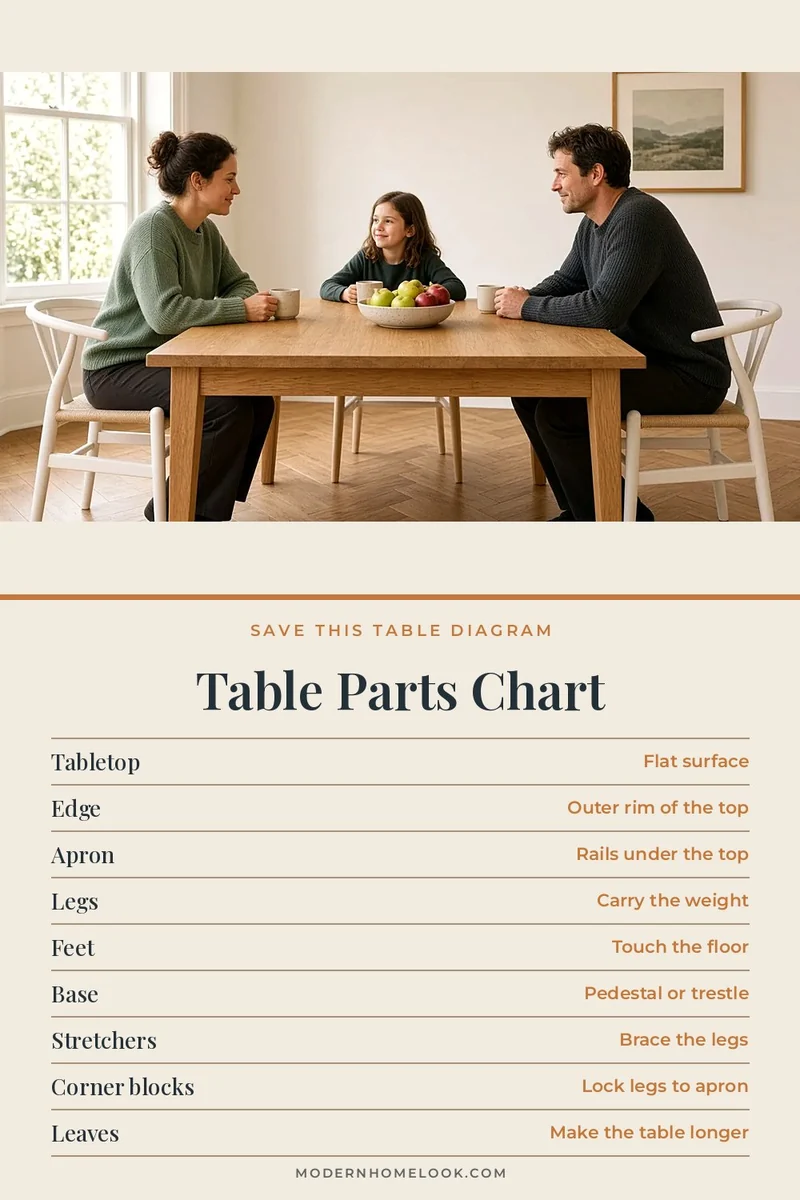
The main table parts are the tabletop, the apron, the legs, and the feet. Many dining tables add a few more: a pedestal or trestle base instead of four legs, stretchers that brace the legs low down, corner blocks and bolts hidden underneath, and leaves that make the table longer. Know those nine names and you can read any product listing, fix a wobble, or plan a holiday seating chart with confidence.
This guide walks you through the parts of a table one by one, in plain words, with the real-life details that matter: how much legroom the apron leaves, which base squeezes in extra guests, and what to check underneath before you buy. If you are still choosing a size, keep our dining table size chart for 6 to 12 people open in another tab.
This post contains affiliate links. As an Amazon Associate, I earn from qualifying purchases, at no extra cost to you.
Parts of a Table at a Glance
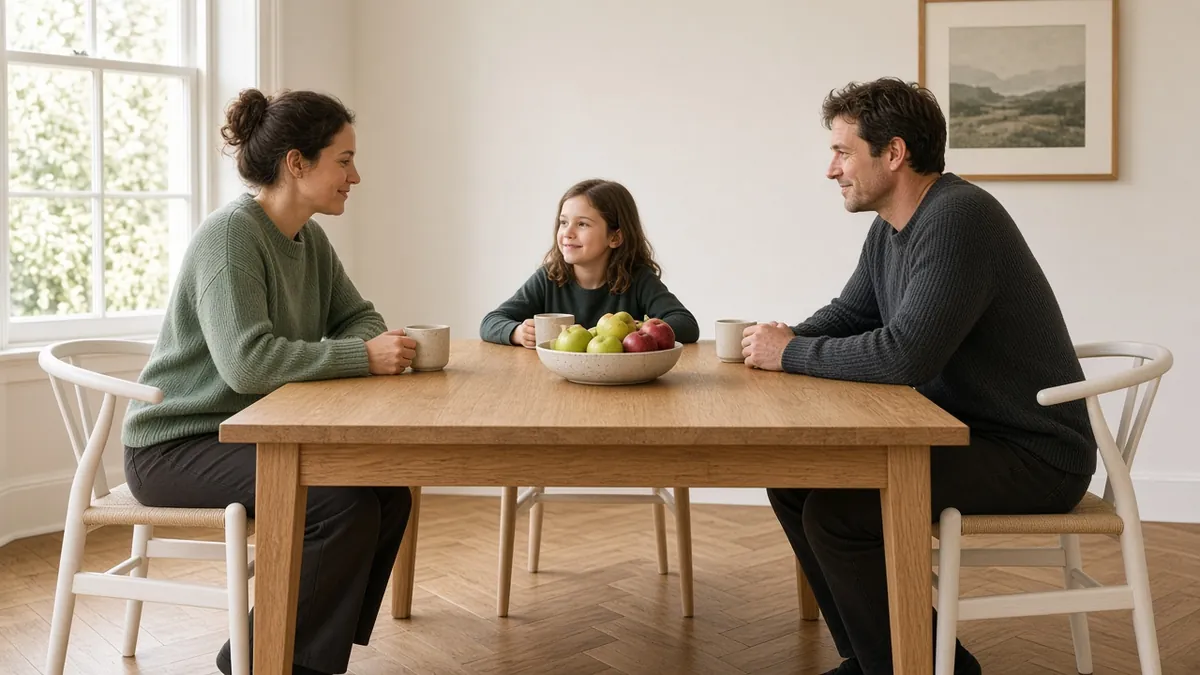
Think of this chart as a simple table diagram in words. Picture a classic four-legged dining table from the side: the flat top, a band of wood just under it, four legs, and whatever touches the floor. Everything else is either a different way to hold the top up or a helper part you rarely see.
| Table part | Where it is | What it does |
|---|---|---|
| Tabletop | The flat surface | Holds everything; sets the look, size and durability |
| Edge | The outer rim of the top | Shapes how the table looks and feels against your arms |
| Apron | Rails just under the top, between the legs | Stiffens the frame and connects legs to top |
| Legs | Usually one at each corner | Carry the weight down to the floor |
| Feet | The very bottom of each leg or base | Touch the floor; may hold glides, pads or levelers |
| Base | Pedestal or trestle under the top | Replaces four legs to free up seating |
| Stretchers | Bars linking the legs low down | Brace the legs and stop racking (side-to-side wobble) |
| Corner blocks | Inside each corner, under the top | Lock legs to the apron with a bolt or screws |
| Leaves | Extra panels in the middle or at the ends | Make the table longer for guests |
Not every table has all nine. A modern apronless table may skip the apron, a pedestal table has no corner legs, and plenty of everyday tables never get a leaf. Still, this anatomy of a table covers almost anything you will find in a store or on a listing.
The Tabletop: Surface, Edges and Table Sides
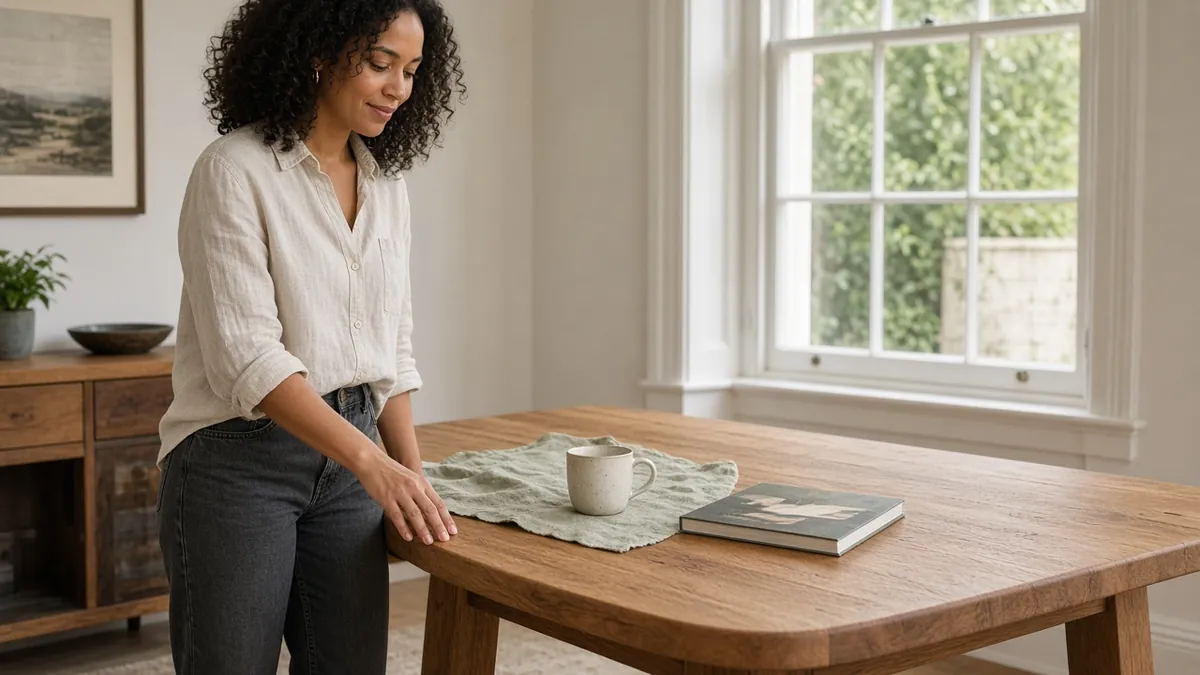
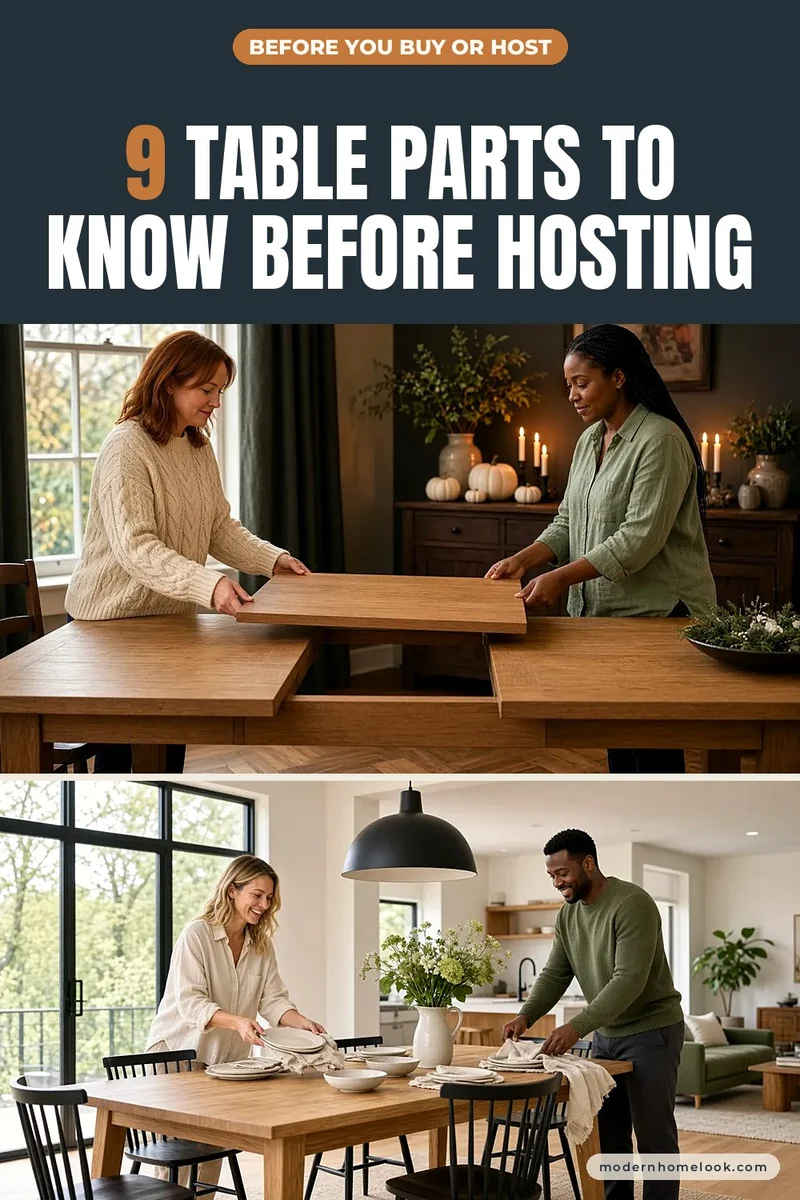
The tabletop is the part you live with every day, so it deserves the most attention. Its thickness, material and edge do more for the “expensive” look than almost anything else. A chunky top of 1.5 inches or more reads solid and custom, while a thin top can make even a big table feel flimsy.
Tabletop Materials
Solid wood can be sanded and refinished for decades, veneer gives you a real wood face over a stable core at a lower price, and laminate or MDF tops are the most budget friendly and easiest to wipe clean. If you love the warm grain look on a budget, our guide to acacia wood explains why it is such a popular middle ground.
Softer woods and veneers dent and mark more easily, especially at big family dinners. A smart budget fix is a quilted cut-to-fit table pad under your tablecloth, usually in the $20 to $30 range, which cushions hot dishes and catches spills before they reach the wood.
Edge Profiles
The edge is the shape of the tabletop’s rim. A square edge looks crisp and modern, an eased edge is square with the sharp corner softened, a bullnose is fully rounded, and a beveled edge is angled to make a thick top look slimmer. Rounded and eased edges are kinder to forearms and small heads, which makes them a quiet win for homes with kids.
What Are the Table Sides?
When people search for table sides, they usually mean one of two things. On a rectangular table, the long edges are the sides and the short edges are the ends, which matters for seating: the sides seat most guests, while each end usually fits one. Furniture makers also call the long aprons under the top the side rails, and on a drop-leaf table the hinged flaps are often called side leaves.
The Apron: The Hidden Part That Decides Legroom
The apron is the band of wood or metal that runs just below the tabletop, connecting the legs to each other and to the top. It is one of the most important dining table components, because it keeps the frame square and stops the top from sagging over time.
It also decides how comfortable your guests are. Most dining tables stand about 28 to 30 inches tall, and most dining chairs have a seat around 18 inches high. A deep apron eats into that gap, so look for roughly 24 to 25 inches between the floor and the bottom of the apron. That leaves enough room for thighs, crossed legs and armchairs to slide in.
Hidden Pro Tip: measure the apron height before you buy chairs with arms. If the arms are taller than the space under the apron, the chairs will not tuck in, and a small dining room suddenly feels much smaller.
Legs, Feet and Bases: What Holds the Table Up
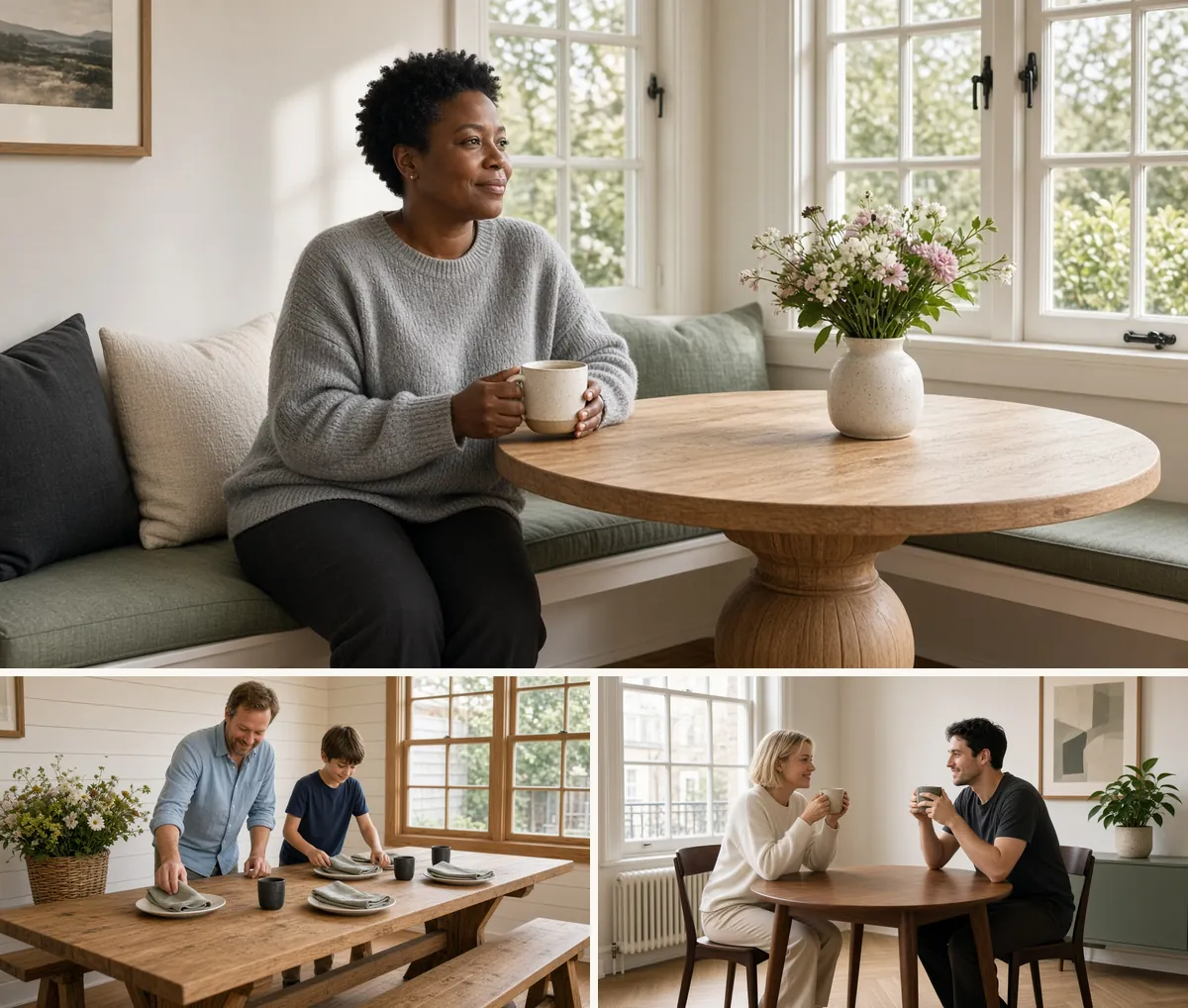
This is where tables look most different from each other, and where your choice changes how many people you can seat. There are three main ways to hold a tabletop up, plus the small parts at the bottom that protect your floors.
Four-Leg Tables
Four legs at the corners is the classic setup. Legs can be tapered (narrower at the bottom), turned (shaped on a lathe), splayed (angled outward, as on mid-century tables), hairpin metal, or curvy cabriole legs on traditional pieces. The trade-off is that corner legs block a seat at each corner, so long tables seat best along the sides.
Legs are also the easiest part to change. Many coffee tables, benches and side tables use screw-in legs with a hanger bolt, so a set of mid-century wood furniture legs in the $20 to $30 range can update a tired piece in minutes. Our guide on how to pick a coffee table helps you pick the right height first.
Pedestal Bases
A pedestal table sits on one central column, often with a wide foot or splayed feet at the bottom. With no corner legs, everyone gets knee room and you can squeeze in an extra chair when cousins arrive. Round pedestal tables around 42 to 48 inches across usually seat four, which makes them a favorite for breakfast nooks and small apartments.
If you want that look without a big spend, the round drop-leaf pedestal dining table from East West Furniture is a good fit for small spaces, since its sides fold down when you need floor space back. It usually sits in the $175 to $225 range.
Trestle Bases
A trestle table rests on two sturdy end supports joined by a long center beam, which is technically a stretcher. It is the signature base of the farmhouse dining room look, and it frees up the corners so benches and extra chairs slide in easily. Just check the space at the ends, because the end supports can bump the knees of whoever sits there.
Feet, Glides and Levelers
Feet are the parts that actually touch the floor. Some are simply the bottom of the leg, some are shaped (bun, ball or block feet), and some hold small hardware: glides that slide, levelers that screw up or down to stop a wobble on uneven floors, or brass caps on mid-century legs. A pack of felt furniture pads, usually under $15, protects hardwood under both table and chair feet, and you will want to swap the chair pads every few months in a busy home.

Stretchers, Corner Blocks and the Hardware You Never See
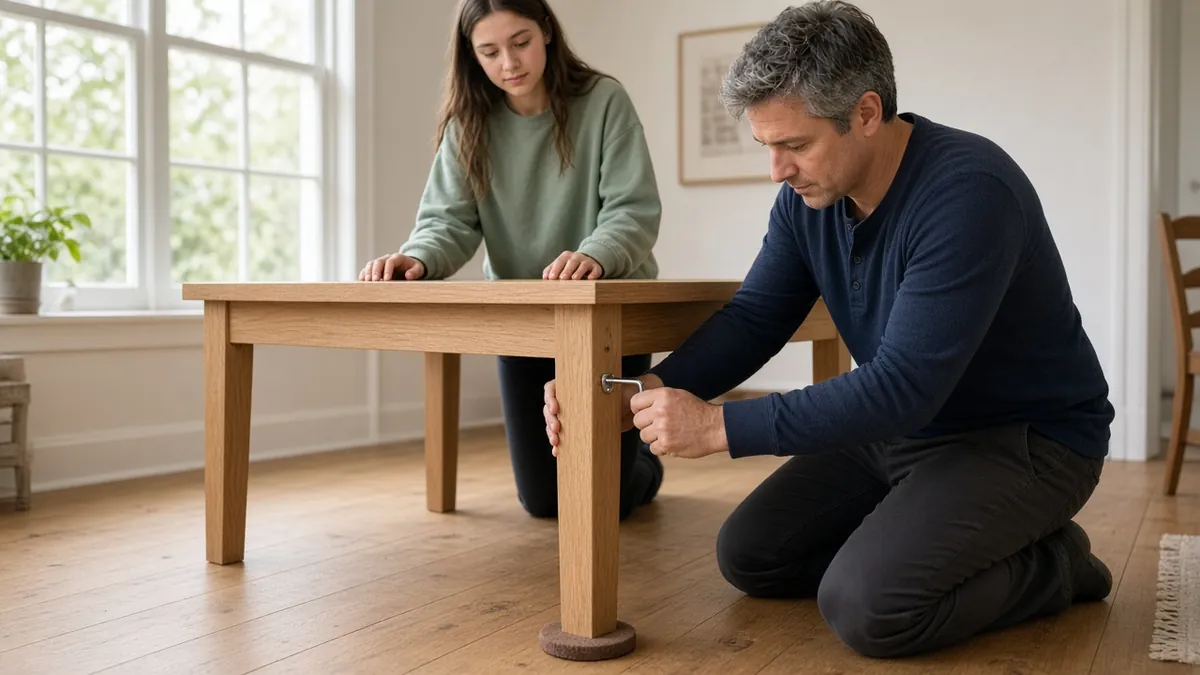
Flip over and you will find the table parts that decide whether it still feels solid in five years. They are easy to ignore in a showroom, but they are the first thing a furniture maker looks at.
Stretchers
Stretchers are bars that connect the legs near the floor. You will see an H-stretcher (two side bars joined by a middle bar), a box stretcher (a bar on every side), or an X-stretcher that crosses in the middle. They add a lot of strength and a classic look, but they can catch feet, so leave a little extra room if your table has a low stretcher.
Corner Blocks and Bolts
On most four-leg tables, a small wood or metal block sits inside each corner where the leg meets the apron. A bolt runs through it into the leg, pulling everything tight. When a table starts to wobble, a loose corner bolt is usually the reason, and five minutes with an Allen key or wrench often fixes it.
Slides, Pins and Locks
Extending tables add metal or wood slides that let the halves pull apart, small pins or dowels on the edges that line the leaf up, and clips or locks underneath that hold it all closed. If a leaf ever sits slightly higher than the main top, check that those pins are seated properly before blaming the table.
Table Leaves: The Dining Room Table Part That Saves the Holidays
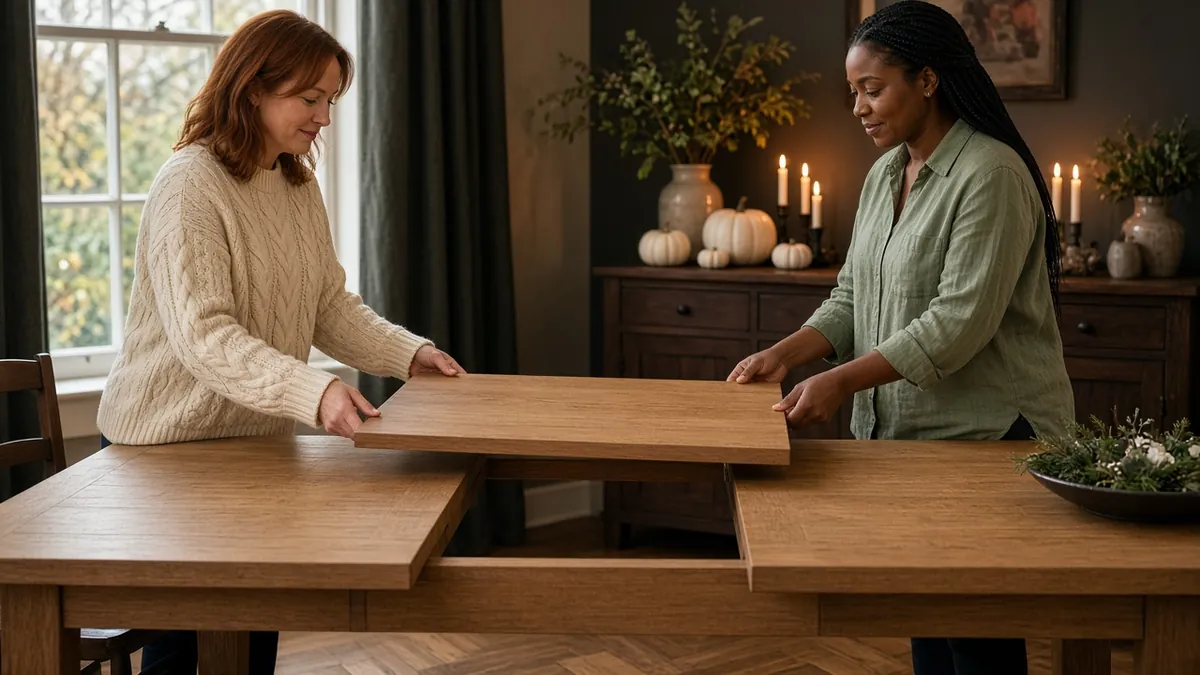
A leaf is an extra panel that makes the table longer. Leaves are usually somewhere around 12 to 20 inches wide, which typically adds one or two place settings along each long side. For Thanksgiving and other big dinners, this is the dining room table part you will thank yourself for.
Types of Table Leaves
- Removable leaf: you pull the table apart, drop the leaf in, and store it in a closet the rest of the year.
- Butterfly leaf: the leaf is hinged and folds away inside the table, so there is nothing to store.
- Drop leaf: hinged flaps on the sides fold down for daily use and lift up for guests.
- Draw leaf: leaves slide out from under each end, a classic on older refectory tables.
For small homes that host a few times a year, a self-storing butterfly leaf is the easiest option. The East West Furniture Norfolk table is a well-reviewed example: it seats four every day and opens to a longer table when family visits, usually in the $200 to $250 range.
Once the leaf is in, size your tablecloth to the new length, not the everyday one. Our tablecloth size guide shows the drop to add on each side, and the rug sizes chart helps you check the rug still clears the chairs at full length.
How to Check Dining Table Parts Before You Buy
A quick look at a few dining table parts tells you more than any product photo. Whether you are in a store or reading a listing, run through this short list.
- Top: is it solid wood, veneer or laminate, and how thick is it?
- Apron height: is there roughly 24 inches or more from the floor to the bottom of the apron?
- Joinery: are there corner blocks with bolts, or just screws into soft board?
- Base: does a pedestal or trestle fit your seating plan better than four legs?
- Feet: are there levelers or glides, and will they protect your floor?
- Leaves: do you need one, and where will it live when it is out?
The same habit works on other furniture too. Our guide to the parts of a couch uses the same idea for sofas, and our kinds of furniture guide ties the whole room together.
What Actually Matters Most
You do not need to memorize every term. For a table that looks good and lives well, focus on three table parts: a top that suits your real life, an apron that leaves real legroom, and a base that fits the number of people you actually seat. Get those right and a budget table can look and feel like a much pricier one.
If you host often, add a leaf to that list. And if your current table wobbles, check the corner bolts and the feet before you replace it; the fix is often free.
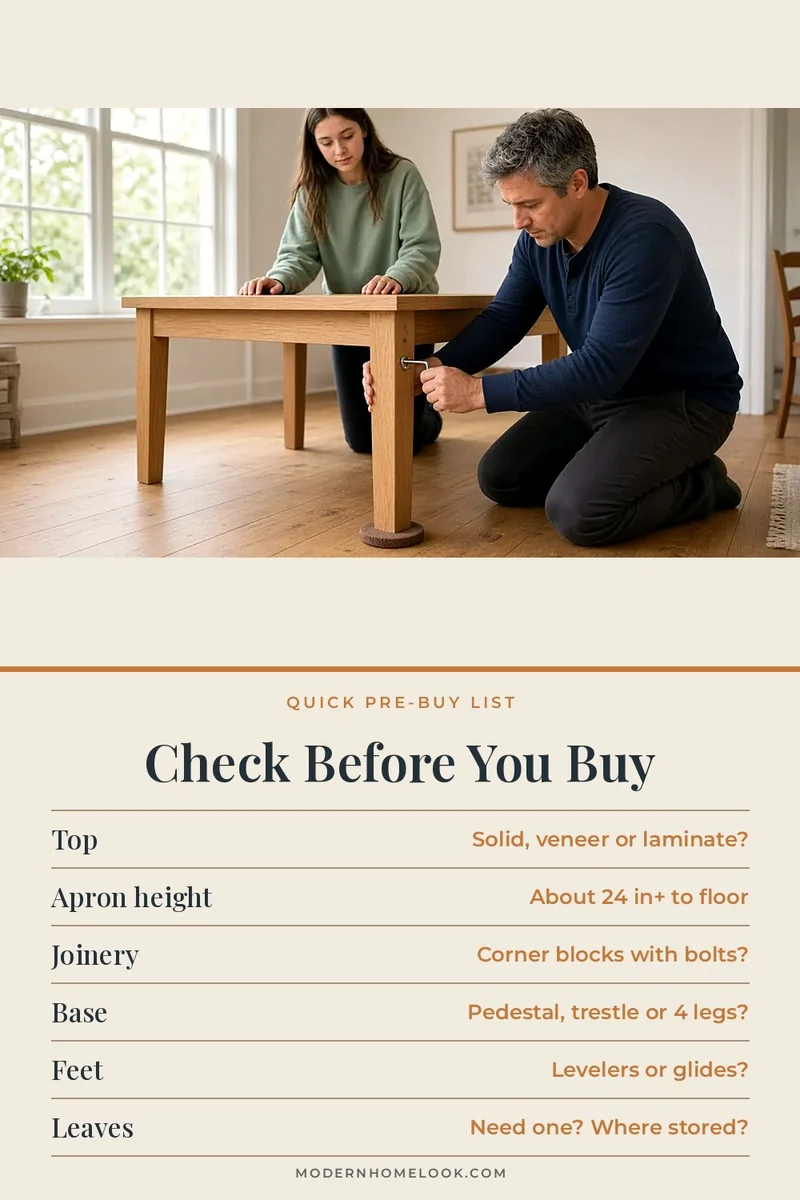
Table Parts FAQ
What are the parts of a table called?
The main parts of a table are the tabletop, the edge, the apron, the legs, and the feet. Many tables also have a pedestal or trestle base, stretchers between the legs, corner blocks with bolts underneath, and one or more leaves to make the table longer.
What is the apron on a table?
The apron is the band of wood or metal just under the tabletop that connects the legs to each other and to the top. It keeps the frame square and the top flat. For comfortable seating, look for about 24 to 25 inches between the floor and the bottom of the apron.
What is the part under a table called?
Directly under the top is the apron, and inside its corners are corner blocks that hold the legs. Lower down, bars connecting the legs are called stretchers. On tables without four legs, the support underneath is called the base, usually a pedestal or a trestle.
What are the sides of a table called?
On a rectangular table, the long edges are called the sides and the short edges are the ends. The aprons under the long edges are often called side rails, and on a drop-leaf table the hinged flaps are called side leaves.
What is the middle part of a table that extends called?
It is called a leaf. Leaves can be removable panels, a self-storing butterfly leaf that folds inside the table, drop leaves hinged on the sides, or draw leaves that slide out from the ends.