A plant sitting on a windowsill works fine until it doesn’t. Once you’ve got more than one or two, you need somewhere to put them that actually makes sense, and that’s where a plant shelf earns its keep. It’s not just storage. It’s the difference between plants that look scattered and a display that looks like you meant to do it.
This guide covers the plant shelves worth actually buying, from window-mounted options to floating shelves to full tiered setups, sorted by material, space, and budget. Whether you’ve got one sunny window or a whole wall to fill, there’s a setup here that fits.
Why a Plant Shelf Beats a Regular Shelf for Plants
A regular bookshelf will technically hold a plant, but it wasn’t built for one. Plant shelves solve problems a standard shelf ignores: drainage for overflow water, materials that won’t warp from humidity, and placement designed around light rather than eye-level convenience.
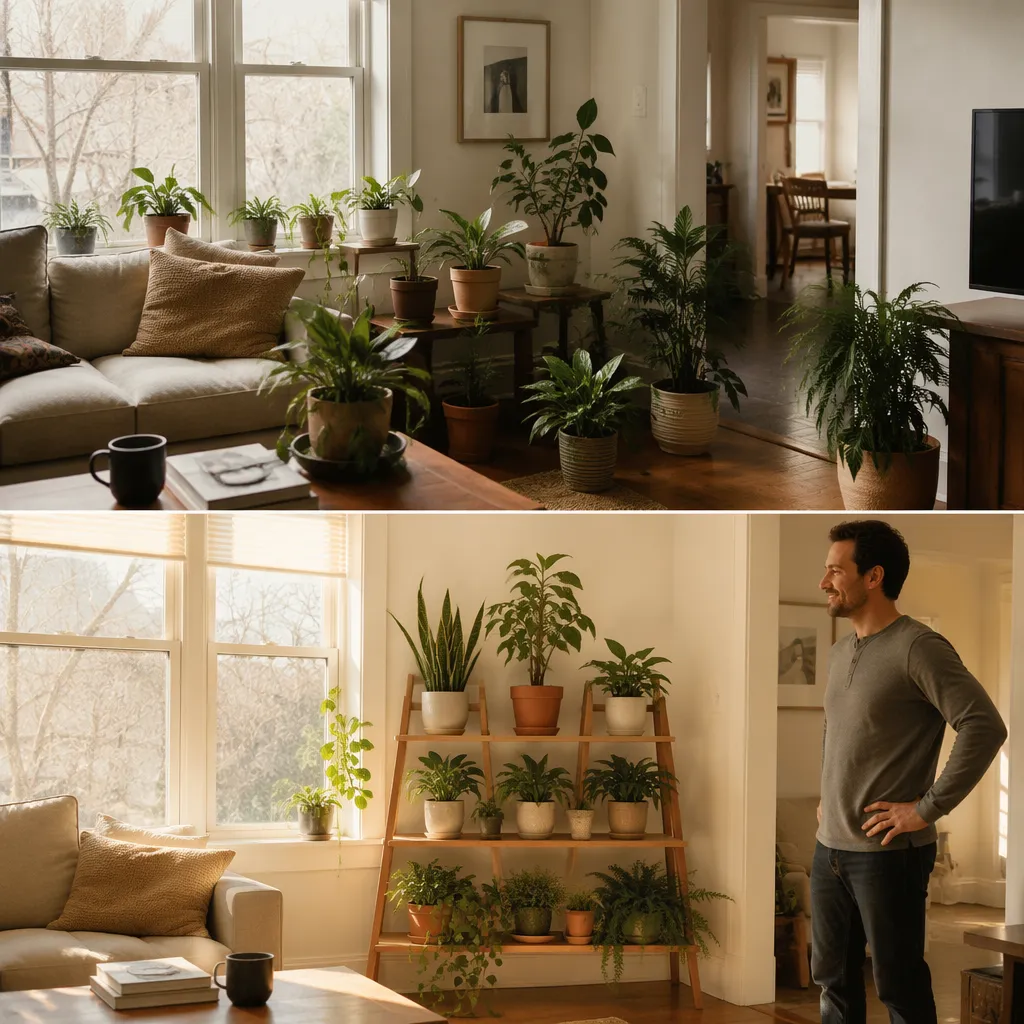
The other advantage is display. A plant shelf groups your greenery in one intentional spot instead of letting pots creep across every windowsill and side table in the house. That single decision makes a room feel considered instead of cluttered.
Pro tip: Position your shelf so the tallest plants sit toward the back or top and trailing plants spill from the front or bottom. That layered depth is what makes a shelf look styled instead of just stocked.
How to Choose the Right Plant Shelf
Start with where it’s going. A window plant shelf needs to handle direct sun exposure and occasional water drips, so sealed wood or metal works best. A wall-mounted shelf inside a living room has more design flexibility since it’s not fighting moisture the same way.
Next, think about how it attaches. Floating shelves need solid wall anchors and work best for lighter pots. Freestanding tiered shelves hold more weight and don’t require any drilling, which makes them the better option for renters.
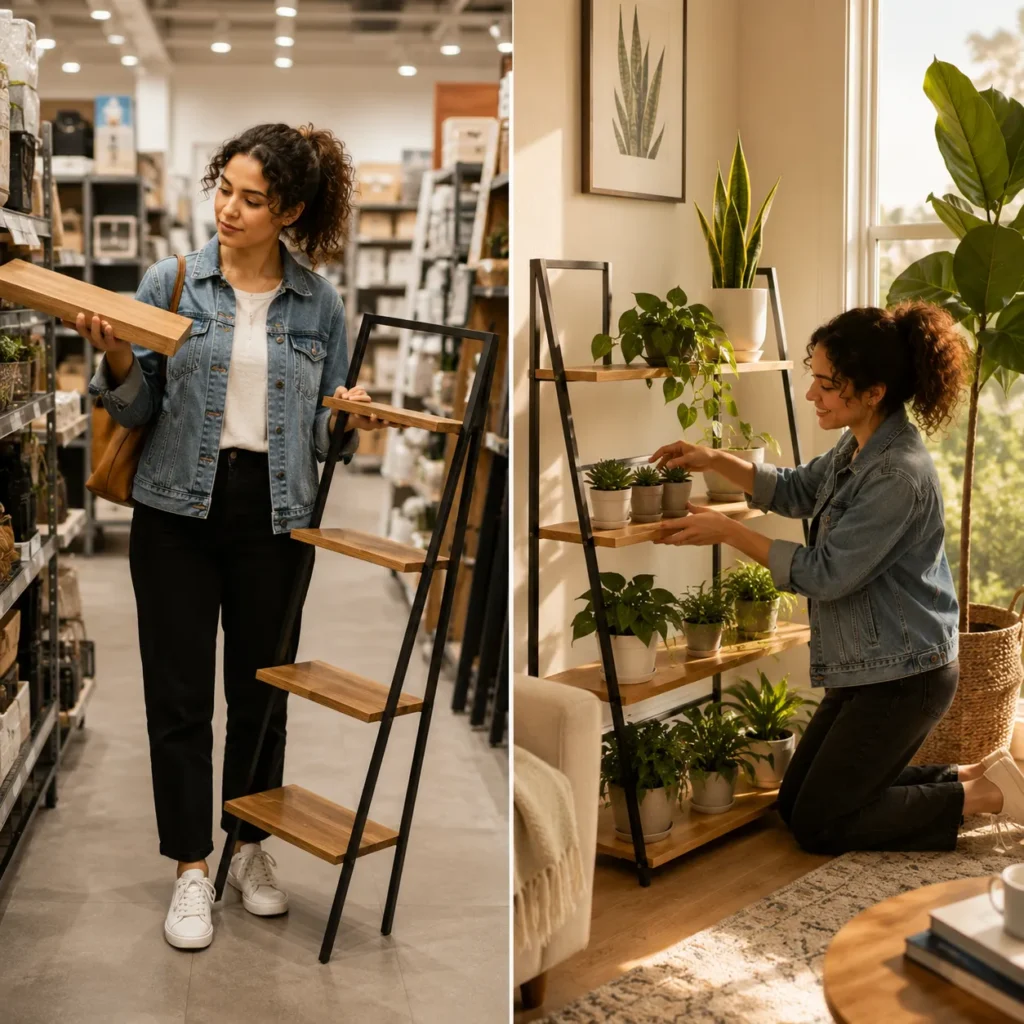
Weight capacity matters more than people expect. A shelf that looks sturdy can still sag under several ceramic pots filled with wet soil. Check the stated weight limit before you buy, especially for anything wall-mounted.
Size comes down to how many plants you’re actually working with. One or two plants do fine on a small single shelf. A growing collection needs a tiered or ladder-style shelf that gives each plant its own level and its own light.
Best Types of Plant Shelves
Window Plant Shelf
A window plant shelf mounts directly across your window frame, turning unused glass space into a proper garden display. These work especially well in kitchens, where a shelf over the sink gives herbs and small plants direct light right where you’ll actually use them.
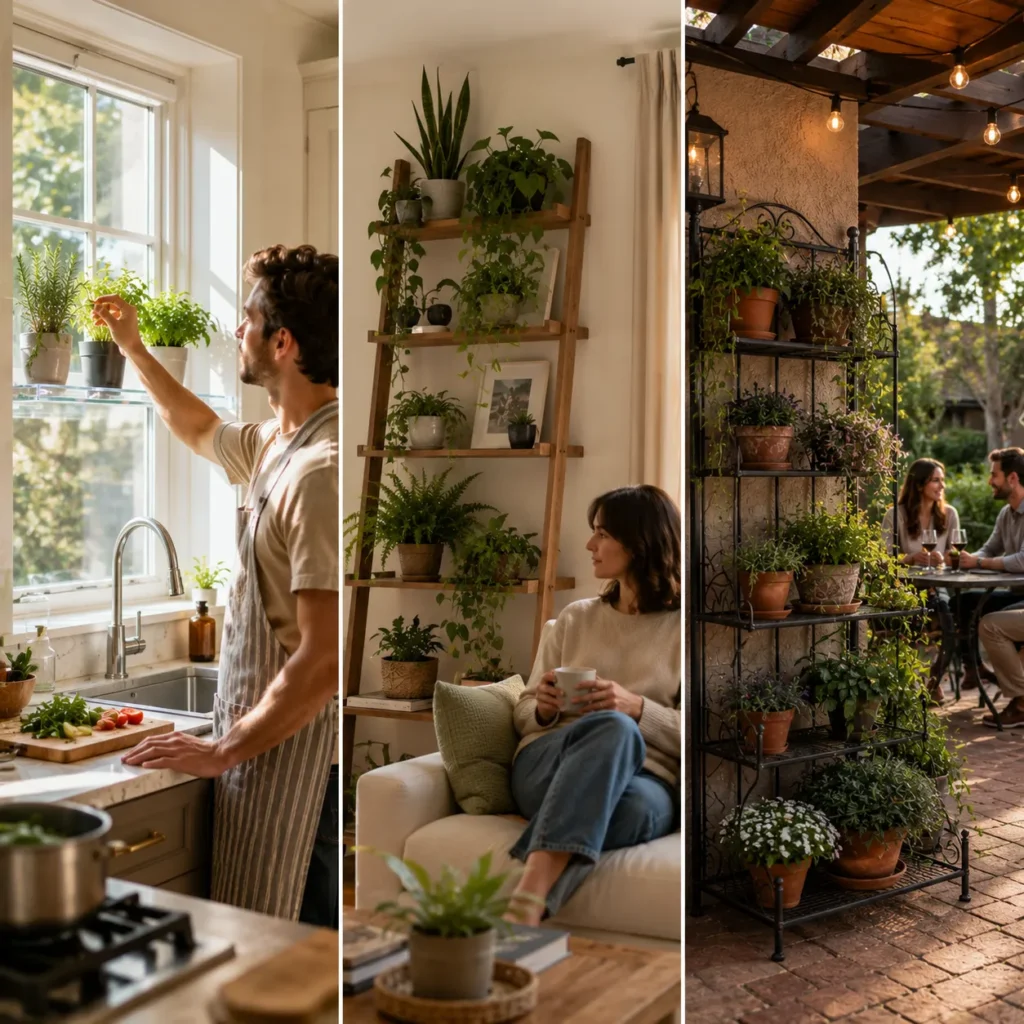
Look for a shelf with a slight lip or drainage groove so water doesn’t run straight down your wall. Glass and clear acrylic versions are popular because they let light pass through to plants on lower levels, which matters if you’re stacking more than one shelf in the same window.
Wall-Mounted and Floating Plant Shelf
A floating plant shelf mounts flush to the wall with no visible brackets, giving it a clean, almost built-in look. These work well in living rooms and hallways where you want plants without eating up floor space.
The tradeoff is weight capacity. Floating shelves generally hold less than freestanding options, so they’re best suited to smaller pots and lighter plants like pothos or succulents rather than anything large and heavy.
Hanging Plant Shelf
A hanging plant shelf suspends from the ceiling on chains or rope, which frees up your walls entirely and adds visual interest above eye level. These are especially good in small apartments where floor and wall space are both already spoken for.
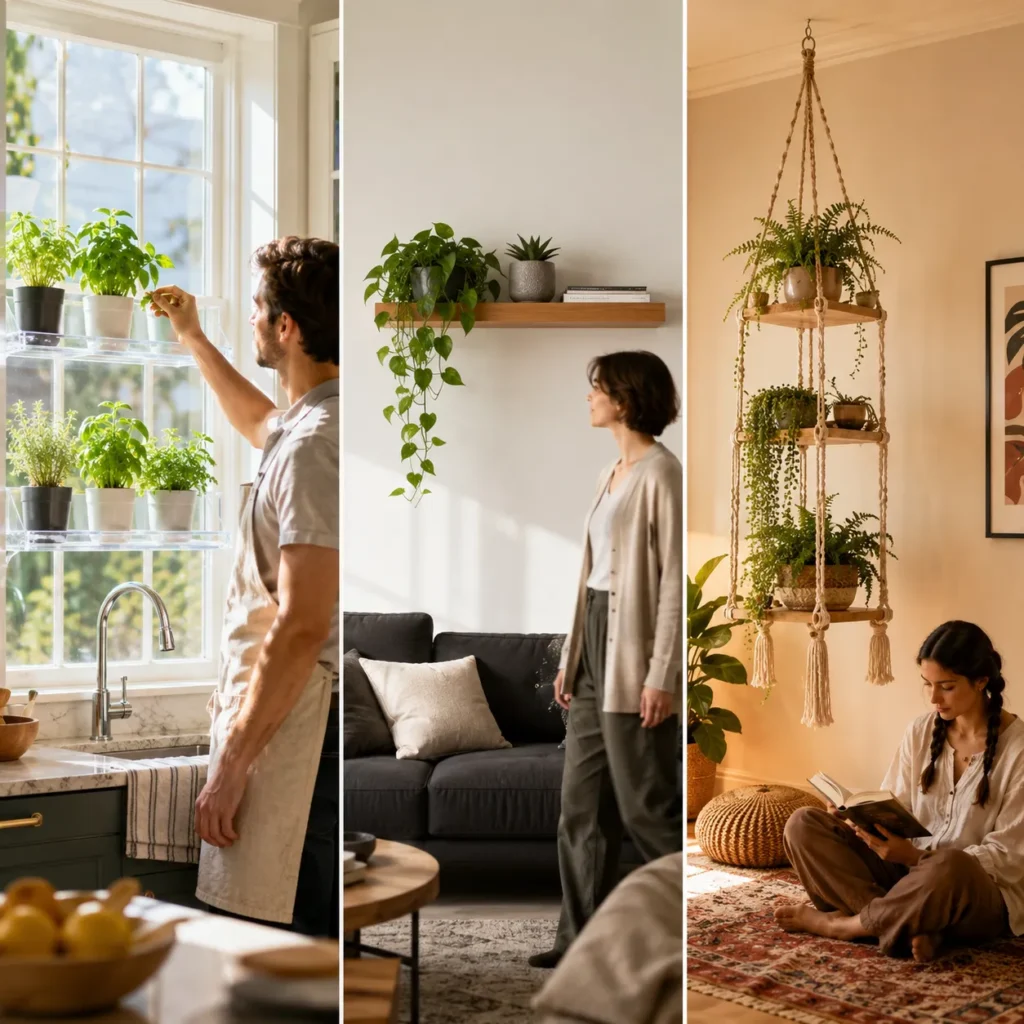
Macramé and rope versions lean boho, while chain-suspended wood or metal shelves read more modern. Either way, make sure whatever you’re hanging from can actually support the weight once the pots are full and watered.
Corner Plant Shelf
Corners are some of the most wasted space in any room, and a corner plant shelf is built specifically to use that angle efficiently. Multi-tier corner units can hold several plants in a footprint that no other piece of furniture would fit into.
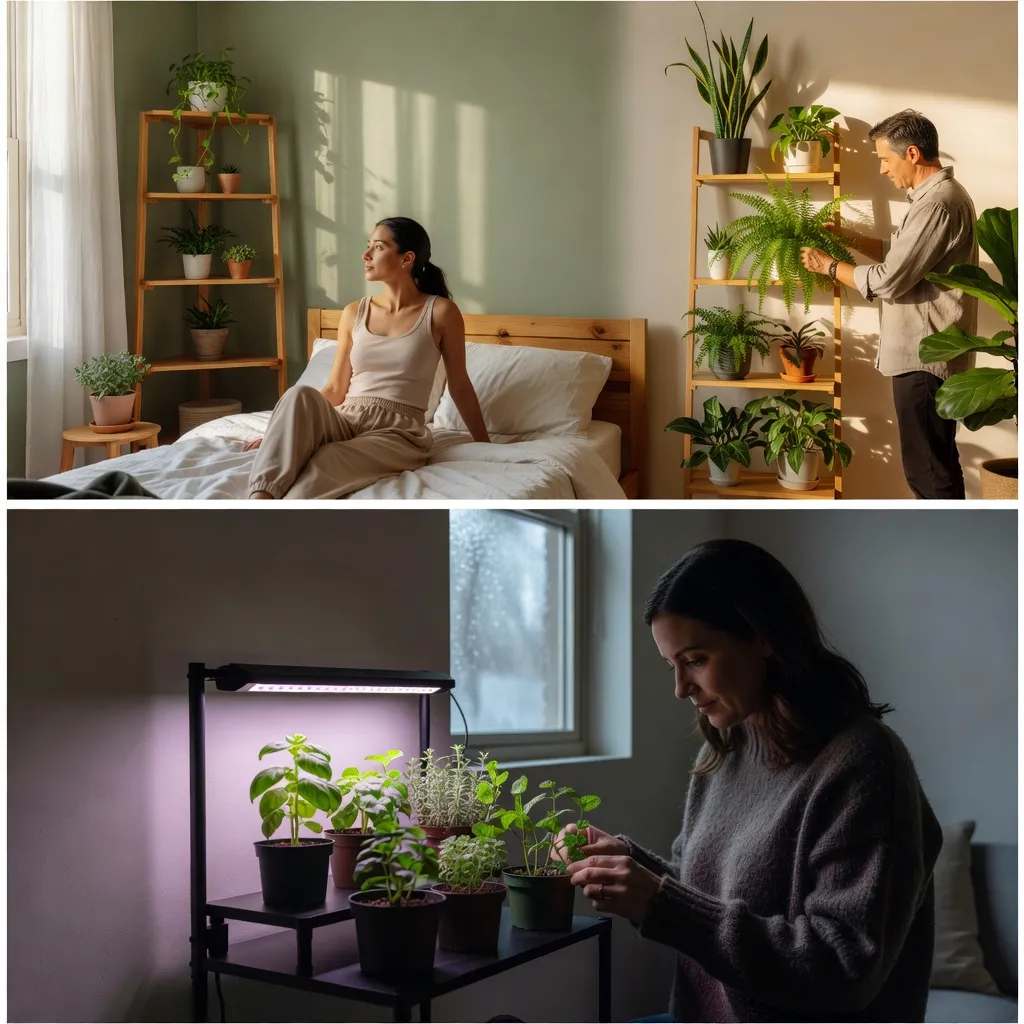
These work particularly well in bedrooms and living rooms where the walls are already claimed by furniture and a corner is the only open real estate left.
Tiered and Ladder Plant Shelf
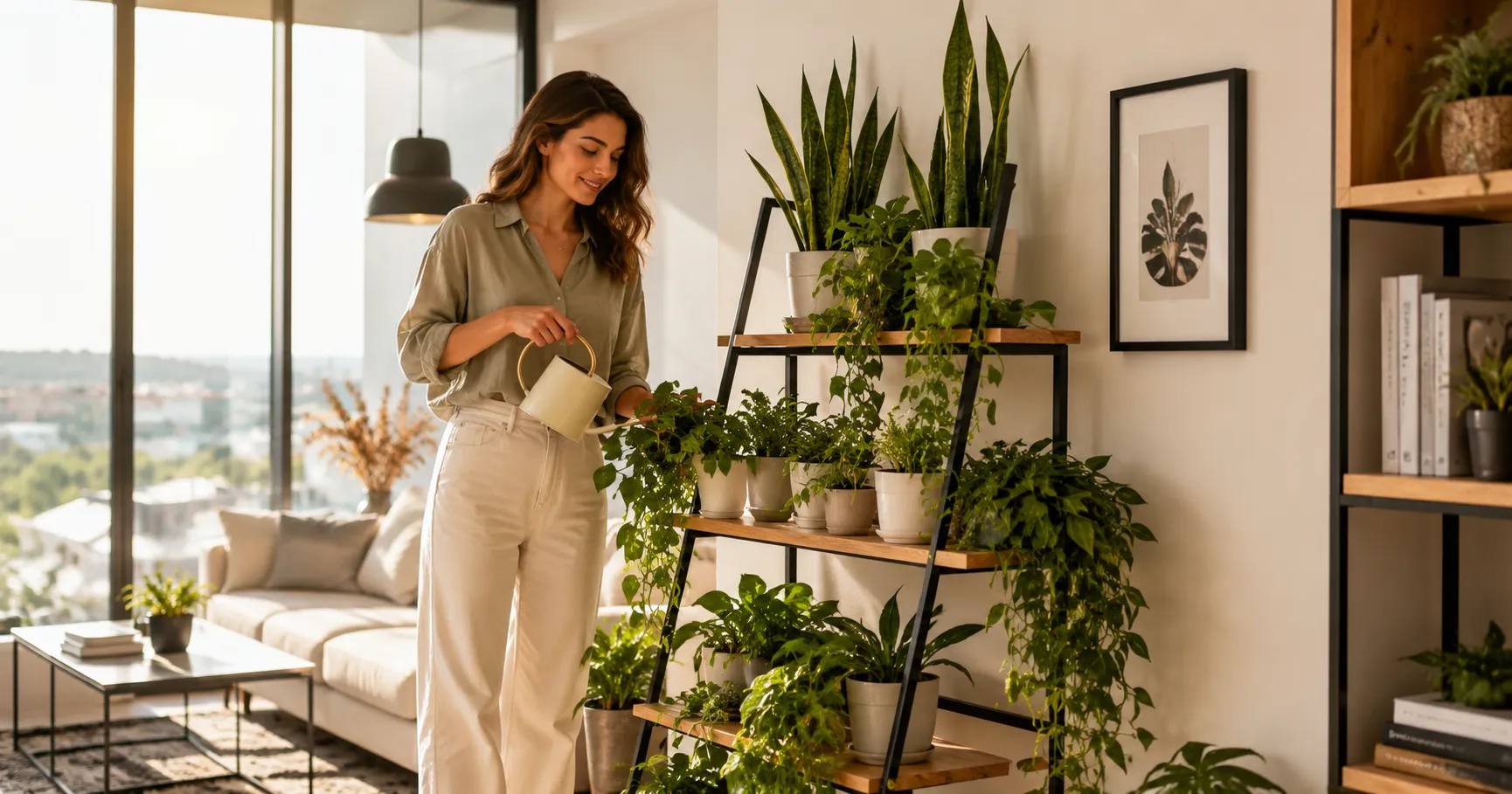
A tiered or ladder-style plant shelf is the best option once your plant collection outgrows a single surface. The stepped design gives every plant its own level and its own light exposure, and the cascading shape naturally looks more intentional than a row of plants lined up on a flat surface.
These freestanding units also don’t require any wall mounting, which makes them a solid choice for renters who don’t want to drill holes.
Plant Shelf with Grow Lights
For rooms without much natural light, a plant shelf with grow lights built in solves the problem directly. These integrate LED grow bars into a tiered shelf structure, essentially creating a self-contained growing setup for plants that would otherwise struggle.
They’re a smart pick for north-facing apartments or anyone trying to keep herbs or plant babies alive through a dim winter.
Pro tip: If you’re using a grow light shelf, keep the lights on a timer. Twelve to fourteen hours a day is plenty for most houseplants, and a timer means you don’t have to remember to turn them on and off yourself.
Best Materials Compared
| Material | Best For | Durability | Maintenance | Price Range |
| Wood | Living rooms, bedrooms | Medium to High | Low, occasional sealing | $25–$150 |
| Metal | Modern and industrial spaces | High | Low, wipe clean | $20–$120 |
| Bamboo | Boho, natural interiors | Medium | Low, keep dry | $20–$90 |
| Wrought Iron | Outdoor and vintage styles | Very High | Low, check for rust | $30–$180 |
For indoor use, wood and metal offer the best mix of durability and style flexibility. Bamboo looks great but should stay away from humid spots like bathrooms and kitchens near a sink. If the shelf is going outside, wrought iron is the one material built to actually last through the seasons.
Best Plant Shelf Ideas by Space
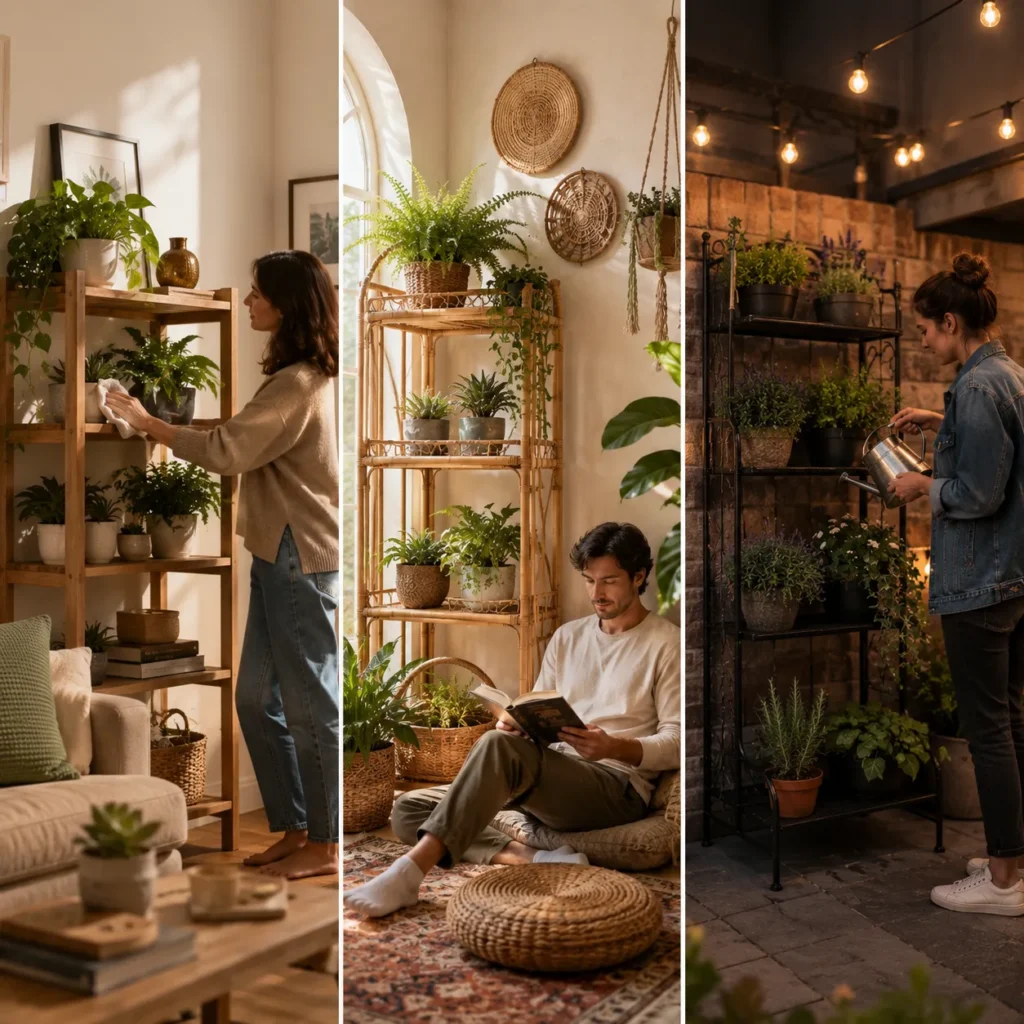
Kitchen window or over the sink is one of the most useful spots in the whole house for a plant shelf. Herbs get consistent light and stay within reach while you cook, and a small glass or acrylic shelf keeps the area looking bright rather than cluttered.
Living room wall benefits from a floating or ladder shelf positioned where it fills a visually flat stretch of wall. Mixing plant heights across the shelf, tall in back, trailing in front, gives the display real depth instead of a flat row of identical pots.
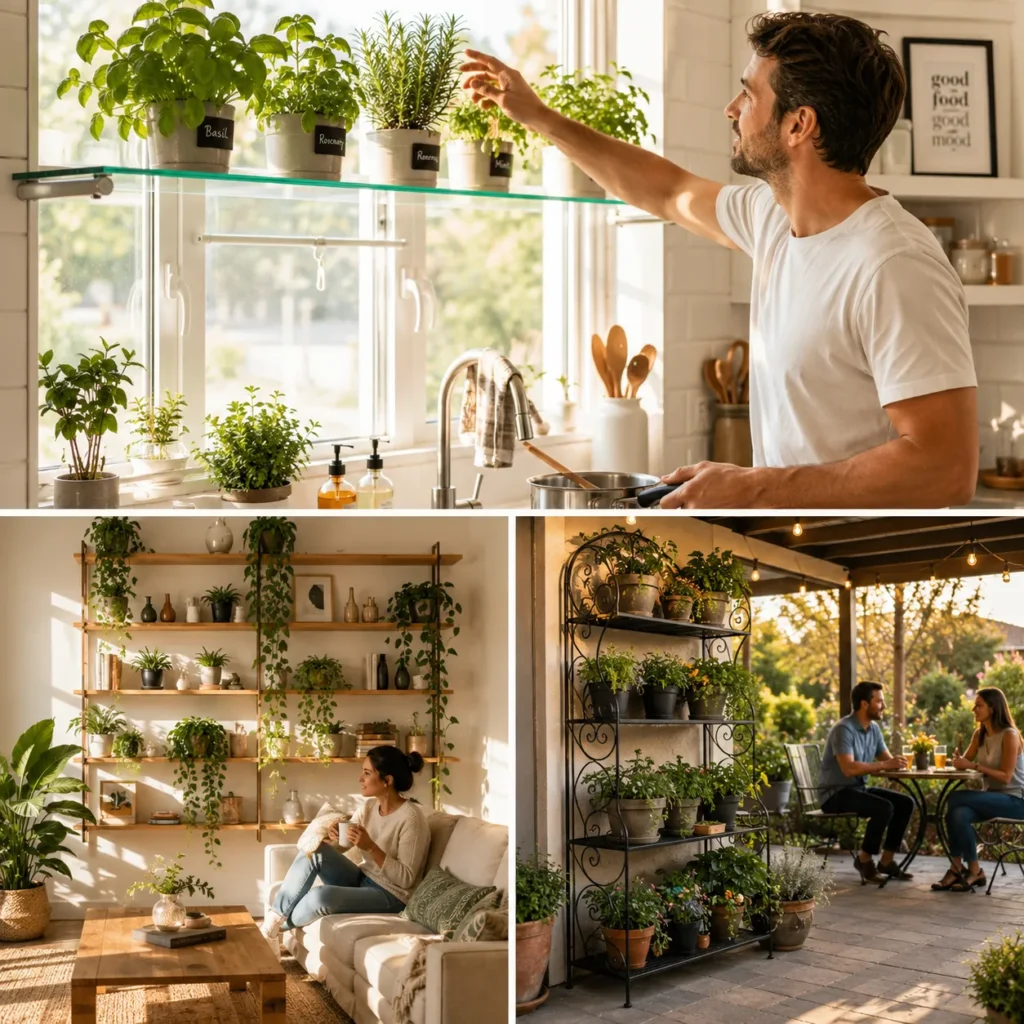
Outdoor patio or balcony calls for a wrought iron or sealed wood tiered shelf that can handle sun and rain. Positioning it against a wall or under a covered area extends its lifespan significantly and protects more delicate plants from direct weather.
Common Mistakes to Avoid
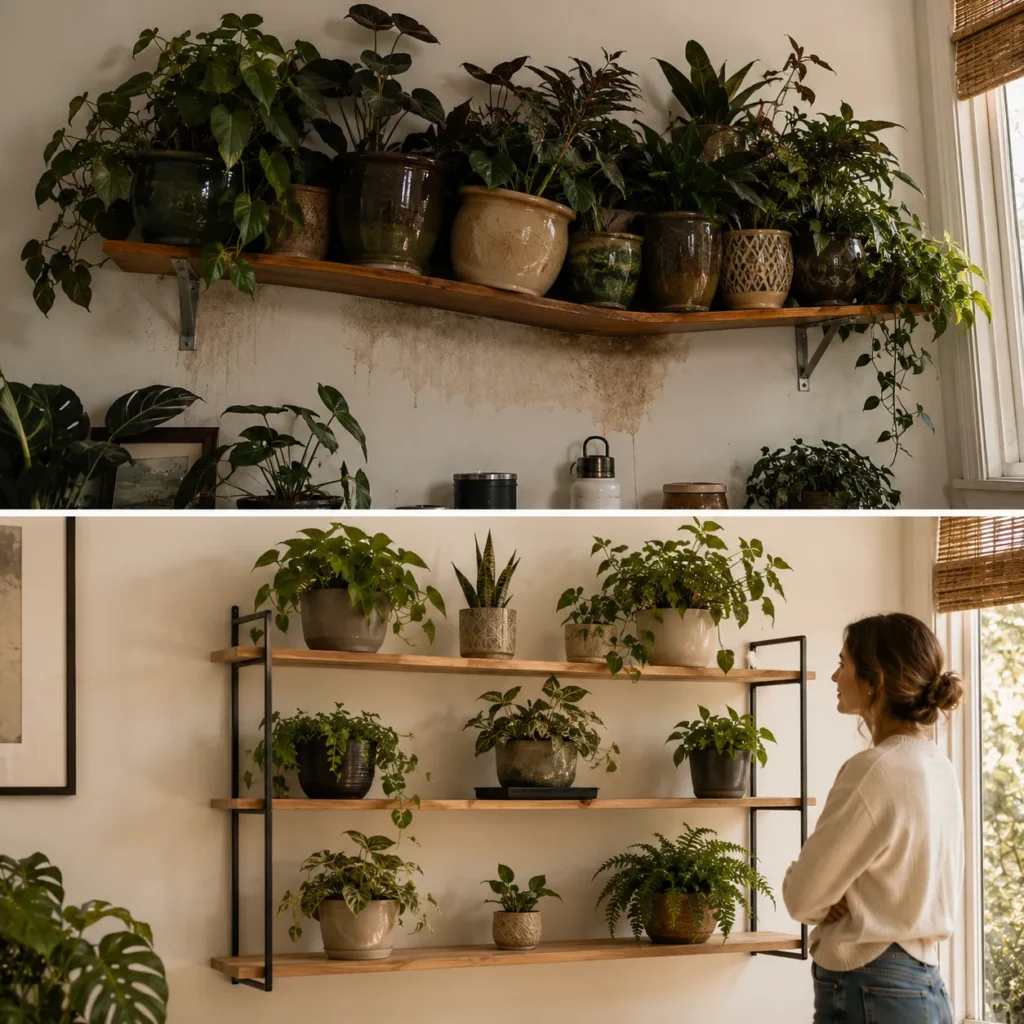
Overloading a shelf beyond its weight limit is the most common mistake, and it usually ends with a cracked bracket or a shelf pulling away from the wall. Skipping drainage consideration is another one. Without a saucer or drainage-friendly design, water damage to walls and floors happens fast.
Ignoring the material’s environment is a mistake too. Bamboo in a steamy bathroom or untreated wood outdoors will both degrade quickly no matter how nice they look on day one. And overcrowding a shelf with too many plants packed too close together ends up looking messy instead of styled, even when every individual plant is healthy.
The Designer’s Take
A plant shelf isn’t just a place to park a few pots. Done right, it turns a scattered collection into a display that actually reads as intentional. Start with one shelf in the spot that needs it most, whether that’s a bare kitchen window or an empty stretch of living room wall, and build from there as your plant collection grows.
FAQs
How much weight can a floating plant shelf hold?
Most floating shelves hold between 15 and 40 pounds depending on the mounting hardware and wall type. Always check the manufacturer’s rating and mount into studs when possible for anything holding more than a couple of small pots.
What’s the best plant shelf for a kitchen window?
A glass or acrylic shelf with a built-in drainage lip works best over a kitchen sink. It lets light through to any plants on lower levels and won’t warp from the humidity that comes with regular kitchen use.
Can plant shelves go outside?
Yes, as long as the material is weather-rated. Wrought iron, powder-coated metal, and sealed or treated wood all hold up outdoors. Untreated wood, bamboo, and basic particleboard should stay indoors.
Do I need drainage on a plant shelf?
It’s not required, but it makes life easier. A shelf with a drainage groove or lip catches excess water before it runs onto your wall or floor, which matters most for window shelves and anything near a sink.