The best indoor planters have a drainage hole (or let you hide a plastic nursery pot inside), run one size up from the root ball, and suit how often you actually water. Below are the seven I would buy today, from budget multipacks to a statement floor pot, plus a comparison table and buying guide.
This post contains affiliate links. As an Amazon Associate, I earn from qualifying purchases, at no extra cost to you.
Quick Answer: The Best Indoor Planters at a Glance
For most homes, the best indoor planters are a glazed ceramic set for shelves and tabletops, terracotta or a self-watering pot for fussy plants, and one statement floor planter in the room you use most. Here are the quick picks by need:
- Best overall: LE TAUCI Ceramic Plant Pots, Set of 3
- Best stone look for less: LA JOLIE MUSE Planter Pots, 2 Pack
- Best for forgetful waterers: QRRICA Self-Watering Pots, 5 Pack
- Best for succulents and overwaterers: Tuqaumu Terracotta Pots, 6 Pack
- Best for windowsills and herbs: MyGift 14-Inch Rectangular Ceramic Planter
- Best mid-century statement: D’vine Dev 10-Inch Planter With Walnut Stand
- Best large floor planter: LE TAUCI 12-Inch White Ceramic Pot
The 7 Best Indoor Planters for Every Plant and Budget
I chose these for a real drainage plan, sizes that match standard nursery pots, calm modern finishes, and solid Amazon ratings. Prices move often, so treat the ranges as a guide.
1. Best Overall: LE TAUCI Ceramic Plant Pots, Set of 3
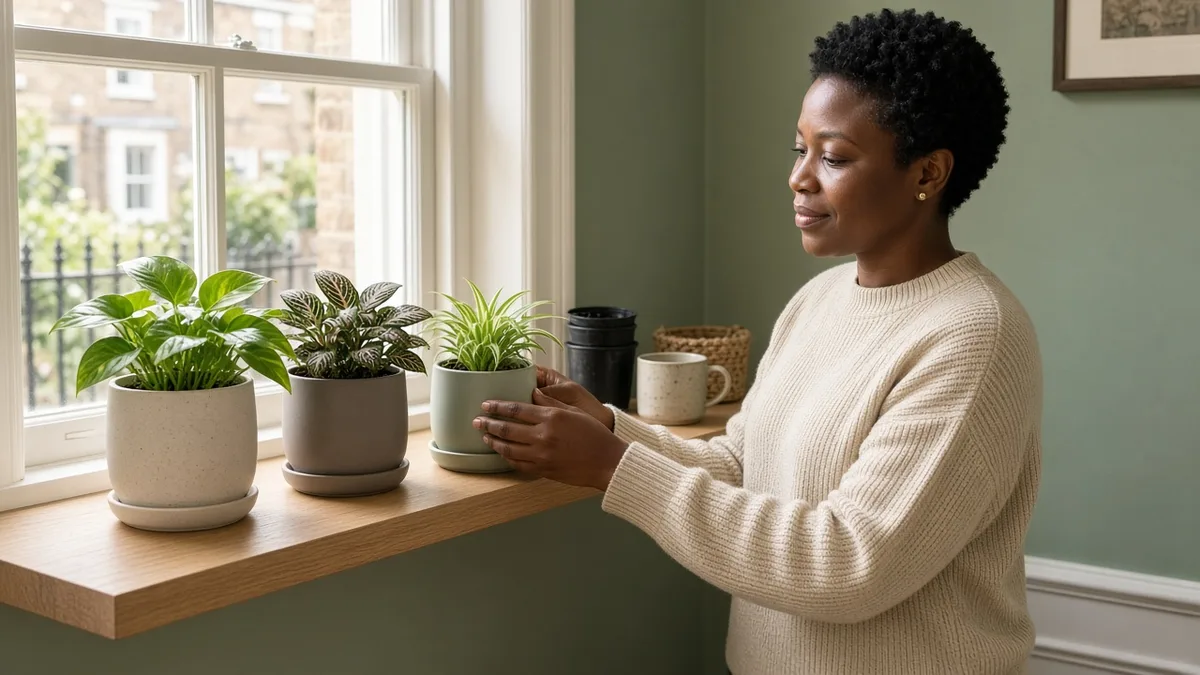
Replacing a shelf of plastic nursery pots? Start with this LE TAUCI ceramic plant pot set. You get three ceramic pots at roughly 4.3, 5.3, and 6.8 inches across, each with a drainage hole, a mesh pad, and a saucer that is fixed to the base. The smooth finish comes in white, black, and brighter shades like turquoise, sapphire, and pink, so a mixed group of houseplants looks intentional.
Expect to pay around $20 to $35 for the set. Reviewers note the attached saucer cannot be lifted off, so water slowly and tip out any excess.
2. Best Stone Look for Less: LA JOLIE MUSE Planter Pots, 2 Pack
This LA JOLIE MUSE stone-look planter pair is a smart high-low choice for renters. The 8.6 and 7.5 inch pots blend recycled plastic with stone powder, so they read as concrete across the room but stay light enough to move toward the window in winter.
Each pot has four raised drainage holes over a small reservoir. There is no saucer, so add one indoors. The pair usually costs around $20 to $30.
3. Best for Forgetful Waterers: QRRICA Self-Watering Pots, 5 Pack
For busy weeks, a QRRICA self-watering pot set takes the guesswork out. A cotton wick pulls water up from a reservoir, while drainage holes and a saucer stop soil sitting in water. The set covers 7, 7.5, 8, 9, and 10 inch pots for around $20 to $30.
The maker says one fill lasts up to two weeks, which will vary with plant and light. Some reviewers find the larger pots shallow, so they suit pothos and herbs better than deep-rooted plants.
4. Best for Succulents and Overwaterers: Tuqaumu Terracotta Pots, 6 Pack
Clay is the safest choice if you tend to overwater. This six-pack of terracotta pots with saucers includes 6 inch pots, plastic saucers, and cone-shaped mesh inserts that keep soil in the drainage hole.
Unglazed clay breathes, so soil dries faster than in glazed ceramic or plastic, which snake plants and succulents appreciate. A set runs around $20 to $25, and a cluster on a tray looks warm and relaxed.
5. Best for Windowsills and Herbs: MyGift 14-Inch Rectangular Ceramic Planter
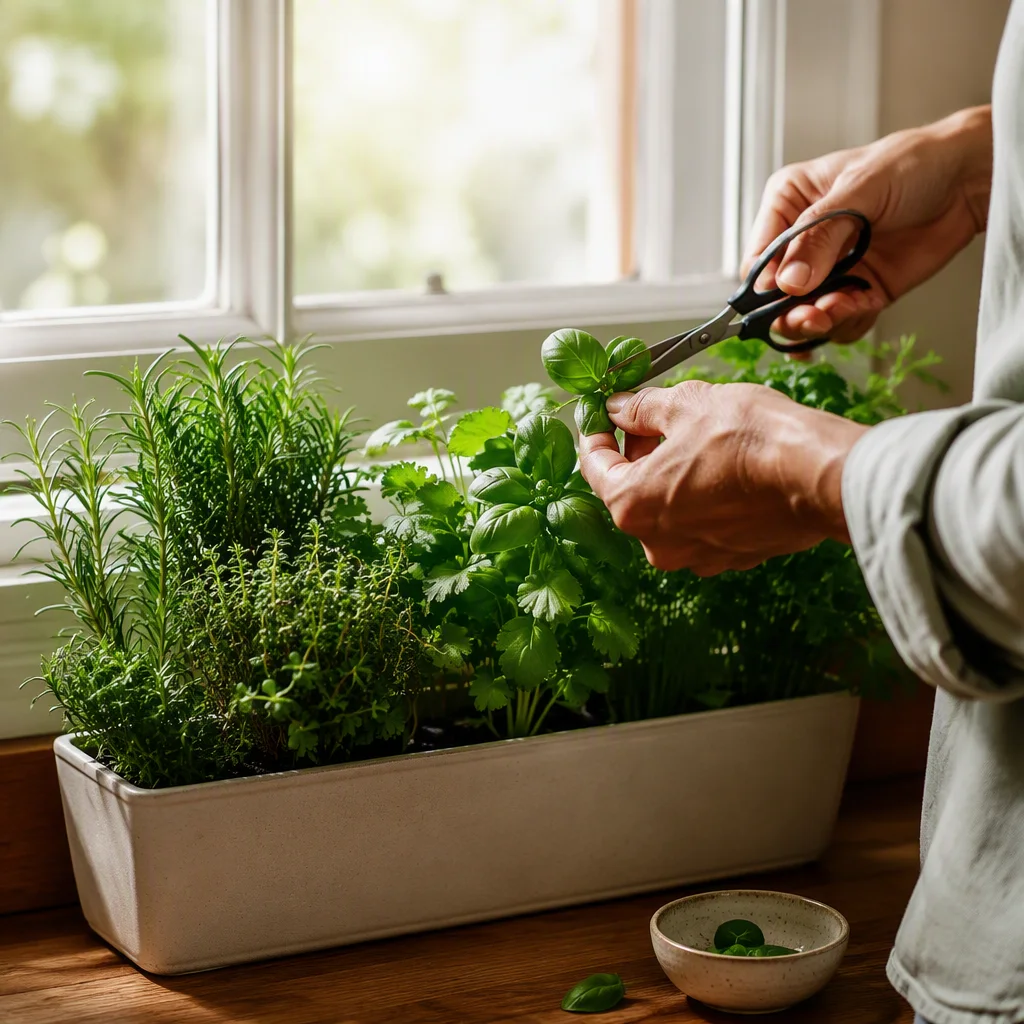
For kitchen herbs, this matte black rectangular window box planter is a tidy choice. The planting box is about 14 inches long and 5.5 inches deep (14.6 by 6.1 inches with its removable tray), with two drainage holes. Measure your sill first, since the tray is the widest part.
It usually sells for around $35 to $45. Some reviewers say the black finish can look uneven up close, so let the herbs be the focus.
6. Best Mid-Century Statement: D’vine Dev 10-Inch Planter With Walnut Stand
Raising a pot gives a medium plant real presence. This ceramic planter with a walnut wood stand sets a 10 inch glazed pot on a solid beech stand in a walnut finish, bringing the total height to about 16.5 inches. It comes with a drainage hole, a detachable saucer, a mesh net, and non-slip pads.
Plan on around $70 to $90, the most you will spend on any pick here. The pot comes in nine colors and the stand in three finishes, and watering at the sink keeps the wood dry.
7. Best Large Floor Planter: LE TAUCI 12-Inch White Ceramic Pot
Let the planter beside the sofa be the one people notice. This LE TAUCI 12 inch white ceramic planter is about 12 inches across and 9.4 inches tall, with a smooth white finish, a drainage hole, a mesh pad, and a saucer.
It suits a snake plant or a mix of smaller plants and usually costs around $55 to $80. It is heavy, and some reviewers say water drains slowly, so place it before planting and water in stages.
Indoor Planters Compared
Here is how the seven picks line up on price and purpose.
| Product Name | Price Range | Best For | Buy on Amazon |
|---|---|---|---|
| LE TAUCI Ceramic Plant Pots, Set of 3 | $20 to $35 | Shelves, desks, and small houseplants | Check price |
| LA JOLIE MUSE Planter Pots, 2 Pack | $20 to $30 | Stone look without the weight | Check price |
| QRRICA Self-Watering Pots, 5 Pack | $20 to $30 | Busy schedules and travel | Check price |
| Tuqaumu Terracotta Pots, 6 Pack | $20 to $25 | Succulents, cacti, and overwaterers | Check price |
| MyGift 14-Inch Rectangular Planter | $35 to $45 | Herbs on a kitchen windowsill | Check price |
| D’vine Dev 10-Inch Planter With Stand | $70 to $90 | Mid-century corners and medium plants | Check price |
| LE TAUCI 12-Inch White Ceramic | $55 to $80 | Large floor plants in main rooms | Check price |
How to Choose an Indoor Planter
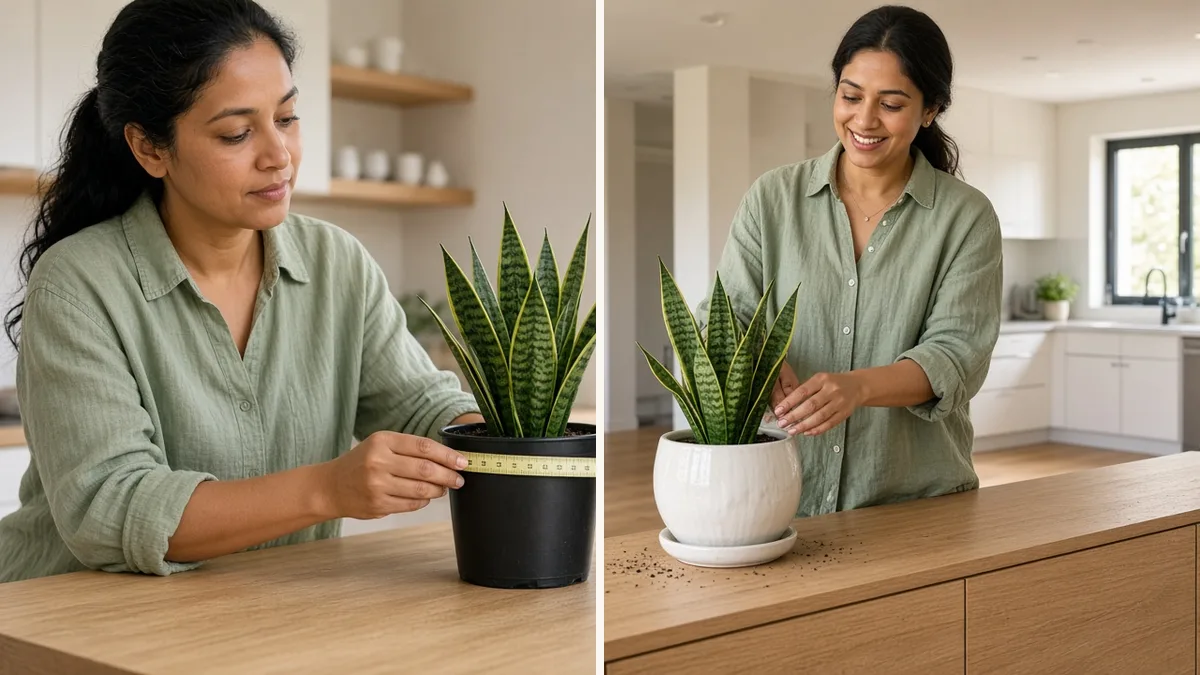
A beautiful pot in the wrong size, or one that traps water, will cost you the plant. These five checks keep it simple.
Size: Match the Planter to the Root Ball
Measure the nursery pot straight across the top. A common rule of thumb is to choose a planter about 1 to 2 inches wider for small and medium plants, and 2 to 4 inches wider for large floor plants. Anything much bigger leaves extra soil that stays wet.
If the nursery pot stays in, measure the inside of the planter and leave about a finger of space around it. As a loose visual guide, a planter a third to half the plant’s height tends to look balanced.
Drainage Holes vs. a Cachepot
A drainage hole lets excess water escape, which is why every pick above has one. A cachepot is a decorative pot without a hole: keep the plant in its nursery pot inside and lift it out to water.
Some planters come with a silicone plug for the drainage hole, so you can use them either way. Skip gravel in a holeless pot; the general advice is that it does not stop water pooling around the roots.
Materials at a Glance
Glazed ceramic looks polished and holds moisture longer but is heavy and breakable. Terracotta breathes and dries fast. Plastic, resin, and stone-composite pots are light and inexpensive but stay wet longer. For the full pros and cons of each, see my guide to the best planter materials compared.
Weight and Where It Will Sit
Wet soil adds real weight. Lightweight pots suit floating shelves and anything you move seasonally, while heavy ceramic belongs on the floor or a sturdy stand. To lift plants closer to the light, these plant stands and shelves pair well with the smaller pots above. A rolling caddy protects floors under big pots. For porches and patios, see my guide to the best outdoor planters.
Light and Style
Bright windows dry soil faster, so porous terracotta and unglazed ceramic work best there, while low-light corners suit glazed ceramic or plastic that hold moisture.
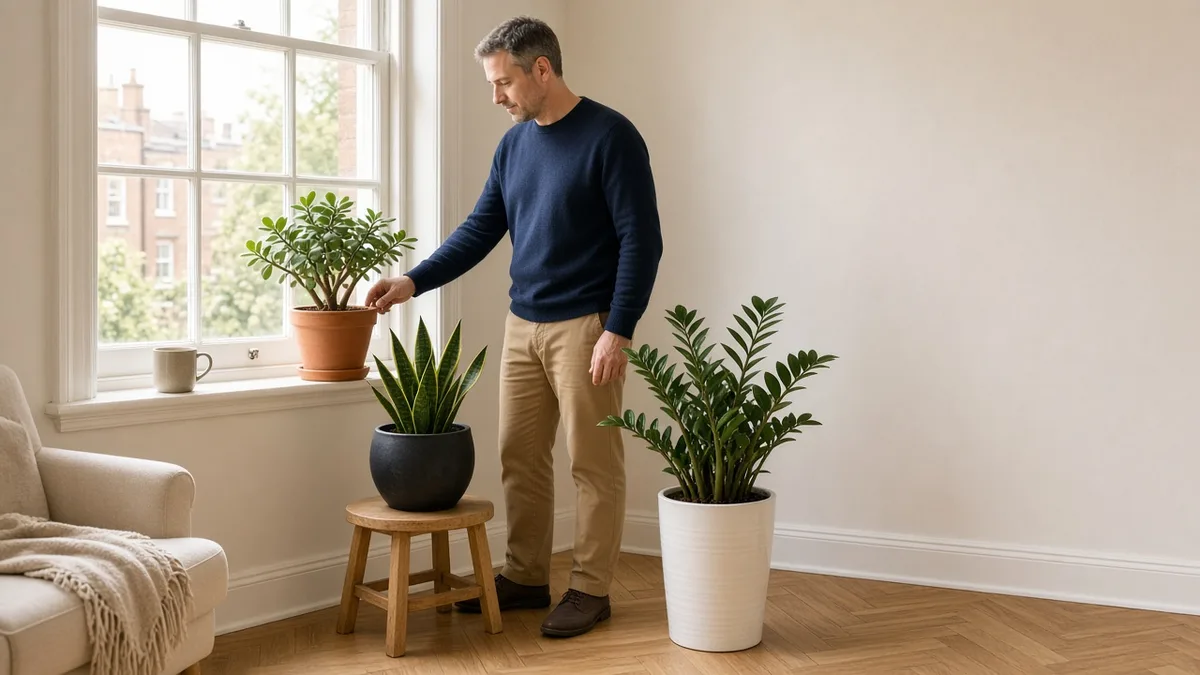
For a look that feels expensive, repeat one material or color across a room and group pots in odd numbers at varied heights. My house plant display ideas show more ways to arrange them, and if floor space is tight, wall planters for small spaces free up surfaces entirely.
What I’d Choose
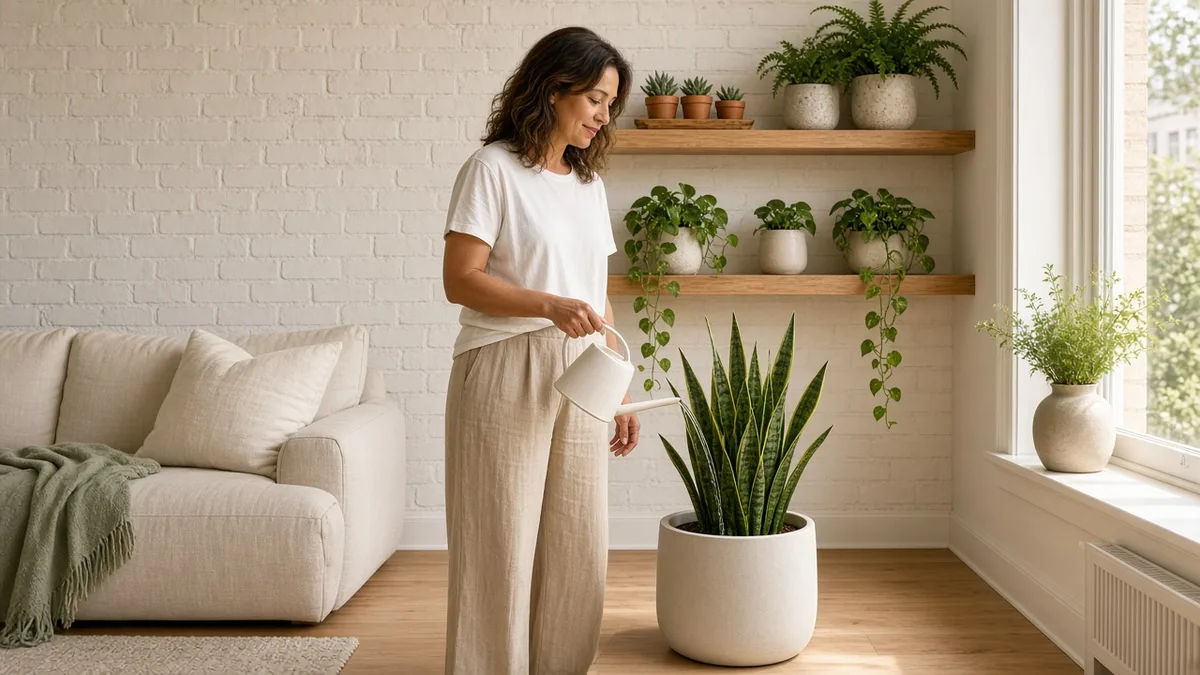
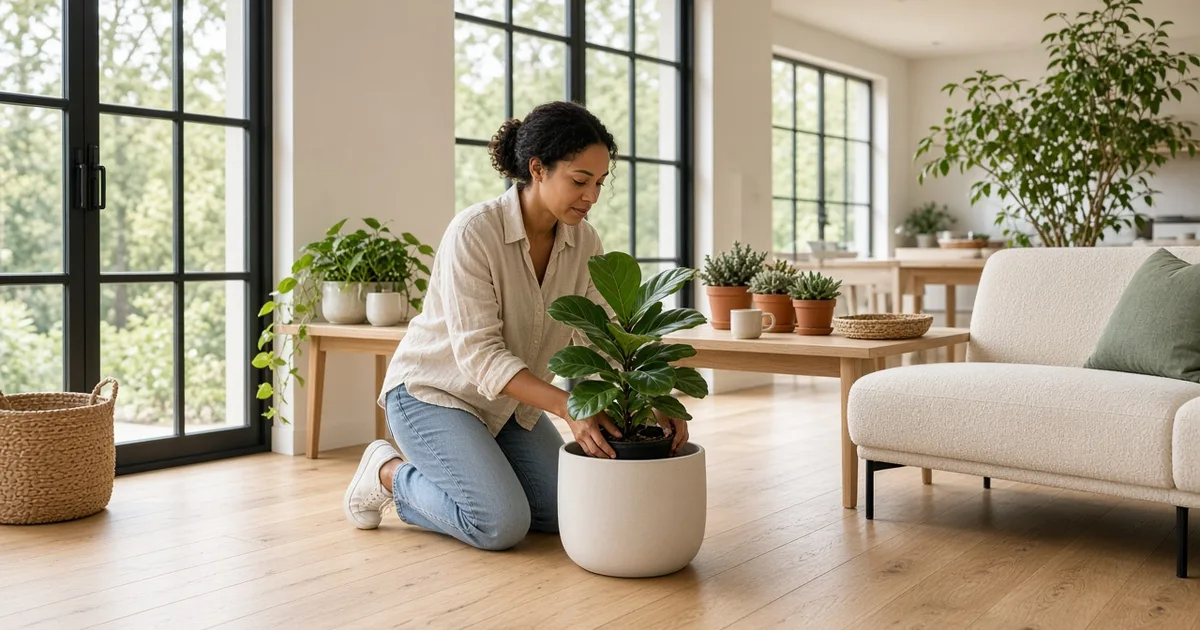
If I were starting over, I would buy the LE TAUCI set of three for shelves, a pack of terracotta for anything succulent, and the stone-look LA JOLIE MUSE pair for spots where weight matters. Then I would save on the small pots and spend on one statement floor planter, because the pot people see first makes an inexpensive plant look like a design choice.
Whatever you pick, size it one step up from the nursery pot, give water a way out, and choose a finish you will still like in five years.
Best Indoor Planters FAQ
What is the best material for an indoor planter?
Glazed ceramic is the most versatile choice for most homes because it looks polished and holds moisture well. Choose terracotta for succulents and lightweight stone-composite pots for high shelves or plants you move often.
Do indoor planters need drainage holes?
Yes, if you plant directly into them. Otherwise water collects and can rot the roots. If you love a pot without one, use it as a cachepot: keep the plant in its nursery pot inside and lift it out to water.
What size planter should I buy for my plant?
Measure the current nursery pot across the top. A common rule of thumb is a planter about 1 to 2 inches wider for small and medium plants and 2 to 4 inches wider for large floor plants. Much larger pots hold extra soil that stays wet.
Should I put rocks in the bottom of a planter?
Usually not. The general advice is that a gravel layer takes up root space and does not stop water from collecting around the roots. A drainage hole and a well-draining potting mix do far more.
Are self-watering planters good for indoor plants?
They work well for plants that like steady moisture, such as pothos, peace lilies, and herbs, and for people who travel. Succulents and cacti prefer soil that dries out, so skip them there.
How do I keep a planter from damaging floors or furniture?
Use a saucer under every pot with a drainage hole, add felt pads under heavy ceramic, and empty saucers after watering. A rolling caddy also makes large planters easy to move.