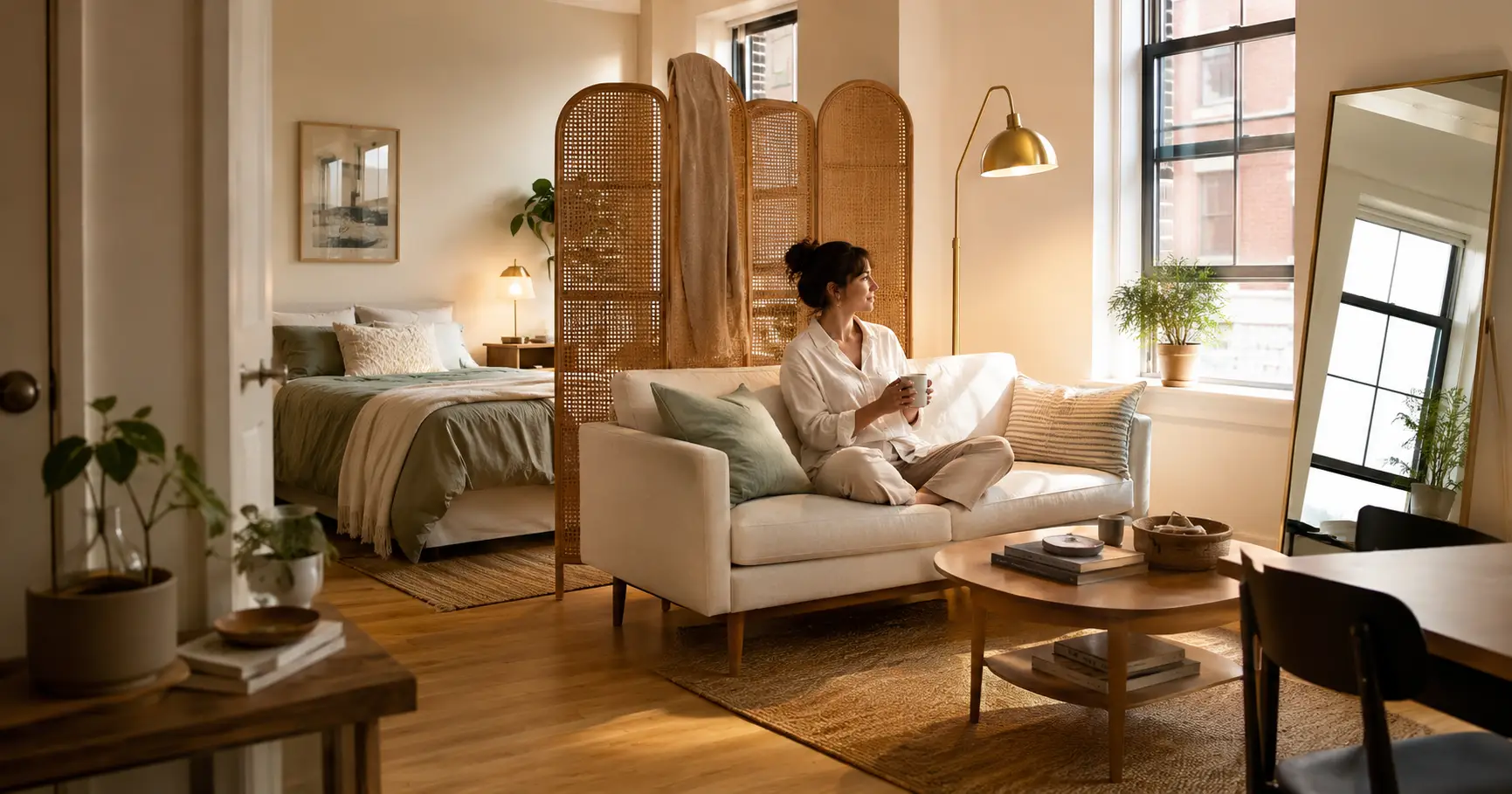
Studio living gets a bad reputation it doesn’t always deserve. Most of the time, it’s not the square footage working against you. It’s the decorating choices that make a small space read as small. A studio apartment can feel surprisingly open, calm, and even spacious once you understand how color, scale, and zoning actually work together in one room.
I’ve helped plenty of studio dwellers rework their space without knocking down a single wall, and the changes that make the biggest difference are almost never the expensive ones. They’re the ones rooted in how the eye reads a room. Here are the ideas that consistently move the needle, from lighting and furniture scale to the small styling habits that keep a studio from feeling like storage with a bed in it.
Why Studio Apartments Feel Smaller Than They Are
Before jumping into fixes, it helps to understand what’s actually working against you. It’s rarely the square footage itself.
The Visual Weight Problem
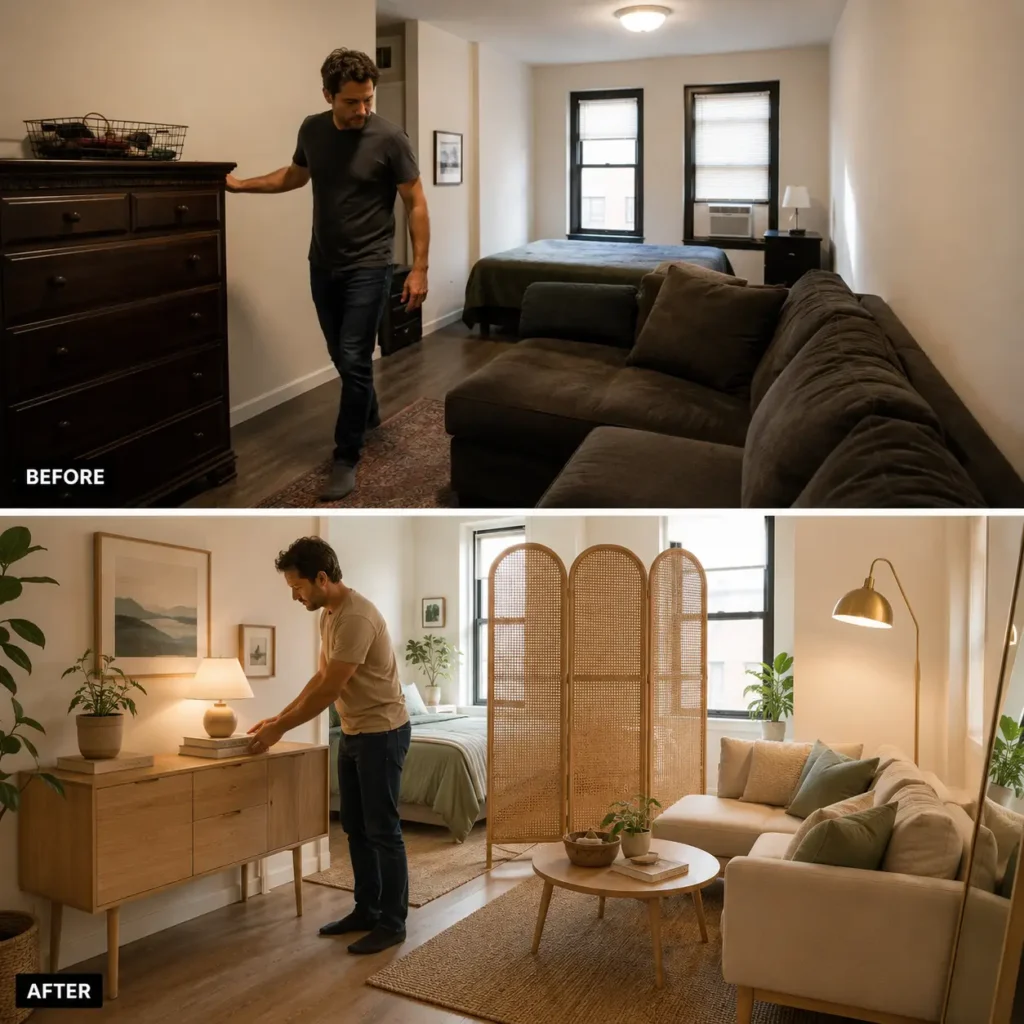
Every object in a room carries visual weight. Dark, bulky, or mismatched pieces add weight fast, and in a studio, that weight has nowhere to go. A single oversized dresser or a heavy dark sofa can make an entire room feel cramped, even if there’s technically open floor space around it. The goal isn’t to own less. It’s to choose pieces that don’t compete for attention.
Zoning Without Walls
In a traditional apartment, walls tell your brain where one function ends and another begins. A studio doesn’t have that built-in structure, so without some kind of visual zoning, everything blurs into one undefined space. That blurring is what actually makes a studio feel chaotic and small, more than the size ever does.
Color and Light Decorating Ideas
Color and light do more heavy lifting in a studio than almost anything else on this list, and they’re usually the cheapest place to start.
Choosing a Wall Color That Expands the Room
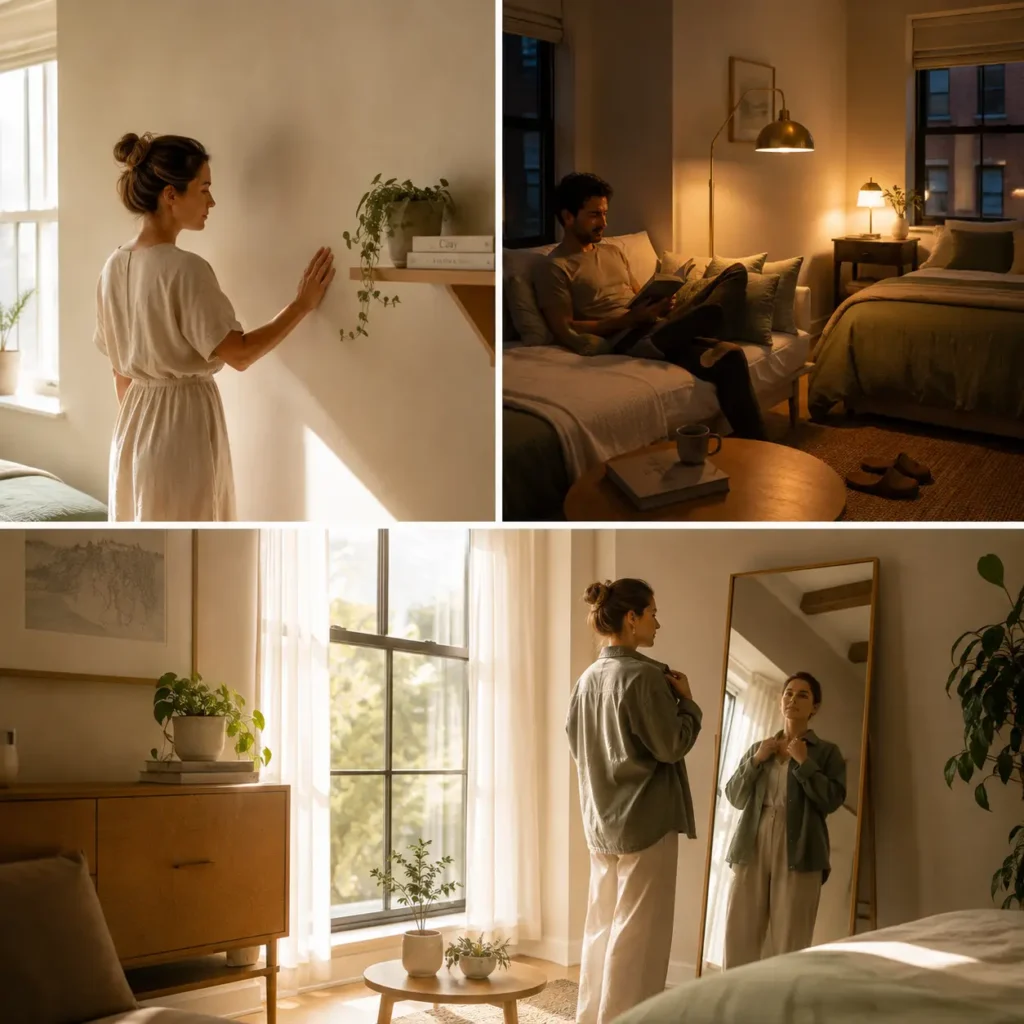
Soft, warm neutrals (think greige, soft ivory, or a muted sage) reflect more light than stark white and read as more sophisticated without shrinking the room. Avoid painting a “feature wall” in a bold color in a studio. It tends to visually cut the space into segments instead of unifying it, which works against the openness you’re going for.
Layering Light Instead of Relying on One Fixture
A single overhead light creates flat, harsh shadows that flatten the whole room. Layering in a floor lamp near the seating area, a table lamp by the bed, and a smaller accent light near a shelf creates depth and warmth. I consistently recommend a dimmable floor lamp as one of the first upgrades in a studio, since it lets you shift the mood between a bright work zone during the day and a softer, cozier space at night.
Mirrors and Reflective Surfaces That Add Depth
A well-placed mirror doesn’t just make a room look bigger, it genuinely bounces more natural light around the space. Position one across from your main window rather than against an interior wall to get the most benefit. A leaning floor mirror works especially well in a studio because it adds height and visual depth without requiring wall-mounting.
Furniture Choices That Make a Studio Feel Bigger
Furniture is where most studio mistakes happen, usually because people furnish for the room they wish they had instead of the one they actually live in.
Scaling Furniture to the Room, Not the Showroom
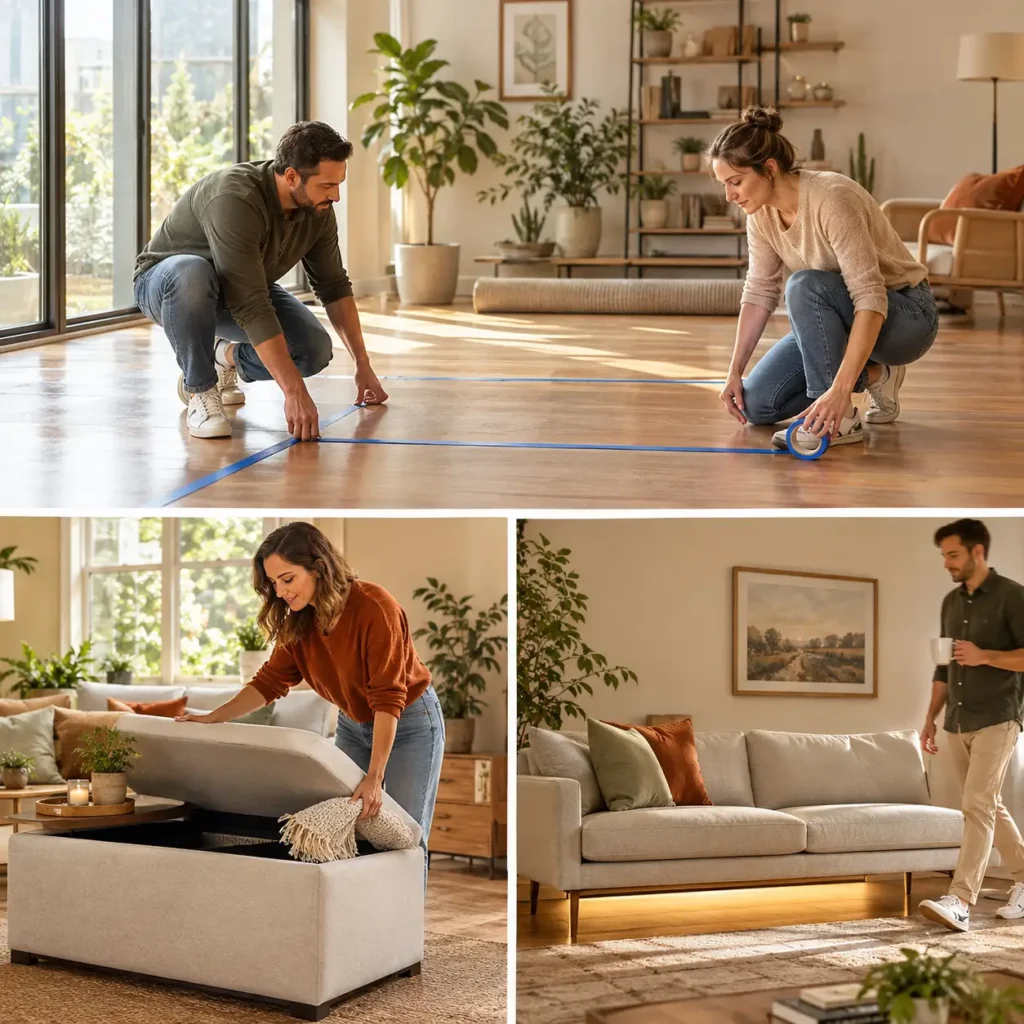
Furniture that looks proportional in a showroom often overwhelms a studio. Before buying anything large, measure the space it’ll occupy and tape it off on the floor first. A sofa that’s even six inches too deep can eat up walking room you didn’t realize you needed.
Multi-Functional Pieces Worth the Investment
A studio rewards furniture that pulls double duty. A storage ottoman that works as a coffee table and extra seating, or a daybed that functions as both a sofa and a guest bed, earns its footprint twice over. A smart budget alternative is a storage bench at the foot of the bed, which adds seating, storage, and a visual anchor for the sleeping zone all at once.
Furniture with Legs vs. Furniture That Touches the Floor
Furniture raised on visible legs lets light and floor space flow underneath it, which reads as airier than a piece that sits flush with the ground. When choosing between two similar sofas or dressers, the one with exposed legs will almost always make the room feel more open.
Pro Stylist Secret: If you’re torn between two pieces of similar size, pick the one with thinner legs and a lighter frame color. Visual “airiness” at floor level does more for perceived space than the piece’s actual dimensions.
Zoning Ideas to Create Separate “Rooms” in One Space
This is where a studio starts to feel like an actual home with distinct areas, rather than one long room with a bed in the corner.
Using a Rug to Define the Living Area
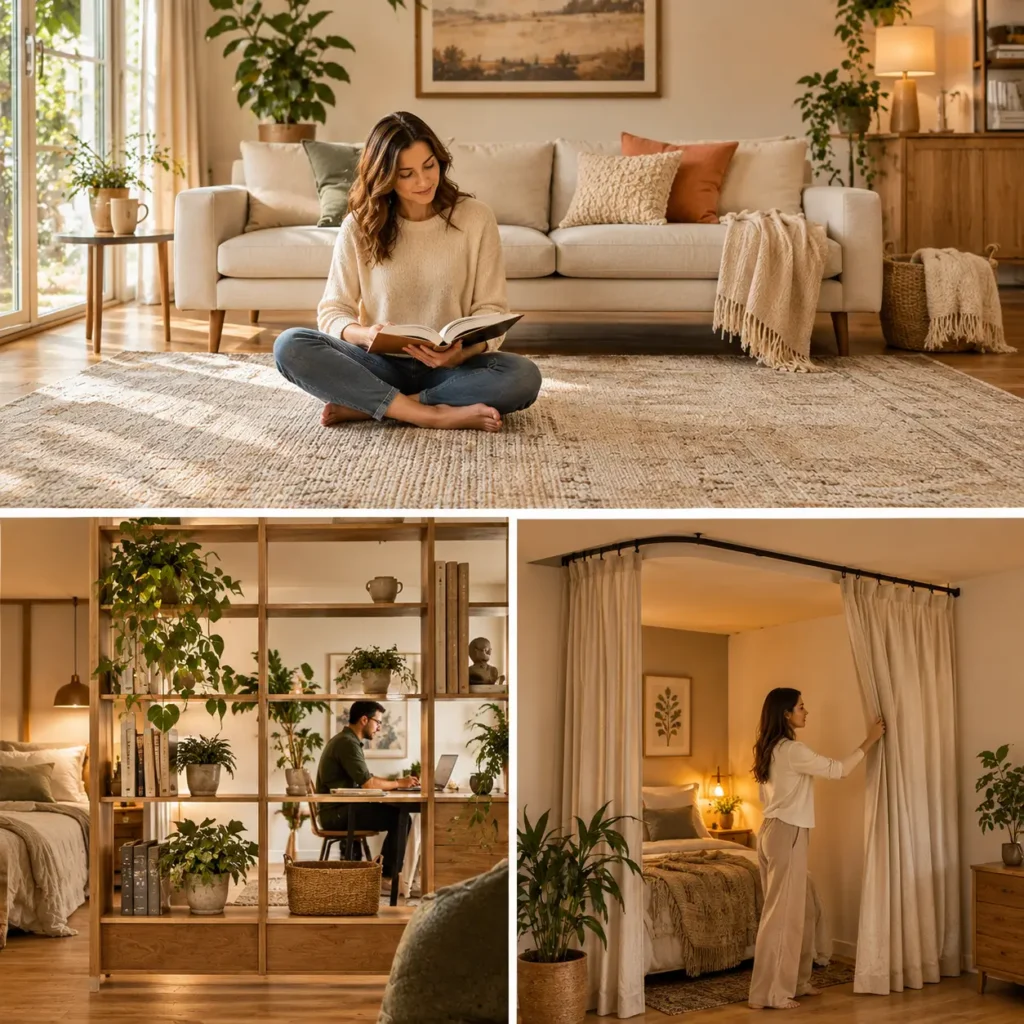
A rug is one of the fastest ways to visually separate a living zone from a sleeping or dining zone without adding any bulk. Size matters here: a rug that’s too small will look like an afterthought floating in the middle of the floor. I generally recommend sizing up more than feels intuitive, so the front legs of your seating land on the rug.
Room Dividers and Open Shelving as Soft Walls
An open shelving unit or a slim room divider creates a sense of separation while still letting light pass through, which keeps the zoning from feeling claustrophobic. This works particularly well between a sleeping area and a living area, giving each zone its own identity without sacrificing the open feel that makes a studio livable.
Curtain Tracks for a Flexible Bedroom Zone
A ceiling-mounted curtain track around a bed nook offers privacy on demand without the permanence (or expense) of a built wall. It’s a favorite among renters specifically because it’s fully reversible at move-out.
Storage and Styling Ideas That Reduce Visual Clutter
Clutter is the fastest way to undo every other decorating decision on this list, so storage strategy deserves real attention.
Vertical Storage Over Floor Storage
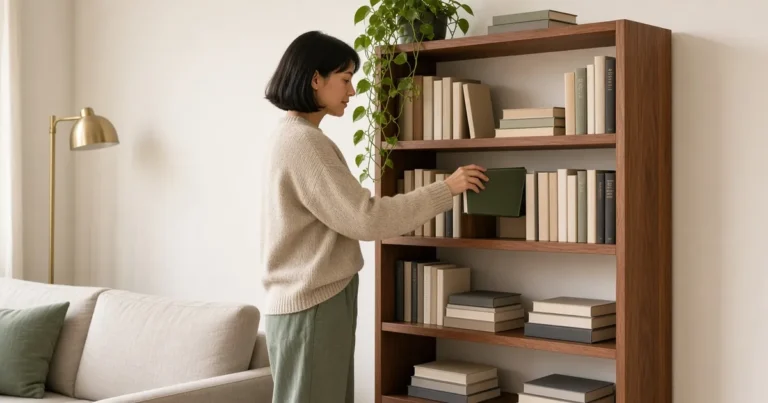
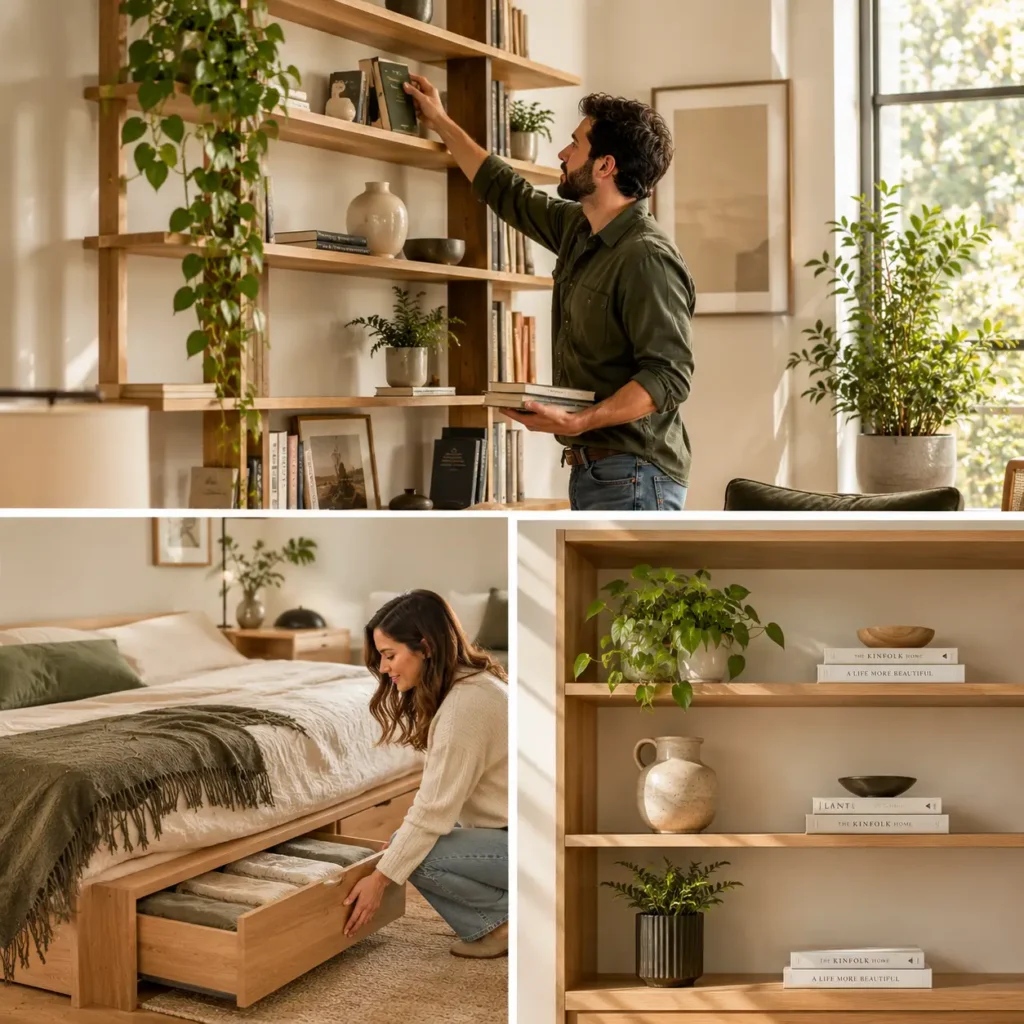
Floor space is precious in a studio, so storage should climb the walls instead of spreading across the room. Tall, narrow bookshelves or wall-mounted cabinets store just as much as a low, wide dresser while taking up a fraction of the footprint.
Hidden Storage That Doubles as Furniture
Beds with built-in drawers, ottomans that open up, and coffee tables with a lower shelf all quietly absorb clutter that would otherwise sit out in the open. Worth the splurge if you’re working with an especially tight layout: a bed frame with built-in under-bed storage, which eliminates the need for a separate dresser entirely in some layouts.
Styling Shelves Without Overcrowding Them
Open shelving looks intentional when it’s edited, and cluttered when it’s not. A good rule of thumb is to leave roughly a third of each shelf empty. That breathing room is what separates “styled” from “storage.”
Textile and Layering Ideas for a Cozy, Elevated Feel
A studio can feel open and still feel warm. These two goals aren’t actually in conflict, as long as the layering is intentional.
Layering Textures Without Adding Bulk
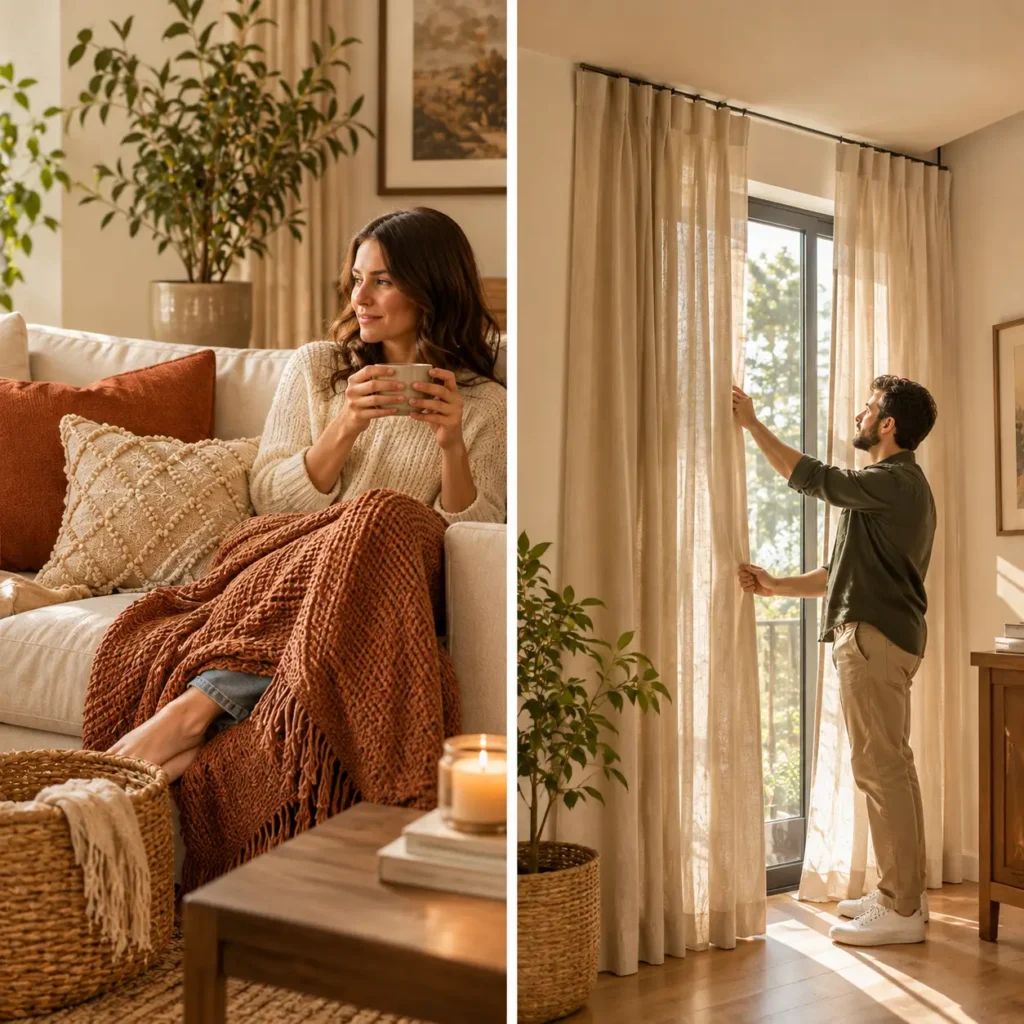
A knit throw, a couple of well-chosen pillows, and a woven basket add warmth and texture without taking up real floor space. The key is restraint: two or three textures read as curated, while five or six start to feel like visual noise.
Curtains That Elongate the Ceiling Line
Hanging curtains close to the ceiling, rather than directly above the window frame, tricks the eye into reading the room as taller. Floor-length curtains in a soft, light fabric reinforce that vertical pull even further.
Small Studio Apartment Decorating Mistakes to Avoid
A few habits undo all the progress above faster than almost anything else:
- Buying oversized furniture that technically fits but leaves no breathing room
- Introducing too many accent colors, which fragments a small space visually
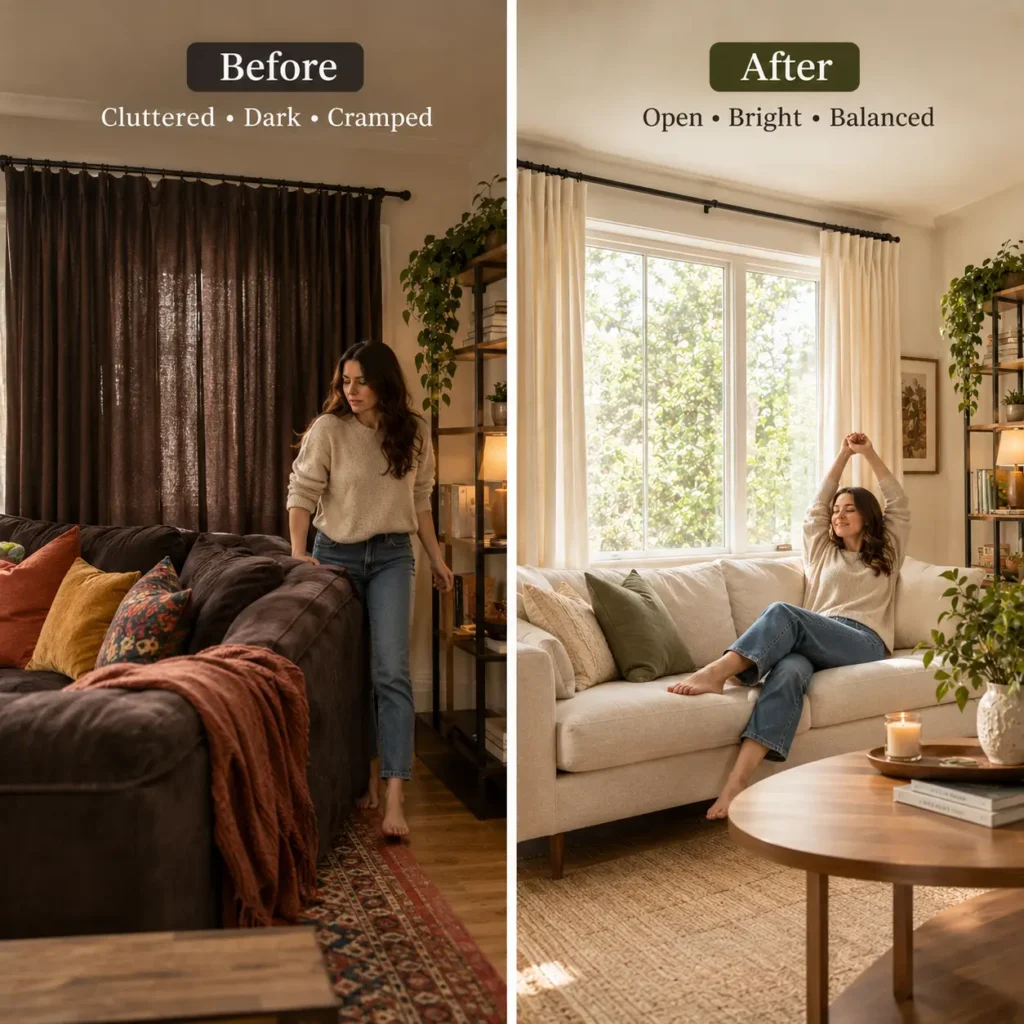
- Blocking natural light with heavy curtains or furniture placed in front of windows
- Ignoring vertical wall space while floor space runs out
- Matching every piece of furniture too closely, which flattens the room instead of adding depth
What I’d Actually Prioritize First
If you’re staring at a studio wondering where to even start, skip the big furniture purchases first. Start with light layering and a properly sized rug to define your zones. Those two changes cost the least and shift how the room feels almost immediately. Once the bones of the space feel right, furniture scale and storage become much easier decisions, because you’re no longer fighting a room that feels chaotic before you’ve even added anything to it.
FAQs About Decorating a Studio Apartment
How do you make a studio apartment look bigger?
Focus on light, color, and furniture scale before anything else. Soft neutral walls, layered lighting, and furniture with visible legs create more perceived space than reducing what you own.
What colors make a small studio feel larger?
Warm neutrals like soft ivory, greige, and light sage reflect natural light well without feeling sterile. Avoid dark, saturated walls in a studio unless you’re intentionally zoning a small nook.
What furniture should you avoid in a studio apartment?
Avoid anything oversized relative to the room, furniture that sits flush with the floor, and pieces that only serve one function when a multi-functional option would do more with less space.