

Acacia wood is a dense, durable hardwood from the acacia tree, and it has quietly become one of the best ways to get the warm, high-contrast look of expensive solid wood furniture without paying walnut or teak prices. Its grain swings from golden honey to deep chocolate in the same board, so even a simple side table looks like a statement piece.
If you have been eyeing an acacia coffee table, a patio set, or a serving board and wondering whether it holds up, this guide walks you through what acacia actually is, where it comes from, every acacia wood color you are likely to see, the honest pros and cons, and how to care for it so it looks good for years. If you are still deciding on shape and size, our guide on how to pick a coffee table pairs well with this one.
This post contains affiliate links. As an Amazon Associate, I earn from qualifying purchases, at no extra cost to you.
What Is Acacia Wood?

So, what is acacia wood? It is lumber cut from trees in the acacia family, a huge group of fast-growing trees and shrubs that includes more than a thousand species. In furniture, it is sold as a solid hardwood, prized for its strength, its natural oils, and that striking streaky grain.
Most acacia furniture you will find in stores comes from plantation-grown trees that are harvested young and replanted, which is a big part of why it costs less than slow-growing hardwoods. You will often see it labeled simply as “acacia” or “solid acacia,” and sometimes as Asian walnut, although it is not related to true walnut.
Where Is Acacia Wood Found?
If you are wondering where is acacia wood found, the short answer is mostly in warm climates. The acacia wood tree is most closely tied to Australia, where many species are called wattles, but acacia species also grow across parts of Africa, Asia, the Pacific islands, and the Americas. Hawaiian koa, a famously beautiful and pricey wood, is an acacia too.
For everyday furniture, the bulk of acacia lumber comes from plantations in Southeast Asia, in countries like Vietnam, Indonesia, and Malaysia. That is why acacia shows up so often in affordable dining tables, outdoor sets, and kitchen boards sold in the US, UK, Canada, and Australia.
Is Acacia a Hardwood?
Yes. Acacia is a true hardwood, and the species used for furniture are generally harder than oak on the Janka hardness scale, the standard test for how well wood resists dents. In real life, that means fewer dings from toy cars, dog claws, and dropped keys than you would get from pine or mango.

Acacia Wood Color: What Shades to Expect

The acacia wood color range is the main reason people fall for it. Natural acacia mixes pale golden sapwood with medium to dark brown heartwood, often with reddish or caramel undertones and dark streaks running through it. No two boards match, so a tabletop made from several strips looks almost striped.
Manufacturers then add finishes that push the acacia color lighter, darker, or grayer. Here is what each one looks like in a real room.
Natural and Honey Tones
Natural, honey, and “teak finish” acacia keep the warm golden glow front and center. These shades feel bright and relaxed, and they work beautifully with white walls, linen upholstery, and sage or olive accents. They are the easiest choice if you want acacia to read as Scandinavian or coastal.
Walnut, Espresso, and Dark Stains
Darker stains tone down the contrast and give acacia a richer, more formal look that passes for walnut at a fraction of the price. A dark acacia dining table with black chairs and a cream rug looks grounded and grown-up, which is why this finish shows up so often in farmhouse and modern rustic rooms.
Gray Wash and Weathered Finishes
Gray-washed and sandblasted acacia leans coastal or industrial. Outdoors, untreated acacia will also fade to a soft silvery gray on its own after months in the sun. Some people love that weathered look, while others oil the wood regularly to keep the original warmth.
Hidden Pro Tip: Acacia color shifts over time. Indoor pieces usually deepen and warm up a little with light exposure, so if you are matching a new acacia piece to an older one, expect the new one to look a shade lighter at first.

Acacia Wood Pros and Cons
Acacia is a strong, good-looking wood for the money, but it is not perfect. Here is the honest breakdown before you commit.
The Pros
- Hard and dent resistant: it stands up well to kids, pets, and daily use.
- Naturally water resistant: its oils help it shrug off spills better than many woods, which is why it is popular for boards and patio furniture.
- Distinctive grain: the high-contrast streaks look custom, even on budget pieces.
- Affordable for solid wood: plantation growth keeps prices well below teak and walnut.
- Fast growing: acacia matures quickly, so responsibly sourced acacia is a reasonable choice if sustainability matters to you. Look for FSC certification when possible.
The Cons
- Color varies a lot: what arrives may be lighter, darker, or more streaky than the listing photos.
- Can crack in dry air: very dry rooms or a spot next to a heater can cause small splits.
- Needs upkeep outdoors: without oil or sealer, it grays and can check (develop fine surface cracks).
- Heavy: solid acacia pieces are not fun to move up stairs.
- Not always solid: some budget items use acacia veneer over engineered wood, so read the material details carefully.
Acacia vs Teak, Oak, Mango, and Bamboo
Seeing how acacia stacks up against the woods it is usually compared with makes the buying decision much easier.
Acacia vs teak: teak is the gold standard for outdoor furniture because its oils make it extremely weather resistant, but it costs much more. Acacia gives you a similar warm look outdoors for less, as long as you are willing to oil it once or twice a year and cover it in winter.
Acacia vs oak: oak has a calmer, more even grain and a classic look. Acacia is usually harder and more dramatic, so pick oak if you want a quiet backdrop and acacia if you want the wood itself to be the star.
Acacia vs mango: mango wood is another affordable plantation hardwood, but it is softer and dents more easily. It tends to be paler and more uniform, while acacia brings more contrast.
Acacia vs bamboo: bamboo is technically a grass. It is light, affordable, and great for small accessories and shelving, but it does not have the depth of color or the substantial feel of solid acacia.
Acacia Wood Pictures: Where It Looks Best at Home
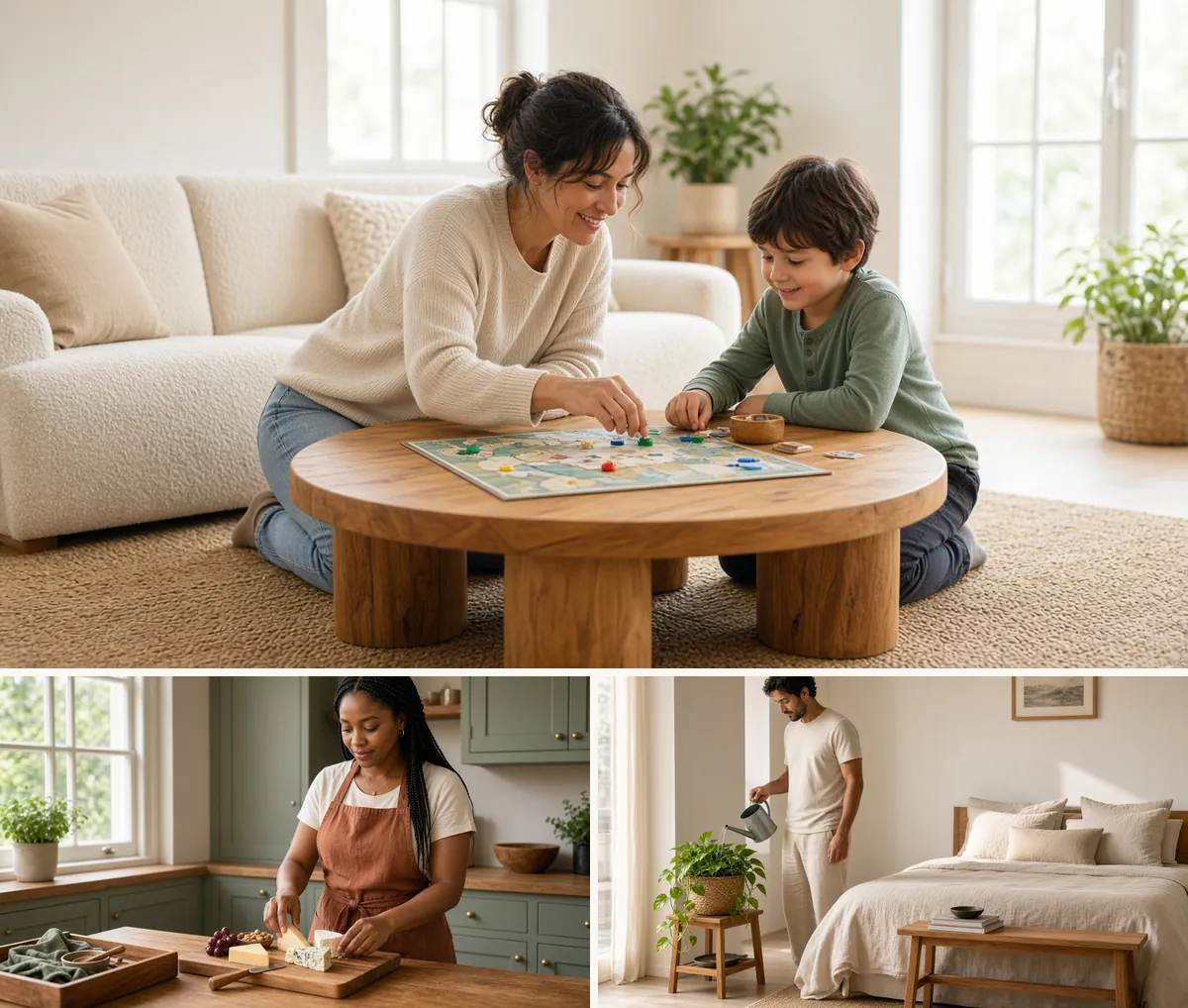
Browsing acacia wood pictures is the best way to picture it in your own space, so here is where it genuinely shines, room by room, with a few well-reviewed pieces to get you started.
Coffee Tables and Side Tables
An acacia coffee table instantly warms up a neutral living room. Keep the rest of the wood tones in the room either noticeably lighter or darker so the acacia stands out instead of competing. A round top softens a boxy sofa, while a rectangle works best in front of a long sectional. For outdoor living areas, a slatted acacia coffee table with a metal frame looks clean and handles weather well when you oil it.
Dining Tables and Benches
Acacia is tough enough for a family dining table and looks even better with a few years of use. A long table paired with a matching bench seats more people in less space, which is handy for holiday hosting. If you want a casual table that works indoors or on a covered patio, the Best Choice Products 6-person acacia dining table is a good fit for relaxed, farmhouse-style dining. For more styling ideas, see our farmhouse dining room guide.
Outdoor Furniture
Acacia is one of the most popular budget woods for patios and balconies because it handles moisture better than most woods in its price range. A small side table next to a lounge chair is a low-risk way to try it. The two-tier acacia Adirondack side table gives you a spot for drinks on top and a plant or book below. Browse more patio options in our roundup of the best outdoor tables.
Kitchen Boards and Serving Trays
If you want to try acacia before investing in furniture, start in the kitchen. Its tight grain and natural oils make it a favorite for cutting and charcuterie boards. A handled acacia cutting board doubles as a serving board when friends come over.
A tray is the other easy win. Set an acacia serving tray with handles on an ottoman or coffee table to corral remotes, candles, and a small plant, then carry it out for breakfast in bed.
Planters and Plant Stands
Acacia plant stands, benches, and planter bases add warmth to bedrooms and corners without taking up much space. Just keep a saucer or liner between wet soil and the wood. If you are weighing wood against ceramic, metal, or resin, our guide to the best planter materials breaks down how each one handles water.
Acacia Wood Pieces Worth Considering
These well-reviewed acacia pieces cover the most common ways people use the wood, from living room to patio to kitchen. Prices move around, so treat the ranges as a guide and check the current listing.
| Product Name | Price Range | Best For | Buy on Amazon |
|---|---|---|---|
| Christopher Knight Home Carlisle Acacia Coffee Table | $80 to $160 | Patios and industrial-style living areas | Check Price |
| 2-Tier Acacia Adirondack Side Table | $40 to $60 | Balconies and beside lounge chairs | Check Price |
| Best Choice Products 6-Person Acacia Dining Table | $170 to $200 | Casual indoor or covered patio dining | Check Price |
| Acacia Wood Serving Tray with Handles (17 in) | $15 to $25 | Ottoman styling and easy hosting | Check Price |
Before you order any acacia furniture, check whether the listing says solid acacia or veneer, look at customer photos for the real color, and confirm the dimensions against your space with painter’s tape on the floor.
How to Care for Acacia Wood

The good news is that acacia is low maintenance. A few simple habits keep it looking rich instead of dry or blotchy.
- Everyday cleaning: wipe with a soft, slightly damp cloth, then dry it. Skip harsh cleaners and silicone polish sprays.
- Protect the surface: use coasters, placemats, and trivets, and wipe up spills quickly.
- Watch the placement: keep indoor pieces away from radiators, heating vents, and long hours of direct sun to reduce cracking and fading.
- Boards and trays: hand wash only, never soak or run them through the dishwasher, and rub in food-safe mineral oil whenever the wood looks pale or dry.
- Outdoor pieces: clean with mild soapy water, let them dry, and reapply an outdoor wood oil or sealer about once or twice a year. Cover or store them through wet winters.
If a tabletop starts to look dull, a light rub with furniture wax or oil brings the grain right back. Always test a new product on the underside first.
Is Acacia Wood Worth It?
For most homes, yes. Acacia gives you real hardwood strength, natural water resistance, and a grain that looks far more expensive than it is. It is especially smart for dining tables, coffee tables, patio pieces, and kitchen boards, where durability matters as much as looks.
Just go in with realistic expectations: embrace the color variation, keep it away from heat, and give outdoor pieces a little oil each year. Do that, and acacia is one of the easiest ways to bring warm, high-end texture into your home on a sensible budget. If you are planning a bigger furniture refresh, our guide to the kinds of furniture can help you map out the rest of the room.
Acacia Wood FAQ
What is acacia wood?
Acacia wood is a dense hardwood cut from trees in the acacia family, a large group of fast-growing species found mostly in warm climates. It is popular for furniture, outdoor sets, and kitchen boards because it is hard, naturally water resistant, and has a striking grain that ranges from golden to dark brown.
What color is acacia wood?
Natural acacia wood mixes light golden sapwood with medium to dark brown heartwood, often with reddish or caramel undertones and dark streaks. Finishes can make it lighter (honey or natural), darker (walnut or espresso), or grayer (gray wash), and untreated outdoor acacia fades to silvery gray over time.
Where is acacia wood found?
Acacia trees grow mainly in Australia, plus parts of Africa, Asia, the Pacific islands, and the Americas. Most acacia furniture sold today comes from plantation-grown trees in Southeast Asia, which helps keep prices affordable.
Is acacia wood good for outdoor furniture?
Yes, acacia is a popular budget choice for outdoor furniture because its natural oils help it resist moisture. It is not as weatherproof as teak, so oil or seal it about once or twice a year and cover or store it during long wet winters.
Does acacia wood scratch easily?
Acacia is harder than many common furniture woods, including oak and mango, so it resists dents and scratches well. It can still scratch from grit or sharp objects, so use coasters and felt pads, and wipe it with a soft cloth rather than anything abrasive.
Is acacia wood better than oak?
Neither is better for everyone. Acacia is usually harder and has a bolder, high-contrast grain at a lower price, while oak has a calmer, more uniform grain and a classic look. Choose acacia if you want the wood to be a statement and oak if you want a quieter backdrop.