The right outdoor planters can turn a plain patio, balcony, or front entry into something that actually looks designed, not just decorated with whatever pots were on sale. Whether you’re working with a small balcony railing or planning a full raised bed garden, there’s a planter style built for it. Here’s how to choose the right one, plus our top picks by size, function, and style.
This post contains affiliate links. As an Amazon Associate, I earn from qualifying purchases, at no extra cost to you.
What to Look for in an Outdoor Planter
Material is the biggest factor in how well an outdoor planter holds up over time. Fiberglass and resin are lightweight, weatherproof, and won’t crack in freezing temperatures the way ceramic can. Metal options like galvanized steel or corten steel bring a more industrial, modern look and hold up well outdoors, though they can get hot in direct sun. Wood adds warmth but needs a weather-treated finish to avoid rotting.
Drainage is non-negotiable outdoors. Without a drainage hole, rainwater has nowhere to go and roots sit in standing water, which kills plants far faster than underwatering ever would. Size matters too. As a general rule, bigger planters hold moisture longer and need less frequent watering, which is worth considering if you’re not able to water daily during hot summer months.
Best Large and Tall Outdoor Planters

Best Large Outdoor Planter
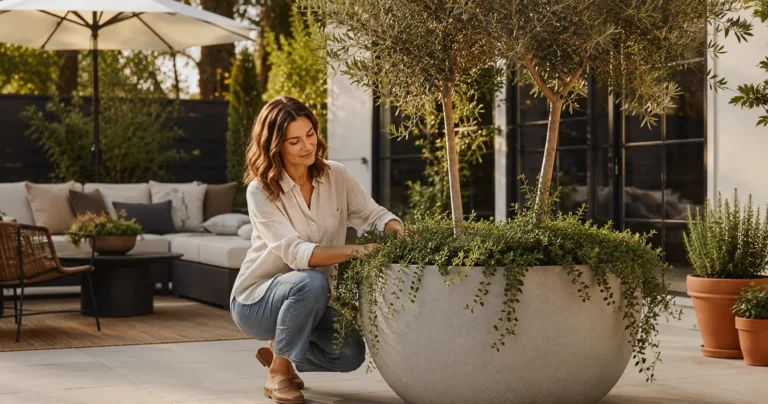
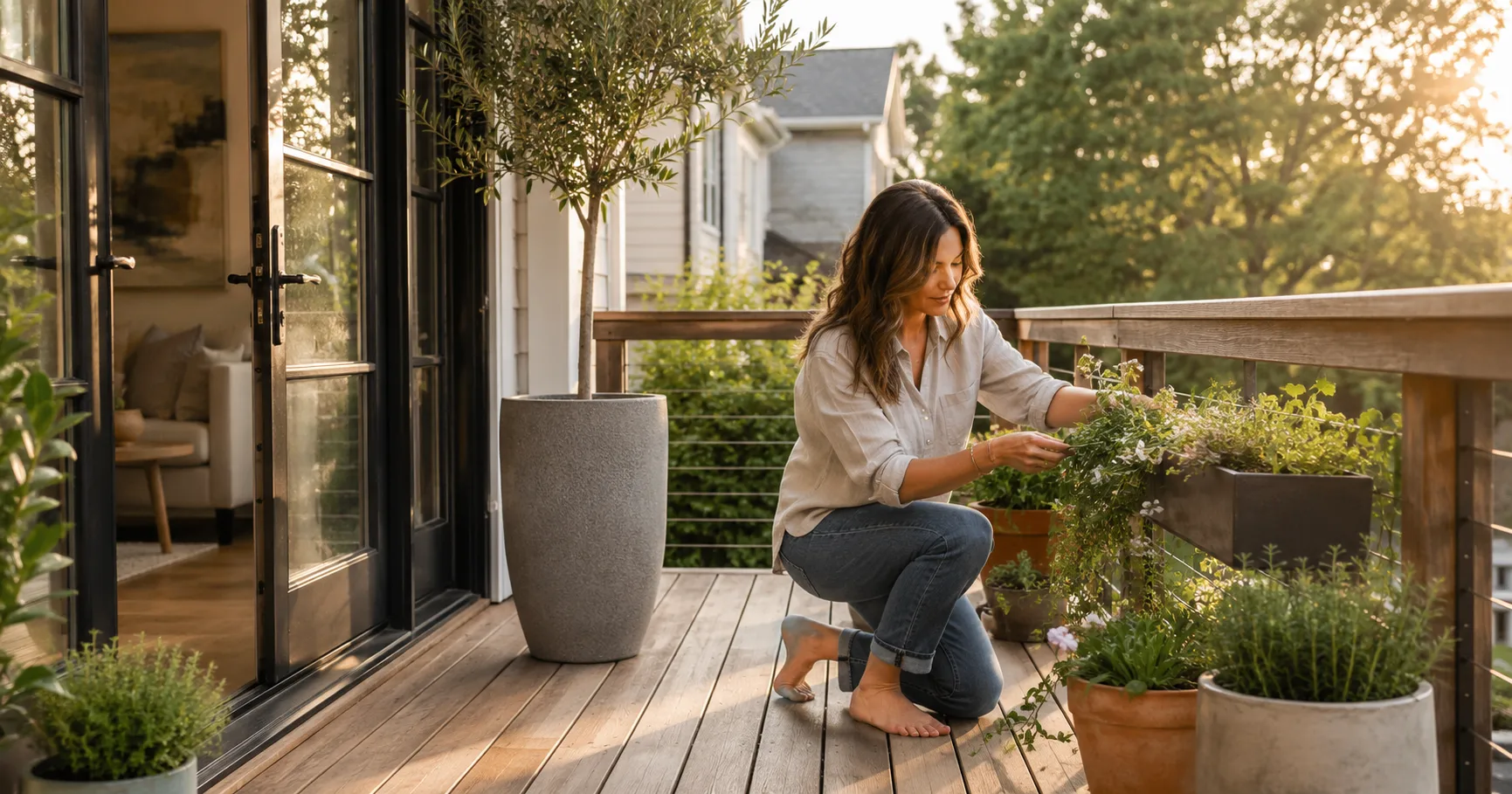
For anything from a small tree to a full shrub, a large fiberglass outdoor planter gives roots enough room to establish without needing to size up again in a year or two. The lightweight material also makes it far easier to move than a comparable ceramic or concrete option.
Best Tall Outdoor Planter
A tall, narrow planter is the better choice when floor space is limited but you still want height and presence, like flanking a front door or filling a narrow side yard. Look for a wide, stable base so it doesn’t tip in windy conditions.
Best Self-Watering Outdoor Planters
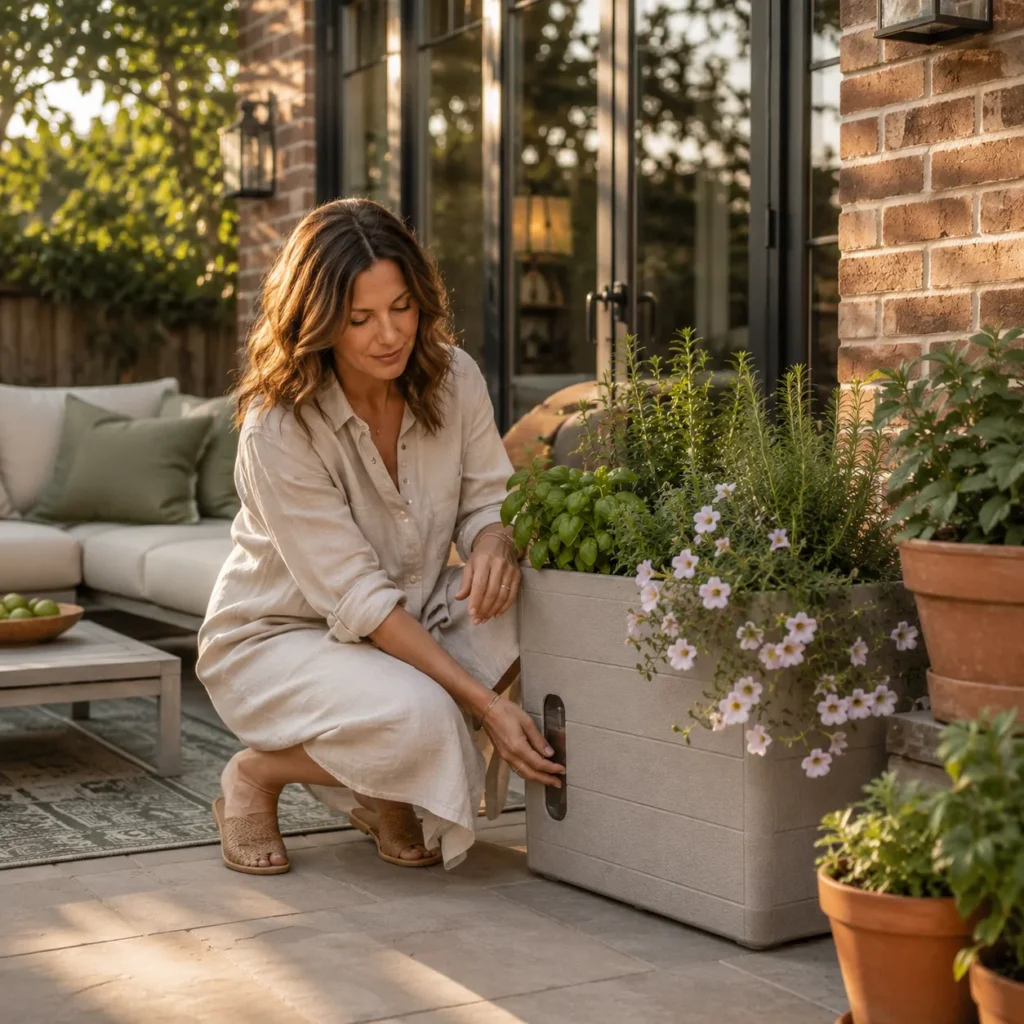
If keeping up with watering is the main thing standing between you and a full patio garden, a self-watering outdoor planter solves that with a built-in reservoir that wicks water up to the roots as needed. Most can go five to seven days between refills depending on plant size and heat, which makes them a genuinely practical upgrade rather than just a convenience feature. They’re worth the slightly higher price if you travel often or tend to forget watering schedules during busy weeks.
Best Railing and Balcony Planters
Best Railing Planter
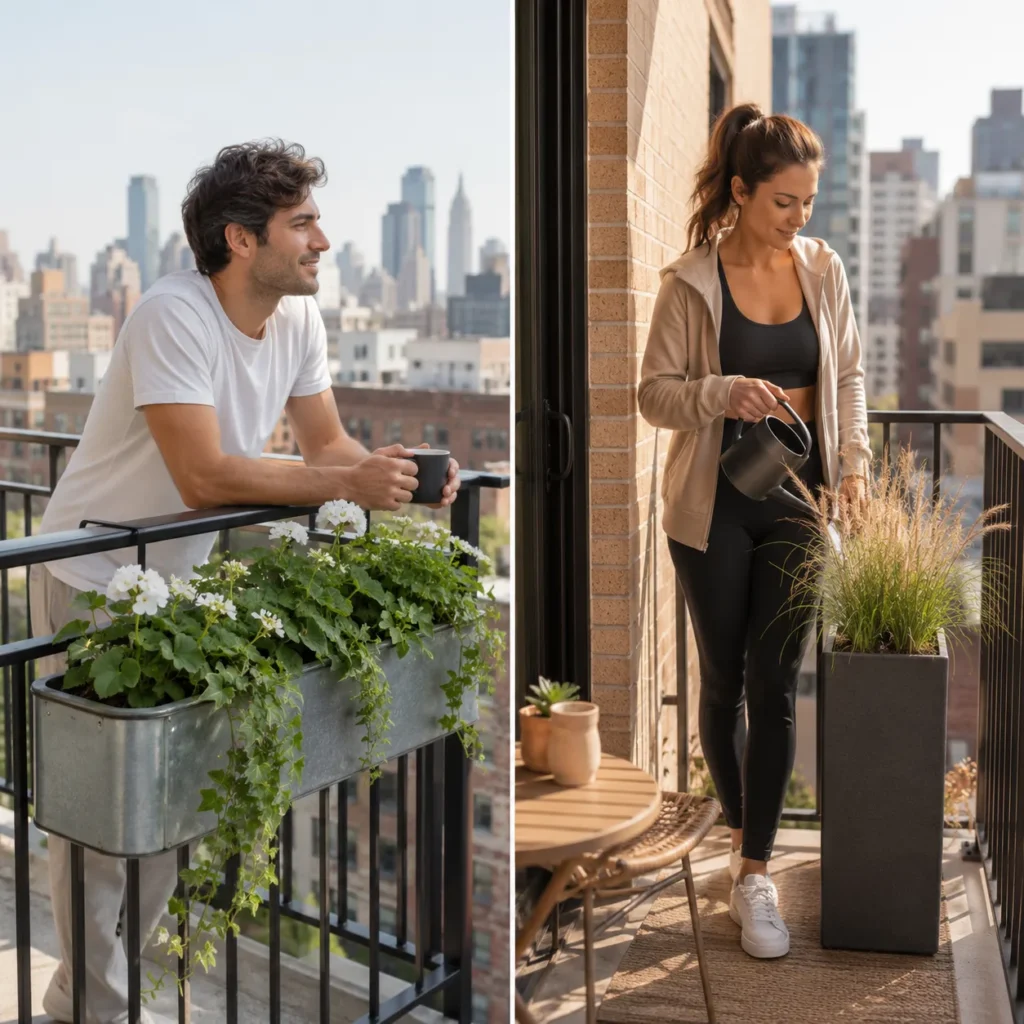
A railing planter with an adjustable clamp system fits most standard deck and balcony railings without drilling, making it one of the easiest ways to add greenery to a small outdoor space. Look for one with a drip tray if the space below the railing needs to stay dry.
Best Balcony Planter
For balconies without a railing suited to clamp-style planters, freestanding balcony planters sized for tight footprints work just as well, especially in a narrow rectangular shape that fits along a wall or corner.
Best Raised Bed and Elevated Planters
Best Raised Bed Planter
A raised bed planter is the better choice if you’re growing vegetables or a cutting garden rather than purely ornamental plants, since the extra soil depth supports root vegetables and larger plants that a shallow container can’t. Cedar and other rot-resistant woods hold up well without needing a liner.

Best Elevated Box Planter
Elevated box planters raise the growing bed to waist height, which is a genuine benefit if bending down to garden isn’t practical or comfortable. They also tend to warm up faster in spring, giving an earlier start to the growing season.
Best Statement Style Planters
Corten Steel Planters
Corten steel planters develop a natural rust-toned patina over time that gives them a modern, industrial look no other material quite replicates. They’re increasingly popular for entryways and modern landscaping and remain a relatively easy space to stand out in since fewer sites cover them well.
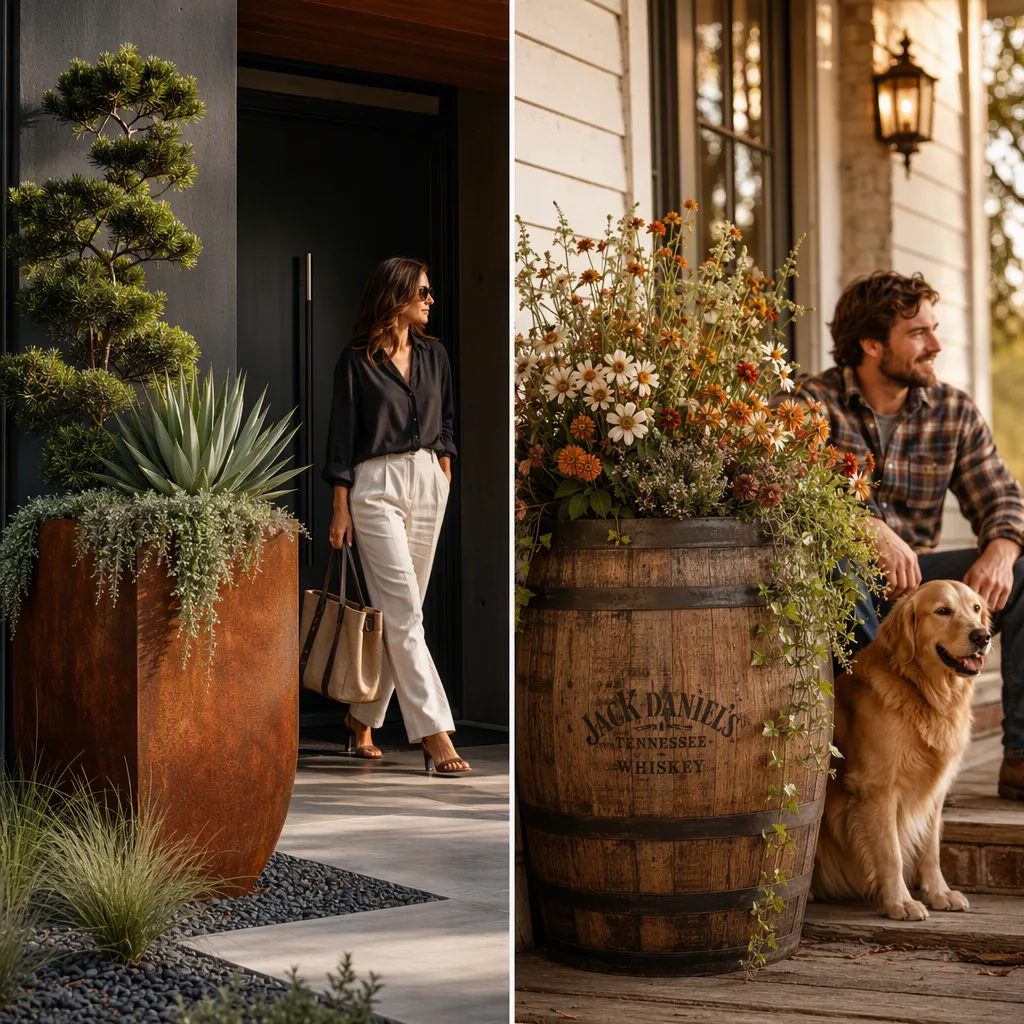
Whiskey Barrel Planters
For a more rustic, traditional look, whiskey barrel planters bring warmth and character that pairs naturally with cottage-style gardens or a farmhouse exterior. They’re also deep enough to handle larger plants without needing a second container.
Also Read: Best Indoor Planters for Every Style of Home
Top Outdoor Planters Compared
Here’s how a range of outdoor planter styles compare across size, function, and price.
| Product Type | Price Range | Best For | Buy on Amazon |
|---|---|---|---|
| Large Fiberglass Planter | $100 to $150 | Small trees and shrubs | Shop the large planter |
| Self-Watering Outdoor Planter | $50 to $75 | Low-maintenance patios | Shop the self-watering planter |
| Railing Clamp Planter | $100 to $135 | Balconies and deck railings | Shop the railing planter |
| Cedar Raised Bed Planter | $95 to $149 | Vegetable and cutting gardens | Shop the raised bed |
| Corten Steel Planter | $90 to $140 | Modern entryways and landscaping | Shop the corten planter |
Which Outdoor Planter Is Right for Your Yard?
If you’re just getting started, a large fiberglass planter or a self-watering option covers the most ground for the least effort, since both work in nearly any outdoor setting and hold up well long term. From there, it’s really about matching the planter to the space, railing and balcony styles for tight spots, raised beds for anything you plan to grow rather than just display, and a statement material like corten steel or a whiskey barrel if you want the planter itself to be part of the design.
FAQ
What’s the best material for outdoor planters?
Fiberglass and resin hold up well in most climates without cracking, while corten steel and cedar are better choices if you want a more natural or industrial look and don’t mind a slightly higher price.
Do self-watering planters actually work?
Yes, self-watering planters use a built-in reservoir that draws water up to the roots as the soil dries out, which typically extends the time between waterings to five to seven days depending on plant size and weather.
How big should an outdoor planter be for a small tree or shrub?
Look for a planter at least 18 to 24 inches in diameter for a young tree or large shrub, which gives the root ball enough room to establish before it needs a bigger container.
Can raised bed planters be used for flowers, not just vegetables?
Yes, raised beds work well for flowers, herbs, or a mix of both. The extra soil depth benefits nearly any plant that needs more root space than a standard container provides.