The main parts of a chair are the back, the seat, the legs and, on some chairs, the arms. Each of those breaks down into smaller pieces with their own names, like the top rail, the splat, the seat rails and the stretchers. Once you know them, shopping for dining chairs, fixing a wobbly one or describing what you want to a furniture store gets so much easier.
Below you will find every chair part from top to bottom, the styles named after them and a quick check to do before Thanksgiving guests sit down. If you liked our guides to the parts of a couch and table parts, this one fills in the last piece of the dining room.
Quick answer: a chair has four main zones. The back (top rail, splat or spindles, back posts), the seat (seat pan, seat rails, padding), the legs (front legs, back legs, stretchers, feet) and the arms (arm rest and arm support). The joints where these meet are where chairs usually loosen first.
This post contains affiliate links. As an Amazon Associate, I earn from qualifying purchases, at no extra cost to you.
Parts of a Chair Diagram: Every Part at a Glance
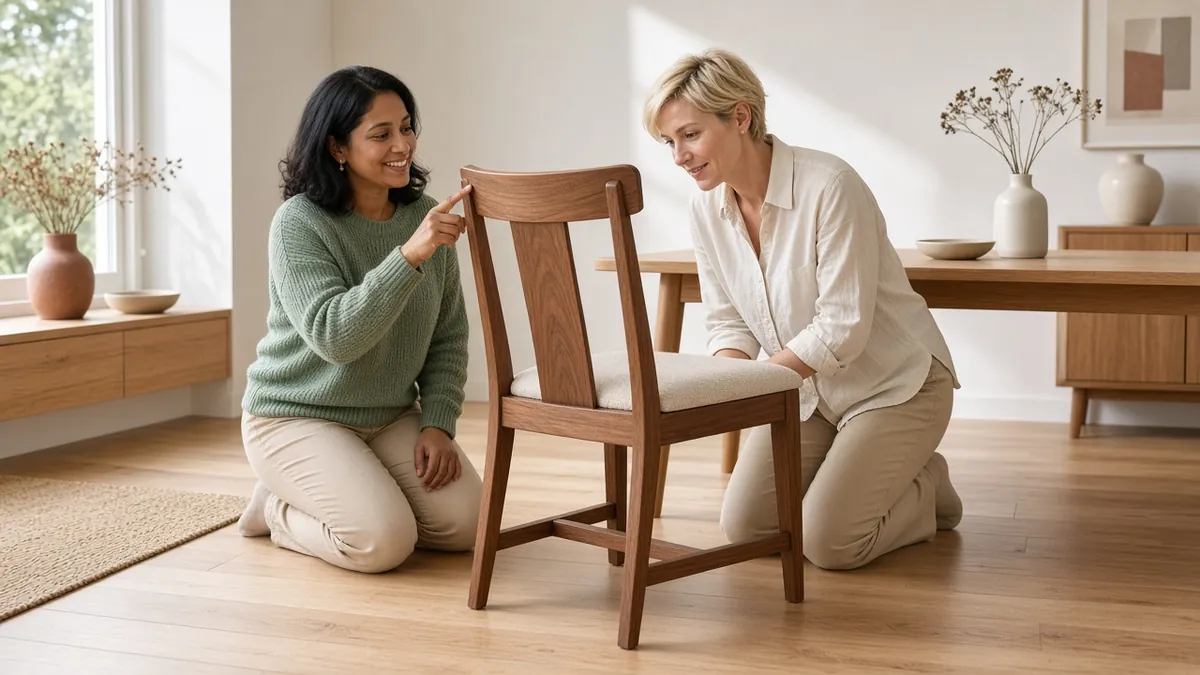
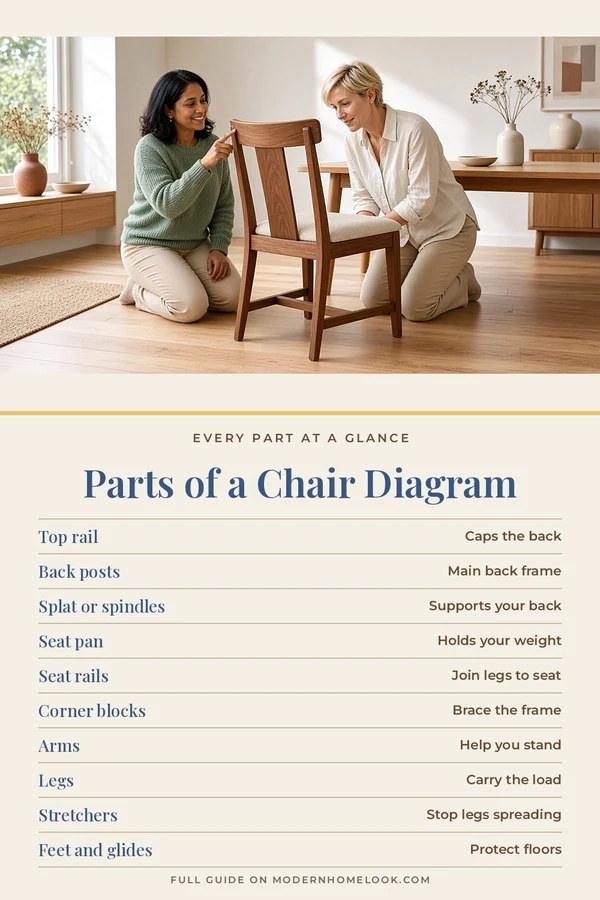
Here is every common chair part in one place, from the very top of the back down to the floor. Use it like a labeled parts of a chair diagram you can come back to.
| Chair Part | Where It Is | What It Does |
|---|---|---|
| Top rail (crest rail) | Top of the back | Caps the back, holds posts |
| Back posts (stiles) | Sides of the back | Main back frame |
| Splat, slats or spindles | Inside the back | Supports your back |
| Seat (seat pan) | Middle | Holds your weight |
| Seat rails (apron) | Under the seat edge | Joins legs to seat |
| Corner blocks | Under seat corners | Brace the frame |
| Arms and arm supports | Sides, above seat | Rest arms, help you stand |
| Front and back legs | Below the seat | Carry the load |
| Stretchers (rungs) | Between legs | Stop legs from spreading |
| Feet and glides | Floor contact | Level and protect floors |
Takeaway: if you remember only four zones, back, seat, legs and arms, you can name almost any chair part.
The Back Part of a Chair: Top Rail, Splat, Slats and Spindles
The back part of a chair is made of two back posts joined by a top rail, with a splat, slats or spindles filling the space between. That inside piece is what gives most chairs their style name.
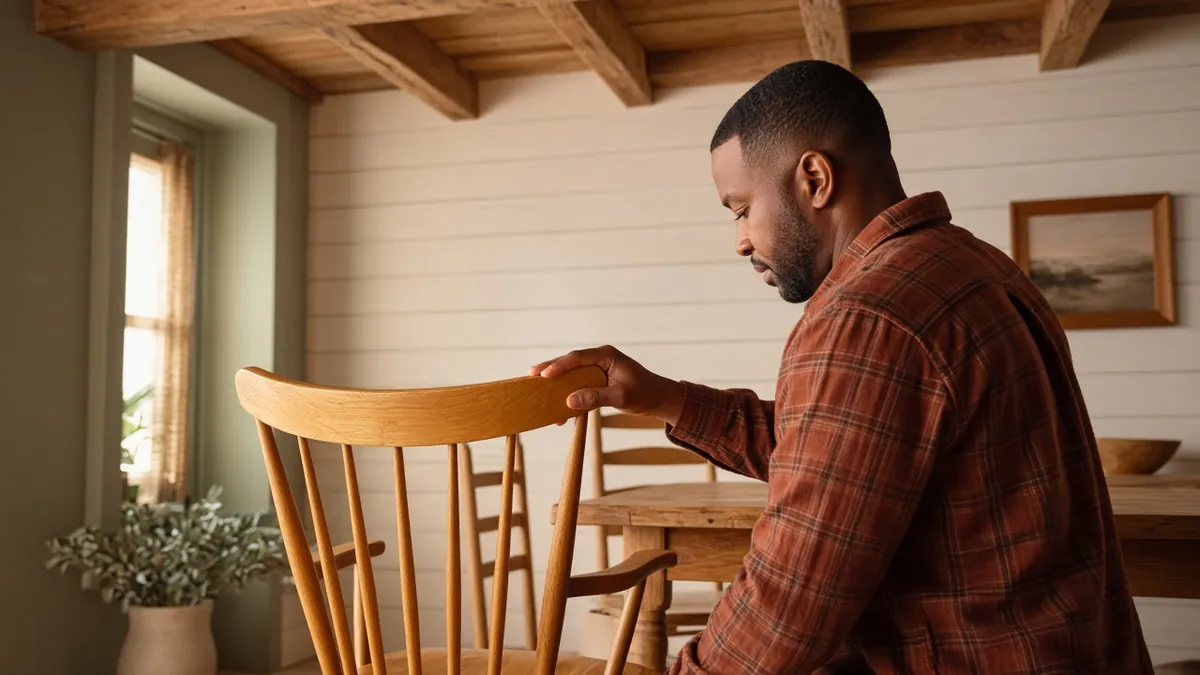
Top Rail and Back Posts
The top rail, also called the crest rail, is the horizontal piece across the top of the chair back. The back posts, or stiles, are the two upright sides. On many wooden dining chairs the back legs simply keep going up and become the back posts, which makes for a strong one-piece frame.
Splat, Slats and Spindles
These are the chair back parts that actually touch your back:
- Splat: one wide, flat center board running from the seat to the top rail, common on Queen Anne and Chippendale chairs.
- Slats: flat horizontal boards stacked like a ladder, which is where the ladder-back chair gets its name.
- Spindles: thin turned rods, the signature of a Windsor chair.
- Back rest or back cushion: on upholstered chairs, a padded panel replaces all of the above.
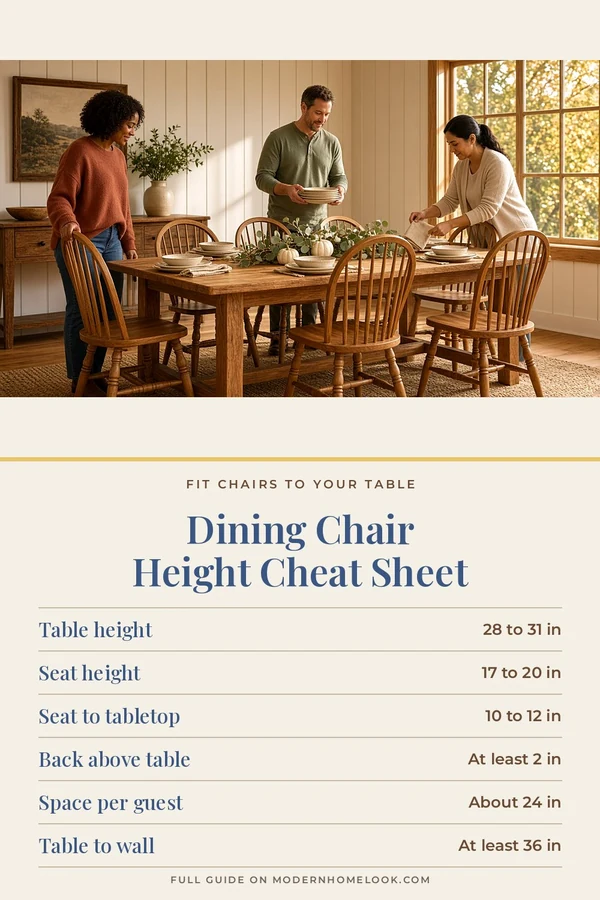
One handy rule for the chair back: it should rise at least 2 inches above your tabletop, and taller looks better, or the chairs can look squat next to the table (The Spruce).
The Seat: Seat Pan, Seat Rails and Padding
The seat of a chair is the flat surface you sit on, held up by seat rails that connect the legs. Under an upholstered seat you will find a board or webbing, then foam, then fabric.
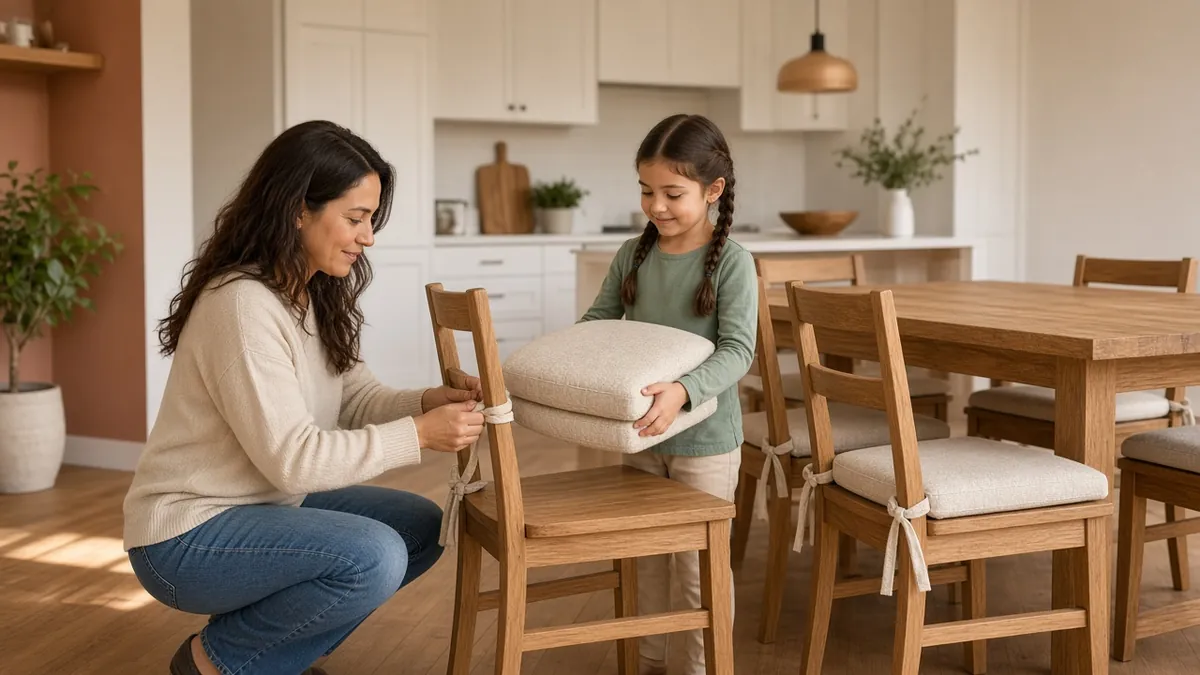
Seat Rails and Corner Blocks
The seat rails are the four wooden pieces that run between the legs just under the seat. Together they are sometimes called the apron, just like on a table. Flip a good dining chair over and you will often see small triangular corner blocks glued and screwed into each corner. They are a sign of solid construction, so they are worth looking for.
Seat Pan, Foam and Upholstery
A solid wood seat is often carved slightly (called saddling) so it is comfortable without padding. Upholstered seats have a plywood or webbed base, foam and fabric. Before you clean one, check the tag: W means water-based cleaner, S means solvent only, W-S or SW means either, and X means vacuum only (Ashley cleaning codes).
Hard wooden seats get uncomfortable during a long holiday meal. A set of tie-on cushions is the easiest fix. These AAAAAcessories D-shaped chair cushions are 2 inches thick, about 17 by 16 inches, with ties and a removable, machine-washable cover. If your seats are a little stained or just do not match, SPRINGRICO stretch dining chair covers in spandex and polyester slip over the seat and back and go straight in the washing machine.
Chair Legs, Stretchers and Feet
Chair legs carry your weight to the floor, stretchers tie the legs together so they do not spread apart, and the feet or glides are the small parts that touch the floor.
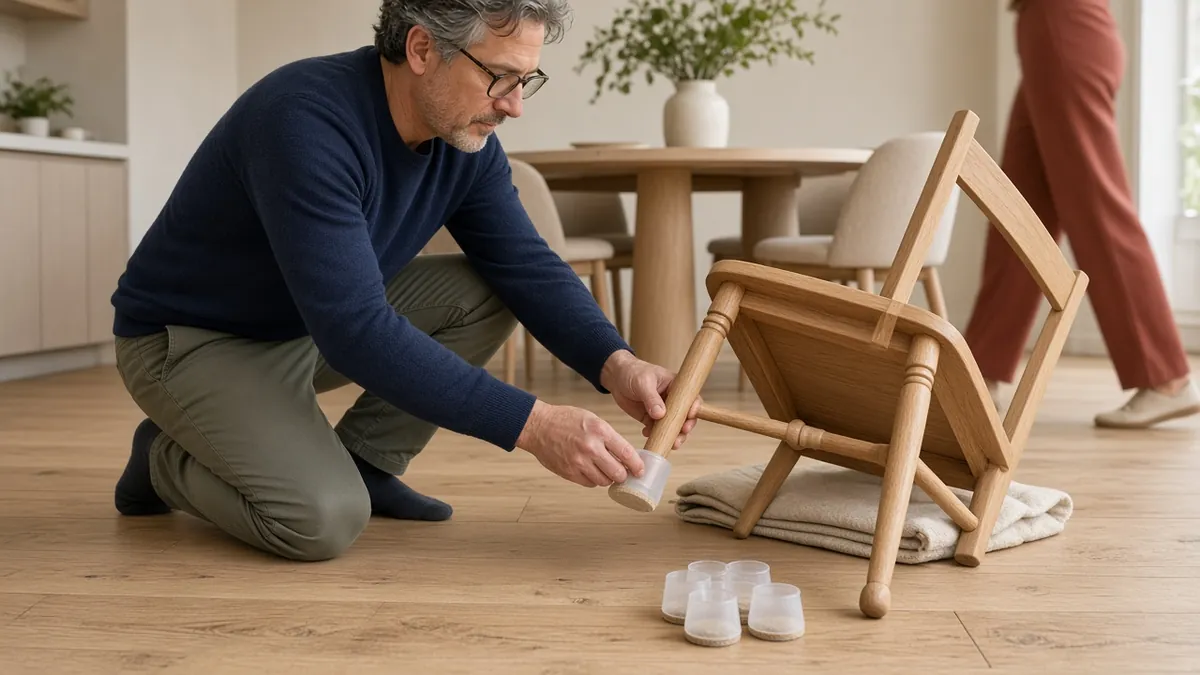
Front Legs and Back Legs
Front legs are usually straight, turned or tapered. Back legs are often angled backward (splayed) so the chair does not tip when you lean back.
Stretchers, Rungs and the H-Stretcher
Stretchers, also called rungs, are the bars that run between the legs near the floor. A box stretcher connects all four legs in a square, while an H-stretcher has two side bars joined by one bar across the middle. Chairs with stretchers usually stay tight longer, especially if people tend to tip back.
Feet and Floor Glides
The bottom of each leg is the foot, and many chairs have a small nail-in glide there. Those wear down and scratch wood floors. These OASUM silicone chair leg protectors slide over round legs about 1.3 to 2 inches wide (33 to 50 mm) and have felt on the bottom, so check your leg size before you order.
Chair Arms: Arm Rests and Arm Supports
Chair arms have two parts: the arm rest you lean on and the arm support (or arm post) that holds it up from the seat. Dining chairs with arms are often called armchairs or carver chairs, and the ones without are side chairs.
Arms make it easier to sit down and stand up, which is lovely for older guests at the head of the table. Just measure first, because the tops of the arms must clear the table apron or the chair cannot slide in and the arms get dinged (The Spruce).
Dining Chair Styles Named After Their Parts
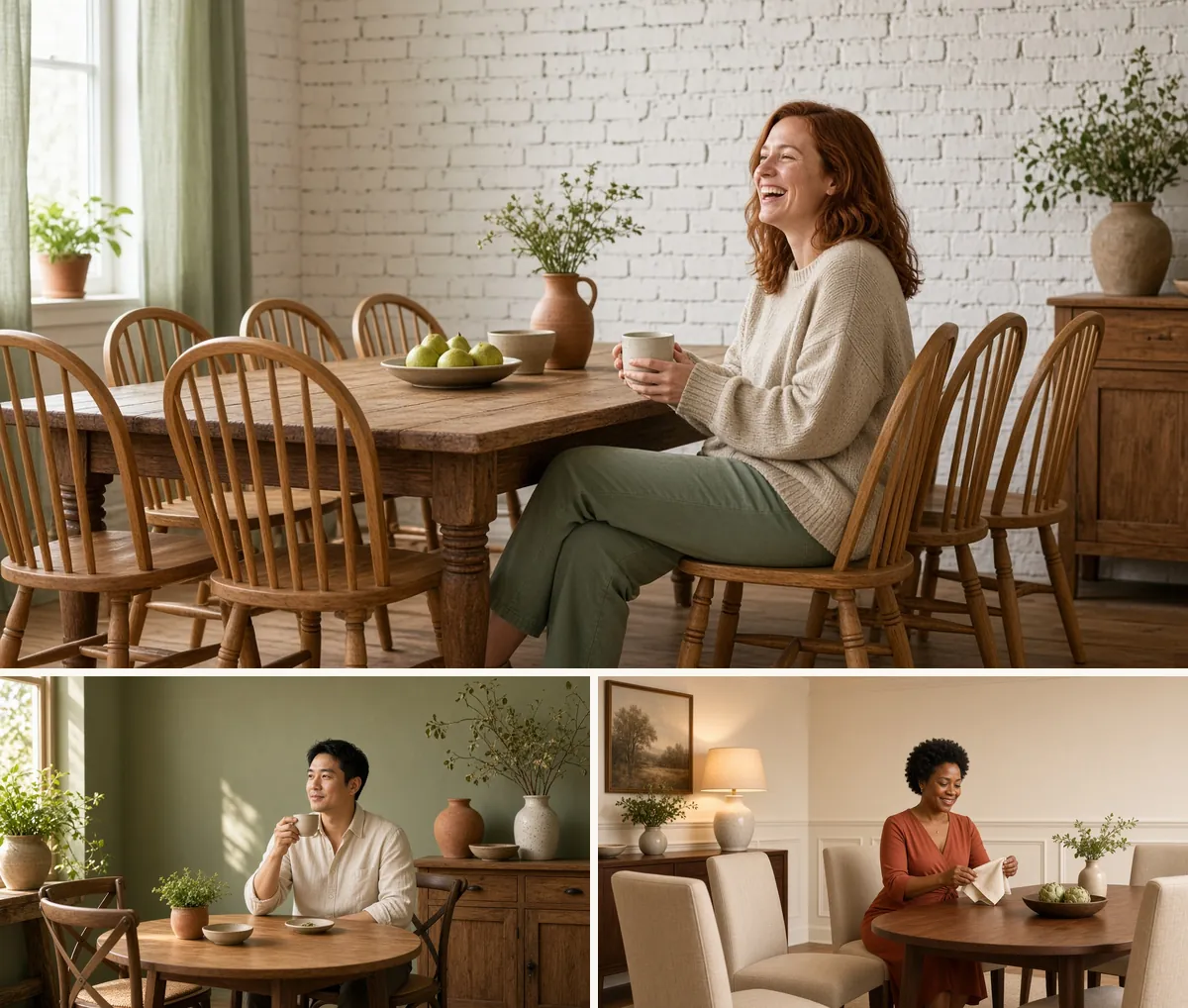
Most dining chair styles are named for the shape of their back or legs. Once you know the parts of a chair, these names start to make sense.
| Chair Style | Defining Part | Common Material | Best Look |
|---|---|---|---|
| Windsor | Spindle back | Solid wood | Farmhouse |
| Ladder-back | Horizontal slats | Wood, rush seat | Country |
| Cross-back (X-back) | X-shaped back | Wood | Rustic, bistro |
| Wishbone | Y-shaped back | Wood, paper cord | Scandinavian |
| Parsons | Fully upholstered | Fabric over wood | Classic, modern |
| Chiavari | Thin spindles, light frame | Wood or resin | Events, weddings |
Takeaway: the back decides the style, so pick the back shape first and the material second. For more names, see our guide to kinds of furniture, and our farmhouse dining room ideas show Windsor and X-back chairs styled in real rooms.
How to Check Chair Parts Before Thanksgiving Guests Sit Down
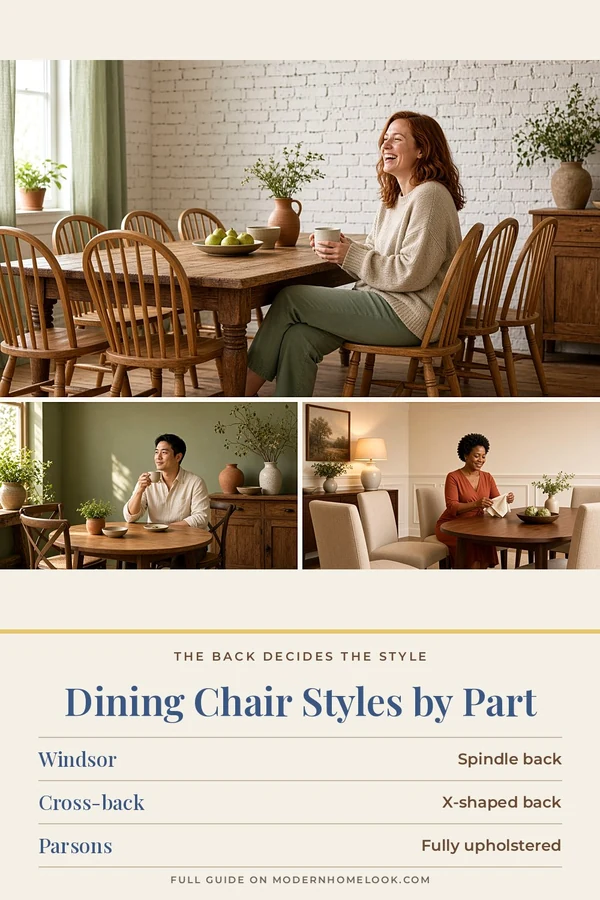
Give each chair a quick wiggle test: hold the top rail and rock it side to side. If the back, legs or stretchers shift, a joint has loosened and it is worth fixing before a full table of guests.
- Back: push gently on the top rail. Movement usually means a loose back post joint.
- Seat: flip the chair and tighten any screws in the corner blocks.
- Legs and stretchers: twist each stretcher. A rung that spins in its hole needs glue.
- Feet: check for missing glides that could scratch the floor.
How do I fix a wobbly wooden dining chair before my Thanksgiving guests arrive next week?
Gently take the loose joint apart, scrape off the old dried glue, apply fresh wood glue, then clamp it and let it dry for 24 hours before anyone sits on it (Family Handyman). Titebond II Premium Wood Glue is an easy, water-resistant pick for newer chairs, and a few days is plenty of time if you start early in the week.
What height dining chairs should I buy for a 30 inch table if most of my family is tall?
Most dining tables are 28 to 31 inches high and most dining chairs have a seat height of 17 to 20 inches. Aim for 10 to 12 inches between the top of the seat and the tabletop (The Spruce). For a 30 inch table that means a seat around 18 to 20 inches, and tall family members will appreciate the higher end. Measure a padded seat while you are sitting on it, since the foam compresses.
Extra Seating for a Big Holiday Table
If you are short on chairs, plan about 24 inches of table edge per person and at least 36 inches between the table and the wall so people can pull chairs out (Lamon Luther table size guidelines). Our guide to the size of dining room table to seat 10 has the full numbers.
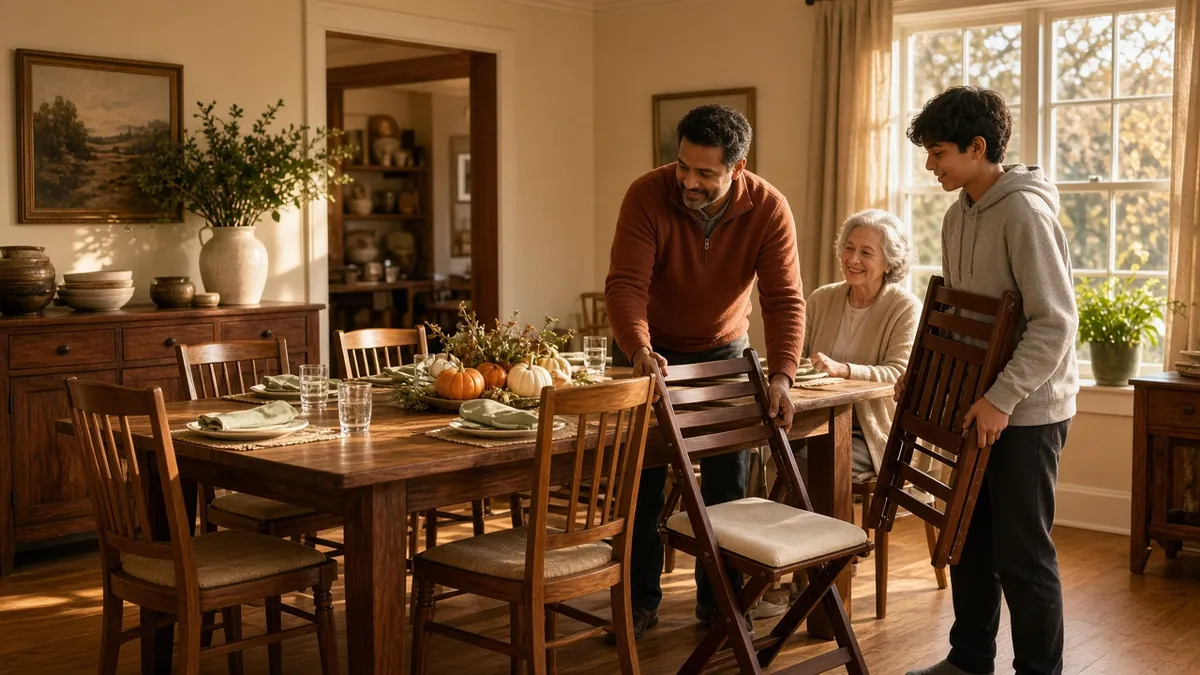
For extra guests, folding chairs are the easy answer. The Flash Furniture Hercules resin folding chairs come in a 2-pack in a mahogany finish, with a polypropylene resin frame and removable, washable seat pads. They need no assembly and fold flat once the leftovers are gone.
Tighten the chairs you already own first, then add folding chairs only where you need them. To finish the look, try our Thanksgiving table decor ideas.
What Actually Matters Most
Knowing the parts of a chair is really about knowing where chairs succeed or fail. The joints between the legs, seat rails and back posts take all the stress, so look for corner blocks and stretchers when you shop, and fix a loose rung the moment you feel it.
After that, it is all about fit: a seat 10 to 12 inches below your tabletop, arms that clear the apron and a back taller than the table. Get those right and any style you love will feel good through a long holiday dinner.
Parts of a Chair FAQ
What are the main parts of a chair called?
The main parts of a chair are the back, the seat, the legs and the arms. The back includes the top rail, back posts and a splat, slats or spindles. The seat sits on seat rails, and the legs are joined by stretchers and end in feet or glides.
What is the back part of a chair called?
The back part of a chair is called the chair back or backrest. Its top piece is the top rail or crest rail, the two upright sides are the back posts or stiles, and the center is filled by a splat, horizontal slats or thin spindles.
What are the bars between chair legs called?
They are called stretchers or rungs. They connect the legs near the floor so the legs do not spread apart, and they make the whole chair sturdier. A box stretcher joins all four legs, while an H-stretcher uses one bar across the middle.
What is the part under the seat of a chair called?
The wooden pieces that run between the legs just under the seat are called seat rails, and together they are sometimes called the apron. Many well-made chairs also have small corner blocks glued and screwed into each corner under the seat for extra strength.
Which part of a dining chair usually breaks first, and how can I tell if an old chair is still worth fixing?
The joints break first, usually where the legs, stretchers and back posts meet the seat rails. If the wood itself is solid and only the joints wiggle, the chair is usually worth regluing. Cracked legs, split seats or many broken joints often cost more to fix than the chair is worth.
What is the difference between a side chair and an armchair?
A side chair has no arms and usually sits along the long sides of a dining table. An armchair, sometimes called a carver chair, has arm rests and arm supports and is often placed at the ends of the table.