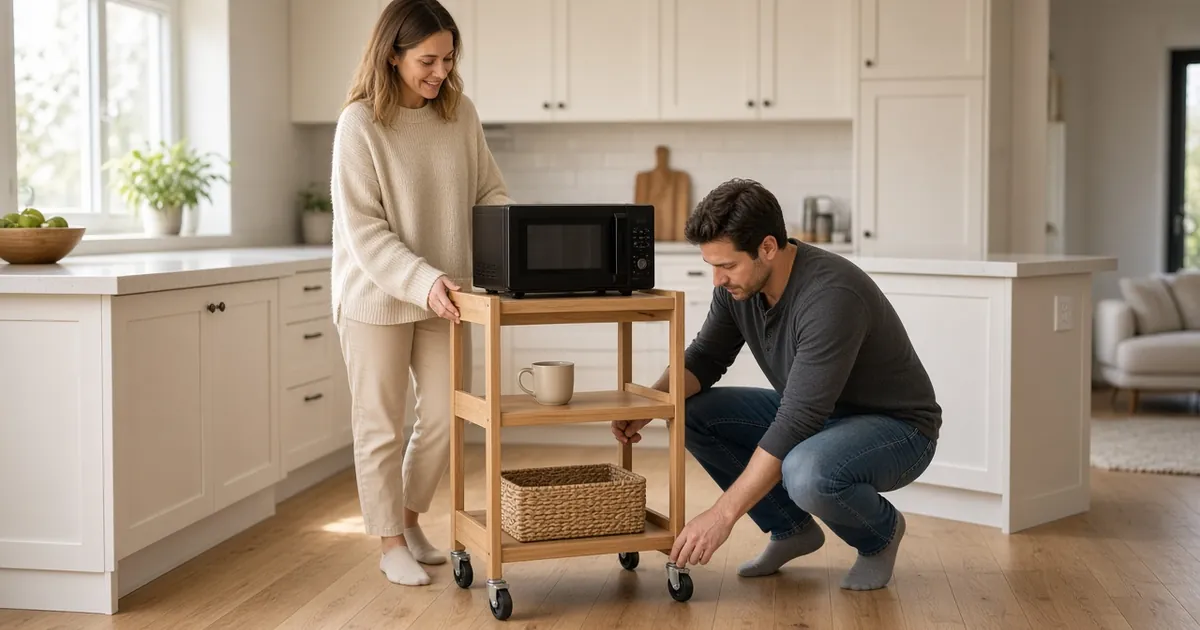
If your microwave still lives on the only clear stretch of counter, a good set of microwave carts options can give that space back without a remodel. The right kitchen microwave cart holds the oven, stashes plates and spices below, and rolls out of the way when you need the floor clear.
This buying guide focuses on kitchen microwave carts and microwave trolleys for small kitchens, studios, and apartments (not full kitchen islands). You will get sizing tips, storage ideas, and a few well-reviewed picks so you can shop once. For layout ideas around a tight footprint, start with our studio apartment decorating ideas and the honest notes in living in a studio apartment.
This post contains affiliate links. As an Amazon Associate, I earn from qualifying purchases, at no extra cost to you.
Quick Answer: Do You Need a Microwave Cart?
You need a microwave cart kitchen setup when the oven sits on precious counter space, when you want a coffee or snack station that moves, or when a rental kitchen has almost no cabinets. Choose a cart whose top (or middle) shelf fits your microwave with vent clearance, whose wheels lock, and whose total weight rating covers the oven plus dishes. Skip oversized island carts if your aisle is already tight.
What Is a Kitchen Microwave Cart (and Microwave Trolley)?
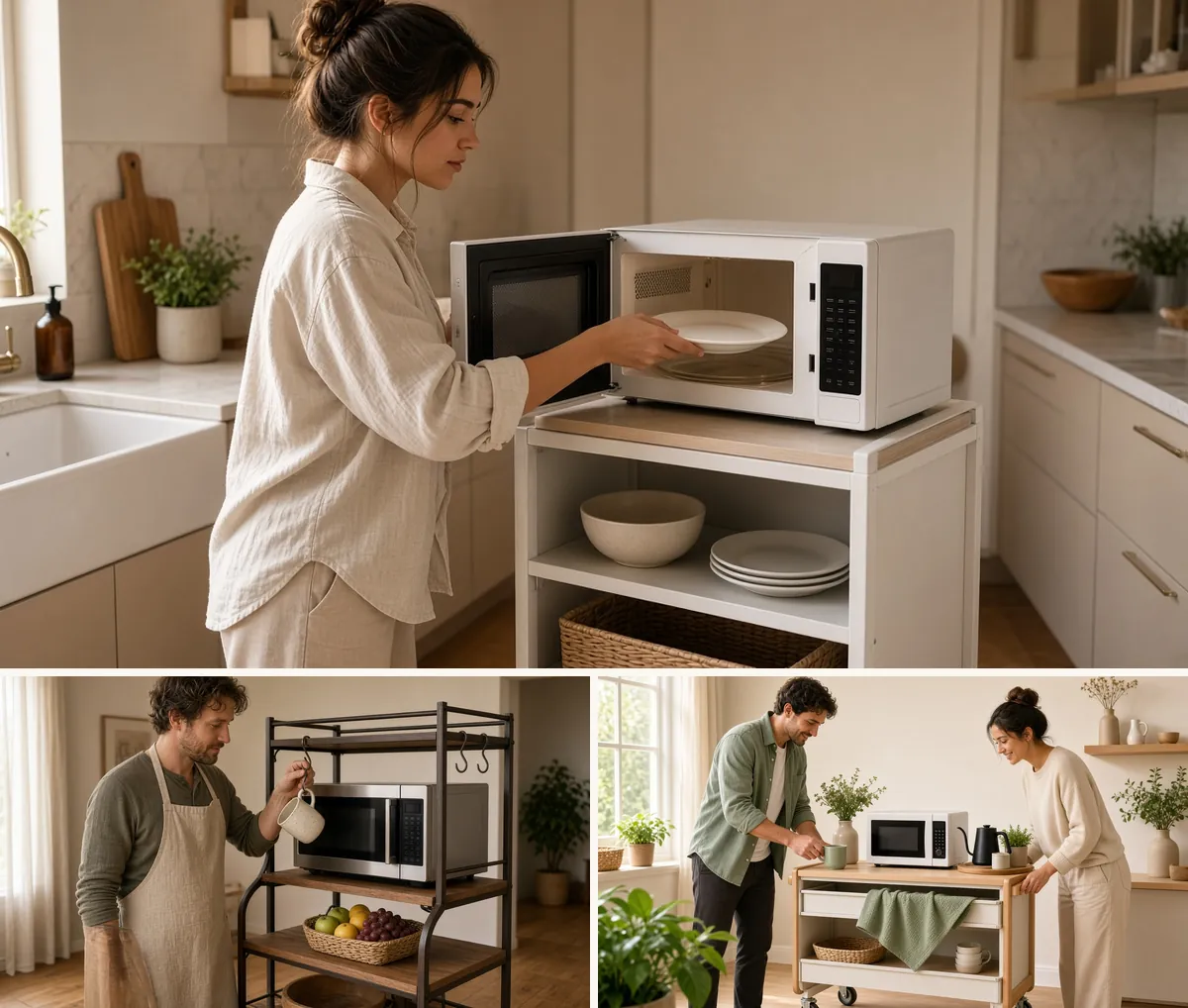
A kitchen microwave cart is a freestanding multi-tier stand built to hold a microwave and everyday kitchen storage. Shoppers also search microwave trolley for the same idea: a rolling rack with lockable casters. Most affordable models use a metal frame with laminate or wood-look shelves, side hooks for utensils, and two or three tiers.
These carts are not the same as a full kitchen island with seating. They stay narrow (often around 23 to 36 inches wide), stay movable, and exist to free counters in apartments, dorms, and galley kitchens. Think of them as vertical counter replacements: the microwave gets a safe home, and the shelves below become the drawer you never had.
You will see names like microwave stand, baker’s rack, utility cart, and coffee cart used interchangeably. For this guide, if it is sized for a microwave, rolls or stands in a small footprint, and adds storage under the oven, it counts. If you are shopping budget upgrades that still look finished, our economy home decor guide pairs well with a practical cart pick.
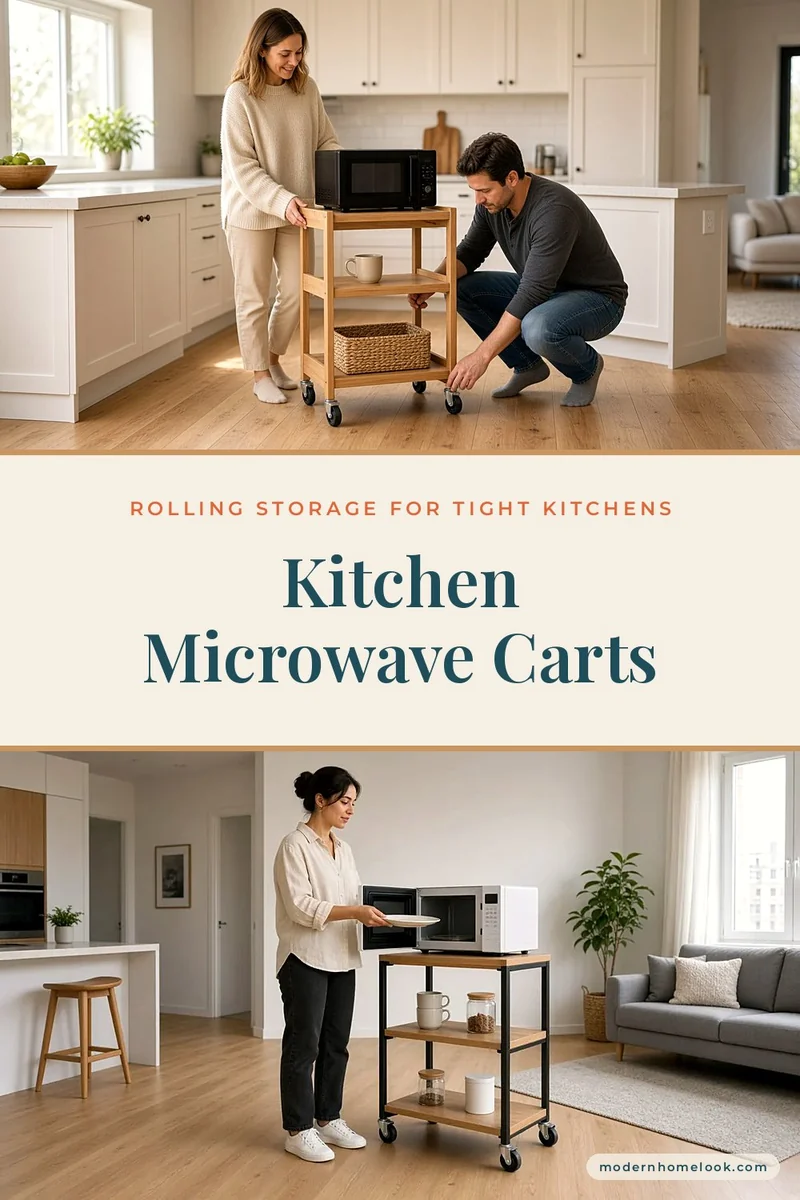
How to Choose Microwave Carts for Small Spaces
Start with your microwave, not the cart photo. A beautiful rack that cannot clear the door swing or the vent gap will frustrate you every day. A short checklist beats impulse shopping during a flash sale.
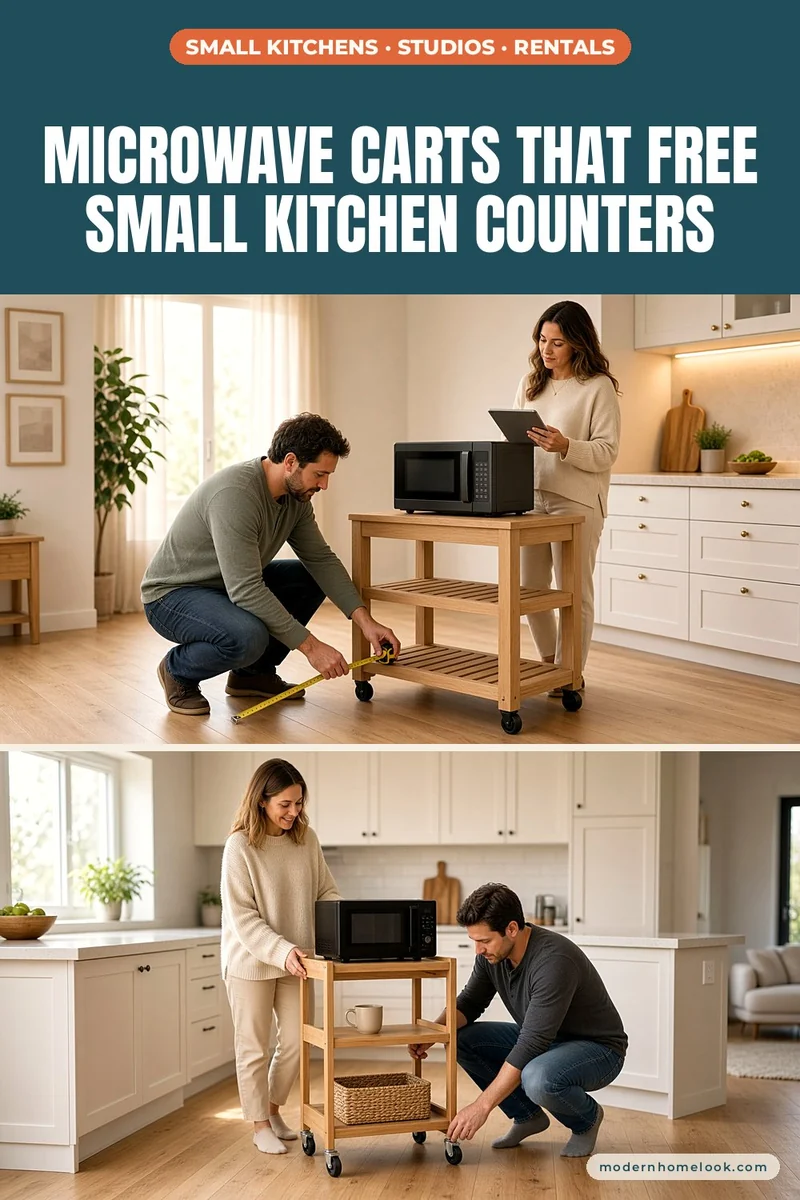
Measure the Microwave and the Aisle
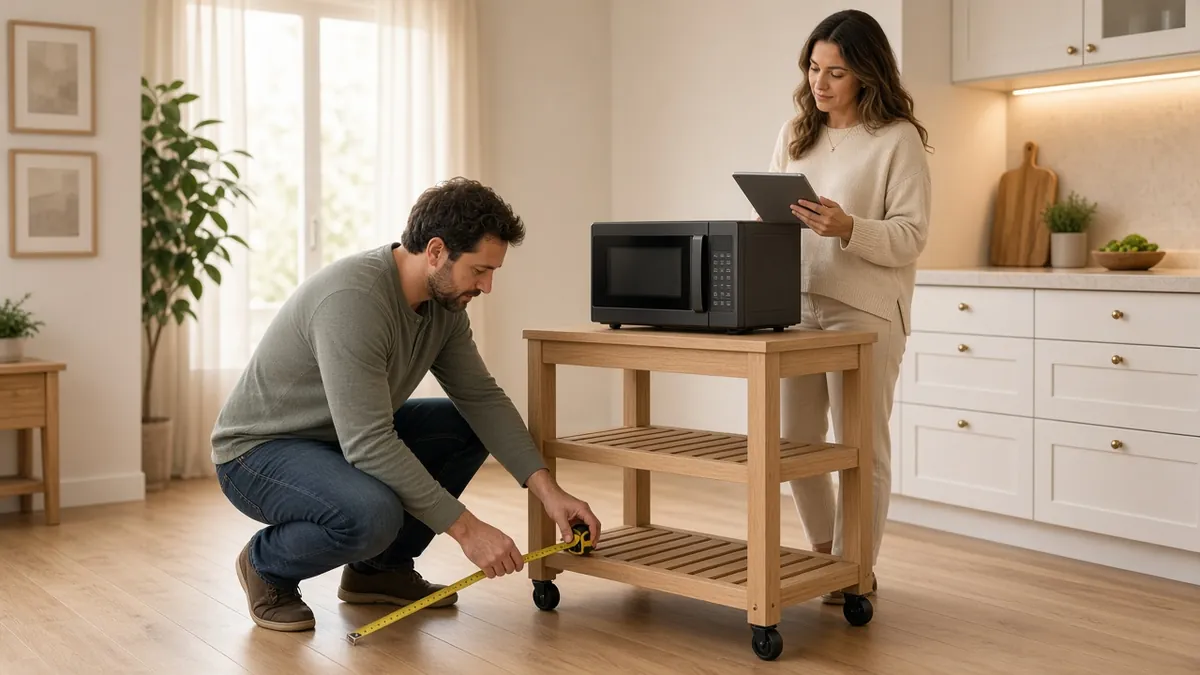
Write down width, depth, and height of the microwave with the door open. Leave room for airflow too: GE, for example, asks for about 3 inches on each side and on top and 1 inch at the back for its countertop models, so check your own microwave manual for its exact numbers. Then measure the floor spot: width of the niche, depth from wall to walkway, and how much room you need to open nearby cabinets or the fridge.
Compact kitchen microwave carts often land near 23 to 24 inches wide and about 15 to 16 inches deep. Wider baker-rack styles stretch closer to 35 inches and need a clearer wall run. If your microwave overhangs the shelf by more than a small lip, keep looking. Overhang looks fine in photos and feels unsafe once the door swings full of a hot plate.
Wheels, Locks, and Stability
Rolling microwave trolleys shine when you wipe floors, host, or shift the cart into a living-room coffee setup. Two lockable casters are non-negotiable once the microwave sits on top. Feel for a rigid X-brace or thick frame; a tippy cart is a safety issue, not a style choice.
If you never plan to move it, a stationary baker’s rack can work, but most small-kitchen shoppers still prefer lockable wheels. Test the locks after assembly before you load the microwave. Soft flooring and thick rugs can make cheap casters drag, so hard floors suit rolling carts best.
Shelves, Hooks, Weight Ratings, and Materials
Look for stated shelf and total load ratings above your microwave weight. An adjustable middle shelf helps when the oven is taller than average. Side S-hooks are useful for mugs, towels, or utensils without eating shelf space. Laminate and sealed wood tops wipe faster than raw wood; powder-coated metal frames resist kitchen humidity better than thin chrome that chips.
Hidden Pro Tip: put the heaviest items on the lowest shelf so the cart stays planted when you open the microwave door. Keep liquids in sealed containers on a middle shelf, not above the microwave controls. If kids or pets bump the cart, locks matter even more than looks.
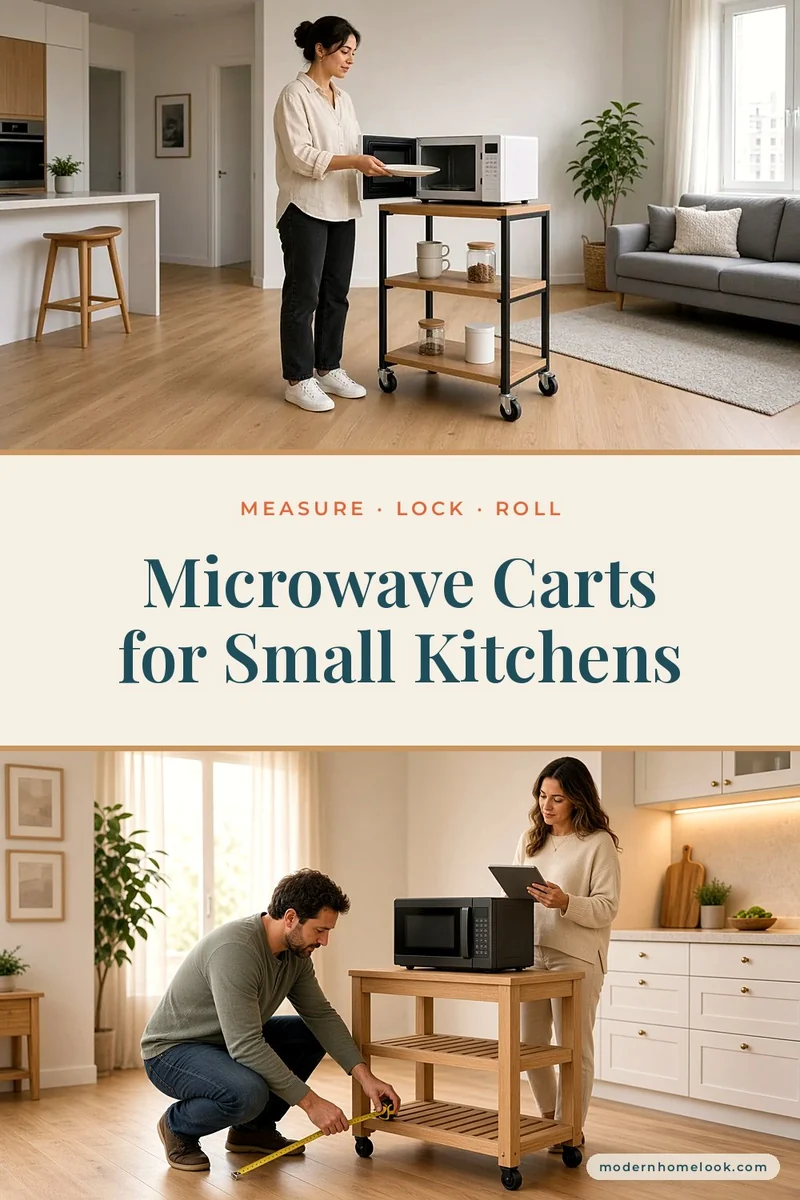
Small-Space Ideas: Studio and Apartment Microwave Stations
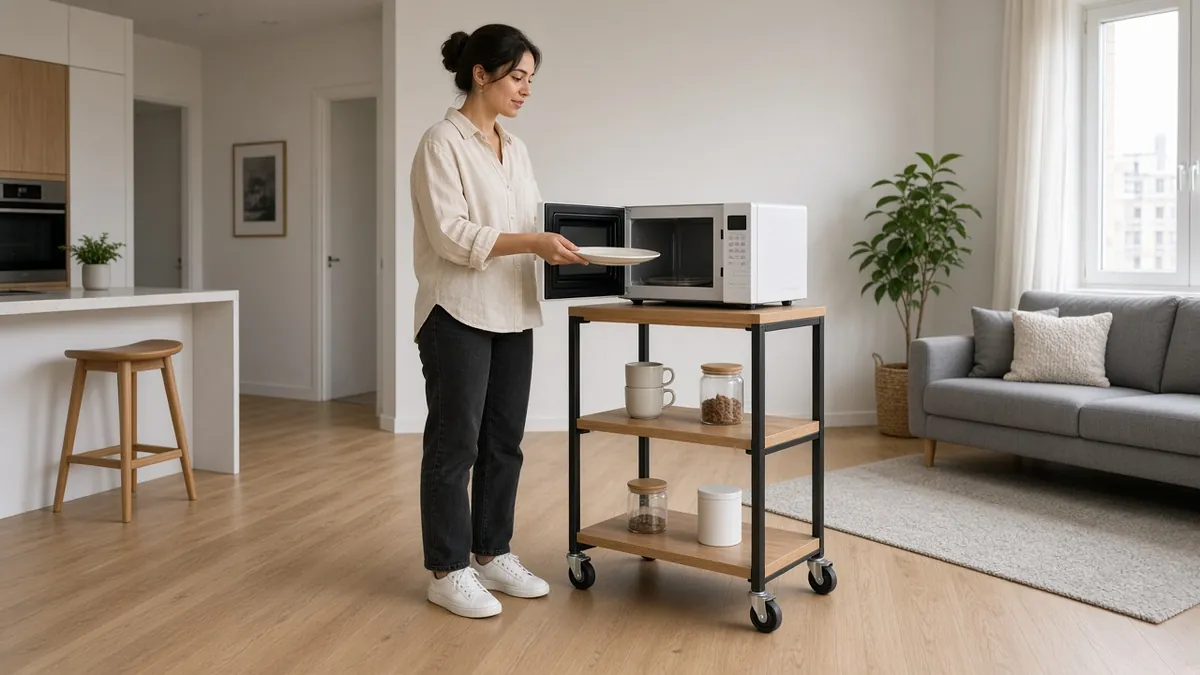
In a studio, the cart can live beside the fridge as a vertical appliance wall: microwave on top, baskets for snacks in the middle, mixing bowls below. In a galley kitchen, park it at the end of the run so it does not block the aisle, then roll it toward the dining table when you serve. In an open living area, style the lower shelves with matching baskets so the cart reads like furniture, not leftover storage.
Another workable layout is a coffee-and-microwave corner. Place the microwave on the top or middle shelf, keep mugs on hooks, and store pods, tea, or oatmeal on the shelf below. Morning routines stay in one footprint, and the main counter stays free for chopping. If you host, roll the whole station closer to guests so people are not crowding the cook.
Keep cords neat with a short surge strip clipped to the back leg, and leave the wall outlet accessible. If your whole home is one room, treat the cart finish like the rest of the palette (warm white, oak, soft black) so it blends. That is the same high-low thinking we use in studio apartment decorating ideas: one hardworking piece that still looks intentional. Real-life studio tradeoffs also show up in living in a studio apartment, including how much floor space you can honestly give away.
A high-review compact starter is the VASAGLE 23.6-inch kitchen shelf on wheels, usually in the $55 to $65 range, with three shelves, six removable S-shaped hooks, and four casters, two of which lock.
Mistakes to Avoid With Kitchen Microwave Carts
Buying by photo alone is the most common miss. Confirm the shelf depth against your microwave base, not just the cart width. Ignoring door swing is next: leave space in front so steam and plates have somewhere to go. Skipping the lock test after assembly is how carts creep across hard floors during reheating.
Overloading the top shelf with a microwave plus a toaster plus a kettle is another quiet problem. Spread heat-producing appliances, and keep the top focused on the microwave unless the brand rates a wider worktop for prep. Finally, do not block HVAC vents or heater returns with a wide baker’s rack; small apartments need that airflow.
When to Buy Microwave Carts on Sale
Microwave carts are affordable year round, so the best time to buy is when you have measured your space. Holiday sales can trim the price a little, but they are a bonus, not a reason to wait. Decide your width and weight needs first, then watch a short list instead of browsing every rack on Amazon.
For a bestseller-style rolling pick with strong recent sales, many shoppers like the ThreeHio 3-tier rolling microwave cart, typically around $45 to $55, with lockable wheels and side hooks. If you want adjustable chrome shelves and a huge review base, the Amazon Basics wood-and-chrome microwave cart usually sits near $50 to $60 and is rated up to 175 lb total per the listing. Prefer a wider baker-rack look with a basket? The soges 35.4-inch microwave stand often lands in the $55 to $70 range.
When you want a deeper wood top and a larger work surface, step up to a Finnhomy 36-inch oak-top rolling kitchen cart, typically around $100 to $120, for microwave plus prep space in one piece. That option makes more sense when you have a clear wall run and want the cart to double as a small island substitute, not when you are squeezing beside a fridge in a micro-galley.
Compare the Picks
Use this side-by-side for the kitchen microwave carts most small homes need before a sales weekend. Prices move during deals, so confirm the listing before you buy.
| Product Name | Price Range | Best For | Buy on Amazon |
|---|---|---|---|
| VASAGLE 23.6″ Kitchen Shelf on Wheels | $55 to $65 | Compact studios and tight aisles | Check Price |
| ThreeHio 3-Tier Rolling Microwave Cart | $45 to $55 | Everyday rolling storage with hooks | Check Price |
| Amazon Basics Wood/Chrome Microwave Cart | $50 to $60 | Adjustable shelves and high capacity | Check Price |
| soges 35.4″ Baker’s Rack Microwave Stand | $55 to $70 | Wider wall runs needing more storage | Check Price |
Screenshot the dimensions and weight chart when you add an item to your cart so a variant swap does not surprise you. Stock and prices can shift, so check the listing right before you buy. If two options are close in price, pick the one that matches your microwave depth and your aisle width first, then worry about finish color.
What Actually Matters Most
You do not need every microwave cart on the market. You need one that fits your microwave, locks in place, and clears your walkway. Measure first, then match width and shelf height. Prefer lockable wheels in rentals and studios where floors get mopped and furniture shifts for guests.
Before you start shopping, write three lines: microwave width and weight, max cart width your aisle allows, and whether you need a coffee-station look or pure storage. Then buy one focused cart instead of three almost-right racks that never leave the box.
Free the counter, lock the wheels, and style the lower shelves so the piece looks like it belongs. That is how a simple microwave trolley earns its floor space every day.
Microwave Carts FAQ
What is a kitchen microwave cart?
A kitchen microwave cart (also called a microwave trolley or microwave stand on wheels) is a compact multi-tier shelf that holds a microwave on top or on a middle shelf and stores plates, spices, or small appliances below. Most models use lockable casters so you can roll the unit for cleaning or serving, then lock it in place.
How much space do I need for a microwave cart?
Measure your microwave first (width, depth, and height with the door open), then add a little clearance on the sides and back for vents. Most compact carts are about 23 to 24 inches wide and 15 to 16 inches deep. Leave a clear path if the cart has wheels, and check that the top shelf rating covers your microwave weight.
Are microwave carts good for small kitchens and studios?
Yes. A rolling microwave cart frees counter space, adds vertical storage, and can double as a coffee station or prep shelf in a studio apartment. Choose a narrow footprint, lockable wheels, and enough shelf height for your microwave. Pair the cart with other small-space layout ideas so it does not block walkways.
What should I look for when buying a microwave cart?
Prioritize shelf weight ratings, overall dimensions that fit your microwave and aisle, lockable wheels if you want mobility, and materials that wipe clean (laminate or sealed wood tops with metal frames). Hooks and an adjustable shelf help in tight kitchens. Avoid carts that feel tippy once the microwave sits on top.
When is the best time to buy a kitchen microwave cart?
Any time you have measured your space. Microwave carts are affordable year round, so there is no need to wait for a sale. Compare current prices and stock, then buy once you know your microwave size.