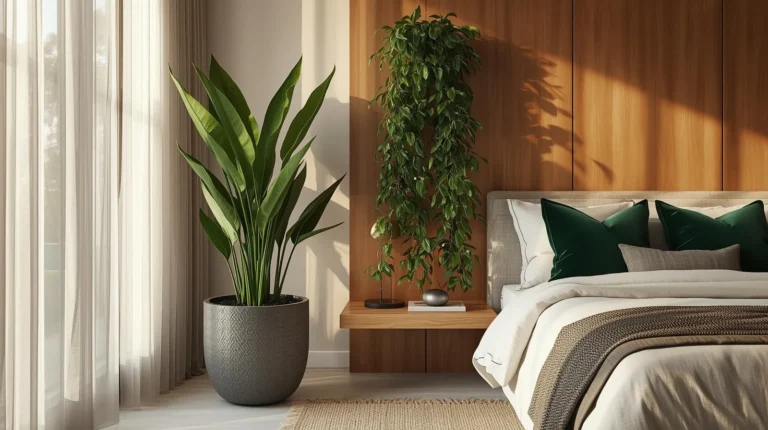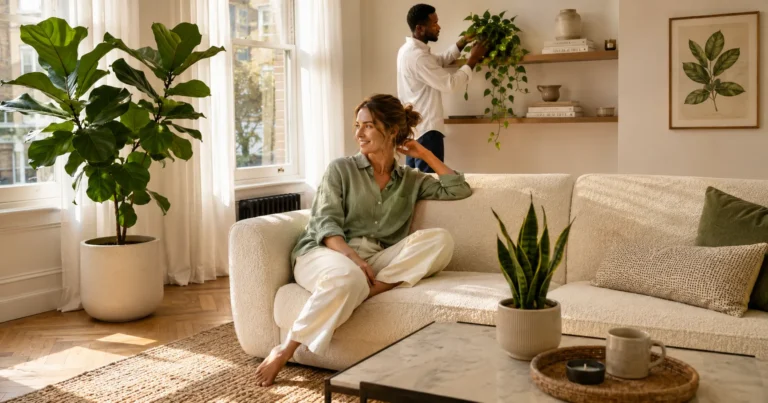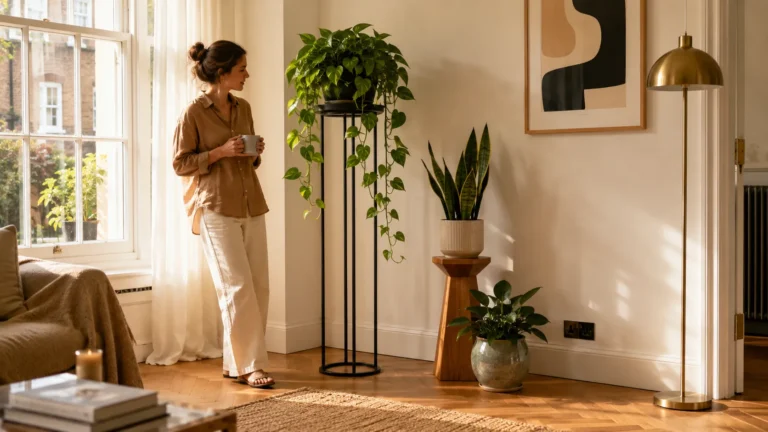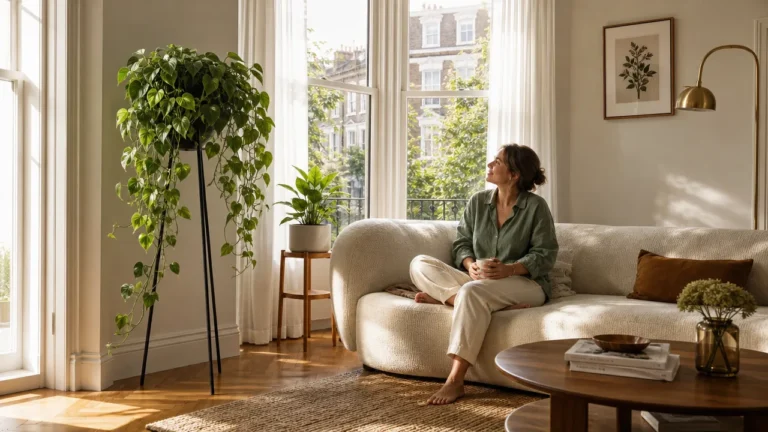
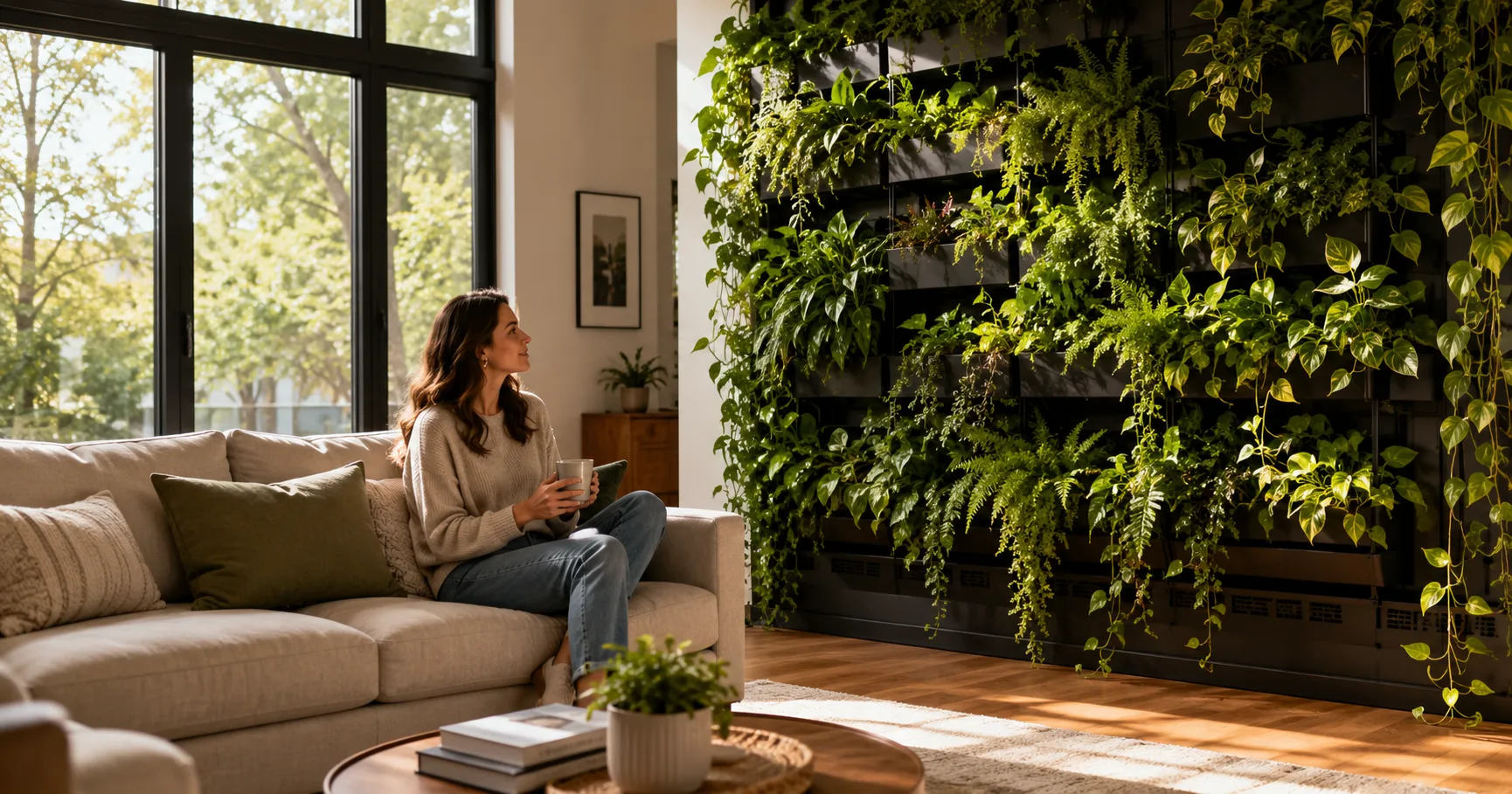
A blank wall is one of the easiest opportunities in a home to overlook, and one of the most rewarding to fix. A plant wall turns that empty stretch into a full, living design feature, whether you go with real greenery, a low-maintenance moss installation, or a faux setup that looks convincing from across the room. This guide covers all three approaches, how to choose between them, and exactly how to put one together in your own space.
This post contains affiliate links. As an Amazon Associate, I earn from qualifying purchases, at no extra cost to you.
What Is a Plant Wall?
“Plant wall” covers a few different setups, and knowing the differences upfront makes it much easier to pick the right one for your space and lifestyle.
Living Plant Walls
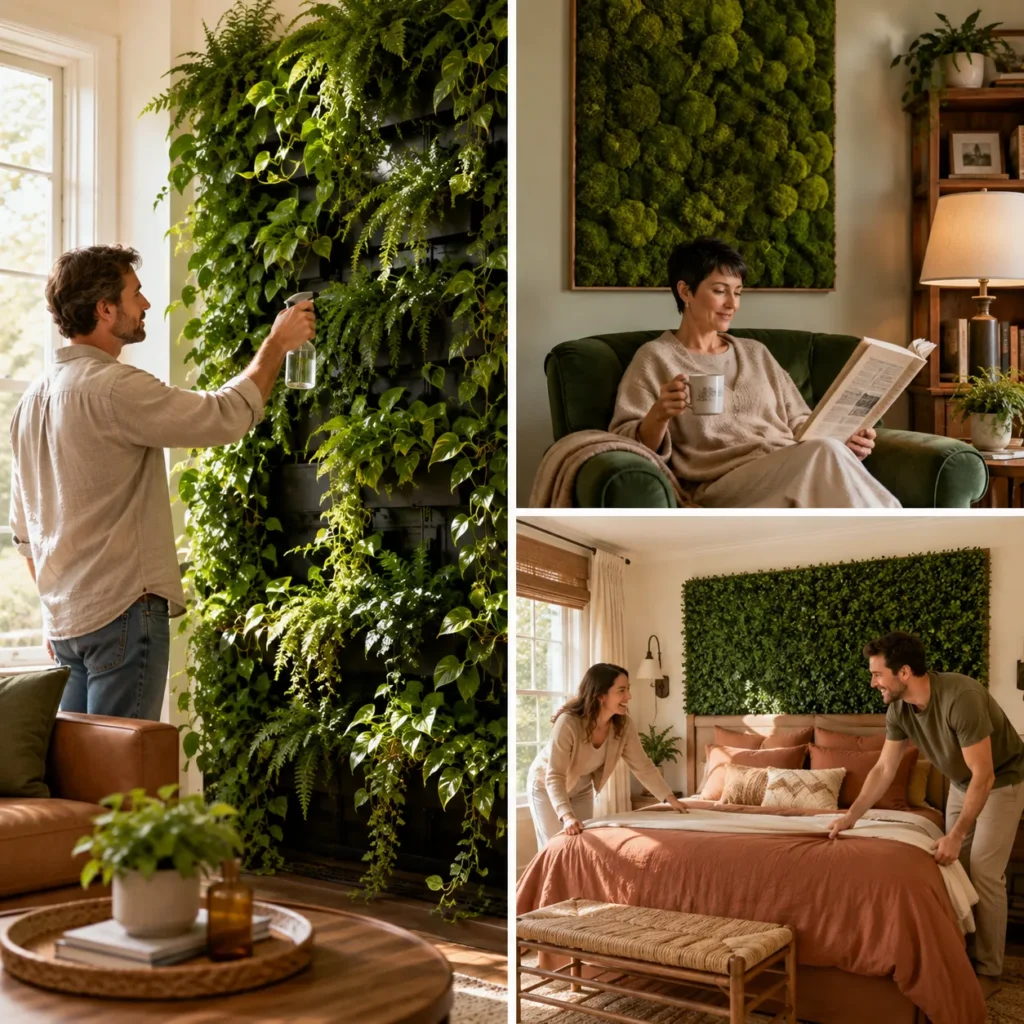
A living plant wall uses real, rooted plants, usually arranged in a vertical planter system, wall-mounted pots, or a modular panel with built-in irrigation. It’s the most striking option and the one that actually improves air quality, but it also asks the most of you in terms of light and watering.
Moss Walls
Moss walls use preserved moss rather than live plants, so there’s no watering, no sunlight requirement, and no maintenance beyond the occasional dusting. They deliver a soft, textured, deeply green look that works especially well as an accent panel behind a headboard or media console.
Faux and Artificial Plant Walls
Faux plant walls use realistic artificial greenery, often sold as interlocking panels you can mount directly to a wall. They’re the fastest and lowest-effort option, and modern versions have come a long way from the flat, plasticky look of older artificial plants.
How to Choose the Right Plant Wall for Your Space
The right approach comes down to how much natural light you have, how much upkeep you’re realistically willing to do, and whether you’re working with a rental.
Light and Watering Considerations
Living plant walls need consistent bright, indirect light and a watering routine you can actually stick to, so they work best near a window in a room you pass through daily. If your space is dim or you travel often, moss or faux options sidestep the issue entirely.
Budget and Maintenance Level
Faux panels tend to be the most budget-friendly upfront and require zero ongoing cost. Moss walls sit in the middle, with a higher upfront cost but no maintenance after installation. Living walls have the lowest upfront cost per plant but add up over time between soil, fertilizer, and the occasional plant that doesn’t make it.
Renter-Friendly vs. Permanent Installations
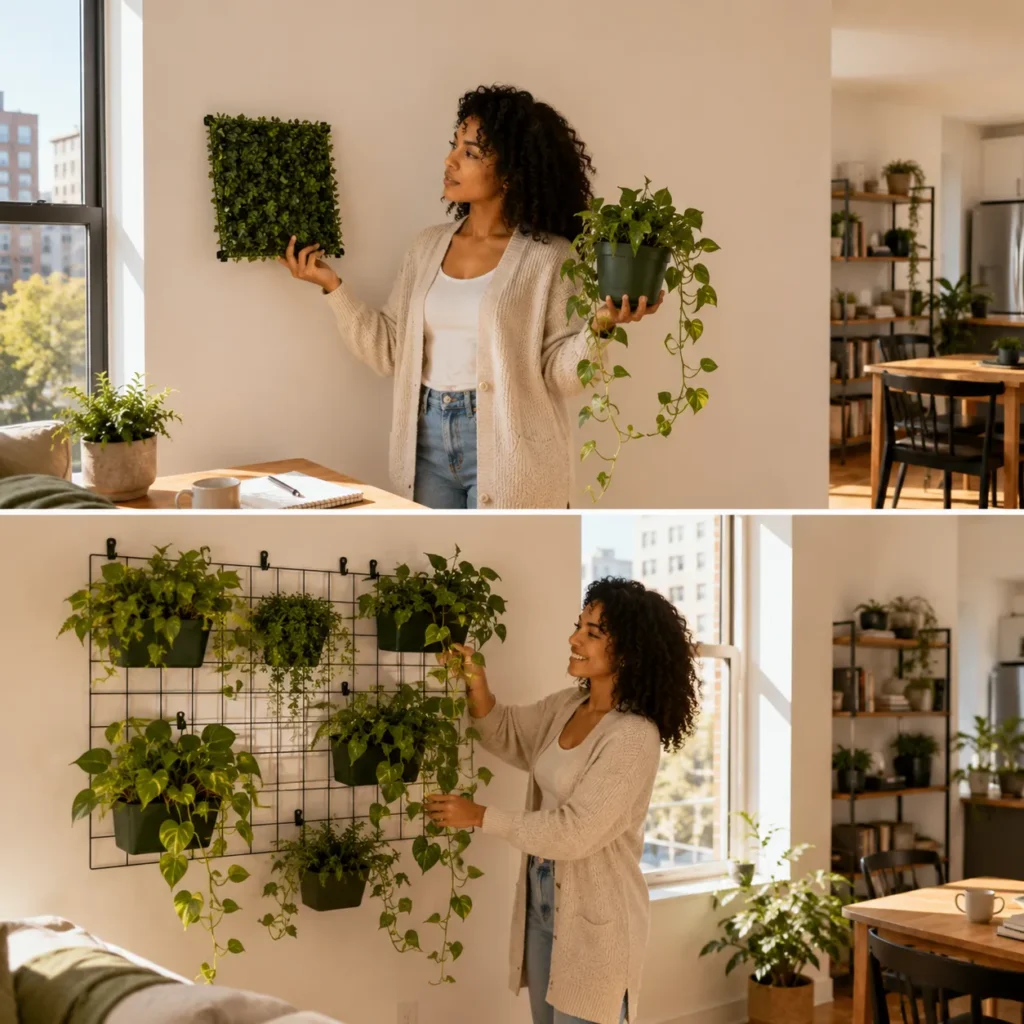
Command hooks and lightweight wall grids make faux and small living plant walls easy to remove without damage, which matters if you’re renting. For frames and art, our guide to renter friendly picture hooks covers how much weight each type holds. Larger irrigated living wall systems and built-in moss panels are more of a permanent commitment, better suited to homeowners.
How to Build a Plant Wall Step by Step
Once you’ve picked a style, the actual build comes together in a handful of steps.
Step 1: Pick Your Mounting System
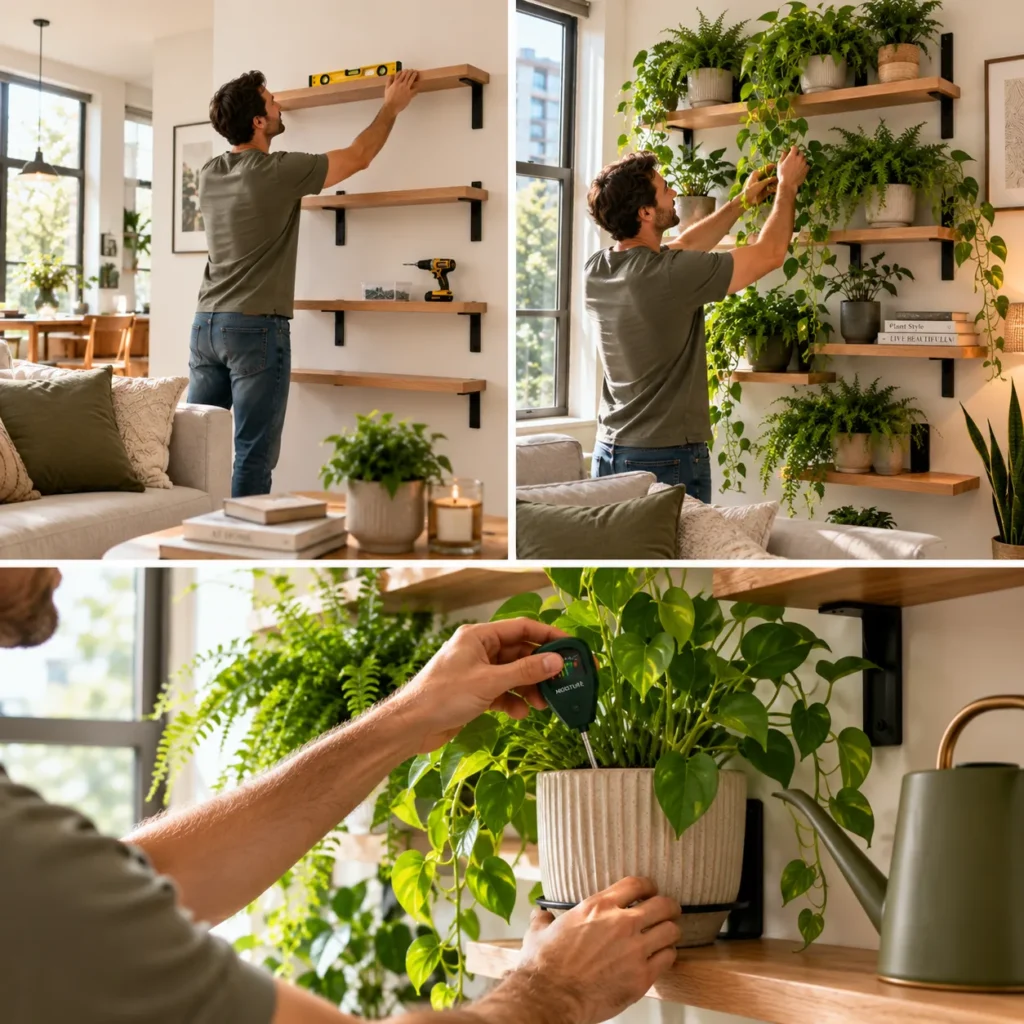
Your options are generally a wall-mounted shelf system, individual wall hangers, or a modular panel grid, depending on whether you’re going with potted plants or a flush faux or moss installation. Shelves give you the most flexibility to rearrange later, while panel systems create a cleaner, more uniform look.
Step 2: Choose Your Plants or Faux Greenery
For living walls, pothos, ferns, and philodendrons are forgiving choices that tolerate a range of light conditions. For faux setups, look for panels with varied leaf shapes and a mix of matte and glossy textures, which reads as far more realistic than a single repeated leaf pattern.
Step 3: Install and Arrange
Mount your shelves, hooks, or panels at varying heights rather than a single straight line. Stagger plant sizes so larger leaves sit lower and smaller, trailing varieties fill in higher up, which creates depth instead of a flat grid.
Step 4: Water and Maintain (Living Walls Only)
Check soil moisture weekly rather than watering on a fixed schedule, since wall-mounted pots can dry out faster than plants at floor level. Rotate pots occasionally so growth stays even on all sides.
Hidden Pro Tip: The biggest mistake with plant walls, living or faux, is spacing everything too evenly. Real plant growth is irregular, so leaving slightly uneven gaps and letting a few leaves overlap actually reads as more natural and intentional than a perfectly symmetrical layout.
Plant Wall Ideas by Style

Minimalist Wall Shelf Displays
A few floating wall shelves staggered at different heights, each holding one or two potted plants, gives you a plant wall effect without committing to a full panel system. It’s the easiest style to start small and build on over time.
Boho Hanging Wall Planters
Mixing textured wall planters like woven or macrame-style holders with varying pot sizes creates a relaxed, layered look that pairs naturally with rattan and warm wood tones.
Statement Living Walls
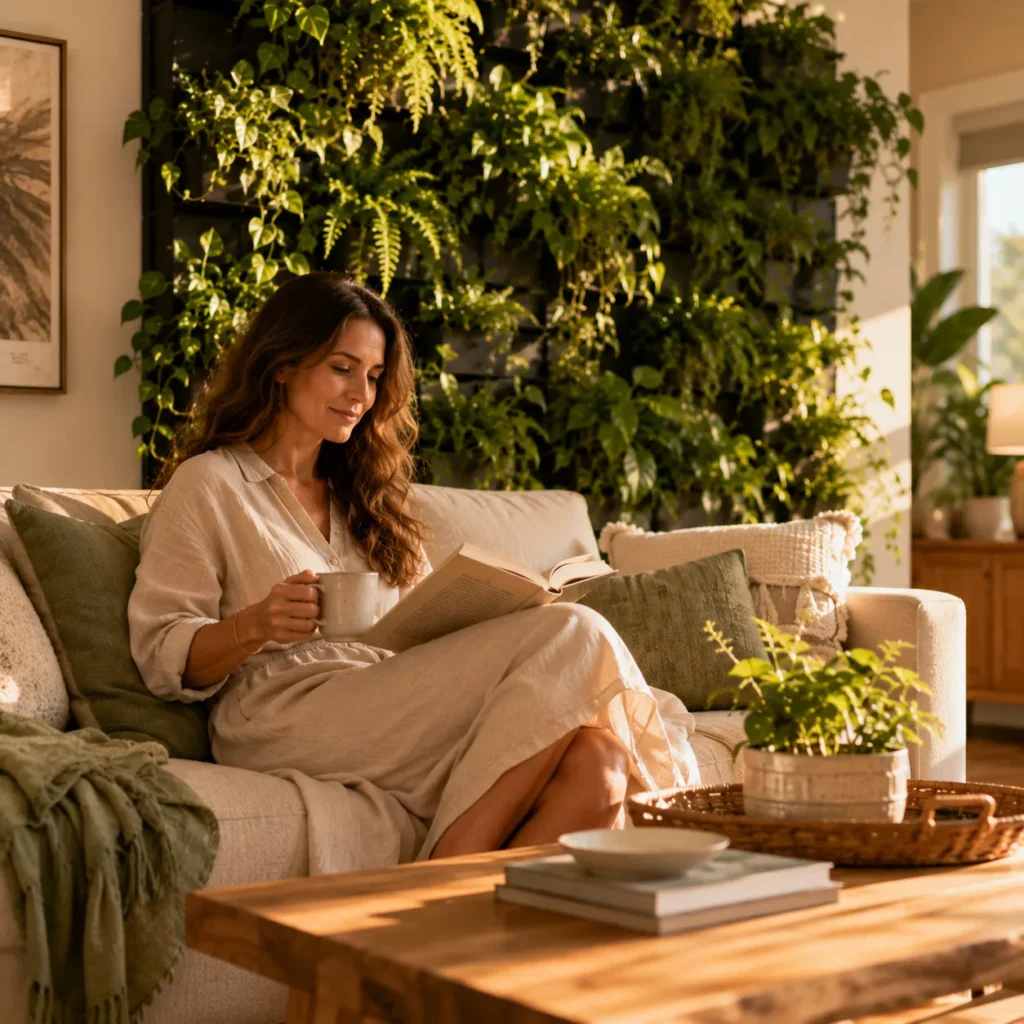
A full modular living wall panel, densely packed with a mix of trailing and upright plants, works as a genuine focal point in a living room or entryway. This is the highest-commitment option but also the most visually dramatic.
Succulent Wall Planters
For low-light-tolerant, low-water displays, a wall-mounted succulent planter delivers a lot of visual texture with minimal upkeep, making it one of the more forgiving living options for beginners.
Best Plant Wall Products to Shop
If you’d rather buy a ready-to-install system than build one piece by piece, here’s how a few common options compare.
| Product Type | Price Range | Best For | Buy on Amazon |
|---|---|---|---|
| Floating Wall Shelf Set | $25 to $45 | Flexible, low-commitment starter setups | Shop wall shelves |
| Wall-Mounted Planter Hangers | $15 to $30 | Boho-style layered displays | Shop wall planters |
| Faux Greenery Wall Panel | $40 to $70 | Fast, no-maintenance installs | Shop faux panels |
| Preserved Moss Wall Panel | $60 to $120 | Accent walls with zero upkeep | Shop moss panels |
Where to Add a Plant Wall in Your Home
A living room accent wall or the space behind a sofa are the most natural spots for a plant wall, since they’re visible from most of the room and benefit from the added texture. Entryways are another strong option, turning a transitional space into something worth noticing the moment you walk in.

In smaller apartments, a plant wall is also one of the most efficient ways to add greenery without sacrificing floor space, which pairs well with the ideas in our indoor plant styling guide. If you’d rather keep some plants at floor level alongside a wall display, our plant stand ideas roundup covers options for that too.
Which Plant Wall Is Right for You?
If you want the real thing and you’ve got the light and the time, a living plant wall is worth the effort and genuinely transforms a room. If your space is trickier or your schedule doesn’t leave room for upkeep, moss and faux options get you nearly the same visual payoff with a fraction of the commitment. There’s no wrong choice here, just the one that actually fits how you live.
FAQ
How do you make a plant wall?
Choose a mounting system such as shelves, hangers, or a panel grid, select living plants, moss, or faux greenery based on your light and maintenance preferences, then install at varying heights for a natural, layered look.
What’s the best plant for a plant wall?
Pothos, ferns, and philodendrons are the most forgiving choices for living plant walls since they tolerate a range of light levels and are relatively low-maintenance.
How do you install a wall planter without damaging the wall?
Command hooks or a lightweight wall grid work well for renters, since both hold securely without drilling and can be removed cleanly later.
Do fake plant walls look tacky?
Not if you choose panels with varied leaf shapes and textures rather than a single repeated pattern. Mixing matte and glossy leaves, and avoiding overly uniform colors, is what makes modern faux walls read as realistic.