
Living in a studio apartment means your bed, sofa, kitchen and desk all share one room, so every choice you make shows. Day to day, studio living is cheaper, quicker to clean and easier to keep in order, but it can feel cramped and a little too public if the room has no structure.
It suits people who live alone or as a relaxed couple, work partly outside the home and care more about location and rent than square footage. The usual pain points, like no privacy, clutter and nowhere to put guests, are mostly solved by two things: clear zones for sleeping, living and working, and multifunctional furniture that does two jobs in one footprint.
This post contains affiliate links. As an Amazon Associate, I earn from qualifying purchases, at no extra cost to you.
Quick Answer: Is Living in a Studio Apartment Comfortable?
Yes, for most people who plan it. Give the room three zones (sleep, live, eat or work), anchor each with a rug, a divider or lighting, and choose pieces that store or convert, such as a storage bed or a sleeper sofa. Keep surfaces clear with a daily reset, and studio living feels calm and deliberate rather than small.
What Is a Studio Apartment, and Who Does Studio Living Suit?
A studio apartment is a single-room home where the sleeping area, living area and kitchen share one open space, with a separate bathroom. Most US studios fall roughly between 300 and 600 square feet, often around 450, though big cities can go well below that.
The appeal is practical: lower rent, less upkeep and access to neighborhoods you might not afford with an extra bedroom. Studio living tends to suit first-time renters, people who travel or work long hours, and anyone who wants a simpler, lower-maintenance routine.

Studio vs. Alcove Studio vs. Junior One-Bedroom
A standard studio is fully open, so your bed sits in the same sightline as your sofa and kitchen counter. An alcove studio adds a nook, usually L-shaped, that can hold the bed slightly out of view. A junior one-bedroom typically has a partial wall or a small separate sleeping area.
If privacy matters to you, an alcove studio or junior one-bedroom gives you more room to zone. For pure budget efficiency, a standard studio is hard to beat.
Size matters less than layout. A well-proportioned 400-square-foot studio with good windows often feels better than a 550-square-foot one with an awkward shape and one small window.
The Real Pros of Living in a Studio Apartment
Lower Rent and a Better Location
Studios usually rent for noticeably less than a one-bedroom in the same building, often somewhere in the 20 to 40 percent range, depending on the city. That gap can go toward savings, travel or paying down debt.

The location benefit can matter even more. A studio in the neighborhood you actually want often beats a bigger place with a long commute, because the city around you becomes part of your living space.
Less to Clean and Less Mental Load
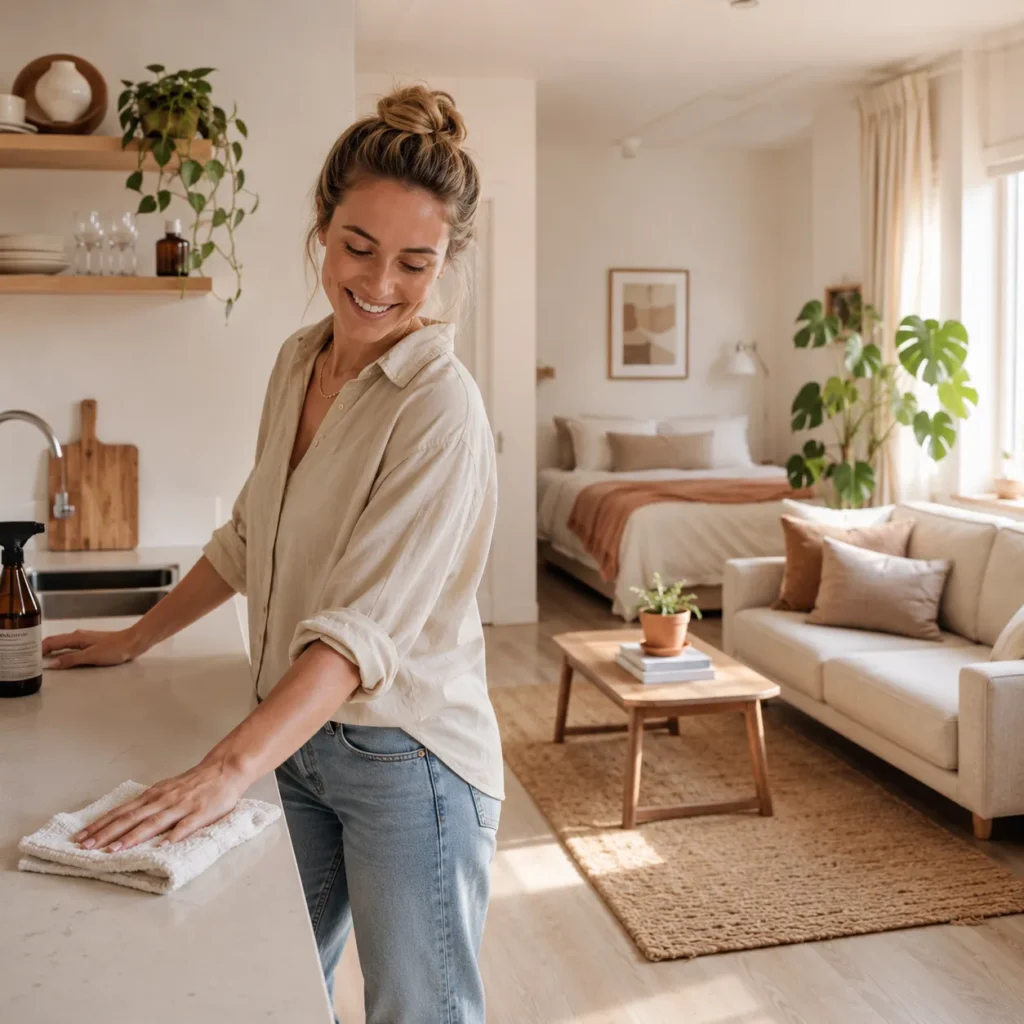
One room means one room to clean. There is no guest room collecting dust and no formal dining room used twice a year. A full reset can take 20 minutes, which makes it far easier to keep the place guest-ready.
There is a quieter benefit too: fewer surfaces to organize and fewer decisions about where things go. A simple rule helps: every item needs a home, and if something has no home, it probably does not belong in the studio.
Forced Minimalism That Can Feel Freeing
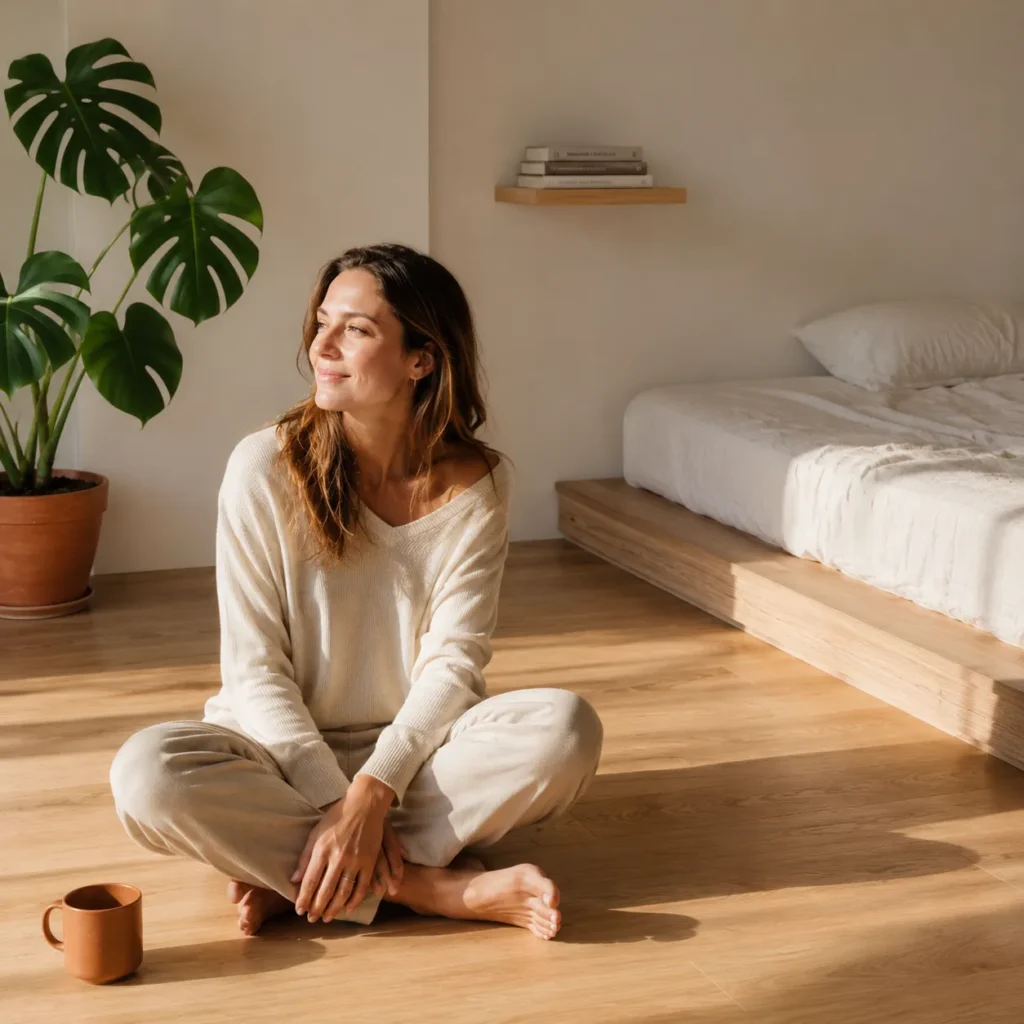
A studio does not let you accumulate without consequence. That limit pushes you to keep what you use and love, and many people who downsize describe the result as freeing: less stuff, less decision fatigue and more attention on the few pieces that matter.
Want Your Home to Look Expensive for Less?
Grab the free room by room styling checklist, plus weekly decor tips.
Get the Free ChecklistThe Honest Cons and What Actually Helps
Studio living is not for everyone, and the downsides are real. The good news is that each one has a practical fix.
No Privacy and No Separation
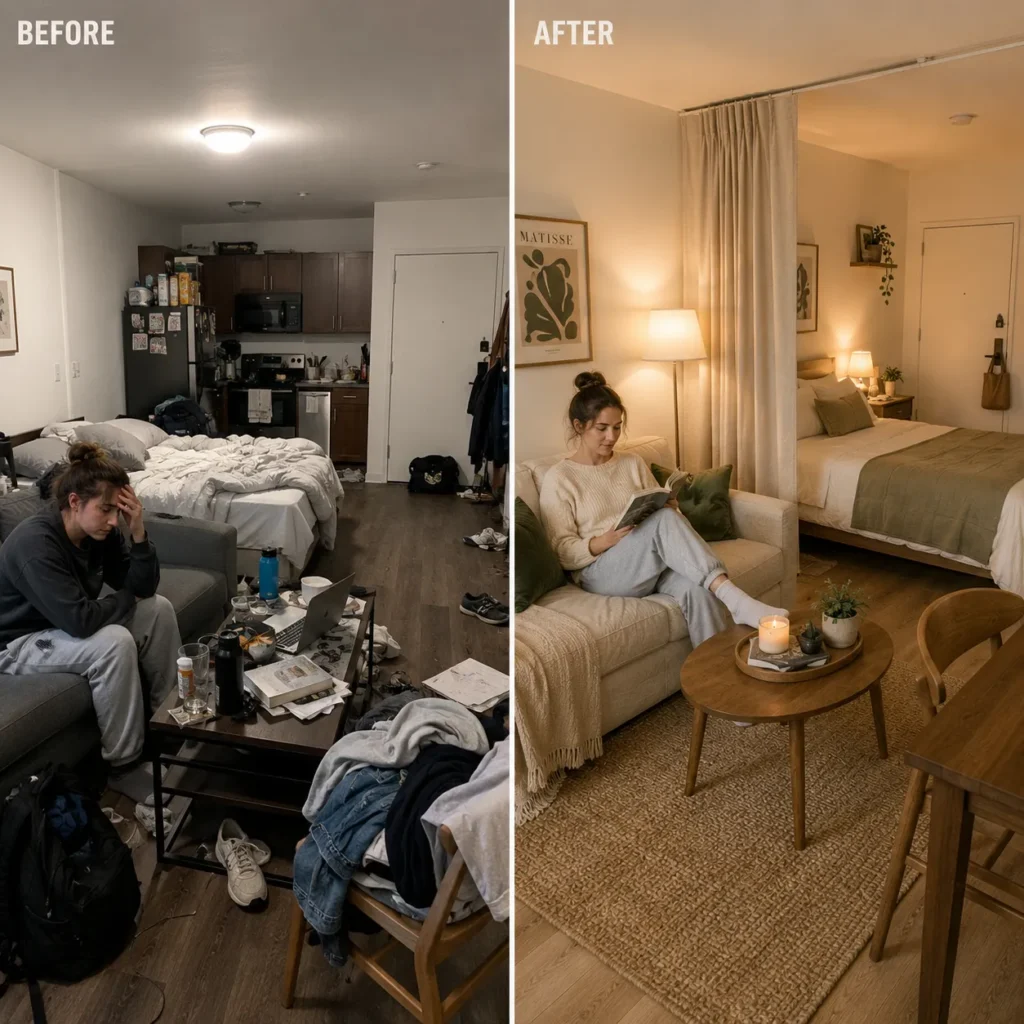
The hardest part of one-room living is not the size, it is the lack of separation. Your bed is visible from the sofa, the kitchen is visible from the bed, and work bleeds into rest. The fix is intentional zoning with rugs, furniture placement, curtains and lighting, so each part of the room has a clear job.
Clutter Shows Up Fast
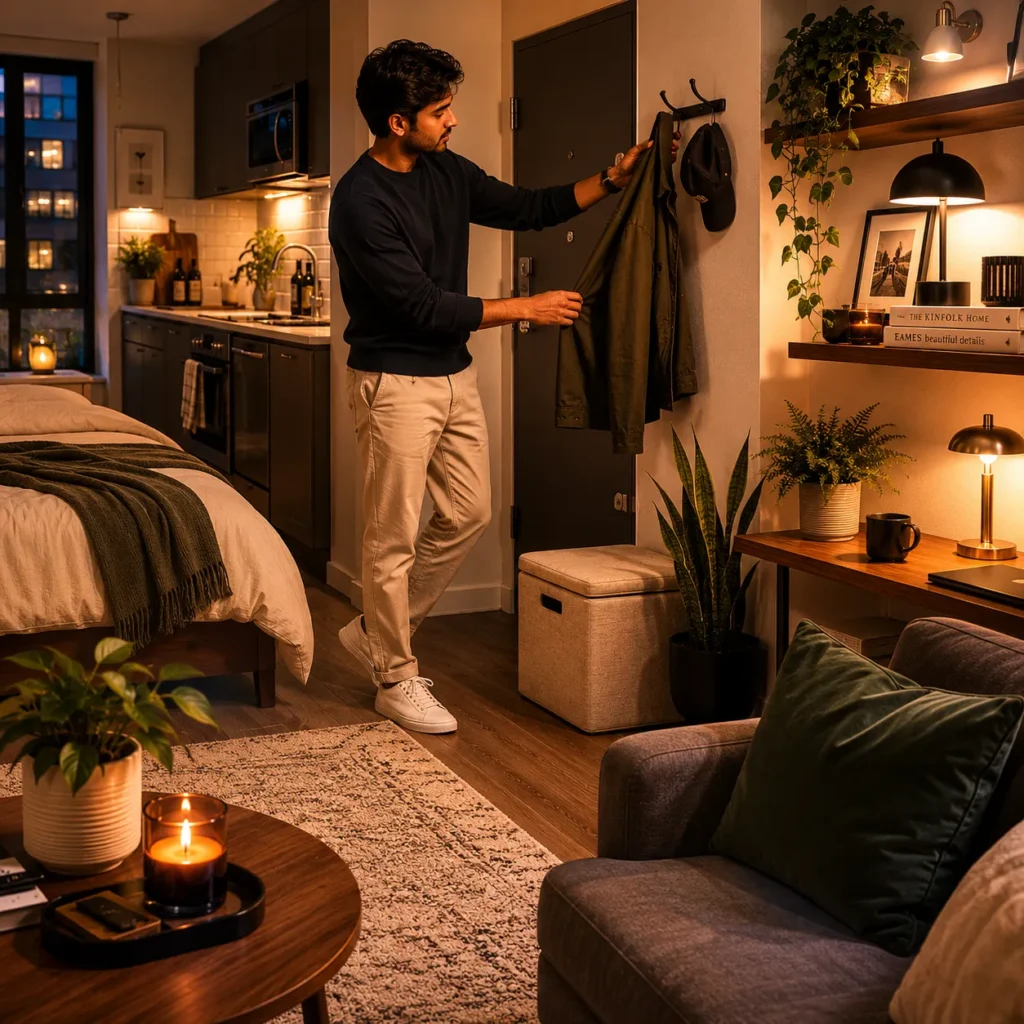
In a larger home, clutter hides. In a studio, one pile of mail or a few shoes by the door can make the whole room feel messy. That is not a personal failing, it is just how open rooms work. Closed storage and a two-minute evening reset keep it under control.
Living in a Studio Apartment as a Couple
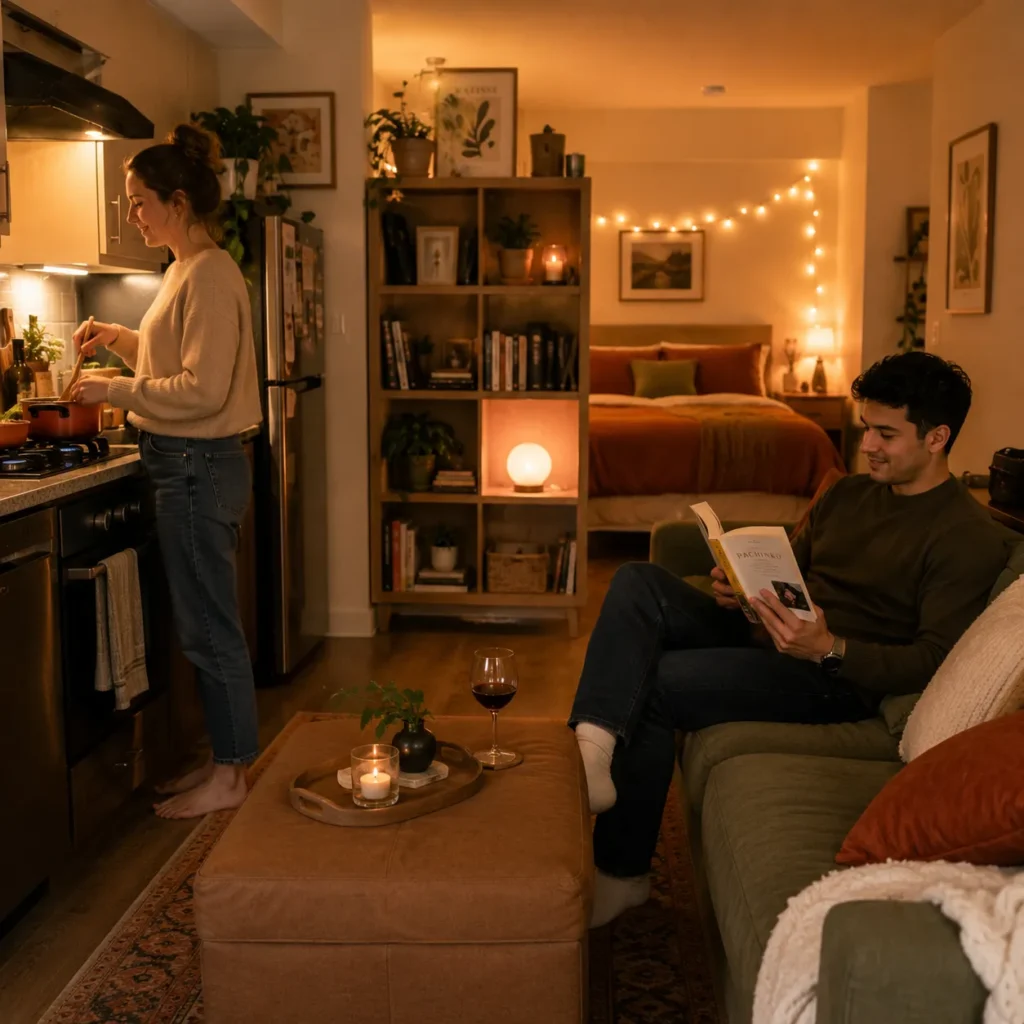
It can work well, but it takes more communication than the floor plan does. Couples who enjoy studio living tend to agree on quiet hours, give each person one drawer or shelf that is fully theirs, and plan time apart, whether that is a walk, a gym session or headphones on the sofa.
The physical limits, like shared closet space and one work surface, are solvable with storage under the bed and a desk that folds away. The emotional side, having nowhere to retreat, is easier when the room has a clear sleeping zone that feels separate.
How to Define Zones in a Studio Apartment Without Walls
Zoning is the most useful skill in studio living. Without it, the room reads as one big space where everything happens at once. With it, the same square footage feels like a small home with a bedroom, a living room and a place to eat or work.
Use Area Rugs to Anchor Each Zone
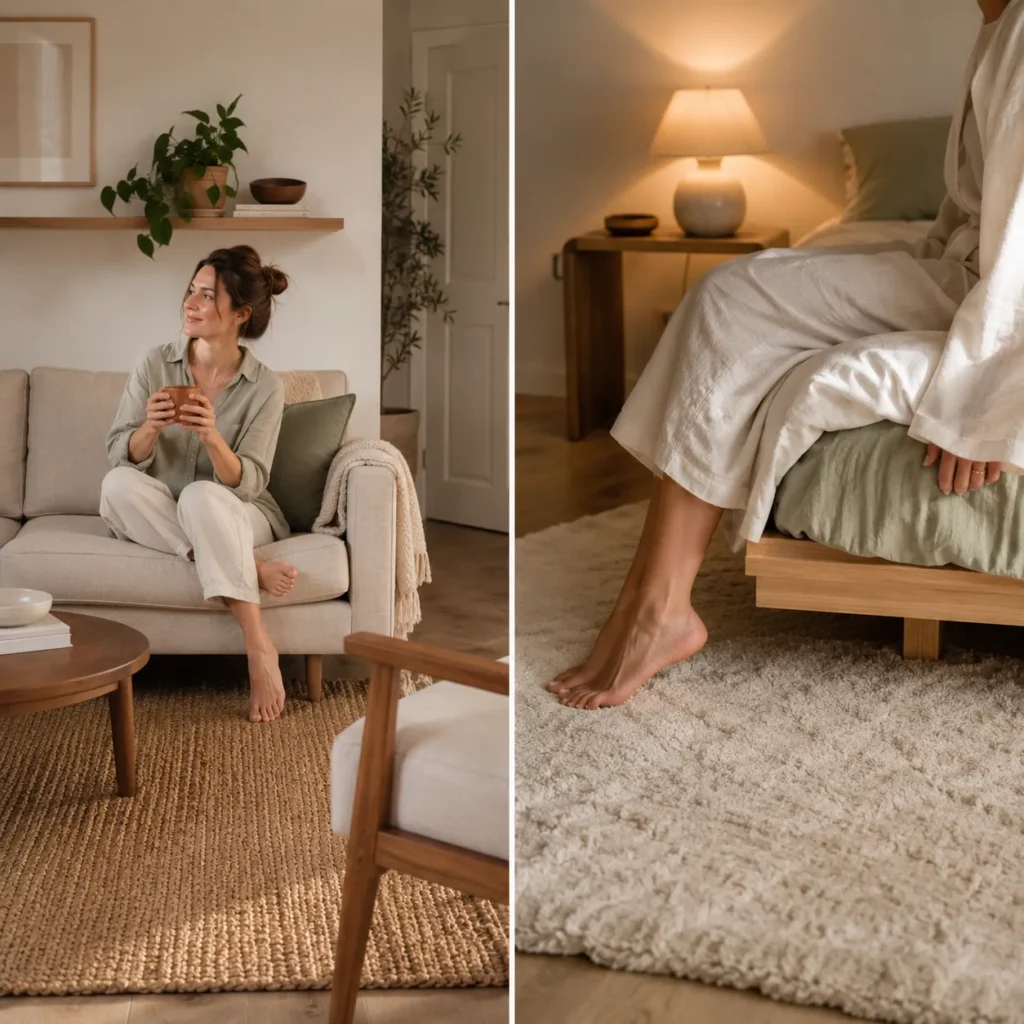
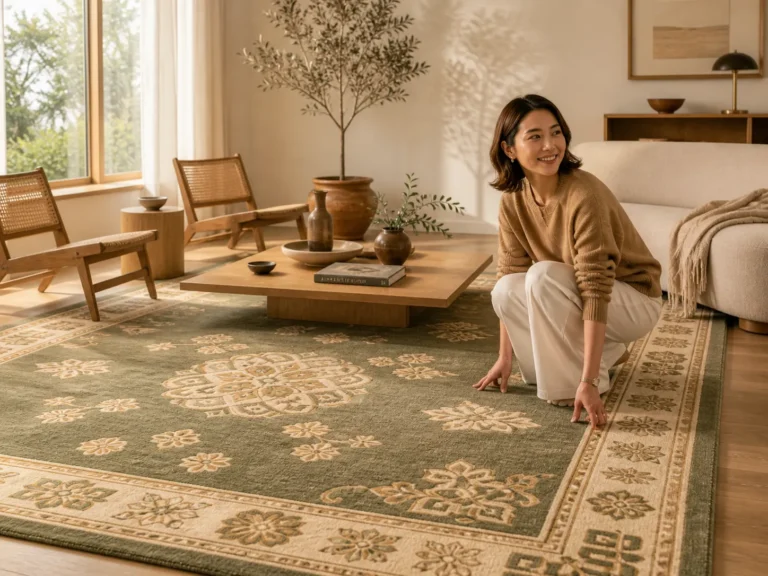
An area rug is the easiest zoning tool. Put one under the sofa and coffee table to define the living zone, and use a different rug, or none, near the bed. As a rough guide, choose a living-area rug large enough for at least the front legs of the sofa and chairs to sit on it; our rug sizes chart shows standard sizes by room.
For a pattern that gives the zone a point of view, a statement piece like a Chinese Art Deco rug works well. If you have a small balcony, browse these 25 best outdoor rugs to make it a fourth zone.
A Bookcase as a Room Divider
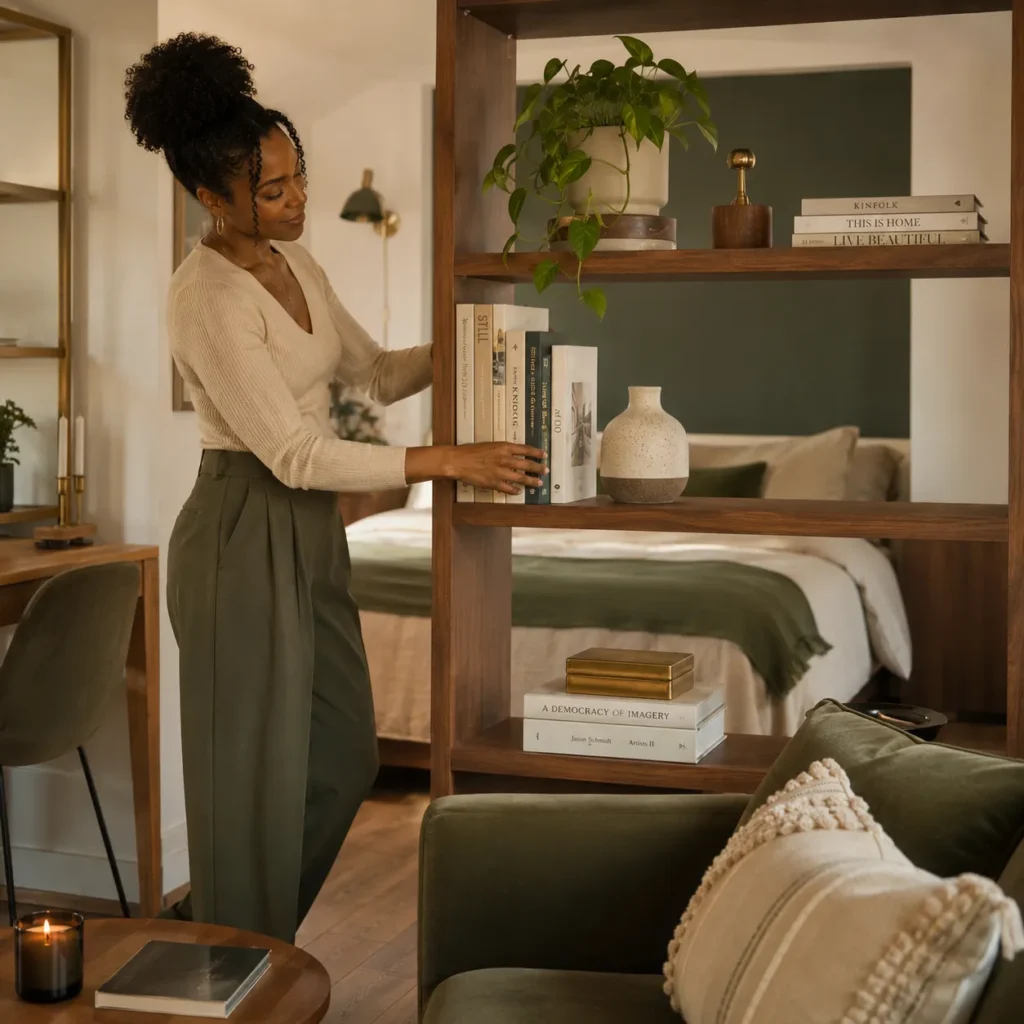
An open bookcase room divider placed at a right angle to the wall, with its back toward the bed, creates a visual break without blocking light. It also gives you display and storage space on the living side and makes the sleeping area feel tucked away.
Style the shelves lightly. A mix of books, a plant and a few closed boxes looks intentional, while packed shelves make the divider feel like a wall of clutter. Anchor any tall bookcase to the wall for safety.
Curtains, Screens and Sliding Panels
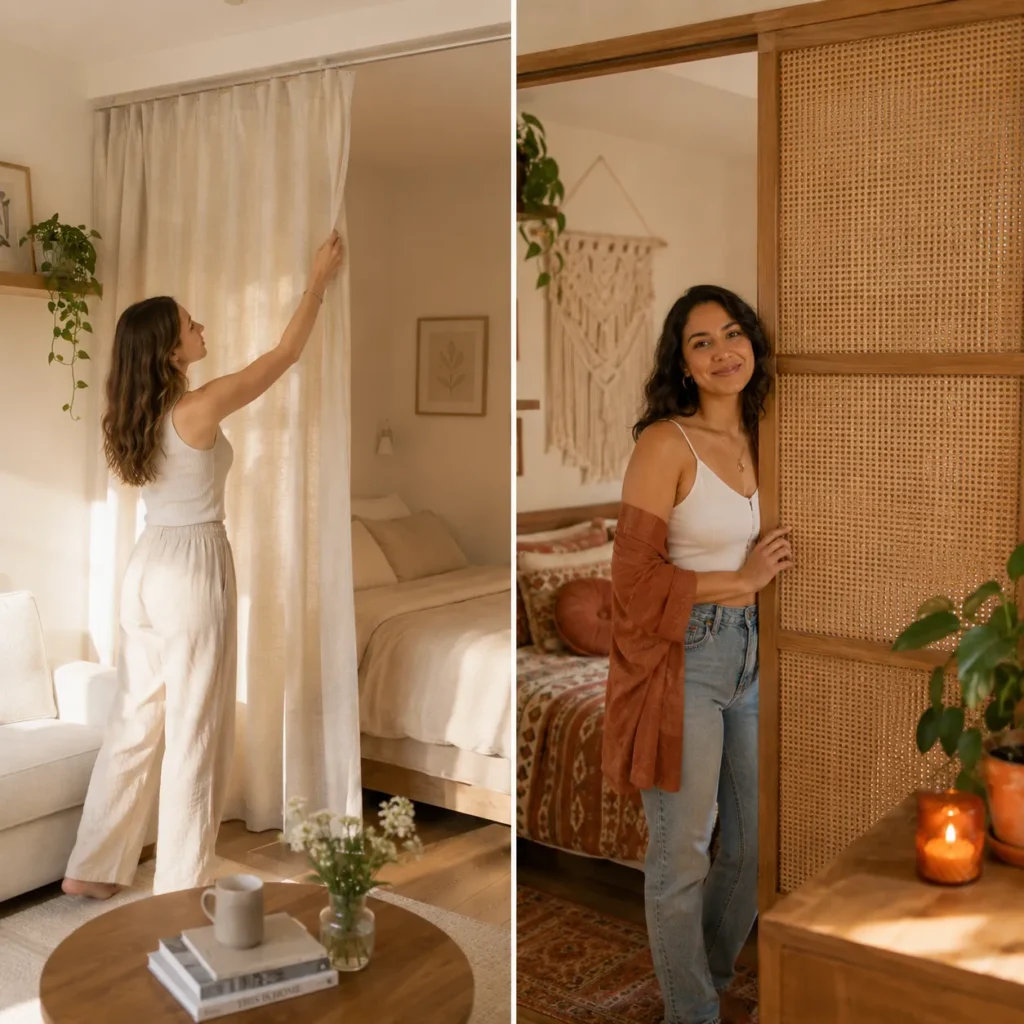
For renters who want stronger separation, a ceiling-mounted curtain track with linen or sheer panels can close off the bed at night and disappear during the day. Freestanding folding screens work the same way and move with you. Half walls and built-in partitions usually need landlord approval, so they suit owners more than renters.
Studio Apartment Furniture: What to Buy and What to Skip
Furniture makes or breaks a studio layout. The wrong sofa can swallow the room, while the right bed can hold a season of clothes. Measure first, and check our couch dimensions guide before you buy a sofa for a tight wall.
Multifunctional Furniture That Earns Its Floor Space
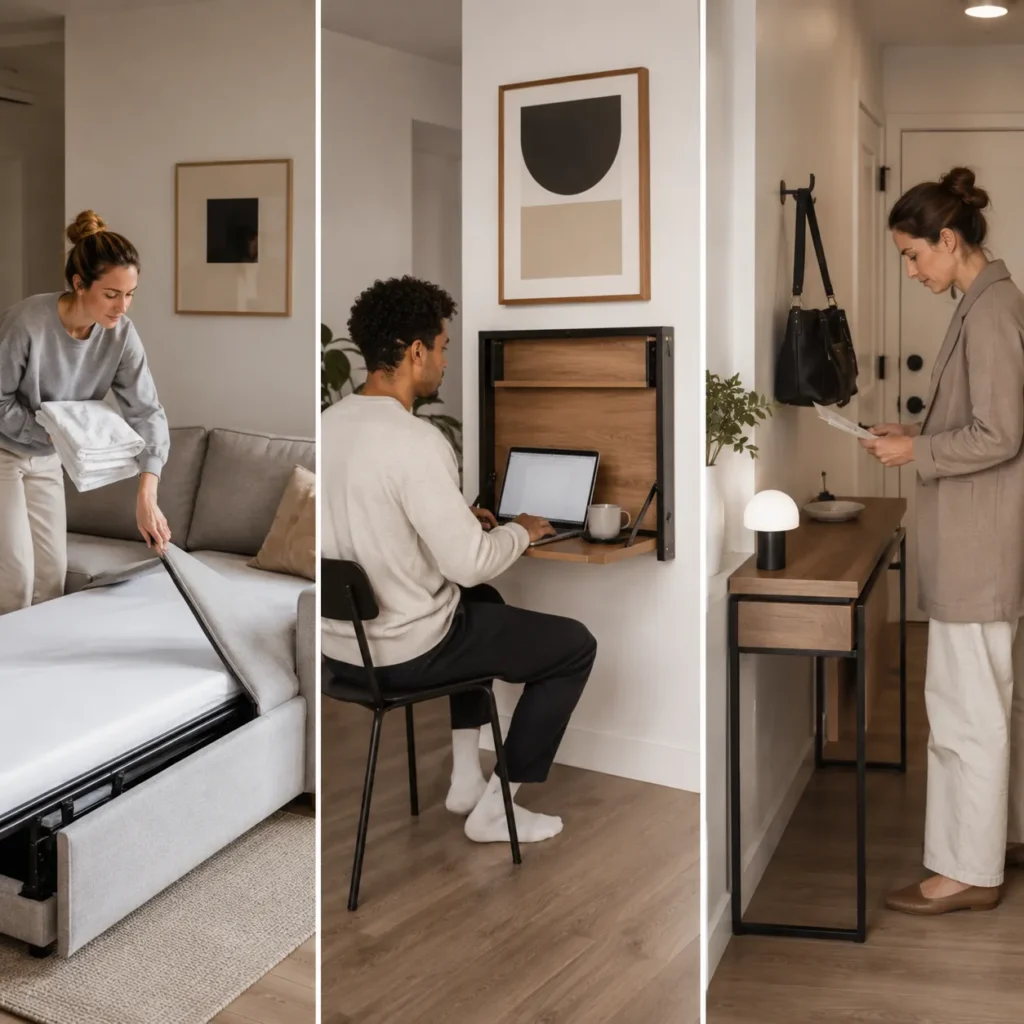
Every piece in a studio should justify its footprint. A sofa that sleeps guests, a dining table that folds flat and a desk that doubles as an entry console are not compromises, they are how a small room works harder. If you like lounging low to the floor, a modular caterpillar sofa lets you start with one seat and add more later if the room allows.
Look for pieces that look good in their main role and convert as a bonus. A convertible sleeper sofa that reads like a regular couch during the day handles overnight guests without a dedicated guest bed.
Storage Beds and Ottoman Coffee Tables
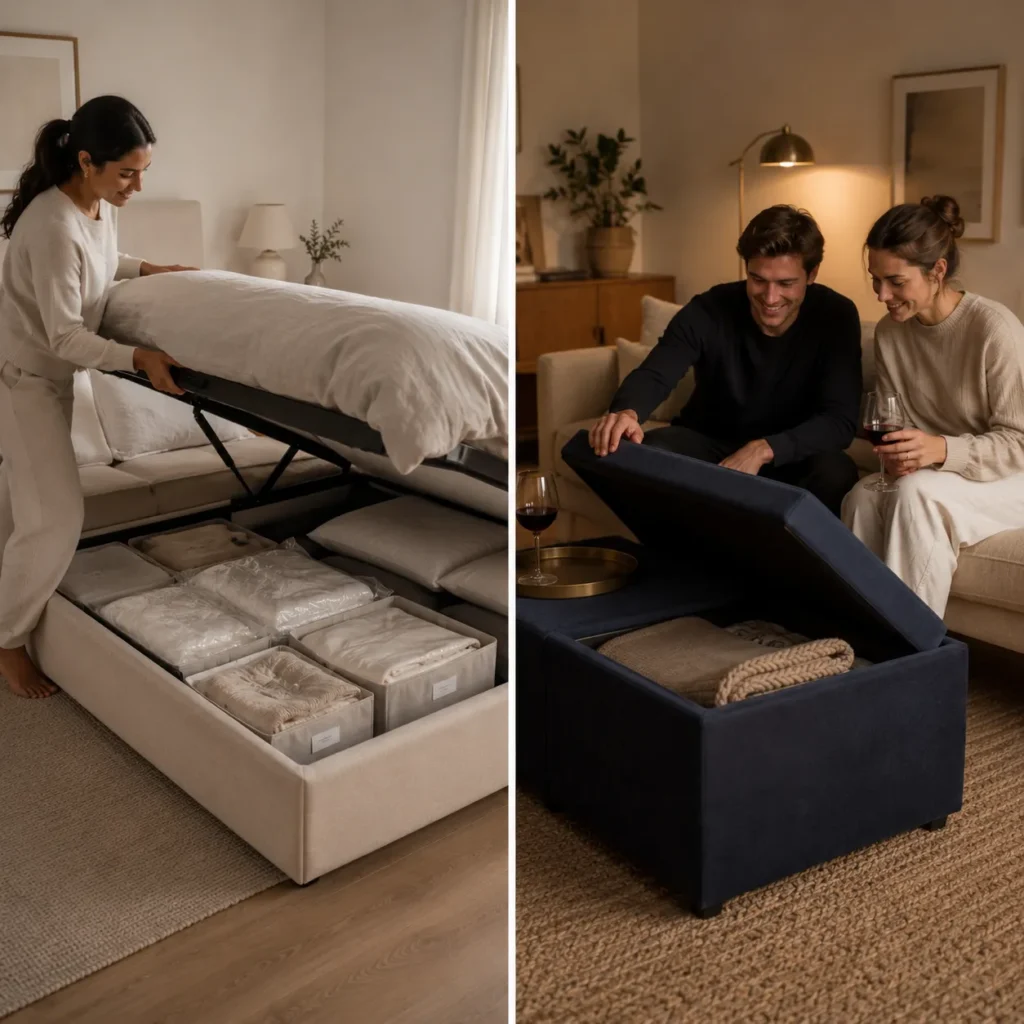
A storage bed with a hydraulic lift is one of the most useful buys for studio living. The space under the mattress can hold spare bedding, suitcases and off-season clothes, which frees the closet for everyday things.
A storage ottoman that doubles as a coffee table does the same job in the living zone. It gives you a surface, an extra seat when friends visit and a place to hide blankets and remotes.
Here are three well-rated pieces that cover the main storage gaps in a studio.
| Product Name | Price Range | Best For | Buy on Amazon |
|---|---|---|---|
| Allewie Hydraulic Lift Storage Bed (Queen) | $200 to $300 | Storing bedding and off-season clothes under the mattress | Check price |
| Zihanhome 30-Inch Round Storage Ottoman | $140 to $200 | A coffee table, extra seat and hidden storage in one | Check price |
| Yecaye Rolling Under-Bed Storage Bins (2-Pack) | $20 to $35 | Shoes and seasonal items on wheels under any bed | Check price |
Clear, Raised and Leggy Furniture
Furniture raised on legs shows the floor underneath, which makes the room feel less dense. Clear acrylic or glass pieces, like a ghost chair or a lucite side table, take up space without adding visual weight. In a studio where everything is always in view, that matters as much as storage.
Storage Solutions That Keep a Small Studio Clutter-Free
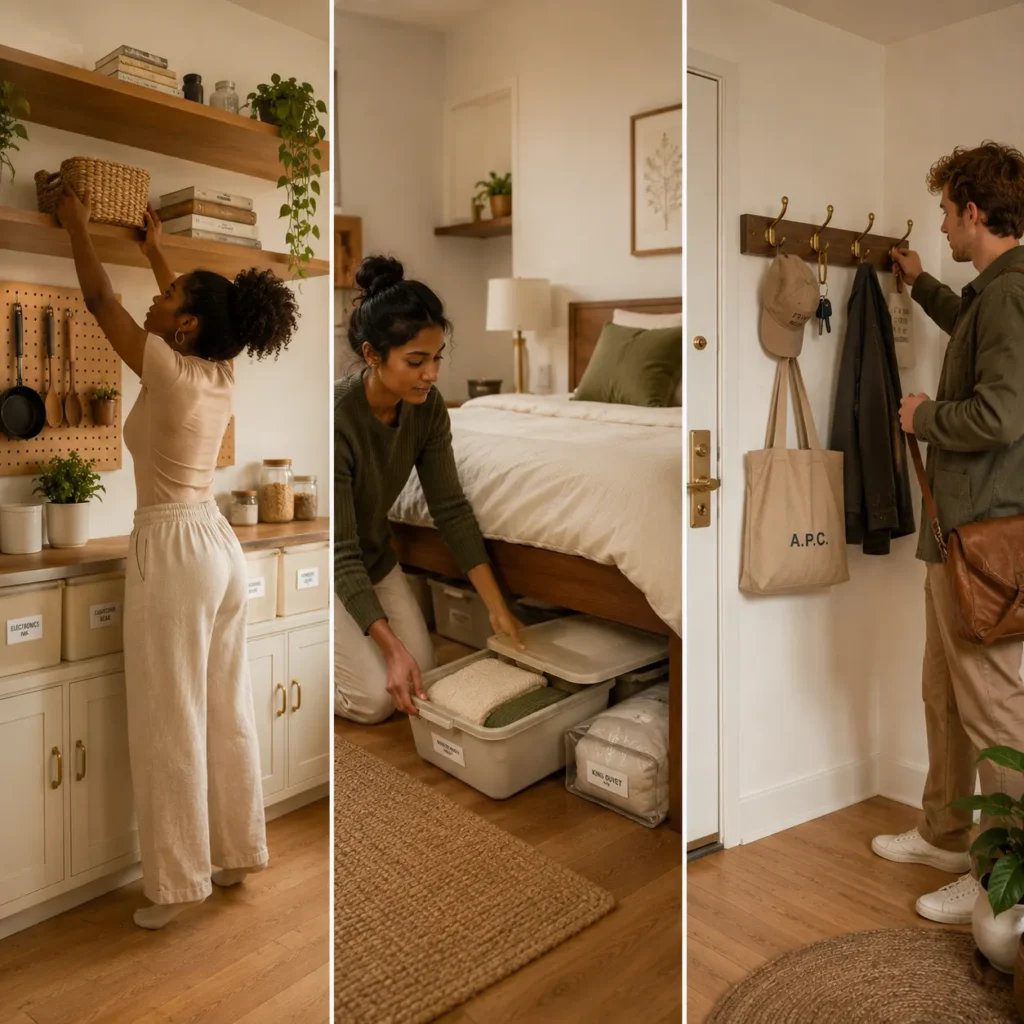
Clutter-free studio living is less about owning less and more about giving everything a closed, easy home. When putting something away takes one step, it gets put away.
Go Vertical When You Cannot Go Out
Floor space is limited, but wall space is often unused. Floating shelves above eye level, tall bookcases that reach toward the ceiling and a pegboard in the kitchen or entry turn empty walls into storage. In the kitchen itself, a microwave cart for a small kitchen gets the microwave off the counter. Anything you do not need every day can live up high, in labeled baskets on shelves or on top of kitchen cabinets.
Under-Bed Storage, Entry Hooks and Other Quick Wins
Hooks by the door solve the pile-up problem: keys, bags and jackets go straight onto the wall instead of the nearest chair. A small tray for mail keeps paper from spreading across the counter.
Under the bed, rolling bins with lids keep seasonal items dust-free, and vacuum bags shrink bulky duvets. If you are choosing a new frame anyway, a lift-up storage bed turns the whole footprint of the mattress into a closet.
How to Make a Studio Apartment Feel Bigger and More Like Home
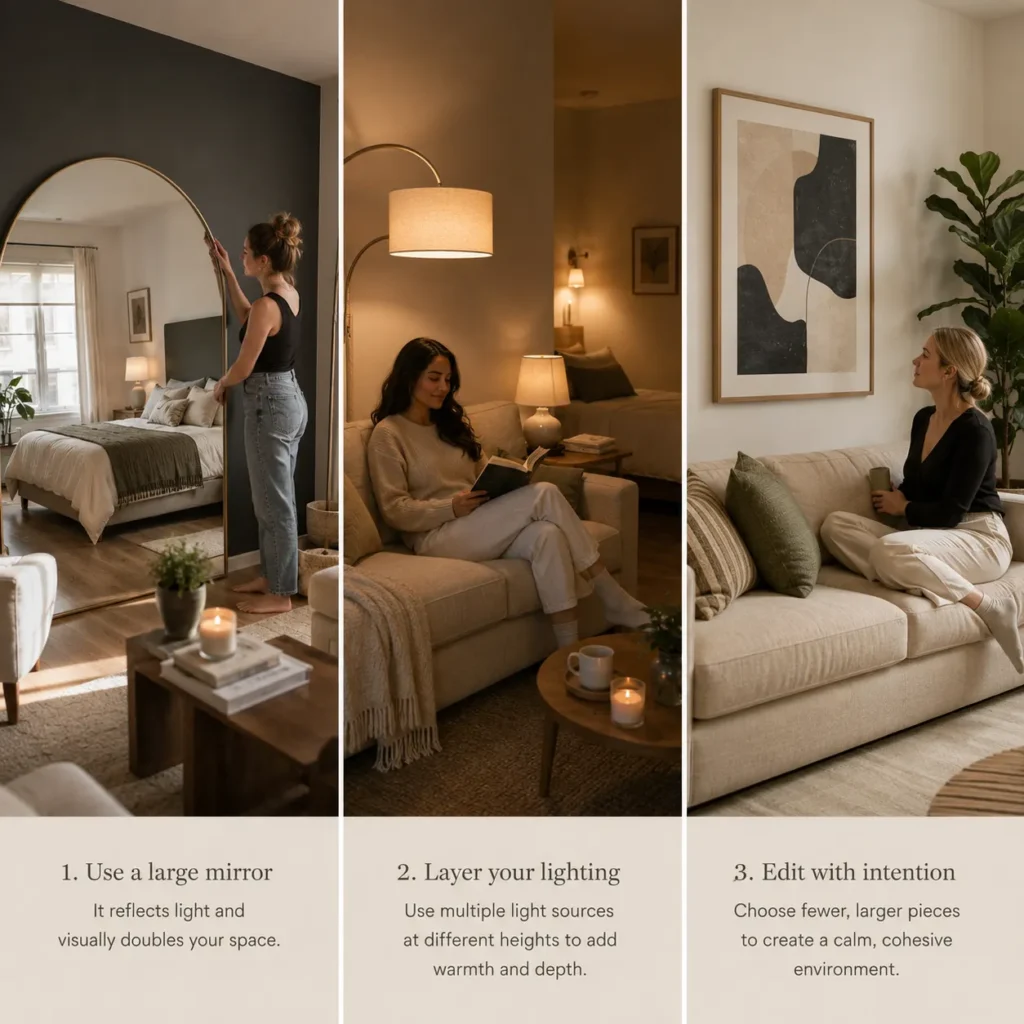
Making a studio feel like home is about intention, not volume. A few well-chosen pieces, good light and a clear floor do more than any amount of decor.
Paint, Mirrors and Light
Light, warm neutrals such as soft white, cream and greige reflect light and keep walls from closing in. A large mirror placed opposite or beside a window bounces daylight deeper into the room and doubles the view.
Layered Lighting: Floor Lamps, Table Lamps and Sconces
Overhead lighting alone flattens a room. Layer it instead: an arc floor lamp over the sofa for ambient light, a table lamp for warmth and plug-in sconces by the bed. Each light source quietly marks a zone, so the studio reads as several small spaces after dark.
Warm bulbs, roughly 2700K to 3000K, make a big difference for very little money. Swap them before you buy any new furniture.
Warmth and Personality Without Clutter
In a small space it is tempting to either over-decorate or leave everything bare. The middle path works better: one meaningful piece of art instead of a gallery wall, two or three throw pillows instead of six, and one healthy plant instead of a crowded windowsill.
If you want more styling ideas once the layout works, our guide to studio apartment decorating ideas covers colors, decor and layouts in depth. This guide stays focused on how studio living actually feels day to day.
The Sight-Line Rule for Small Spaces
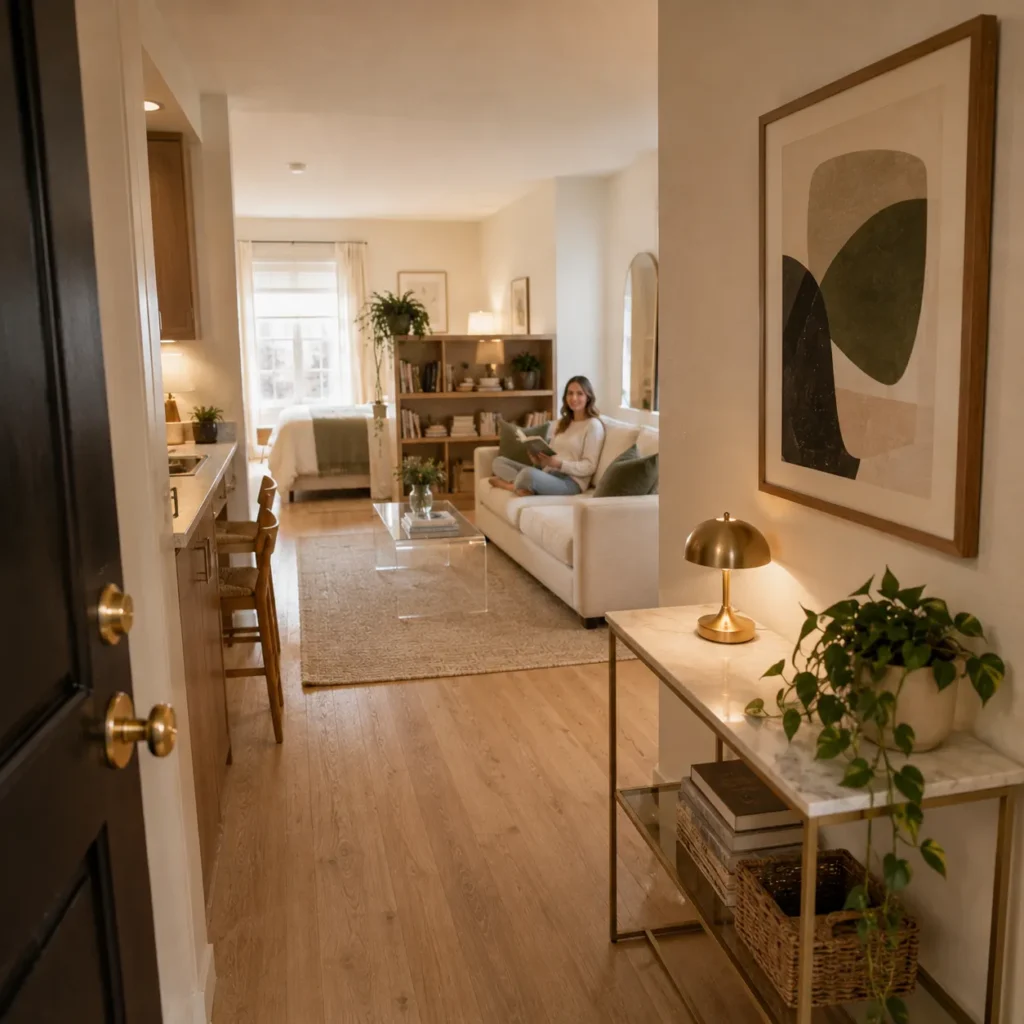
In a studio, you can usually see the whole room from the front door. That first view shapes how the space feels every time you come home, so it is worth planning.
Keep the main sight line from the entry clean: ideally it lands on a window, a piece of art or the living zone, not the bed or the kitchen sink. Then check the secondary views from the sofa and the bed. If the first thing you see from the sofa is the laundry basket, move the basket, not the sofa.
Living in a Studio Apartment: Common Scenarios
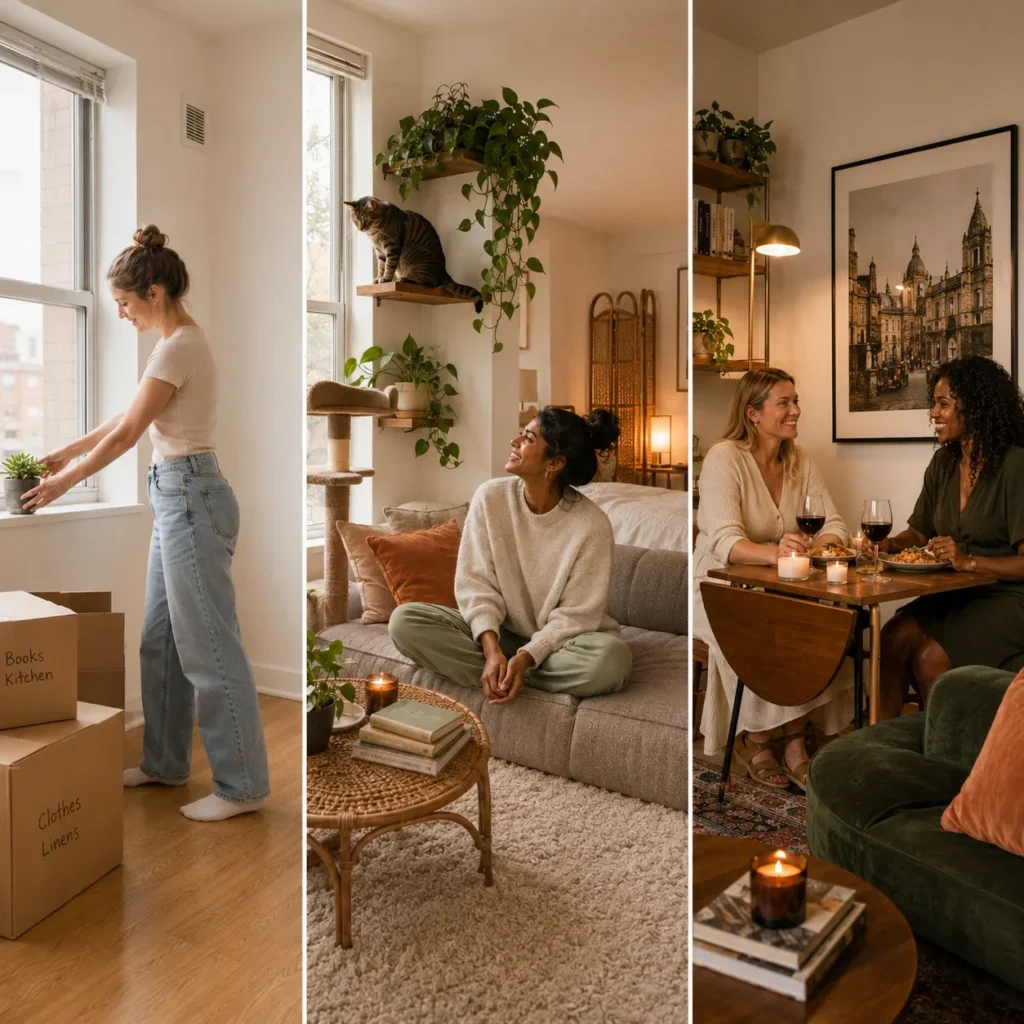
Your First Apartment, Living Alone
A first studio often feels more daunting in theory than in practice. Define your zones before you unpack, set up storage early and hold off on big furniture purchases until you have lived in the space for a few weeks. First-apartment basics that people often forget include a shower curtain, a bath mat, extra lamps, entry hooks and a basic tool kit.
Living in a Studio with a Dog or Cat
Pets usually adapt to studio living better than people expect. Dogs need regular walks and play outside, and cats appreciate vertical space like shelves or a cat tree. Indoors, the challenges are pet hair, litter box placement and toy scatter. Choose the best couch material for dogs, such as microfiber or a performance fabric, and give pet gear its own closed bin.
Living in a Studio in Your 30s
There is an old assumption that studios are only for your early 20s. In practice, studio living in your 30s is common, driven by housing costs and a choice to put location and lifestyle first. The difference is that a studio at this stage tends to be curated rather than improvised, with fewer, better pieces and a layout built around how you actually live.
Is Living in a Studio Apartment Worth It?
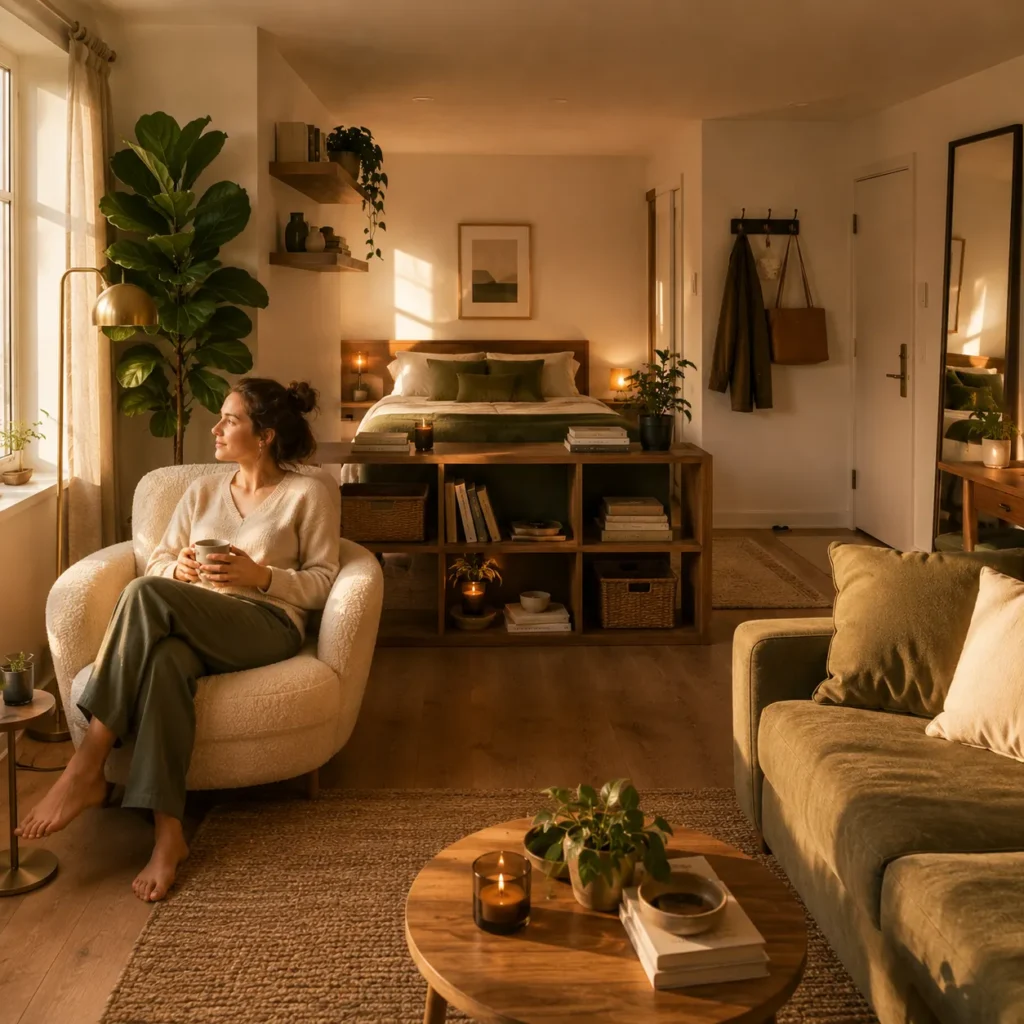
For the right person, yes. If you value location, lower costs and a simpler routine, studio living can be one of the most comfortable ways to live in a city. The challenges, limited privacy, quick clutter and sleeping in the same room you relax in, are real, but they mostly come from an under-planned layout rather than the size itself.
Plan the zones, choose furniture that stores or converts, light the room in layers and keep a daily reset. Do that, and a studio stops feeling like a compromise and starts feeling like a home that fits.
Studio Living FAQ
Can you live comfortably in a studio apartment?
Yes. Most people live comfortably in a studio when the room has clear zones for sleeping, living and eating or working, plus multifunctional furniture like a storage bed or sleeper sofa and warm, layered lighting.
What is studio living like day to day?
Studio living is simpler and cheaper than a larger apartment: one room to clean, lower rent and less to manage. The trade-off is less privacy, so zoning and a quick daily reset make a big difference.
What are the disadvantages of living in a studio apartment?
The main downsides are limited privacy, less storage, clutter that shows quickly and little separation between sleeping and living. Rugs, dividers, closed storage and good lighting address most of them.
Is a studio apartment good for a first apartment?
Often, yes. A studio keeps rent and furnishing costs lower and is easy to maintain. Define your zones before you unpack and remember basics like a shower curtain, a bath mat, extra lamps, entry hooks and a small tool kit.
What is the 30% rule for apartments?
The 30% rule suggests spending no more than about 30 percent of your gross monthly income on rent. Studios often make that easier in expensive cities.