
If you have ever typed kinds of furniture into a search bar and gotten a messy mix of style names, room lists, and shopping ads, you are not alone. Most people want a clear map: what the main types of furniture are, what they are called, and which ones actually earn their space in a real home.
So let’s make one together. Below you’ll find a simple furniture list by room, the furniture names you’ll keep bumping into while shopping, and a few easy rules so you never buy the wrong size twice. Bookmark it for your next room refresh or your Black Friday list.
This post contains affiliate links. As an Amazon Associate, I earn from qualifying purchases, at no extra cost to you.
Quick Answer: What Are the Main Kinds of Furniture?
Most homes use five big groups: seating (sofas, chairs, stools), tables (coffee, dining, console, nightstands), storage (dressers, bookcases, cabinets, ottomans), beds and sleep furniture, and occasional or accent pieces (benches, mirrors with stands, plant stands). Start with the rooms you use every day, measure first, then shop by function instead of by trend.
What Counts as Furniture (and What Does Not)
Think of furniture as the solid, usually freestanding pieces you actually use every day: for sitting, sleeping, eating, working, and storing things. A sofa, dining table, dresser, nightstand, and bed frame all count. Soft furnishings and finishes usually do not. Rugs, curtains, pillows, lamps, and wall art are decor or soft furnishings, even though they sit beside furniture and change how a room feels.
Why does that matter? Because it tells you what to buy first. Get the big pieces that set the layout, then layer in rugs and textiles. Our rug sizes chart is a useful next step once the sofa and coffee table are decided, because the rug has to fit the furniture footprint, not the other way around.
Furniture by Room: A Practical List
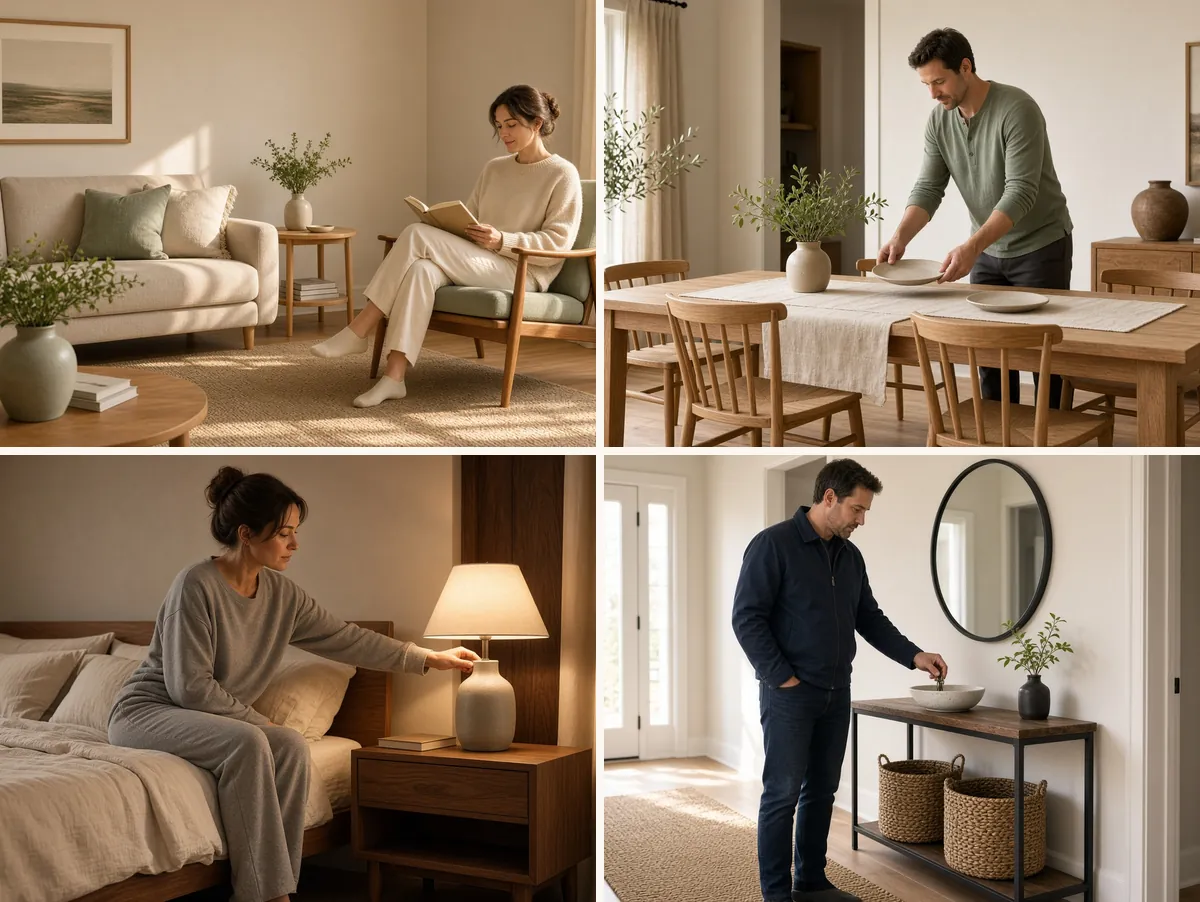
The easiest way to build a list of furniture is room by room. Don’t worry, you won’t need everything below. Just pick the pieces that fit how you really use each space.
Living Room Furniture
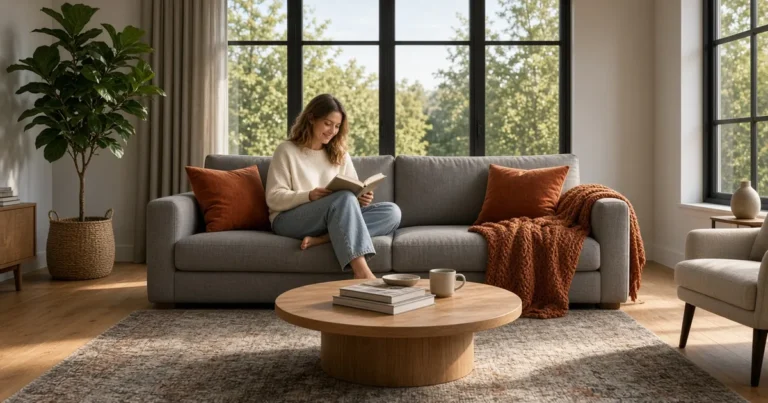
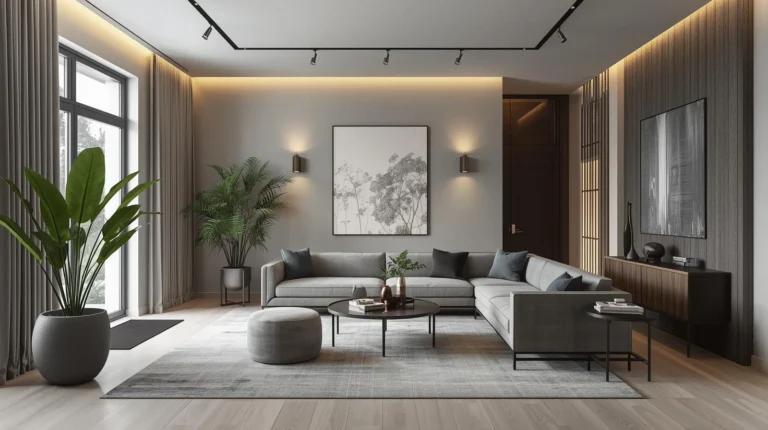
Living rooms usually revolve around seating and a central table. Core pieces include a sofa or sectional, one or two accent chairs, a coffee table, side tables, a media console or TV stand, and sometimes a storage ottoman or bench. If you want a soft, modular look, a caterpillar-style sofa can replace a traditional three-seater; see our caterpillar sofa guide for how that shape behaves in small rooms.
Scale is the quiet detail that makes or breaks the room. Before you order anything long, check our couch dimensions guide so the sofa leaves walking space and still fits through the door. Coffee table height and length should relate to the sofa seat height and arm-to-arm span; how to pick a coffee table walks through those proportions in plain language.
Secondary living room furniture should support the sofa, not compete with it. One accent chair is often enough in a small apartment; two chairs facing the sofa can create a conversation square in a larger room. Side tables need only enough top space for a drink and a lamp. A media console should be at least as wide as the TV for a settled look, with cable cutouts or an open back so wires do not dangle down the wall.
Dining Room and Kitchen Furniture
Dining furniture is simpler on paper and pickier in practice. You need a table sized for the people you host most often, chairs or benches that tuck cleanly, and sometimes a sideboard or buffet for serving and storage. Bar stools or counter stools belong here too if you have an island or peninsula.
For bigger holiday hosting, table length matters more than style. Our guide to the size of a dining room table to seat 10 covers clearances and common lengths. If you like painted wood, open shelves, and a softer country feel, the layout ideas in our farmhouse dining room post show how table, chairs, and a buffet can work together without crowding the room.
Bedroom Furniture
Bedroom basics are a bed frame or platform, a mattress (technically bedding, but it drives every other choice), nightstands, and a dresser or chest. Optional pieces include a bench at the foot of the bed, an accent chair in a reading corner, a wardrobe if you lack closet space, and a small desk if the room doubles as a work spot.
Nightstands should sit close to mattress height so you can reach a lamp, water, and phone without stretching. In a tight room, one well-chosen nightstand plus a wall sconce often beats two bulky cabinets. Keep pathways of about 24 inches where you can, especially on the side you get in and out of bed.
Dressers work hardest when drawers are deep enough for folded clothes and the top stays mostly clear. If you share a closet, a tall chest can free floor area that a wide dresser would claim. A bench at the foot of the bed is optional, but it is useful for laying out clothes and for guests who need a place to sit while putting on shoes.
Entryway and Small-Space Furniture
Entry pieces do a lot of quiet work: a narrow console for keys and mail, a bench for shoes, a coat rack or hall tree, and a mirror that also bounces light. In studios and small apartments, one piece often plays two roles, such as a storage ottoman that is seating, a coffee table stand-in, and blanket storage.
When floor space is scarce, choose furniture with a visible floor underneath (legs instead of a solid plinth) so the room feels larger. Slim consoles about 10 to 14 inches deep usually fit hallways better than deep sofa tables.
Types of Furniture by Function
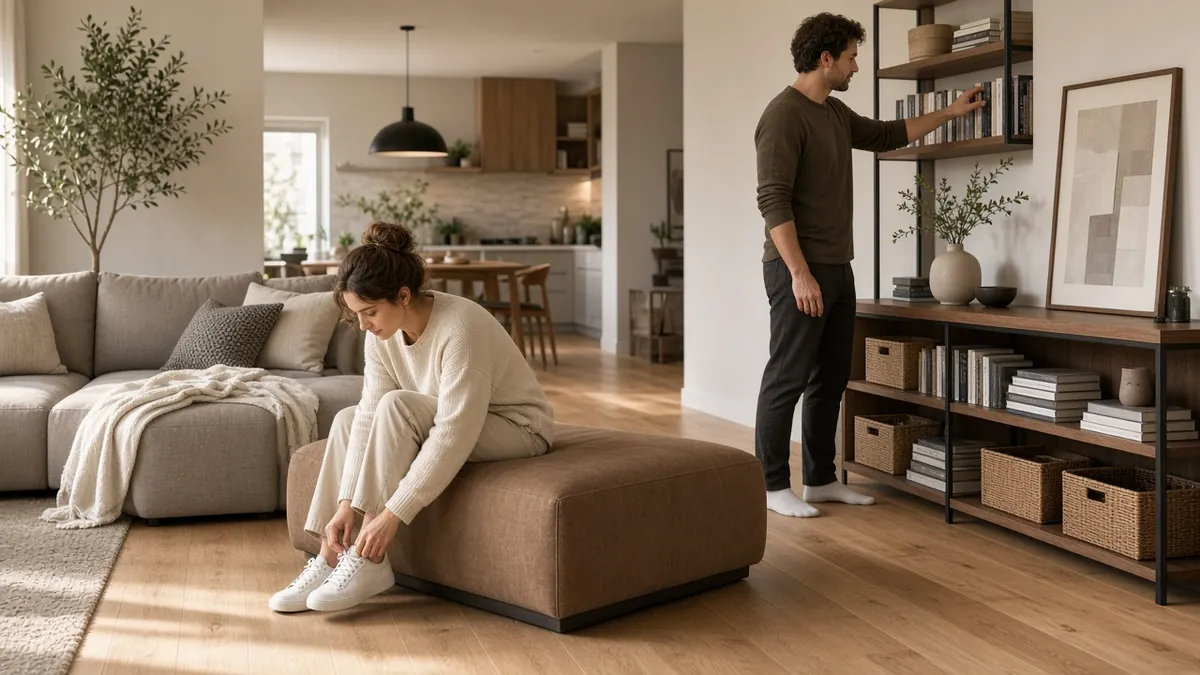
You can also sort different types of furniture by what they do. This is handy when you’re shopping online and the filters keep throwing style labels at you.
Seating
Seating covers sofas, sectionals, loveseats, accent chairs, dining chairs, stools, benches, and recliners. Prioritize seat depth and cushion firmness for daily use, and save dramatic shapes for pieces you sit in less often. Upholstery choice matters for pets and kids; performance fabric and removable covers are often smarter than delicate linen in a busy house.
Seat height is another filter people skip. Dining chairs commonly sit around 18 inches off the floor. Counter stools are often about 24 to 26 inches, and bar stools about 28 to 30 inches. Measure from the floor to the underside of your counter before you buy a set, and leave a few inches of knee space.
Tables
Tables include dining tables, coffee tables, side and end tables, console and sofa tables, nightstands, desks, and nesting tables. Match height to the job: dining tables usually sit around 28 to 30 inches high, coffee tables a little below sofa seat height, and nightstands near mattress height. Materials range from solid wood and veneer to metal, glass, stone, and laminate. If a product page mentions an apron, stretcher, or leaf and you’re not sure what that means, our table parts guide explains each one in plain words.
Shape changes traffic flow. Round dining tables ease tight corners and suit square rooms. Rectangular tables host more people along the long sides. Nesting tables earn their keep in small living rooms because the extras tuck away when you do not need them. A desk should leave room for your chair to roll back, so plan on about 24 to 36 inches of clearance behind the desk so you can stand up and slide out comfortably.
Storage Furniture
Storage furniture includes dressers, chests, sideboards, bookcases, cabinets, wardrobes, and storage ottomans. Closed storage hides clutter; open storage displays books and objects and needs more styling discipline. If a piece will hold heavy books or media equipment, check weight ratings and whether the back panel is fully attached.
Beds and Sleep Furniture
This group covers bed frames, platform beds, headboards, daybeds, and bunk or loft beds. The frame sets the look; the mattress sets the comfort. Leave space for bedding thickness when you judge nightstand height, and confirm that the slat system matches the mattress type your warranty requires.
Outdoor and Occasional Pieces
Outdoor furniture (dining sets, lounge chairs, benches) needs weather-ready materials. Occasional pieces are the extras that finish a room: accent stools, plant stands, folding guest chairs, bar carts, and kitchen microwave carts. Buy these last, once the main layout is settled, so you do not spend the budget on accessories before the sofa fits.
Furniture Names and Examples Worth Knowing
Search terms and store labels do not always match everyday speech. Here is a short glossary of furniture names and furniture examples that show up often when people look for a furniture list or furniture types.
Sofa vs. couch: In retail, sofa is the more formal word, but most shoppers use both for the same piece. Sectional: multi-piece seating arranged in an L or U. Loveseat: a compact two-seater. Accent chair or occasional chair: a single chair added for style and extra seating. Chaise: a long seat for reclining with legs up.
Console table: a long, narrow table for an entry or behind a sofa. Sideboard or buffet: a low dining-room storage cabinet. Credenza: often used for a low cabinet in dining or office spaces. Chest of drawers vs. dresser: both store clothes; dressers are often wider with a mirror option, chests are taller. Ottoman: a padded seat or footrest, sometimes with hidden storage. Bench: a backless seat for dining, entry, or the foot of a bed.
Quick grammar note: you might see “furnitures” around, but “furniture” already covers one piece or a whole houseful. If you need to count, say “pieces of furniture.”
Style labels such as mid-century, farmhouse, contemporary, and traditional describe looks, not separate species of furniture. A mid-century sofa and a farmhouse sofa are still seating. Use style words to filter finishes and silhouettes after you know the function and size you need. That habit keeps shopping lists short and prevents you from buying three coffee tables because each one matched a different mood board.
How to Choose Furniture That Fits Your Home
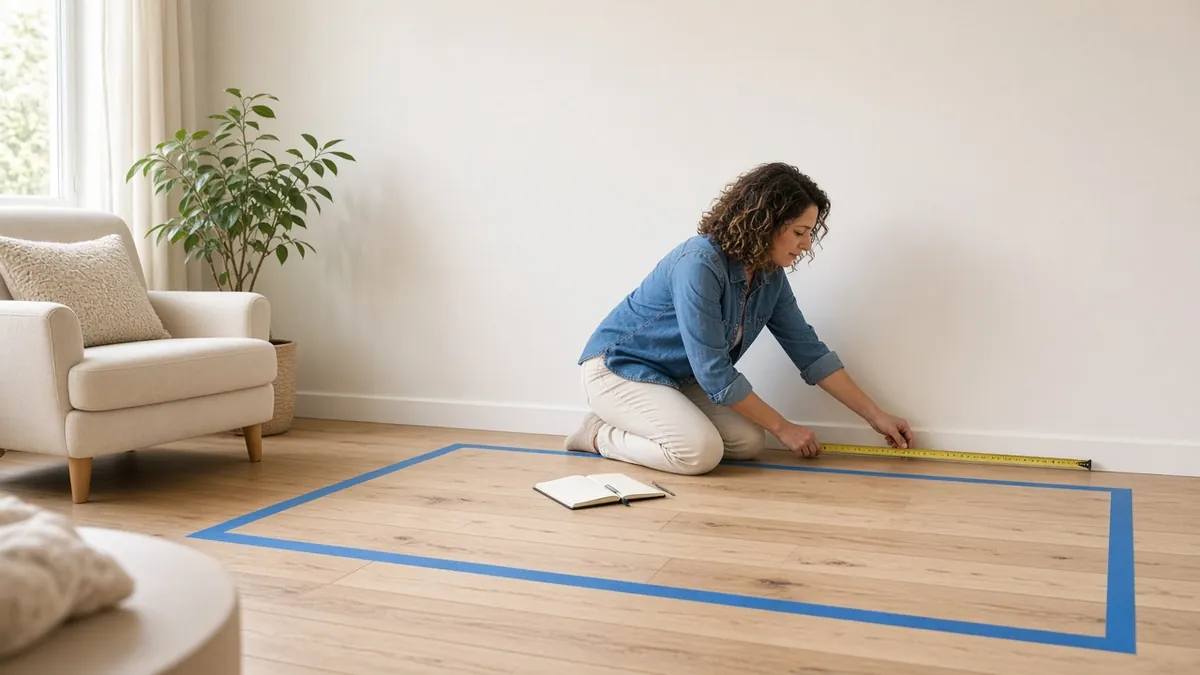
Mood boards are fun, but your tape measure gets the final say. Run through this quick checklist before you hit buy.
Measure the Room and the Path In
Record wall lengths, doorway widths, stair turns, and elevator depth if you have one. A sofa that fits the wall can still fail at the stair landing. Mark the footprint on the floor with painter’s tape so you can walk the clearance before the box arrives.
Match Scale and Visual Weight
A bulky rolled-arm sofa needs a coffee table with enough mass to balance it. A slim mid-century sofa pairs better with a lighter table. Leave roughly 14 to 18 inches between sofa and coffee table so cups are reachable without blocking knees. Keep main walkways near 30 to 36 inches where the room allows.
Choose Materials for Real Life
Solid wood (oak, walnut or acacia wood) and quality veneers age well. Performance fabrics and washable covers forgive spills. Glass tops look light but show fingerprints. Rattan and cane feel warm and breezy, yet they need gentle use in high-traffic homes. For outdoor sets, look for teak, powder-coated metal, or all-weather wicker rather than untreated softwood.
Finish also affects cleaning. Matte and textured surfaces hide dust better than high gloss. Dark fabrics camouflage pet hair of a similar color but show lint; light fabrics do the opposite. If you entertain often, choose tabletops that tolerate coasters and the occasional hot dish, or keep trivets next to the serving spot so you are not relying on luck.
Plan High-Low, Not All-New
A calm room usually mixes one stronger investment piece with simpler supporting furniture. Spend more where your body spends time (sofa, mattress, desk chair) and save on occasional tables and secondary storage. That high-low approach is how affordable rooms still look intentional.
Shopping Smart for Black Friday Furniture Deals
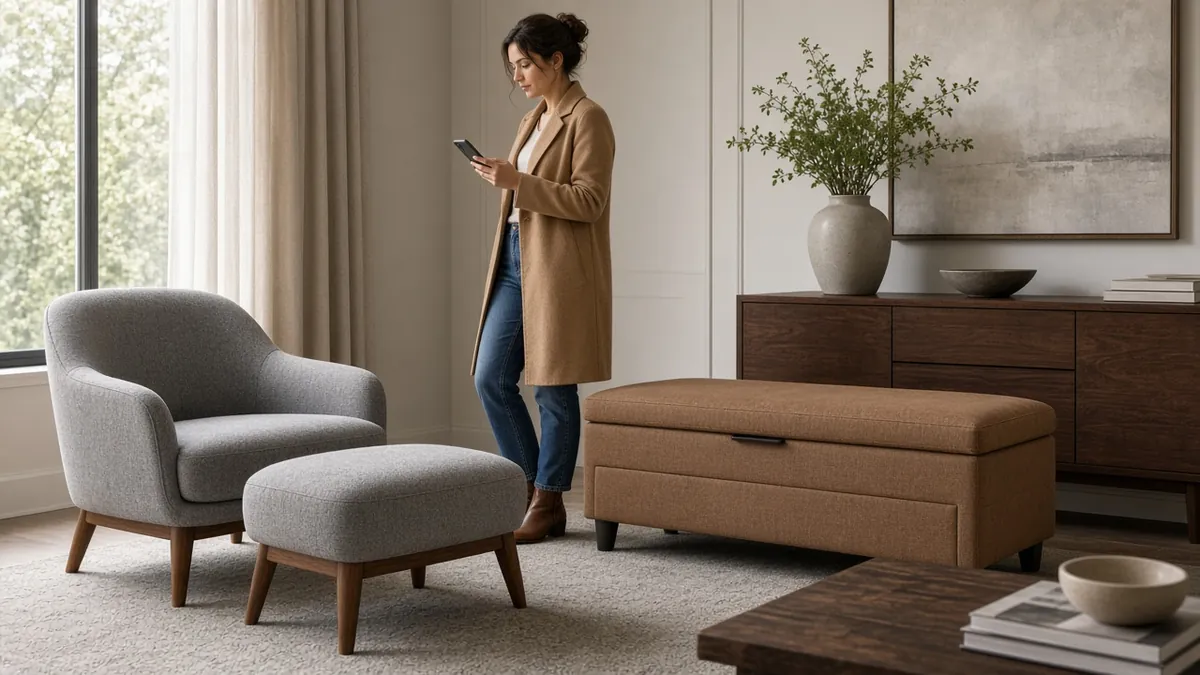
Black Friday and Cyber Monday are useful for furniture if you shop with a list, not a mood. Focus on versatile, high-review pieces that fill clear gaps: an accent chair for a dead corner, a storage ottoman for blankets, a console for the entry, or counter stools for the island. Confirm dimensions, weight limits, and return windows, because large parcels are harder to send back than a throw pillow.
Sale weeks reward people who already know their measurements. Write down the maximum width, depth, and height for each spot, plus the finish family you want (light oak, walnut, black metal, warm white). Then sort deals against that list instead of browsing every “lightning deal” tile. A good Black Friday furniture buy is the piece you planned to purchase in November anyway, at a better price, not a random object that only looked cheap for an hour.
These four Amazon picks cover common needs at approachable prices. These are popular, well-reviewed picks on Amazon US, but prices and stock change, so check the listing before you buy.
For a cozy reading corner or a spare seat that does not eat the whole room, this Tiita accent chair with ottoman is a soft lounge option that usually lands in the $100 to $130 range. It is a good fit when you want somewhere to read without committing to a second full sofa.
If you need seating plus hidden storage, a folding SONGMICS storage ottoman bench typically runs about $40 to $60 and can hold blankets at the foot of a bed or in front of a sofa.
Entryways and behind-sofa spots do well with a narrow industrial console. This VASAGLE 40-inch console table usually sells in the $80 to $100 range and gives you a top surface plus two mesh shelves for baskets or shoes.
For kitchen islands and tall counters, a set of adjustable Homall bar stools often falls around $60 to $80 for two and covers both counter and bar heights in many homes.
Compare the Picks
Here is a quick side-by-side so you can match each piece to the gap in your room and budget.
| Product Name | Price Range | Best For | Buy on Amazon |
|---|---|---|---|
| Tiita Accent Chair with Ottoman | $100 to $130 | Reading corners and extra lounge seating | Check Price |
| SONGMICS Storage Ottoman Bench | $40 to $60 | Hidden storage and foot-of-bed seating | Check Price |
| VASAGLE 40-Inch Console Table | $80 to $100 | Entryways and behind-sofa surfaces | Check Price |
| Homall Bar Stools Set of 2 | $60 to $80 | Kitchen islands and counter seating | Check Price |
Hidden Pro Tip: during sale weeks, screenshot the pre-sale price and the dimensions panel before you buy. Furniture listings sometimes change the default color or size variant, and that one click is how people end up with a 70-inch console when they measured for 40.
What Actually Matters Most
The useful question is not “How many kinds of furniture exist?” It is “Which types of furniture earn their footprint in this room?” Start with seating, a table that matches how you live, and storage that hides what you do not want on display. Add accent pieces only after the main layout feels calm.
If you remember only three rules from this guide, make them these: measure the room and the delivery path, buy for the way you live on a Tuesday night rather than for a magazine cover, and leave a little budget for the small pieces that finish the room after the big ones arrive.
Bookmark this page as your furniture hub when you are planning a room or building a Black Friday list. Measure twice, shop by function, and trust a short, honest furniture list over a cart full of almost-right pieces.
Kinds of Furniture FAQ
What are the main kinds of furniture?
Most homes use five groups: seating, tables, storage, beds and sleep furniture, and occasional or accent pieces. Start with the rooms you use daily, then add extras only where a clear gap remains.
What is the difference between furniture and home decor?
Furniture is the solid pieces you sit, sleep, eat, work, or store things on, such as sofas, tables, dressers, and beds. Decor and soft furnishings include rugs, pillows, curtains, lamps, and wall art that finish the look.
How do I make a furniture list for a new apartment?
List each room, write only the pieces you need for daily life, measure wall lengths and doorways, then shop seating and beds first. Add tables and storage next, and save accent pieces for last.
What furniture should I buy first?
Buy the pieces that set layout and comfort first: sofa or bed, then the main table for that room, then storage. Accent chairs, benches, and decor tables are easier to choose once the big pieces are in place.
Is Black Friday a good time to buy furniture?
It can be, if you already know your measurements and the exact gaps you need to fill. Compare pre-sale prices, check dimensions and return policies, and stick to high-review pieces you planned to buy anyway.