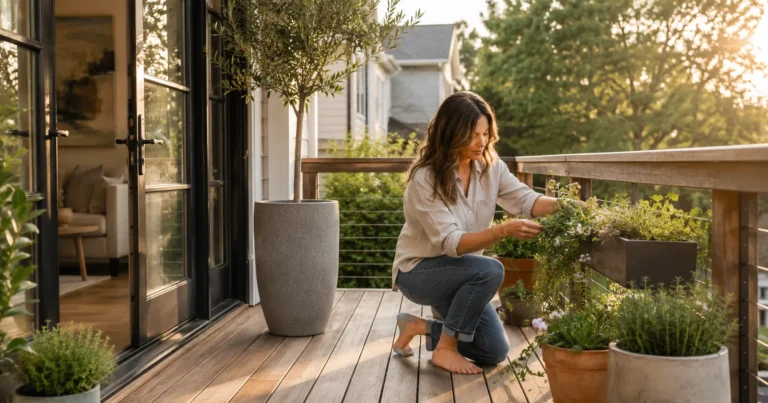
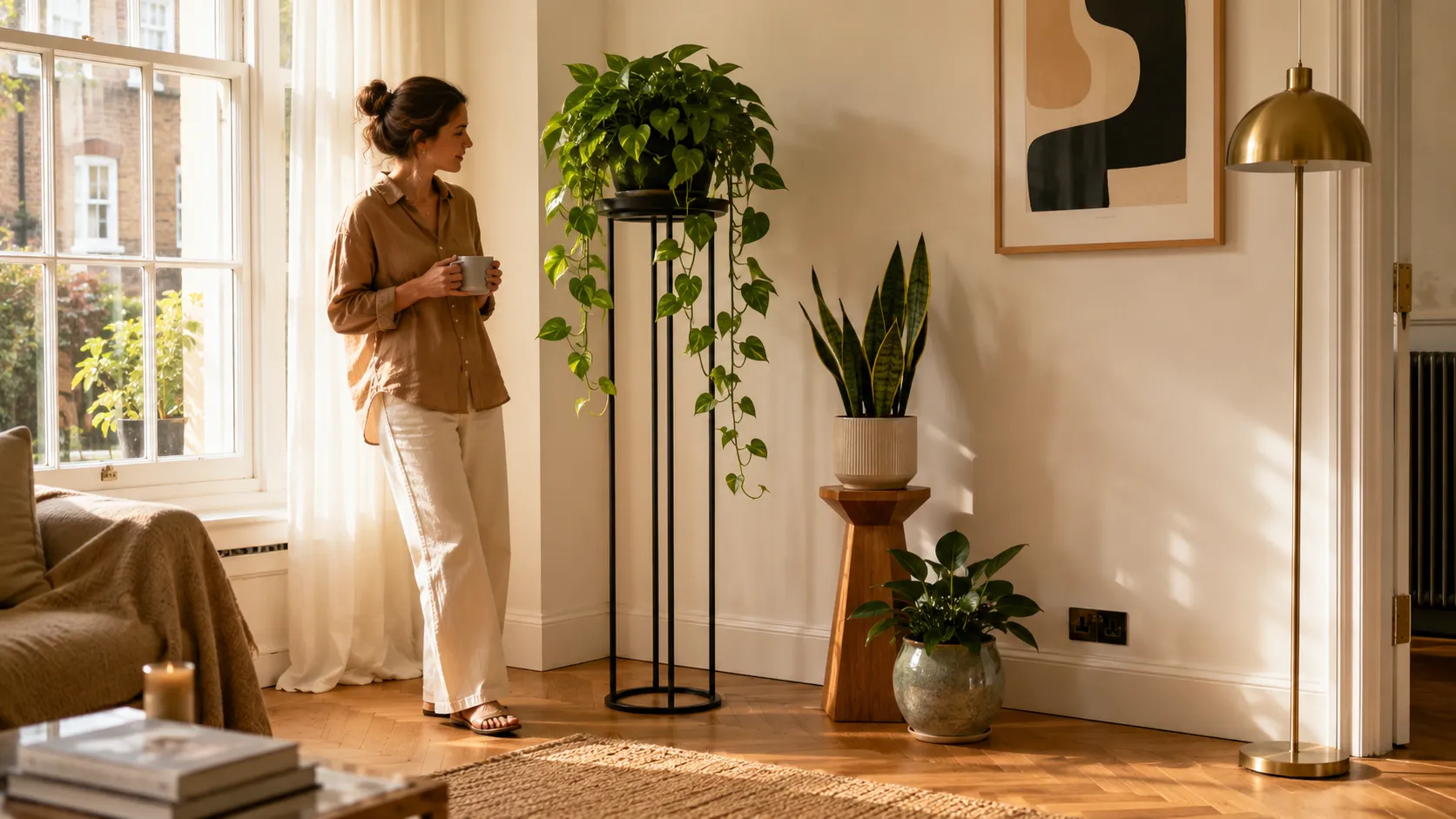
A plant stand seems like a small purchase. It isn’t. The right one elevates your entire room, literally and visually, turning a pot sitting awkwardly on the floor into a deliberate design moment. The wrong one makes your space feel cluttered, unstable, or cheap regardless of how beautiful the plant itself is.
This guide covers every type of plant stand worth considering in 2026: tall and tiered, wooden and metal, indoor and outdoor, budget-friendly and investment-worthy. Whether you’re styling a sunny living room corner, a compact bedroom windowsill, or a shaded balcony, there’s a stand that fits both your plant and your space. We’ve cut through the noise to bring you honest picks across every style, material, and price point, so you spend less time second-guessing and more time enjoying a home that actually looks designed.
This post contains affiliate links. As an Amazon Associate, I earn from qualifying purchases, at no extra cost to you.
Top Picks at a Glance
- Best single wooden stand: Fox and Fern mid century acacia plant stand for pots up to 14.9 inches wide (about $35 to $45)
- Best tiered stand: Bamworld 4 tier plant stand for a group of small pots (about $20 to $30)
- Best for corners: 6 tier corner plant stand that fits flush into a corner (about $25 to $35)
- Best two tier pick: round 2 tier plant stand for one large and one small plant (about $20 to $30)
Why Use a Plant Stand?
A plant stand solves several design problems at once. It lifts plants off the floor, which makes rooms feel less cluttered and floor plans easier to read. It creates visual layering, varying heights across a room is one of the core principles of professional interior styling, and a well-placed plant on a pedestal stand does exactly that. It also improves plant health by increasing airflow and often getting the plant closer to natural light.
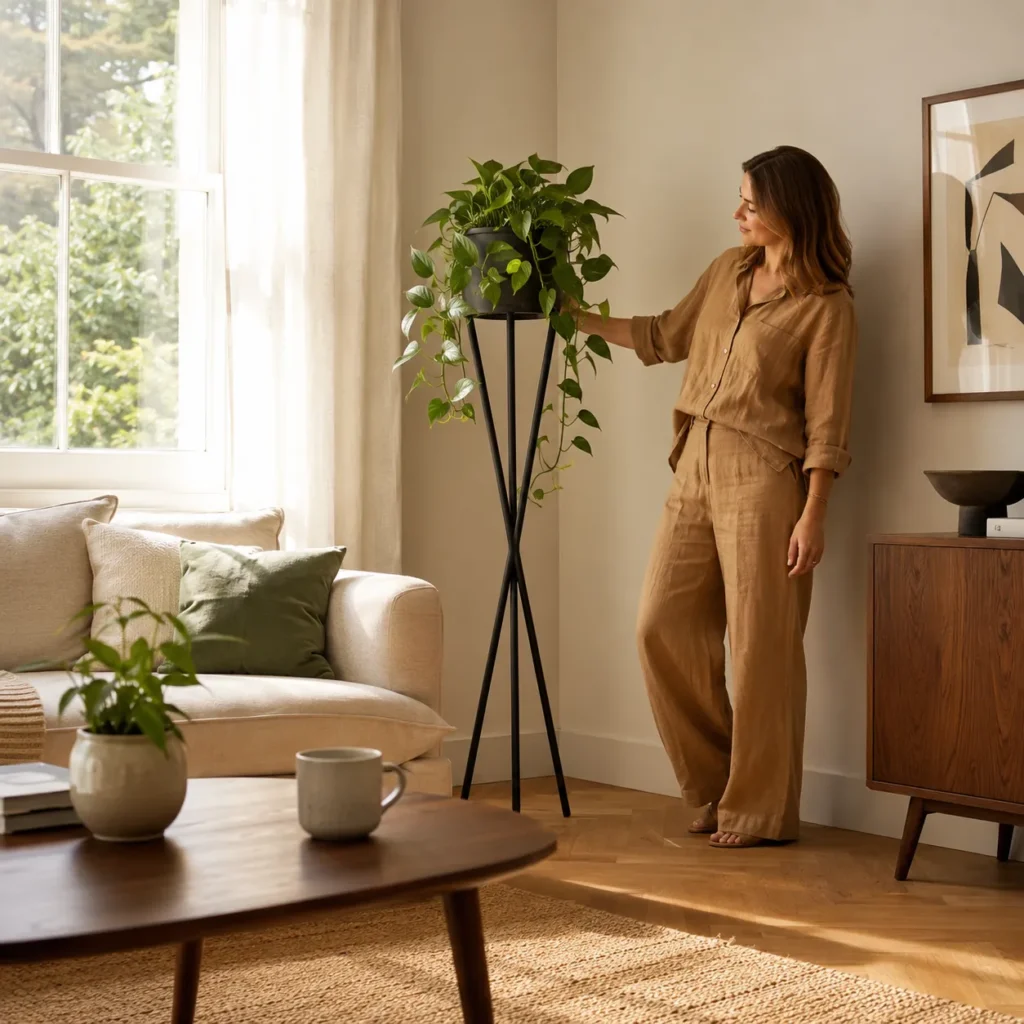
Styling Tip: Treat plant stands as vertical punctuation. One tall stand in a low-furniture corner instantly corrects a room that feels flat and monotonous. Before you buy another throw pillow or piece of wall art, try a tall plant stand in the corner you’ve been ignoring. The difference is immediate.
How to Choose the Right Plant Stand
The right plant stand depends on four things: where it’s going, what’s sitting on it, how much floor space you can give it, and what your room already looks like.
Indoor vs. outdoor use is the first filter. Indoor plant stands prioritize aesthetics, wood, rattan, and powder-coated metal all work well inside. Outdoor plant stands need weather resistance. Teak, wrought iron, galvanized steel, and treated aluminum hold up. Untreated wood and rattan deteriorate quickly in direct sun and moisture.
Plant size and pot weight determine the stand’s structural requirements. A small succulent in a ceramic pot needs nothing more than a simple pedestal plant stand. A large fiddle leaf fig in a heavy planter needs a wide, stable base with significant weight capacity; rolling plant stands with locking wheels are particularly useful here because you can move the plant toward light without lifting it.
Single vs. tiered comes down to how many plants you’re working with and how much floor space you’re willing to use. A single plant stand creates a focal point. A tiered plant stand or ladder plant stand lets you display a collection without spreading it across the entire room.
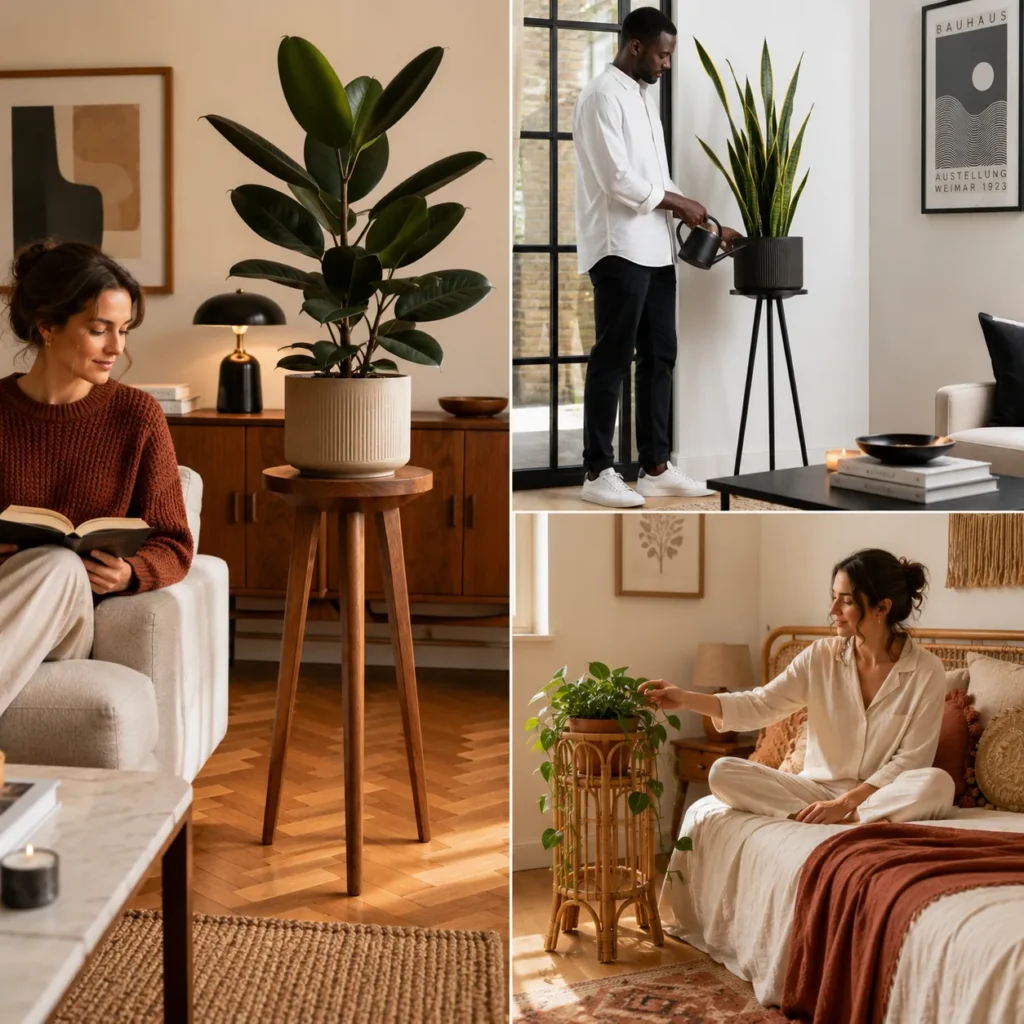
Material and finish should work with what’s already in the room. A mid-century modern living room calls for tapered wood legs and warm tones. An industrial loft reads better with black metal. A boho bedroom wants rattan or bamboo. When in doubt, match the stand’s finish to an existing metal or wood tone already present in the room, this is the fastest way to make a new piece feel intentional rather than added.
Large vs. small is less about the plant and more about the room. In an open-plan living space, a large plant stand with presence holds its own. In a compact bedroom or entryway, a small plant stand keeps the scale appropriate and avoids visual crowding.
Best Types of Plant Stands
Tall Plant Stand
A tall plant stand is the most impactful single plant purchase you can make for a room. Heights ranging from 30 to 60 inches place foliage at eye level and above, turning trailing plants like pothos or heartleaf philodendron into dramatic hanging features, and giving statement plants like snake plants or dracaenas a genuine architectural presence.
They work best in corners, beside sofas, or flanking a fireplace where the vertical element adds balance. Look for a wide, weighted base if your plant is heavy, stability matters more on a tall stand than on a low one.
Tiered Plant Stand
A tiered plant stand, typically two or three levels, is the most efficient way to display a plant collection without spreading it across every available surface. The cascading height creates natural visual rhythm, and the layered display lets you mix plant sizes and pot styles cohesively.
Three-tier models work especially well near windows where every level gets reasonable light. Two-tier versions are better for tighter spots, beside a sofa arm, in a bathroom corner, or on a covered porch.
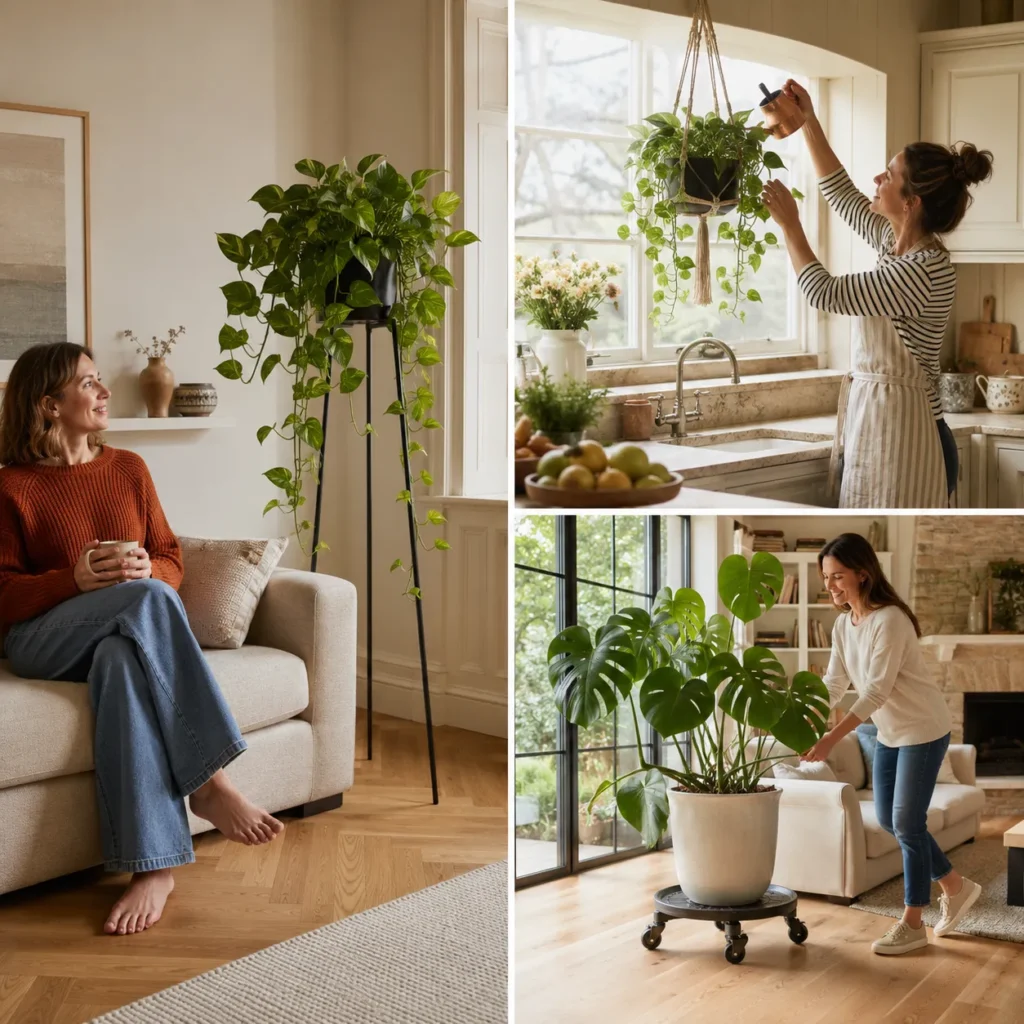
Corner Plant Stand
A corner plant stand solves one of the most common decorating problems: the empty corner that’s too small for furniture but too large to leave bare. Purpose-built corner stands use the right-angle geometry efficiently, often with multiple shelves that fill vertical space without consuming floor area.
They’re particularly effective in living rooms and bedrooms where other furniture has claimed the walls and a freestanding piece would interrupt traffic flow. A well-styled corner stand with two or three plants instantly makes the room feel more complete.
Plant Stand Shelf
A plant stand shelf, whether freestanding or wall-mounted, functions more like furniture than a traditional stand. It creates dedicated plant real estate across multiple surfaces, integrates books or decorative objects between plants, and works as a genuine design feature rather than a purely functional holder.
Freestanding shelf versions work well as room dividers in open-plan spaces. Wall-mounted versions are ideal for renters who want impact without floor footprint. Either way, the key is restraint, overcrowding every shelf makes even a beautiful unit look chaotic.
Hanging Plant Stand
A hanging plant stand moves plants entirely off floor and surface level, creating ceiling interest and freeing up every horizontal surface below. Macramé hangers, ceiling-mounted metal hoops, and adjustable hanging brackets all work, the choice depends on how permanent you want the installation and how much vertical drop you’re working with.
Particularly effective in kitchens (herbs near a window), bedrooms (trailing plants beside a bed), and entryways where a hanging element adds drama without taking up any of the limited floor space.
Rolling Plant Stand
A plant stand with wheels is underrated. For large, heavy planters that need to follow seasonal light, or for anyone who rearranges their space regularly, a rolling stand removes the single biggest barrier to plant placement: the inability to move them easily.
Look for locking casters so the stand stays put once positioned. Powder-coated metal frames handle the weight of large planters best. Most rolling stands are designed for indoor use, but heavy-duty versions with rust-resistant coatings work on covered patios.
Plant Stand with Grow Lights
A plant stand with grow lights is the practical solution for low-light homes, north-facing rooms, or anyone who wants to grow plants that need more light than their space naturally provides. These stands integrate LED grow light bars into a tiered shelf structure, effectively creating a self-contained growing environment.
They range from compact two-tier desktop versions to full floor-standing units with four or five shelves. For herb gardens, propagation setups, or serious plant collectors in apartments without ideal light, a grow light plant stand genuinely expands what’s possible.
Best Materials Compared
Material choice affects durability, aesthetic, maintenance, and price. Here’s how the most common options stack up:
| Material | Best For | Maintenance | Price Range |
| Wood / Teak | Warm, natural interiors | Low, occasional oiling for teak | $40 to $300+ |
| Metal / Black Steel | Modern, industrial, minimalist | Low, wipe clean | $30 to $200 |
| Bamboo | Boho, natural, eco-conscious | Low, keep dry | $25 to $120 |
| Rattan / Wicker | Coastal, boho, relaxed | Low, dust regularly | $35 to $180 |
| Wrought Iron | Traditional, vintage, outdoor | Low, check for rust annually | $50 to $350 |
| Gold / Brass Metal | Glam, contemporary, maximalist | Low, wipe clean | $40 to $250 |
The honest material verdict: For indoor use in most homes, wood and powder-coated metal offer the best combination of durability, aesthetic flexibility, and price. Rattan and bamboo are beautiful but strictly indoor materials, moisture degrades them quickly. For outdoor use, teak and wrought iron are the only materials worth buying if you want the stand to last more than a season.
Best Plant Stand Ideas for Every Room
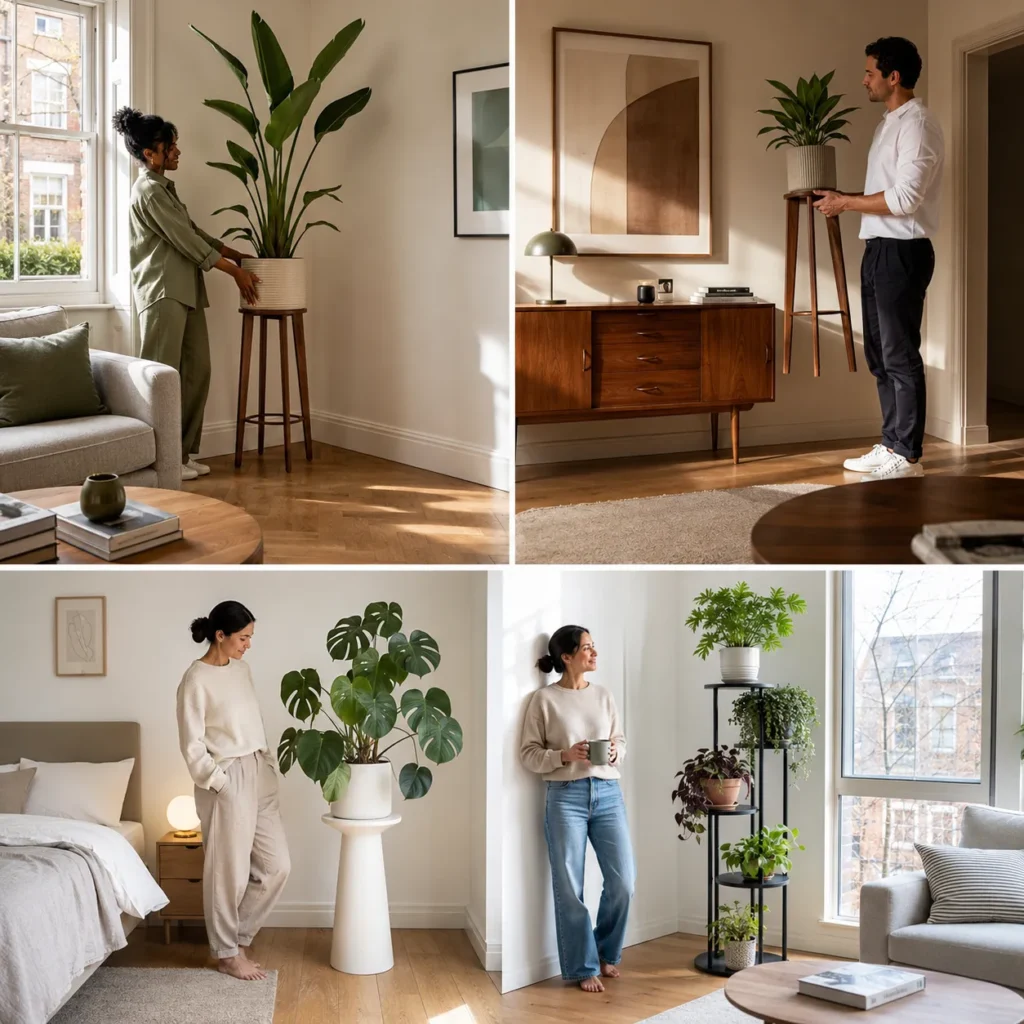
Living room is where plant stands have the most visual impact. A tall stand in a corner, a tiered stand beside the sofa, or a pedestal stand anchoring a reading nook, any of these creates instant layering in the room’s most used space. Pair larger plants on stands with lower trailing plants on the coffee table for depth across multiple levels.
Bedroom benefits most from smaller-scale stands that don’t compete with furniture. A single wooden plant stand beside a dresser or a compact two-tier stand near a window keeps plants present without overwhelming the room’s calm. Trailing plants, pothos, string of pearls, work especially well elevated on a nightstand-height stand where the trailing growth creates a soft, organic frame.
Entryway is where a single statement stand earns its keep immediately. One beautiful pedestal stand with a sculptural plant creates a visual welcome moment without requiring much space. This is also where a hanging plant stand works particularly well, a trailing plant at eye level as you walk in is an underused but genuinely effective design move.
Patio and balcony call for weather-resistant materials and practical thinking. A rolling plant stand lets you move plants under cover when needed. Tiered outdoor stands maximize growing space on compact balconies. Wrought iron and teak are the materials to prioritize outdoors, both age beautifully with exposure rather than deteriorating.
Best Plant Stand Styles
Modern plant stands favor clean lines, geometric forms, and minimal ornamentation. Black powder-coated metal and white matte finishes dominate this category, simple tripod stands, clean rectangular shelves, and pedestal forms with no decorative detail.
Mid-century modern plant stands are defined by tapered legs, warm wood tones, and organic shapes. Walnut and teak finishes, splayed legs, and circular or oval platforms are signature elements. They pair naturally with a wide range of interior styles beyond strict mid-century rooms.
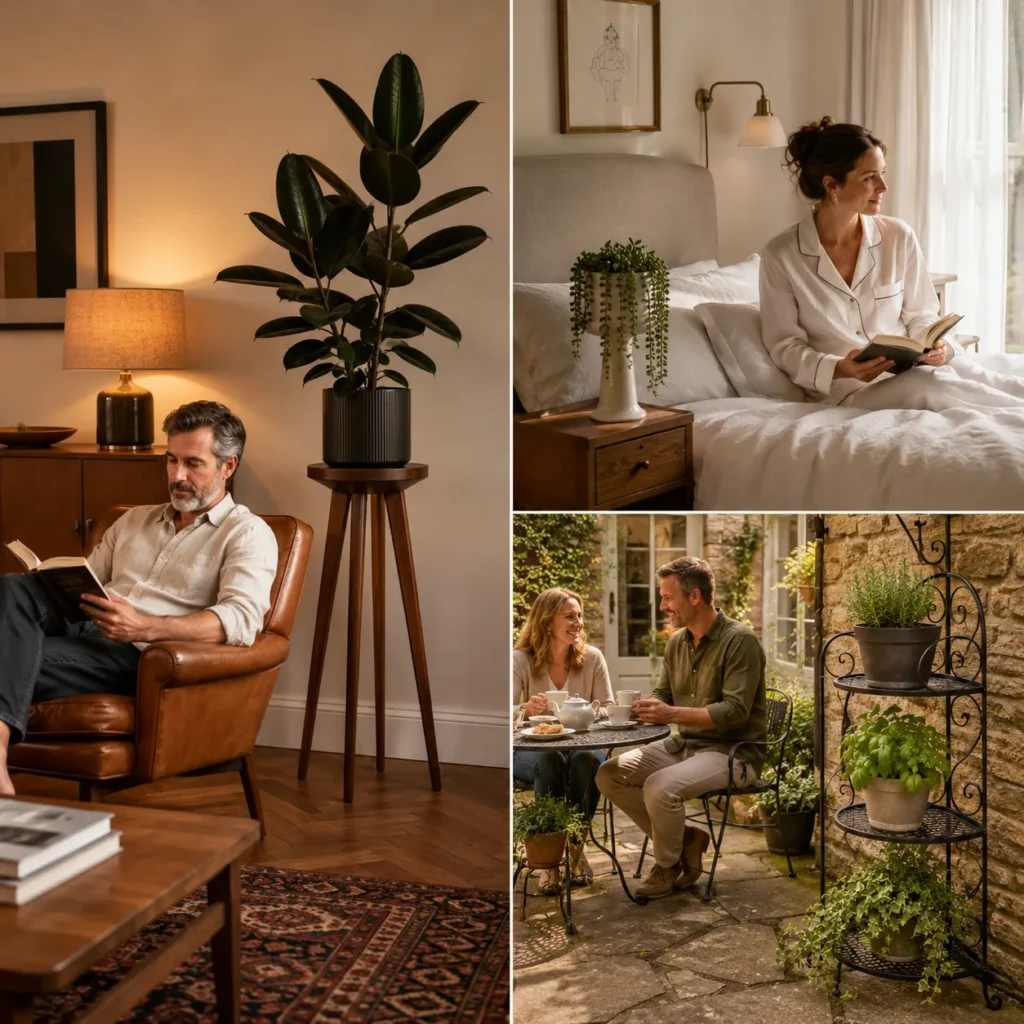
Vintage and antique plant stands lean into ornate metalwork, curved forms, and patinated finishes. Wrought iron with scroll details, brass with verdigris, and painted cast iron all fit this category. They add character and history to a room, particularly effective in eclectic and maximalist spaces.
Farmhouse plant stands favor raw wood, distressed white paint, and simple utilitarian construction. Ladder shelves in whitewashed pine, three-legged wooden stands, and simple crate-style shelves all read farmhouse. Warm and unpretentious by nature.
Boho plant stands embrace natural materials, rattan, bamboo, wicker, macramé, with relaxed, organic forms. This style tolerates more eclecticism than others: mismatched heights, woven textures, and layered collections all work together rather than competing.
Contemporary plant stands sit between modern and traditional, clean but not stark, decorative without being ornate. Gold and brushed brass finishes, mixed material combinations (wood and metal together), and sculptural but restrained forms define this category.
Common Mistakes to Avoid
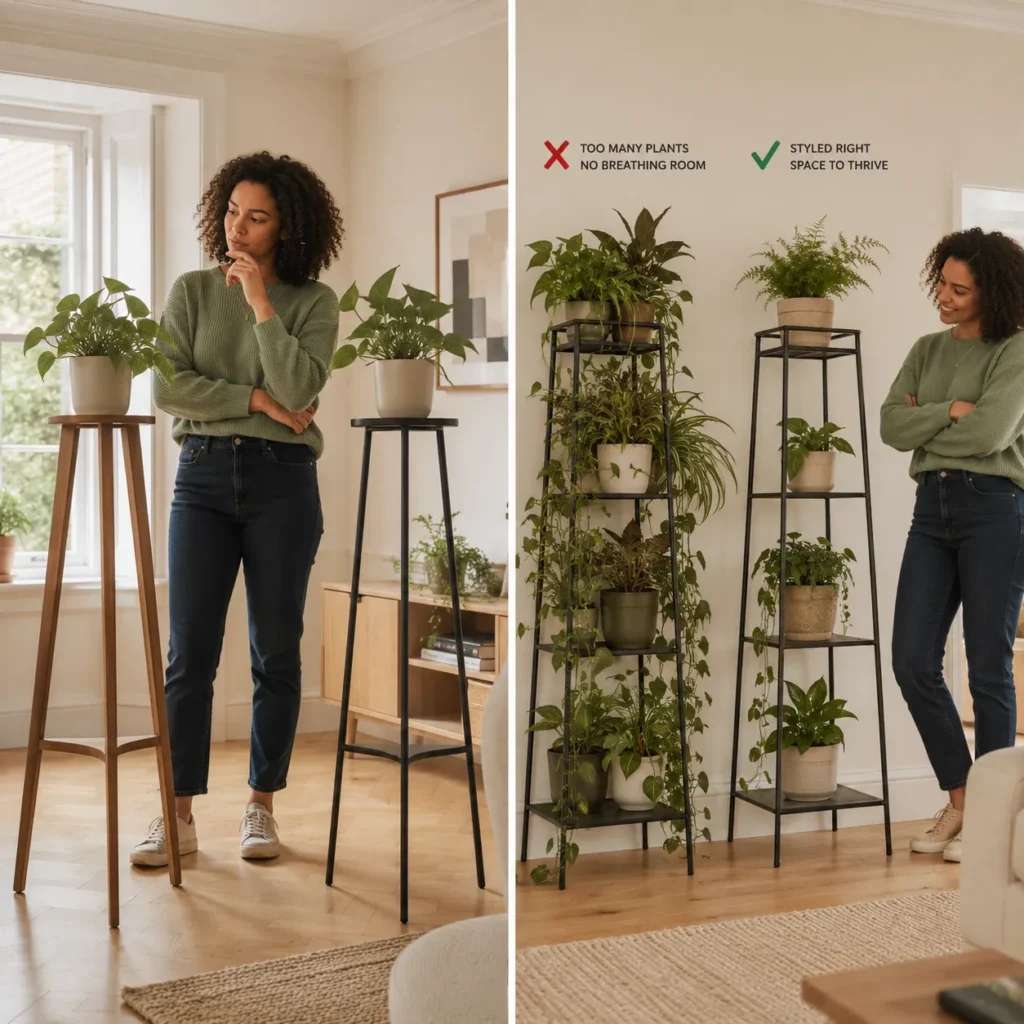
- Buying too small. The most common plant stand mistake is underestimating scale. A stand that looks right in a product photo can disappear in a real room. When in doubt, go one size larger than you think you need.
- Ignoring weight capacity. Large planters with wet soil are heavy. Always check the stated weight limit before buying, especially for tall or top-heavy stands.
- Using outdoor stands indoors (and vice versa). Outdoor materials like treated steel work indoors, but indoor-only materials like rattan will deteriorate outside faster than expected.
- Matching material to furniture instead of the room’s overall finish palette. A wooden stand doesn’t need to match the exact wood tone of every piece in the room, it needs to complement the room’s overall warm or cool undertone.
- Overcrowding tiered stands. A three-tier stand crammed with ten plants looks cluttered regardless of how beautiful each plant is individually. Leave breathing room between plants and allow trailing growth to cascade naturally.
- Placing heavy plants on stands without checking floor protection. Metal and wood feet can scratch hardwood and tile. Use felt pads or rubber feet protectors, especially on rolling stands where movement increases abrasion risk.
The Designer’s Take
A plant stand isn’t an accessory. It’s a design decision. The best ones do two jobs simultaneously: they hold a plant at the right height and they add visual interest to the room independent of whatever sits on top of them. That’s the standard worth holding every option to.
If you only add one plant stand to your home this year, make it a tall one in a corner you’ve been ignoring. The vertical element alone will change how the room reads. From there, build slowly, a tiered shelf near a window, a rolling stand for your largest plant, a hanging planter where you need drama without floor space. Each one, chosen carefully, adds something the room was missing. That’s how a collection of plants becomes an interior.
FAQs
What size plant stand do I need?
Match the stand height to the plant’s natural growth habit and the room’s furniture scale. Trailing or hanging plants look best elevated 24 to 36 inches. Large statement plants like fiddle leaf figs or monstera need only 6 to 12 inches of lift. In rooms with standard 8-foot ceilings, stands over 48 inches should be used carefully, they can make the ceiling feel lower.
Are wooden or metal plant stands better?
Neither is universally better, it depends on your use case and style. Wood is warmer, more traditional, and works well in most interior styles. Metal is more durable, easier to clean, and better suited to modern and industrial aesthetics. For outdoor use, teak wood and wrought iron or powder-coated steel are both strong choices; untreated wood and basic metal will rust or warp.
Can I use a plant stand outdoors?
Yes, but only materials rated for outdoor use: teak, wrought iron, galvanized or powder-coated steel, and treated aluminum. Rattan, bamboo, wicker, and untreated pine will deteriorate quickly with weather exposure. If your patio or balcony is covered, you have more flexibility, but direct sun and rain exposure narrows your options significantly.
How many plant stands is too many?
There’s no fixed number, but the principle is that each stand should have a clear visual purpose in the room. A living room can support two or three stands at different heights without feeling crowded. Once stands start competing with each other visually or disrupting traffic flow, you’ve crossed the line. Edit down to the stands that earn their spot, the room will look better for it.
What plant stand is best for a small space?
For small spaces, prioritize vertical over horizontal footprint. A tall single-stem stand, a corner plant stand, or a wall-mounted shelf all add plant presence without consuming floor space. Avoid wide-base stands or multi-tier units that spread horizontally, in a small room, floor real estate is the resource you’re protecting most.