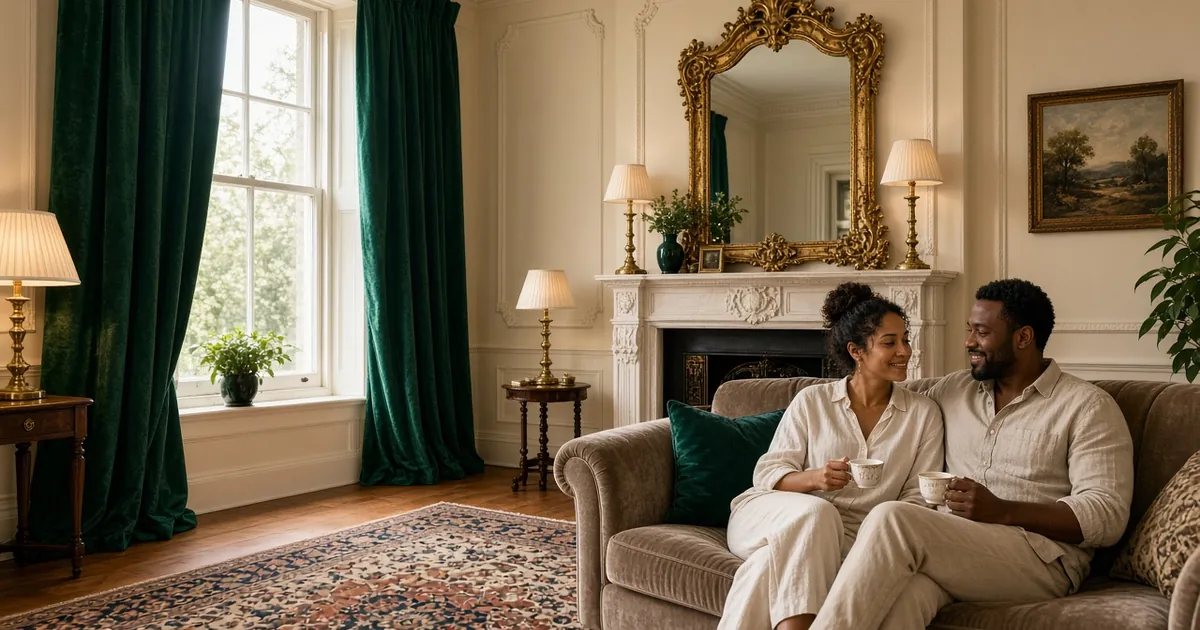
A Victorian living room should feel collected and inviting, not like a museum set. Think jewel-toned velvet, warm brass, a patterned rug underfoot, and one ornate piece that catches the light. Done well, a Victorian style living room looks expensive and lived-in. Done poorly, it can tip into heavy pattern and dark corners that nobody wants to sit in.
Below are 12 Victorian living room ideas you can mix for a sitting room, lounge, or open-plan living area. You will get practical measurements, material tips, and budget-friendly swaps that still read as Victorian home living room style. This guide is about interiors, not exteriors. For the Queen Anne towers and wraparound porches that define the architecture, see our guides to best architectural styles and types of mansions, then bring the mood indoors with the ideas here.
This post contains affiliate links. As an Amazon Associate, I earn from qualifying purchases, at no extra cost to you.
What Makes a Victorian Living Room Feel Authentic
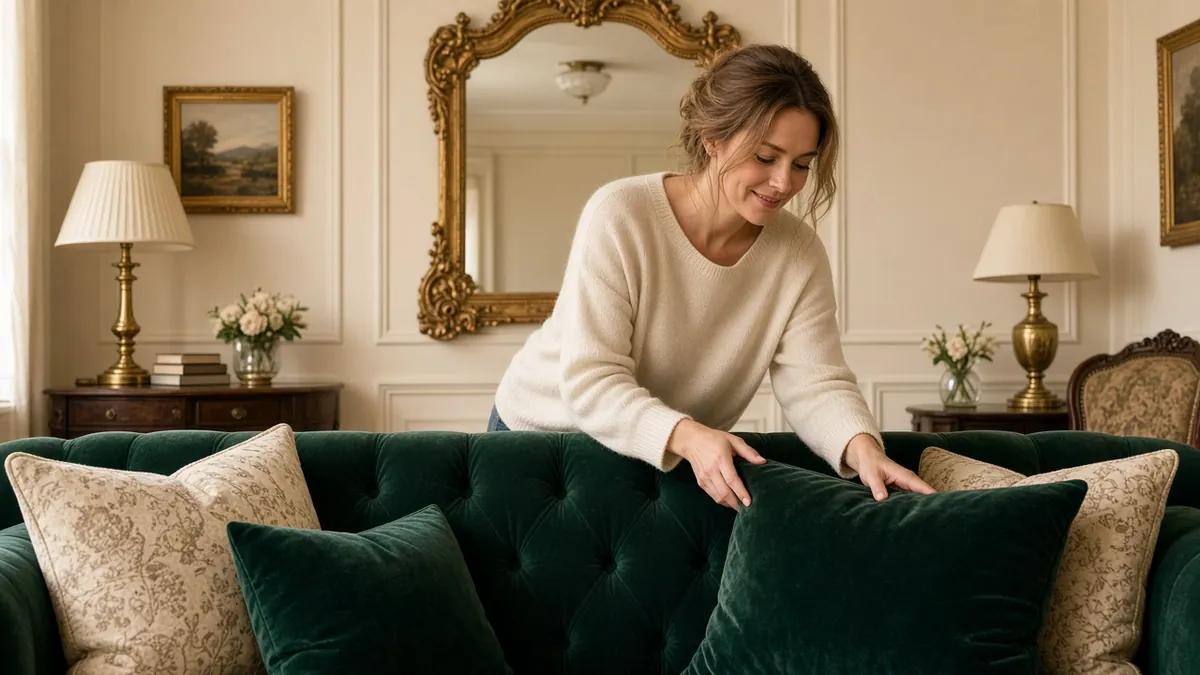
Victorian interiors were layered on purpose. Fabrics had weight. Woodwork had detail. Lighting was warm and multiple. You do not need period antiques to capture that mood. You need a calm base, rich textiles, and a few hero pieces with presence.
Aim for a room that still works with kids, pets, and weeknight TV. Washable rugs, performance velvet, and clear walkways keep a Victorian lounge room from feeling precious. If a piece only looks good in photos and fails everyday use, skip it.
Jewel Tones, Soft Neutrals, and Warm Metals
Classic Victorian palettes lean on emerald, burgundy, navy, and soft cream. Pair those with antique brass or aged gold rather than cool chrome. If your room is small or north-facing, keep walls in warm white or light greige and let color live in curtains, pillows, and art. A grey sofa can still ground a Victorian sitting room when you add warm wood and jewel accents. Our grey sofa living room ideas show how to keep that base soft instead of stark.
Limit yourself to two main colors plus a metal finish. Three competing jewel tones on large surfaces often feel busy. Repeat each color at least twice so the eye reads a plan, not a pile of leftovers.
Layered Texture Without Clutter
Velvet, linen, carved wood, patterned wool-look rugs, and a little fringe or piping signal Victorian style. The trick is editing. One tufted ottoman, one ornate mirror, and full-length curtains usually beat a room stuffed with lace and trinkets. Leave negative space on tabletops so the ornate pieces can breathe.
Furniture Foundations for a Victorian Sitting Room
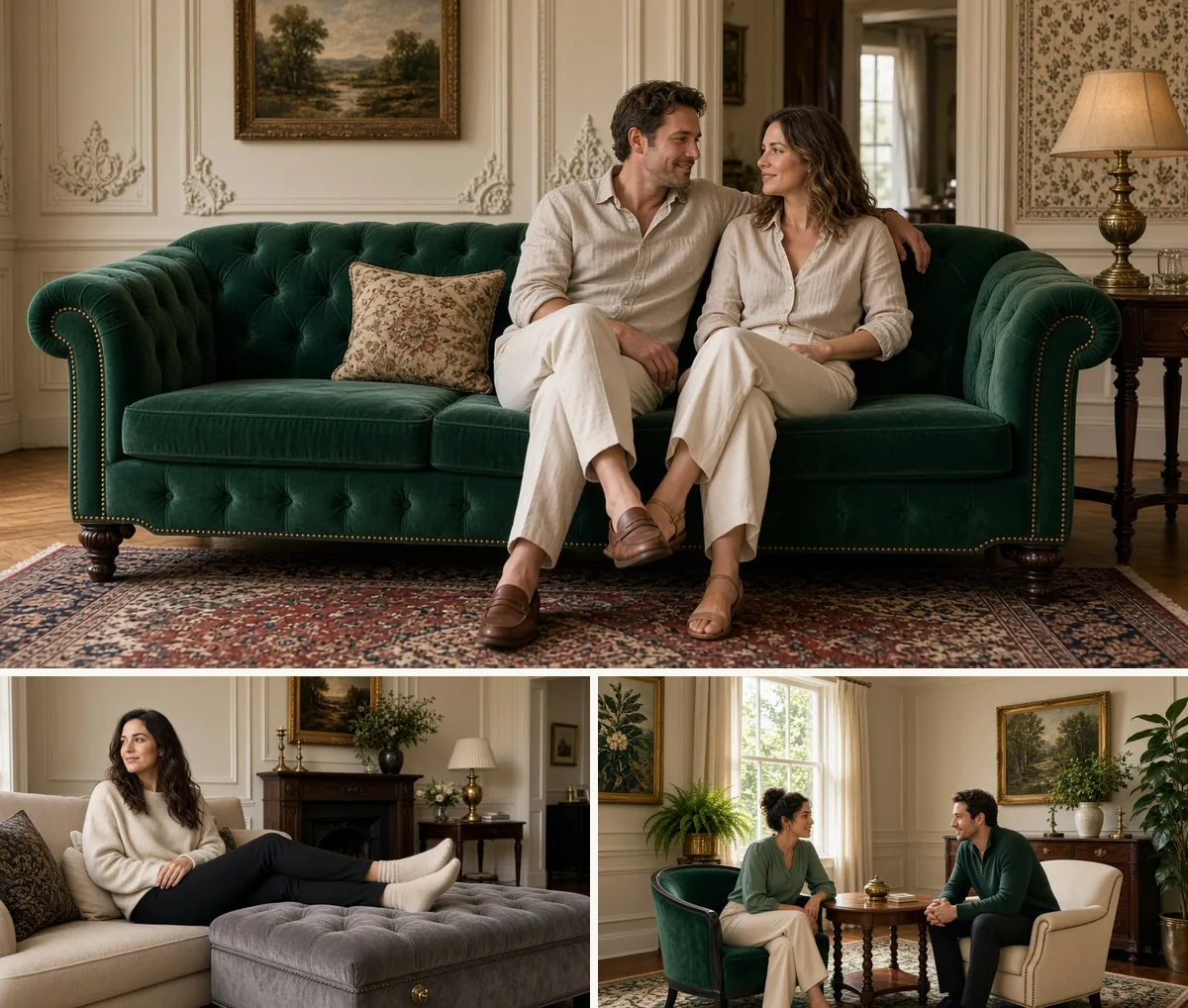
Start with seating scale and comfort. Victorian living rooms historically had conversation groupings. Today that still means a sofa people can sink into, a soft landing for feet, and a chair that invites a second conversation.
1. A Comfortable Sofa With Presence
Look for a sofa with a slightly higher back, rolled or gently curved arms, and a fabric that takes light well. Velvet in emerald, navy, or warm taupe reads instantly Victorian. Performance fabrics with a velvet look are smarter with kids and pets, and it helps to know which sofa fabrics hold up best with dogs. Seat depth around 22 to 24 inches suits most people for lounging. Leave about 30 to 36 inches for main walkways so the lounge does not feel cramped.
If you already own a plain sofa, dress it rather than replace it. A tailored slipcover in a soft neutral plus layered pillows can shift the whole mood for less than a new frame. Add a textured throw folded over one arm for another soft layer without buying new seating.
2. A Velvet Tufted Ottoman
I consistently recommend a velvet tufted storage ottoman as the hardest-working piece in a Victorian living room. The Amazon pick linked here is a folding velvet storage cube with an MDF frame, not solid hardwood, so treat it as a soft, practical accent rather than heirloom furniture. It softens the coffee-table zone, adds a plush texture, and hides throws or toys. Cube styles around 16 inches work as a footrest or extra seat. Larger benches suit bigger rooms. Many solid-looking velvet ottomans land around $35 to $150.
Keep 16 to 18 inches between the sofa seat edge and the ottoman so drinks and feet both fit. Choose a color that echoes your curtains or pillows so the room feels planned.
3. One Accent Chair With a Softer Curve
A single chair with a rounded back, wing silhouette, or carved wood detail breaks up a boxy sofa line. Place it at a slight angle, not stiffly parallel to the sofa. In small rooms, a slipper chair or petite bergere-style seat keeps the Victorian cue without eating the walkway. Match the wood tone to your side tables if you can, even approximately.
Windows, Walls, and Statement Mirrors
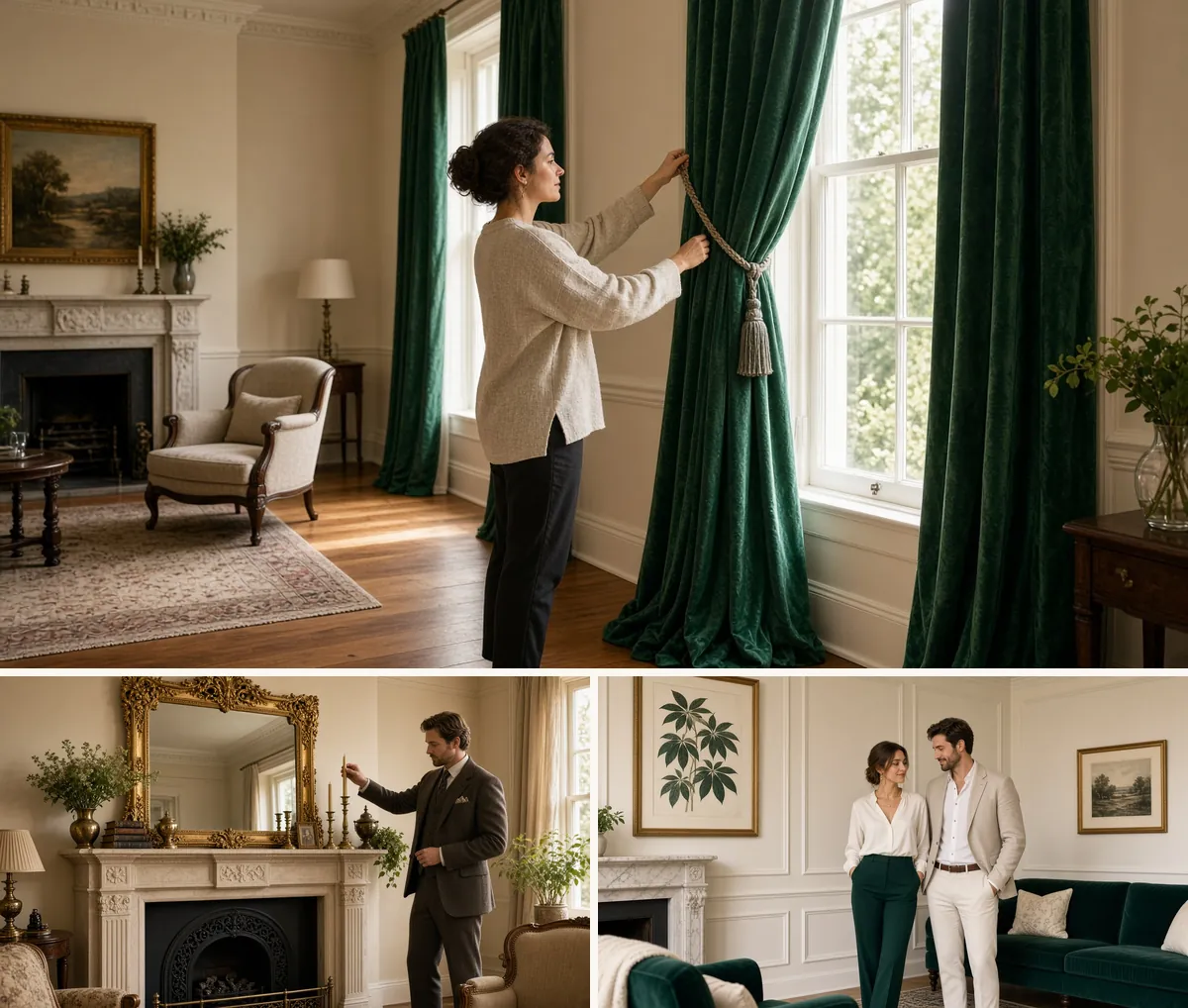
Vertical lines and reflective surfaces make Victorian rooms feel taller and richer. Windows and one bold mirror do most of that work.
4. Floor-Length Velvet Curtains
Hang a rod close to the ceiling and let panels just kiss the floor. That single change fakes taller windows, a classic Victorian trick. I like velvet curtains for the living room in olive, burgundy, navy, or soft gold because the drape looks custom even on a budget. Many two-panel sets cost around $20 to $80 depending on length and color.
Measure width so total curtain fabric is about 1.5 to 2 times the window width for a soft fold. If you rent, use a tension rod only when the window is small. A proper wall-mounted rod looks more intentional and holds heavier velvet better.
5. An Ornate Gold Mirror as the Hero
Pick one ornate piece and let it lead. An ornate gold baroque wall mirror above a mantel, console, or sofa is the fastest Victorian signal that still works in modern homes. Budget ornate mirrors often sit around $60 to $200. Hang the center of the mirror near eye level, roughly 57 to 60 inches from the floor, or center it on the mantel wall so it feels anchored.
Skip covering every wall with small gilt frames. One larger mirror plus a quiet art pair nearby looks calmer and more expensive.
6. Calm Walls With Optional Picture-Frame Molding
Victorian homes often had picture rails and paneling. In a rental or new build, paint walls a soft cream or warm white, then add peel-and-stick molding boxes on one accent wall if your lease allows. Keep the molding the same color as the wall so the detail shows through shadow. Dark feature walls can work in large rooms, but small Victorian lounge spaces usually look better with light walls and rich textiles.
Lighting and Layers That Soften the Room
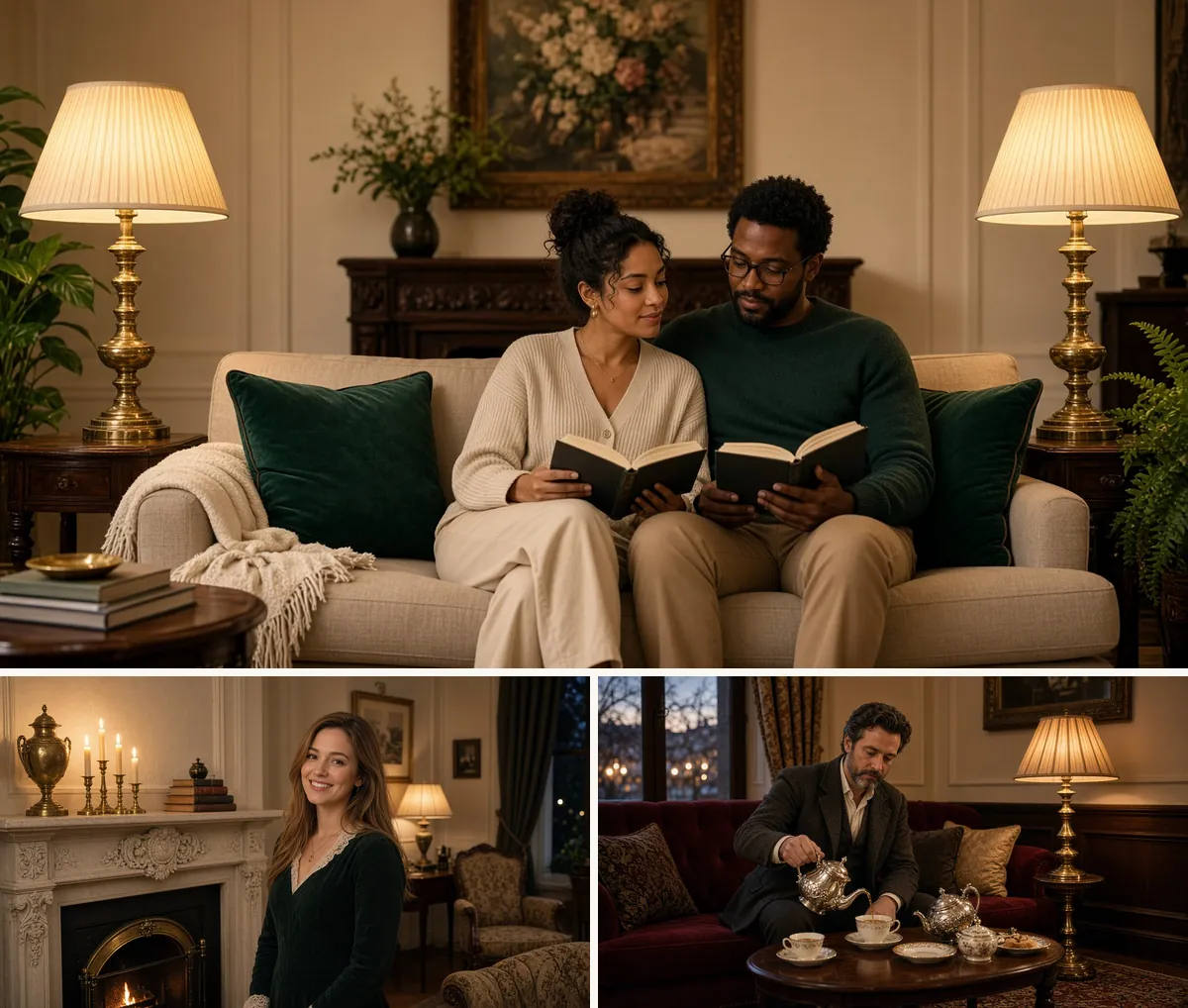
Mansions and Victorian parlors rarely relied on one ceiling light. Layer lamps, a little candlelight, and dimmers if you can.
7. Brass Candlestick Table Lamps in Pairs
Symmetry reads as intentional, which is why I often place a matching pair of antique brass candlestick table lamps on either side of a sofa or console. A set around 26 inches tall suits most side tables near 24 inches high. Good traditional pairs commonly fall around $80 to $200. Use warm bulbs near 2700K so brass and velvet stay flattering at night.
If your ceiling fixture is a plain builder flush mount, the lamps will do more for the Victorian mood than replacing the ceiling light first.
8. Fireplace Mantel as a Quiet Focal Point
If you have a fireplace, style the mantel with restraint: a clock or candlesticks, a small stack of books, and the ornate mirror above. Keep the mantel arrangement lower than the mirror so the wall still feels open. For layout and styling formulas that keep a mantel modern rather than cluttered, see our modern fireplace mantel ideas. No fireplace? A console with a lamp pair and the same mirror creates a similar anchor.
Rugs, Pillows, and Soft Finishing Touches
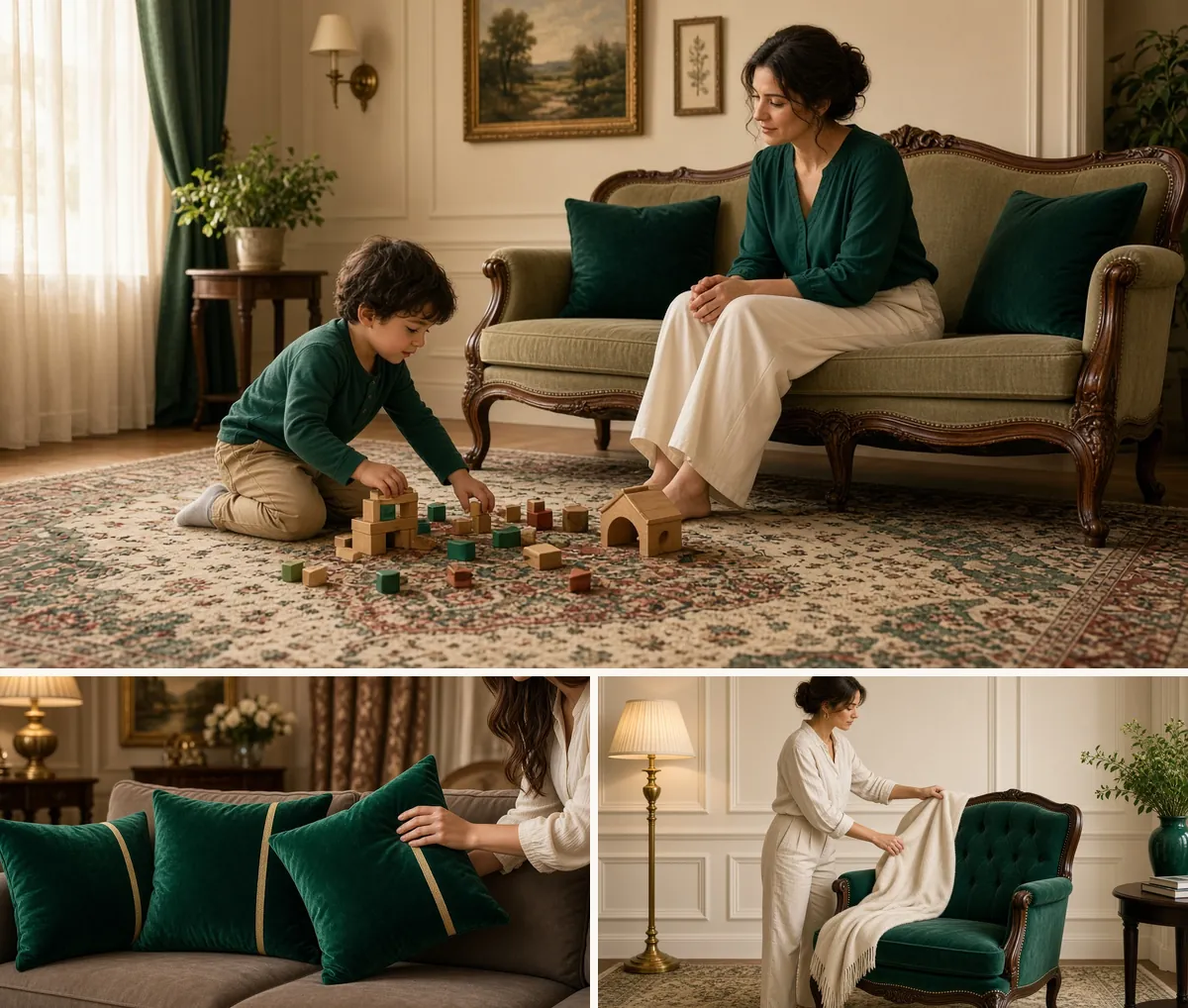
Soft surfaces finish the story. Pattern on the floor and a few rich pillows usually beat busy wallpaper when you are starting from a plain room.
9. A Patterned Persian-Style Rug
A faded oriental or Persian-style pattern grounds a Victorian living room and hides everyday crumbs better than a solid light rug. I prefer a low-pile, washable option when kids or pets are in the mix. A washable Persian-inspired area rug in a 5×7 can define a seating group in apartments, while 8×10 suits most full living rooms. The teal OPPODREAM colorway linked here reads cooler than classic burgundy Victorian, so browse other colorways if you want a warmer, more traditional look. Many family-friendly 5×7 options land around $50 to $150.
Size the rug so the front legs of the sofa and chairs sit on it. Leave about 12 to 18 inches of floor showing around the edges in smaller rooms so the space does not feel swallowed.
10. Velvet Pillows With One Metallic Accent
Pillows are where you can play with emerald, burgundy, or soft gold without committing a whole sofa. I like emerald velvet throw pillow covers with a slim gold detail because they echo brass lamps and ornate frames. These are covers only (inserts sold separately), and the gold stripe is PU leather, not metal. Covers in the 18-inch size often cost around $15 to $40 for a pair. Mix two velvet pillows with one quieter linen or textured pillow so the sofa does not look costume-matched. For layering formulas that look styled rather than stiff, use our guide on how to style throw pillows.
11. Books, Florals, and a Little Negative Space
Victorian rooms loved collected objects, but today’s version should leave breathing room. Stack two or three books on a side table, add a ceramic vase with garden flowers or good faux stems, and stop. Dusty dried arrangements and crowded shelves make the room feel heavy. Rotate seasonal stems so the lounge stays fresh without a full restyle.
Small Spaces, Rentals, and Common Mistakes
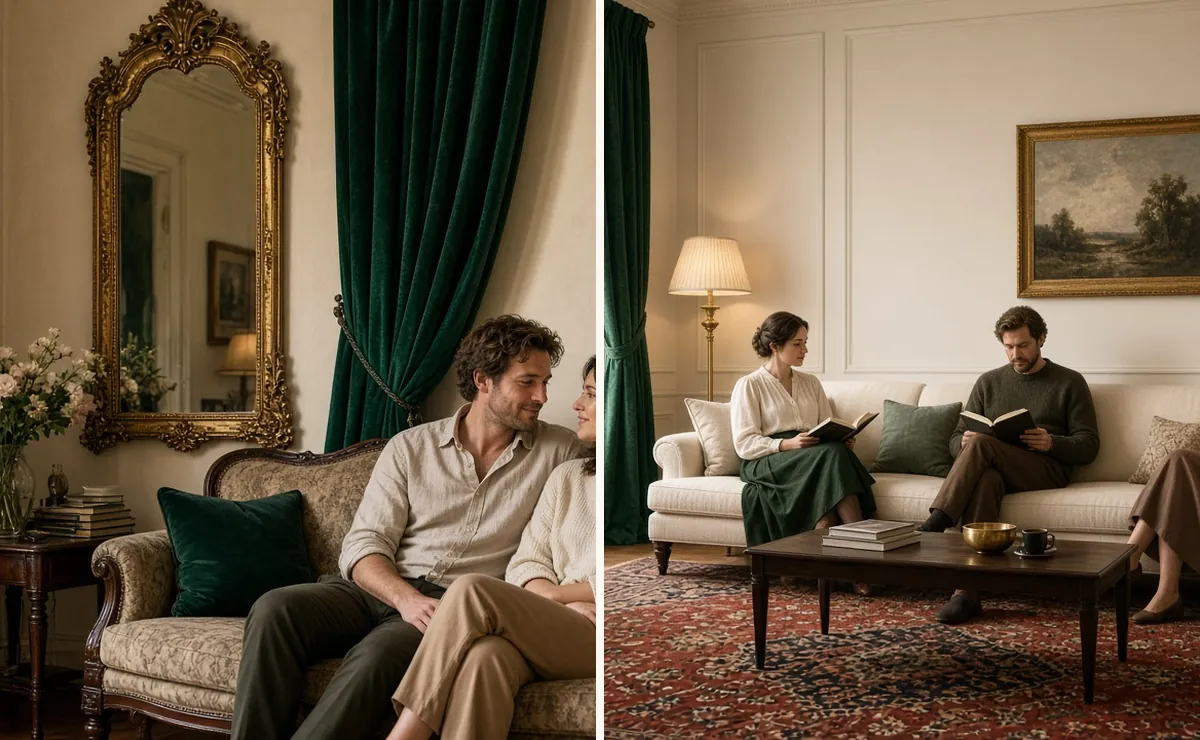
You can get Victorian living room ideas to work in a studio or rental if you respect scale and choose removable upgrades.
12. Renter-Friendly Victorian Swaps
Focus on curtains, a rug, lamps, an ornate mirror hung on sturdy wall hanging hooks with proper anchors, or picture ledges, and peel-and-stick molding you can remove carefully. Avoid drilling for heavy chandeliers if your lease forbids it. A plug-in sconce or a lamp pair gives you layered light without an electrician. Keep large furniture simple and put the Victorian budget into textiles and one statement mirror.
In open-plan spaces, use the rug and sofa back to define a Victorian lounge zone so the style does not spill messily into the kitchen. A narrow console behind the sofa can hold a lamp and a tray, which strengthens the boundary between living and dining without building a wall.
Common Victorian Living Room Mistakes (and Easy Fixes)
Too much pattern on every surface. If the rug is busy, calm the sofa. If the curtains are solid velvet, the rug can carry pattern. Give the eye one place to rest.
All-dark walls in a small room. Deep color can be beautiful on one wall or in a large bay-window room. In a small apartment, light walls with jewel textiles usually look fresher.
Matching gold on everything. Mix antique brass with warm wood. A little variation looks collected; identical shiny gold on lamps, frames, and hardware can look flat.
Furniture pushed against every wall. Float the sofa a few inches out if space allows, and angle the accent chair. Victorian sitting rooms were about conversation, not a waiting-room lineup.
Hidden Pro Tip: Photograph your room in evening lamp light before you buy more decor. Victorian style succeeds when the room glows warm after sunset. If the photo looks harsh or cluttered, edit objects before you add another pattern.
The Designer’s Take
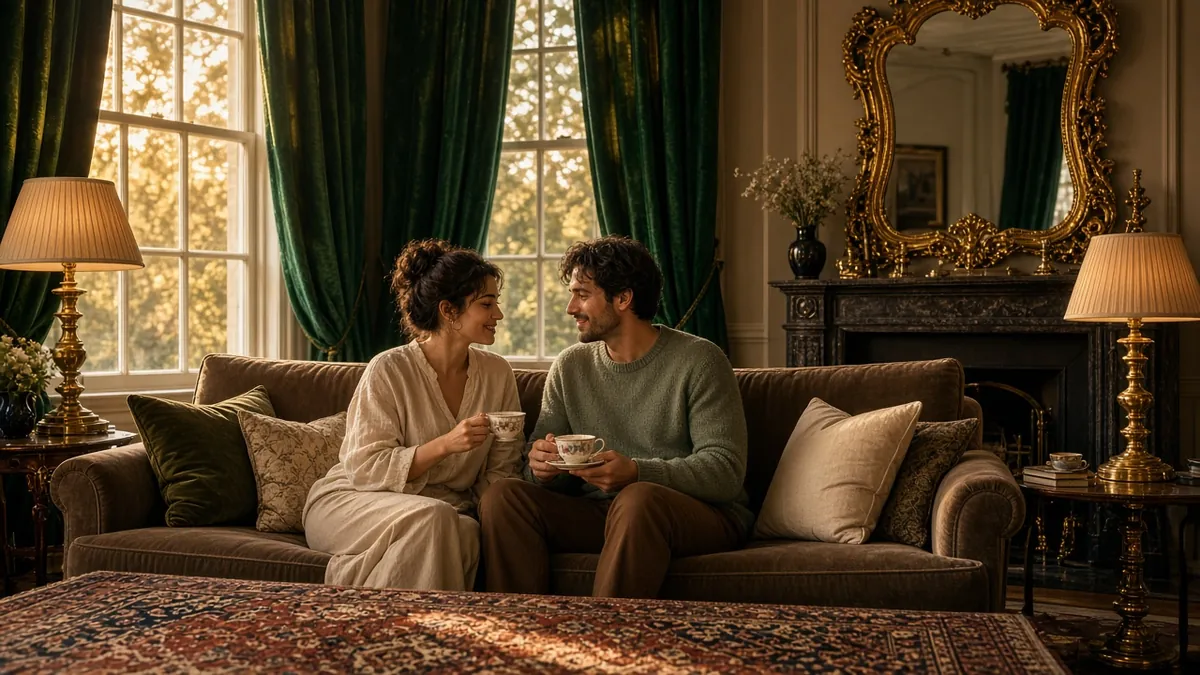
A Victorian living room works best when you borrow the era’s richness without copying every ornament. Start with calm walls, floor-length velvet curtains, a patterned rug, and one ornate mirror. Add brass lamps and a tufted ottoman so the room feels soft and usable from day one.
If I had to choose only two purchases first, I would pick velvet curtains hung high and a strong ornate mirror. Those two changes shift height and character immediately. Seating upgrades, pillows, and seasonal florals can follow as budget allows, and the Victorian sitting room will still feel intentional rather than unfinished.
Remember that Victorian living room style is a mood more than a checklist. Choose the pieces you will actually clean, sit on, and enjoy at night, and the room will look expensive because it looks cared for.
Victorian Living Room FAQ
What makes a living room look Victorian?
Layered textiles, a jewel or soft-neutral palette, one ornate hero piece such as a carved mirror or tufted seat, and warm layered lighting usually do the most work. Keep walls calm so pattern and velvet can stand out without feeling costume-like.
What colors work best in a Victorian style living room?
Deep emerald, burgundy, navy, soft cream, warm white, and antique brass accents are classic. You can also use a lighter base of ivory and greige, then add jewel tones through pillows, curtains, and art so the room still feels bright.
How do I decorate a Victorian living room on a budget?
Start with paint, velvet curtains, a patterned rug, and one ornate mirror. Add brass lamps and a few velvet pillows before you replace large furniture. High-low styling keeps the look expensive without a full antique set.
Can a Victorian sitting room work in a small apartment?
Yes. Choose a sofa with a simple silhouette, hang curtains high and wide, use one large ornate mirror to bounce light, and keep pattern on textiles rather than every wall. Scale and negative space matter more than square footage.
What is the difference between a Victorian living room and a Victorian sitting room?
Historically, a sitting room or parlor was the more formal social space, while the living room is today’s everyday gathering room. In modern homes the terms overlap, so style the room for how you actually use it, with durable fabrics and clear walkways.